
 Yuyun Lusiyani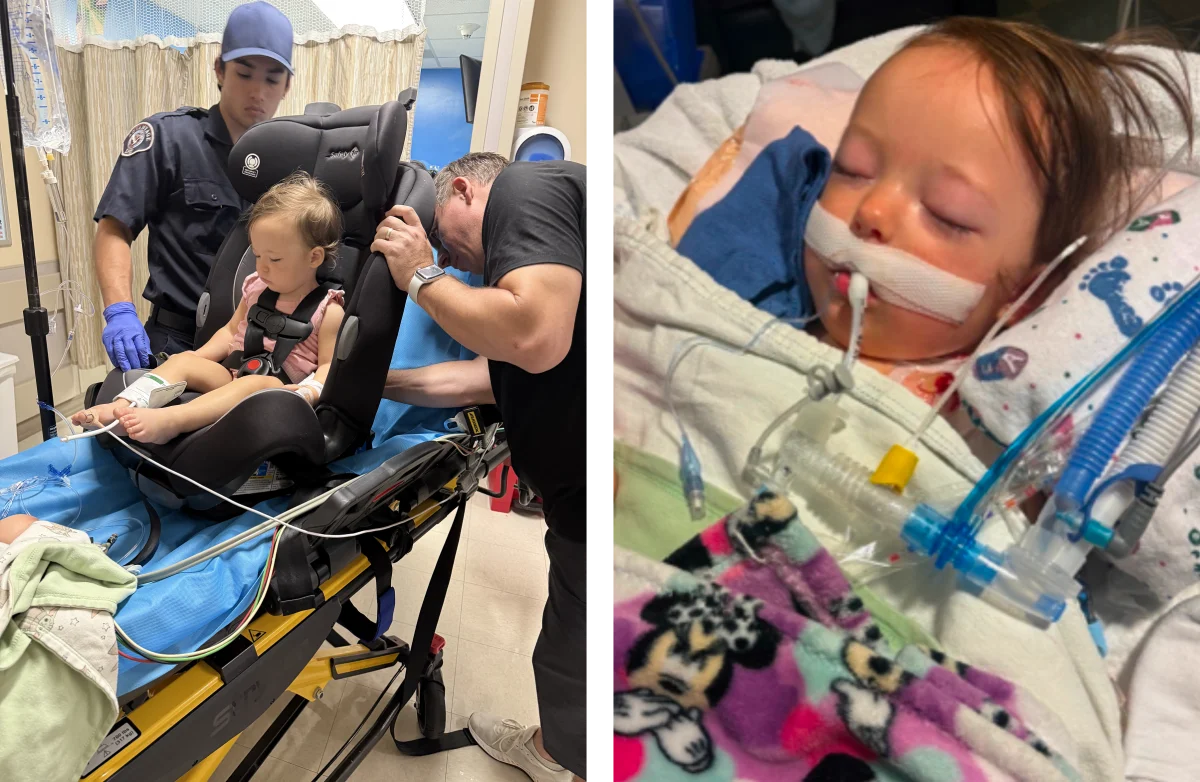
Last year, confined to the sterile, harrowing environment of a pediatric intensive care unit, Emily Marris desperately scrolled through her phone. Her 17-month-old daughter, Brooklyn, lay nearby, her fragile life sustained by a ventilator, a stark symbol of the medical crisis unfolding. Marris was searching for irrefutable evidence to present to California health and food safety investigators, pieces of a puzzle that had led her family to this unimaginable precipice. The suspected culprit: raw goat milk, purchased from a farm championed within a Facebook group administered by her chiropractor. Marris, seeking a "natural" remedy for Brooklyn’s constipation, had unwittingly introduced a virulent pathogen into her daughter’s system. Doctors now unequivocally suspected the unpasteurized milk, unheated and teeming with potential pathogens, as the source of Brooklyn’s severe E. coli infection.
For the state regulators who swiftly contacted Marris, this case quickly escalated to a top priority. The farm, later identified as Moonlight Ridge, appeared to be operating in blatant defiance of state law, selling unregulated raw milk to unsuspecting families. The urgency intensified when another child, a 6-year-old girl, Victoria Galindo, who had consumed milk from the very same farm, was admitted to the same San Diego hospital with an identical, potentially fatal illness, requiring critical blood transfusions. These harrowing incidents were not isolated. Across the United States, a disturbing trend was emerging: similar cases of severe illness linked to raw milk consumption were surfacing, fueled by a burgeoning movement of social media influencers and even high-profile political endorsements, including those from former President Donald Trump’s White House, which consistently touted the unproven benefits of raw milk while dangerously downplaying its inherent risks. In the preceding two years alone, hundreds of individuals had fallen gravely ill across nine states from consuming raw milk or products derived from it, painting a grim picture of a public health challenge.
California, acknowledging a segment of the population’s desire for the freedom to purchase raw dairy, had attempted to strike a delicate balance. The state maintains a stringent system: it licenses farms specifically for the sale of raw milk intended for human consumption, subjects these operations to regular sanitation inspections, and mandates routine testing of milk batches for dangerous pathogens. Yet, as ProPublica had previously reported, even this regulated system had not entirely prevented outbreaks. Its core objective, however, was to ensure consumers were, at the very least, informed; legally sold raw milk in California is required to be clearly labeled with explicit health warnings. This regulatory framework, designed for transparency and safety, made the Moonlight Ridge case all the more troubling for investigators. The milk that had sickened Brooklyn and Victoria did not originate from one of the state’s dozen licensed farms. This dairy operated entirely off the grid, distributing unknown quantities of unlabeled gallons, a ghost in the state’s oversight system.

A Mother’s Search for Wellness and a Tragic Turn
Emily Marris, a self-described "crunchy mom" from Winchester, a suburban community in Riverside County, had always prioritized a holistic approach to her family’s health. A trained birth doula and former teacher, she meticulously detoxified her home, eliminating harmful chemicals and synthetic materials, and strictly limited her family’s intake of ultra-processed foods. Brooklyn, her "miracle baby," born prematurely at 48, held a special place in Marris’s fiercely protective heart. Her traumatic birth, which confined her to the ICU for her first month, amplified Marris’s maternal instincts. Determined to breastfeed Brooklyn for as long as possible, Marris faced a dilemma when a new medication for her chronic hip pain, which could pass into breastmilk, necessitated weaning. Organic infant formula was dismissed due to its additives, and store-bought cow milk only exacerbated Brooklyn’s severe constipation. Desperate for a natural alternative that wouldn’t compromise her ability to walk without pain, Marris turned to her trusted community.
One afternoon in January of the previous year, a Facebook post in a private group for backyard farmers, curated by her chiropractor, Chris Boman, caught her eye. Boman had shared a photo of a refrigerator brimming with freshly collected milk. Marris had observed him selling raw milk from his own cow in his clinic’s waiting room for years. While she hadn’t considered it for her family before, Brooklyn’s struggles pushed her to inquire: "Would this be a good milk for baby Brookie?" The group’s members swiftly offered their endorsements. "I had to put my baby on raw goats milk," one mother attested. "Healed her right up… Goats milk is easier digested than cow." Despite Facebook Marketplace’s prohibition on raw milk sales and ads, discussions surrounding it are permitted, a Meta spokesperson clarified.
The recommendation led Marris to Moonlight Ridge farm. Its Facebook page, adorned with images of velvety Nubian goats, promised "the freshest and best quality" dairy, milked twice daily. Just 10 miles away, Marris arranged a visit. There were no identifying signs for the farm, only a dirt road leading to Courtney Baker, the 23-year-old owner, who greeted Marris by a metal gate. Baker explained that she and her husband, inspired by the pandemic, had started raising goats and sold raw milk primarily through word of mouth, often to support animal rescues and breeders. Baker handed Marris an unlabeled jug of raw goat milk, still warm. Marris, pointing to her sleeping daughter, confided Brooklyn’s digestive woes, telling Baker, "This is the sweet girl you’re helping." Back home, Brooklyn readily consumed the milk, and Marris texted Baker with relief: "She is gobbling it down! …She has had two great and more normal poops!!!!"

Marris believed she had exercised due diligence. Her research into raw milk had been heavily influenced by local farmers and wellness influencers. She and her husband, Josh, had even visited Moonlight Ridge, finding the goats seemingly well-kept. Baker, they recalled, had repeatedly assured them her herd and milk were "clean and tested." Trusting Baker, Marris continued to give Brooklyn raw milk for six months without incident.
The Onset of a Crisis: Two Young Lives Imperiled
Then, on June 2, everything unraveled. Brooklyn vomited violently on the way home from swim lessons. On that very same day, another couple, Navy veterans Iris and David Galindo, made their first trip to Moonlight Ridge for goat milk. Their 6-year-old daughter, Victoria, had been advised by her doctor to limit cow dairy, and Iris, who had consumed goat milk as a child in Guatemala, saw it as a natural alternative. Courtney Baker, who had previously tutored their son, was now advertising raw goat milk in a local Facebook group, fostering a sense of trust, as Iris Galindo recounted. As Baker handed over an unlabeled jug, the Galindos explicitly stated the milk was for their young daughter. That evening, Victoria drank her first cup.
The days following Brooklyn’s initial vomiting were a nightmarish blur for the Marris family. The vomit turned bilious yellow, then a tarry blackish-green. Alarming bloodwork prompted emergency room doctors to arrange transport to a pediatric intensive care unit 70 miles away. At Rady Children’s Hospital, Marris and her husband watched helplessly as their barely conscious daughter was tethered to a labyrinth of medical devices: a tracheal tube for breathing, dialysis lines to support her failing kidneys. Brooklyn had developed hemolytic uremic syndrome (HUS), a rare and devastating condition where microscopic blood clots obstruct small vessels, leading to organ damage. Infectious disease specialists suspected E. coli and questioned Marris about Brooklyn’s recent diet. Her mention of raw milk elicited uneasy glances from the medical team, who identified it as the likely culprit. E. coli, known to thrive in animal intestines, can contaminate raw milk with as few as 10 cells, hidden in a minuscule fleck of feces, potentially triggering a fatal infection.

Marris was consumed by terror and guilt. She had sought the benefits of raw milk online, finding confirmation from its proponents, but was unaware of the medical consensus: raw milk offers no proven nutritional advantages over its pasteurized counterpart and carries over 100 times the risk of foodborne illness. "I’m the one that gave it to her," she agonized. "Just how stupid could I be?"
On June 5, from Brooklyn’s bedside, Marris texted Baker: "They think Brookie got a strain of e-coli possibly from a bad batch of the milk… I just wanted to let you know in case you want to alert anyone that had milk from the week before this." Baker’s swift reply expressed sorrow but claimed, "None of my milk testing results have showed anything abnormal." However, subsequent texts revealed Baker had not tested for E. coli, seemingly unaware of how to do so. Marris, despite her shock, maintained politeness, urging Baker not to "beat yourself up."
Two days later, on June 6, Brooklyn was taken off the ventilator, but struggled to regain consciousness. Her eyes drifted, her body convulsed, and her breathing grew heavy. Her blood became so acidic that it disrupted her heart’s electrical signals, threatening her brain’s oxygen supply. The medical team battled for hours to stabilize her. Her parents didn’t know if she would survive the night. During this agonizing wait, a stool sample confirmed Brooklyn had contracted E. coli O157:H7, one of the most dangerous strains. Marris informed Baker, who then detailed her cleaning process and promised to send a sample to a Colorado lab.
Brooklyn eventually turned a corner, but in Murrieta, Victoria Galindo’s condition was worsening. She had been lethargic for a week, suffering bouts of bloody diarrhea. After two ineffective urgent care visits, the Galindos rushed her to Rady on June 13. Bloodwork confirmed the same HUS disorder caused by E. coli O157:H7. Victoria was immediately admitted to intensive care. "My world just dropped," Iris Galindo recounted.

Regulatory Intervention: A Path Not Taken
On June 14, upon learning of Victoria’s illness, Marris again texted Baker, advising, "Maybe hold off on selling any until we know if there is a common thread." Baker did not respond. The next day, however, Marris discovered Baker advertising her raw goat milk on Facebook: "I have raw goat milk from a clean tested herd in wine country… We milk 2x a day so it is always super fresh." Aghast, Marris screenshotted the post and confronted Baker: "Out of respect, I’m giving you a heads up… I’m appalled that you’re advertising the milk as tested and safe when you haven’t been able to test for that deadly strain of e-coli." Marris then posted a detailed warning in the Facebook group, sharing Brooklyn’s harrowing experience. The responses poured in, validating her decision, but Baker soon replied, apologizing for her delay, claiming she too had been hospitalized, and asking Marris to remove the post. "As much as I hate and feel bad for what happened to Brooke [sic] I really really do," she stated, "I really don’t appreciate my name being thrown out there like that." Reluctantly, Marris complied, but she had already provided her text messages to state regulators. She believed, surely, they would act decisively.
Indeed, on June 20, three regulators conducted an unannounced visit to Moonlight Ridge. Internal records obtained by ProPublica reveal their findings. The farm, situated within a larger horse ranch, was eventually accessed, where Baker’s husband acknowledged their purpose. Baker arrived 20 minutes later, immediately employing a crucial defense: the milk was for pets only and advertised as such on Facebook. "Of course, she insisted that she only sells the goat milk for pet food," Jill Soares, a regional supervisor with the Food and Agriculture Department, later wrote in an email.
The "Pet Food" Loophole: A Regulatory Blind Spot

California law, while requiring licenses for raw milk sold for human consumption, permits unlicensed farms to sell it provided it’s explicitly labeled as "pet food." This loophole has been widely exploited by sellers seeking to evade scrutiny and prosecution, a health official familiar with Baker’s case told ProPublica anonymously, calling it a "gap in regulation." This regulatory vulnerability is magnified in 13 other states where raw milk can only be sold as pet food, yet regulators are acutely aware that people are consuming it. Outbreaks this year in Louisiana and last year in Florida sickened multiple children, with at least one developing HUS, yet no dairy faced penalties as the milk was legally sold and labeled.
Despite the compelling evidence from Marris’s text messages, which showed Baker clearly knew the milk was for a child, the investigative report made no mention of regulators challenging Baker on her "pet food" defense. Supervising special investigator Jeffrey Eggert had already communicated to his team before the visit that pursuing criminal charges was not the primary objective. "The immediate goal here is to get the goat farm to stop all milk related-product manufacturing, and keep the community safe," he wrote, noting that while his unit "typically pursues the criminal route; however, the legal process is lengthy."
This directive seemingly shaped the regulators’ approach. They issued Baker a cease-and-desist order and a violation notice for operating a food facility without a valid permit. Neither carried immediate penalties, but both threatened consequences for non-compliance. They then arranged to collect a milk sample the following morning, as the sickened families had no leftover milk. The next day, Baker handed them a half-gallon jug, claiming it was collected the previous night from 11 goats. CDFA officials stated that California law restricts investigators from entering unlicensed properties, even with reports of illegal activity. In contrast, at licensed farms, investigators collect samples themselves and even test the environment (dirt, water, droppings) for pathogens.
Eleven days later, the state’s limited test results on Baker’s self-collected sample came back negative for E. coli and other pathogens. Regulators then pivoted, actively assisting Baker in obtaining approval to resume selling her milk – still without a license, inspections, or independent testing – provided it was labeled and registered as pet food. Baker promptly informed the undercover investigator, "I have gotten confirmation from CDFA that I’m in full compliance for pet consumption milk!" On August 1, the Food and Agriculture Department closed its case, concluding that Baker had "promoted raw milk for sale and sold unapproved milk products in commerce without a CDFA license," yet she received no penalty. Special investigator Nancy Del Cid noted, "I was unable to show that she sold milk intended for human consumption. If this had been proven, the case would have been referred to the Riverside County District Attorney’s Office for potential prosecution."

The department declined to address specific questions regarding their conclusion, despite internal emails acknowledging Baker "clearly knew the milk was going to a child." Officials maintained that issuing a cease-and-desist was the quickest way to remove the product from the market, stating that local law enforcement often won’t pursue criminal charges unless a cease-and-desist has been violated.
The Farmer’s Defense and the Architect of Misinformation
Earlier this year, Courtney Baker relocated from California and reopened her farm in Arizona. When confronted, she vehemently denied culpability, asserting the case was dismissed, and her milk tests (including those from her private lab) were "squeaky clean," a vindication in her eyes. She contended that if her animals carried E. coli, she and her husband would have been infected, stating, "Quite frankly, we don’t care if we’ve cleaned the pen and then go grab a sandwich. We’ll eat with our hands filthy." Baker admitted to testing her herd for some goat diseases but denied ever claiming to test for foodborne pathogens. She insisted that families knowingly bought milk "for pet consumption," and "what they choose to do with it is not my business." She further accused Marris of making a poor decision and "trying to find someone to take the blame for it." Baker downplayed her familiarity with the Galindo family and their milk consumption, dismissing the simultaneous, rare E. coli O157:H7 infections in two unrelated children who consumed her product as a "coincidence." She claimed to have ceased sales after Brooklyn fell ill, and, in a sharp tone, described Marris as having "completely ruined it" after Baker had extended "special privileges" to her. Many of Baker’s assertions directly contradicted the families’ accounts, their text messages, and the state’s internal records. She refused to respond to follow-up questions, stating she "vehemently" disagreed with ProPublica’s "distortion and mischaracterization of the facts" without specifying inaccuracies.
The raw milk movement’s ecosystem extends beyond farmers to wellness practitioners and online communities. Chris Boman, Marris’s chiropractor and the administrator of the Facebook group where Moonlight Ridge was recommended, embodies this network. After Marris posted her warning, Boman suspended her from the group, claiming she was "just drumming up a bunch of fear." He defended his decision, stating that while he empathized with Marris’s traumatic experience, "People need to see all perspectives." Boman said he had spoken with Baker and was reassured by her negative test results, believing her "standards are super high." He even connected Baker with the Farm-to-Consumer Legal Defense Fund, a nonprofit assisting raw-dairy sellers, though the organization stated it is not representing Baker in the lawsuit. Boman, who still believes in raw milk despite having stopped selling it in his office, stated, "I don’t want a product to get blamed if it wasn’t that." His actions underscore the powerful role of influencers and online communities in shaping perceptions and facilitating access to unregulated products, often at the expense of public health.

The Lingering Scars and a Mother’s Ongoing Crusade
When Brooklyn finally returned home from the hospital, she was a shadow of her former self. The E. coli infection and subsequent HUS had severely interrupted her development. "It just all sort of stopped and stalled," Marris lamented. Brooklyn immediately began physical therapy, but she walks with a slight limp and endures night terrors. Doctors warned of probable long-term kidney issues, necessitating biannual nephrologist visits and a lifetime abstinence from alcohol. Victoria, too, faces ongoing medical monitoring.
Not long after their discharge, a mutual acquaintance connected the Marris and Galindo families. Over a somber gathering in Marris’s backyard, they compared text messages from Baker. It became horrifyingly clear that Baker had been aware of both children’s severe illnesses but had failed to inform either the hospital or the other family. United in their quest for justice, they filed a lawsuit against Baker and Moonlight Ridge in Riverside County Superior Court, alleging negligent sale of contaminated raw milk presented as "fit for human consumption." Baker stated that the farm "will fully defend against the allegations."
Emily Marris carries a profound burden of guilt. "I’m going to hate myself to the day I die for having allowed that to happen," she confessed. Now hyper-vigilant, she agonizes over seemingly innocuous details like undercooked meat or pasteurized milk left out too long. Driven by a fierce desire to prevent other families from enduring similar pain, Marris continues to share her story. She returns to Facebook groups, monitoring posts advertising raw milk. From time to time, she steps into the comments, recounting her family’s ordeal, only to face attacks from raw-milk absolutists or to find her posts deleted. Her experience with Chris Boman, her chiropractor, felt like a deep betrayal. Despite the personal attacks and censorship, Marris persists, a lone voice against a tide of misinformation, hoping to empower other mothers to make truly informed choices about raw milk, fully aware of the potentially deadly risks. The tragic saga of Brooklyn and Victoria serves as a potent, heartbreaking reminder of the severe consequences when regulatory safeguards are circumvented and unproven health claims are prioritized over established public health warnings. The fight for accountability and accurate information in the raw milk debate is far from over.



 Ana Megawati
 Joko Widodo
 Eva Lovia
 Jia Lissa
 Pevita Pearce