
 Yuyun Lusiyani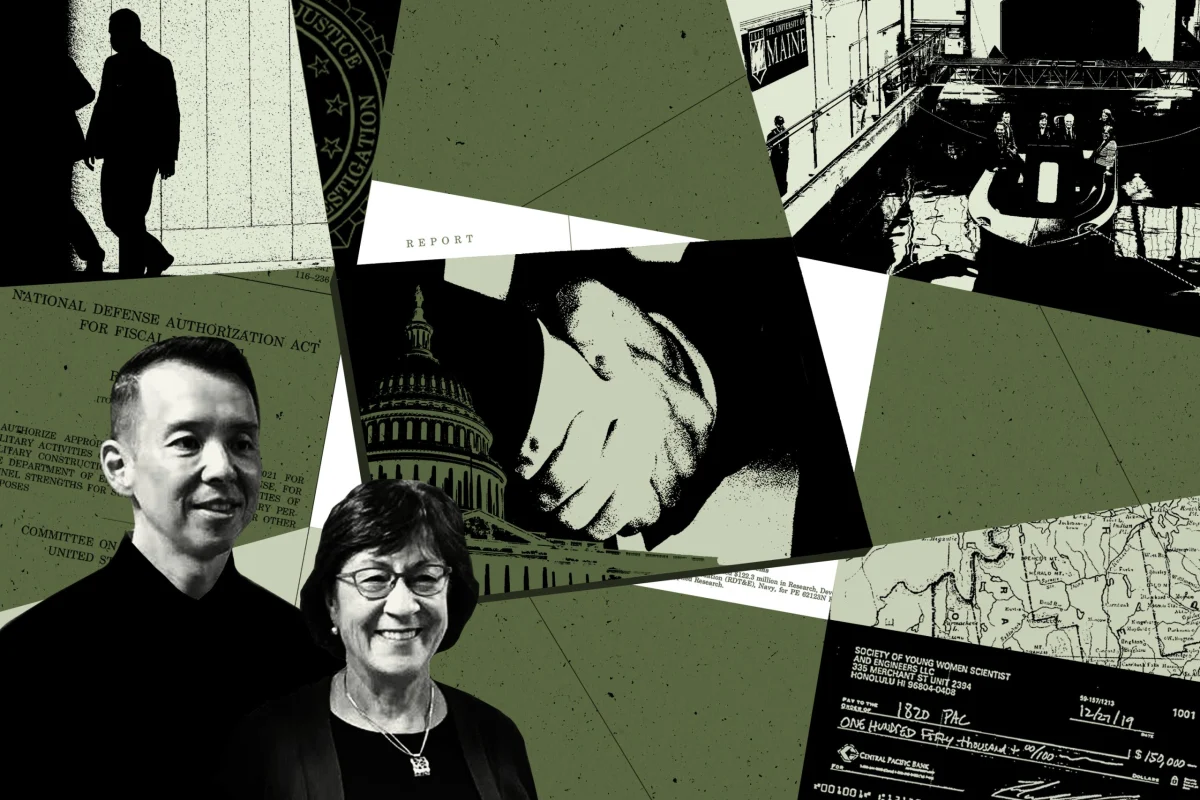
As the scandal over Senator Susan Collins’ relationship with Hawaii defense contractor Navatek became the central issue in her hotly contested Senate campaign in September 2026, she and her top aides mounted a vigorous defense, which has since been met with scrutiny due to a series of incorrect and misleading claims. The controversy stems from a ProPublica investigation published on Tuesday, September 22, 2026, which detailed an FBI probe into the senior Maine senator’s ties to Martin Kao, the former Navatek CEO and a significant campaign donor. Kao, who later pleaded guilty to campaign finance and loan fraud, told law enforcement that he exchanged campaign contributions for government contracts, sparking a federal inquiry that ultimately stalled under the Trump administration.
The ProPublica Investigation: Unveiling a Federal Probe
The ProPublica report painted a detailed picture of federal agents "circling" Senator Collins, her key staff, and a pro-Collins super PAC in recent years. The FBI’s interest revolved around their interactions and financial relationship with Navatek and its former CEO, Martin Kao. The investigation, though in its early stages, was abruptly curtailed in 2025 after President Donald Trump, upon returning to office, reportedly fired or pushed out several federal agents and attorneys involved in high-profile federal corruption cases, including those assigned to the Kao matter. This cessation of the corruption review has raised significant questions about the independence and integrity of federal law enforcement processes, particularly when political figures are involved.
The revelations immediately thrust Senator Collins into a defensive posture, particularly given the tight race for her Senate seat. In numerous media appearances following the ProPublica publication, Collins and her campaign vehemently denied any wrongdoing. However, ProPublica’s subsequent reporting and analysis of FBI documents suggest that several statements made by the senator and her representatives are inconsistent with the documented facts and the timeline of the federal investigation.
Senator Collins’ Defense: A Series of Contradictions
Central to Senator Collins’ defense were two key assertions regarding the federal investigation:
- Collins (Punchbowl News): “In 2021, the Biden Justice Department found there was no wrongdoing by anyone on my campaign staff, my office or me.”
- Collins (WSJ Podcast): “The Biden-led Justice Department and FBI totally cleared my office, my campaign and me five years ago of these seven-year-old allegations.”
These statements imply a definitive closure and exoneration by the Biden administration years ago. While an FBI spokesperson did confirm to ProPublica that the agency had investigated claims against Collins years ago and "ultimately found nothing implicating Senator Collins or Senator Collins’ campaign" from that earlier inquiry, this refers to a distinct, initial investigation that began in 2021. No one in Collins’ orbit was charged as a direct result of that particular earlier investigation.
However, the core of ProPublica’s recent story centers on a separate and more recent investigation, driven by new claims Kao made between 2022 and 2024. Crucially, this later investigation did not conclude under President Joe Biden. Instead, it was shut down in 2025 under the Trump administration, after the aforementioned purge of agents and Department of Justice attorneys assigned to the case. FBI records reviewed by ProPublica explicitly demonstrate that the agency’s interest in the conduct of Collins and her staff persisted right up until this most recent phase of their investigation was terminated by the Trump administration. This timeline directly contradicts Collins’ assertions of a five-year-old clearance by the Biden Justice Department.
A Detailed Chronology of the Investigations
To understand the discrepancies, a clear timeline is essential:
- 2021: The FBI initiates an initial investigation into Martin Kao. An FBI spokesperson later states this early probe found no wrongdoing by Senator Collins or her campaign.
- Late 2021 – Early 2022: Martin Kao is charged and subsequently pleads guilty to multiple counts of campaign finance fraud and loan fraud. These charges stem from his manipulation of political donations and business dealings.
- 2022-2024: Following his guilty plea, Kao begins cooperating with federal authorities, providing new, more extensive claims about exchanging campaign cash for government contracts and detailing his interactions with elected officials, including Senator Collins. These allegations form the basis of the new investigation at the heart of the ProPublica story.
- September 2024: Kao participates in a two-day interview with FBI agents at the U.S. attorney’s office in Honolulu. During this session, he presents a 50-page document containing numerous fresh allegations, significantly deepening the scope of the federal inquiry.
- Early 2025: FBI agents are actively examining Kao’s relationship with Collins, her staffers, and employees of the pro-Collins super PAC. This indicates the investigation was ongoing and highly relevant.
- Mid-2025: President Donald Trump returns to office. A series of dismissals and reassignments within the federal law enforcement community, including those working on the Kao case, leads to the premature shutdown of this ongoing corruption review.
- September 22, 2026: ProPublica publishes its investigative report, bringing the details of the stalled investigation and Kao’s claims to public light.
- September 22-23, 2026: Senator Collins and her team issue statements denying wrongdoing, which ProPublica subsequently challenges based on its review of FBI documents and other evidence.
This chronology clearly distinguishes between the initial 2021 inquiry and the later, more extensive investigation that was cut short in 2025, directly challenging the senator’s narrative of a blanket clearance years prior.
The Credibility Question: Kao’s Claims and FBI Corroboration
Another point of contention arose from statements made by Senator Collins’ Deputy Chief of Staff, Annie Clark:
- Clark (X/Twitter): “The FBI and the Court obviously did not believe Kao.”
- Clark (X/Twitter): “ProPublica took the word of someone who pled guilty to five counts of money laundering, three counts of wire fraud, one count of bank fraud, and making false submissions to the FEC.”
Clark’s statements attempt to discredit Kao entirely by highlighting his criminal past and the fact that the judge in his sentencing offered him no benefit for his cooperation, ultimately sentencing him to 87 months in federal prison. While Kao indeed has significant credibility issues as a convicted felon, ProPublica’s investigation asserts that the FBI did not solely rely on his word.
FBI documents seen by ProPublica explicitly state that agents were able to corroborate some of Kao’s claims. A December 2024 document from the FBI notes, “Pursuant to a Grand Jury Subpoena issued to Navatek, related to the previous investigation, hundreds of thousands of documents were provided to the FBI.” It further states, “Several emails and other documents corroborate Kao’s statements made to the FBI.” Moreover, individuals familiar with the investigation informed ProPublica that FBI agents found Kao to be credible, suggesting that his testimony was not dismissed outright by federal investigators.
ProPublica’s methodology also went far beyond simply "taking Kao at his word." The investigative team reviewed a trove of evidence gathered by the FBI, examined thousands of pages of legal records, and interviewed dozens of individuals familiar with Navatek, its Washington operations, and the FBI inquiry. This extensive independent corroboration forms the backbone of their report.
Unpacking the Super PAC Connection and Email Evidence
A specific example of corroboration involves Scott Reed, the head of the pro-Collins super PAC. Kao claimed that Reed promised to make Senator Collins aware that Kao was the true source behind a substantial, anonymous $150,000 donation to the super PAC, funneled through a shell company.
ProPublica published emails that directly support Kao’s account:
- Emails between Reed and Kao show that Kao explicitly informed Reed of the name of the shell company he was using to anonymize his significant donation.
- An email from an individual working for Reed to a Navatek representative requested Kao’s contact number so that Senator Collins could personally thank him for the donation.
These communications are highly consistent with Kao’s version of events, suggesting a direct link between the donation, Kao, the super PAC, and the senator’s office. When confronted with these details, Steve Abbott, Collins’ campaign manager, stated at a Wednesday press conference, “We have no record of her calling him.” However, he added a caveat that such a phone call would not be unusual, saying, “We routinely thank people for contributions. … We try to thank everybody.” This response, while not directly confirming a call, acknowledges the plausibility of such an interaction.
Scott Reed, when questioned about the $150,000 donation, did not provide detailed answers but stated he didn’t speak to Collins about Kao. He added a dismissive remark, “I understand Martin Kao is now sitting in federal prison,” seemingly echoing the campaign’s strategy of discrediting Kao. However, the email evidence points to a direct communication channel and awareness of Kao’s role in the donation.
Broader Implications and Campaign Impact
The re-emergence of this scandal, particularly with the detailed reporting from ProPublica and the clear discrepancies in the Collins campaign’s responses, casts a significant shadow over Senator Collins’ re-election bid. Maine is known for its independent electorate and a strong tradition of valuing integrity in its public officials. The allegations of a potential quid pro quo, even if indirectly facilitated through a super PAC, resonate deeply with public concerns about money in politics and the influence of special interests.
Legal experts and political watchdog groups have swiftly reacted, with many calling for renewed scrutiny into the shutdown of the federal investigation. The notion that a high-profile corruption probe involving a sitting senator was terminated following a change in presidential administration raises serious questions about the Justice Department’s independence and its ability to pursue cases without political interference. This situation could erode public trust not only in Senator Collins but also in the broader political system and the impartiality of federal law enforcement.
For Senator Collins, a long-serving moderate Republican known for her careful approach and reputation for bipartisanship, this scandal represents a formidable challenge. Her campaign will likely need to move beyond simple denials and provide more transparent and consistent explanations to assuage voter concerns. The implications extend beyond her individual race, potentially influencing national debates on campaign finance reform, the role of super PACs, and the mechanisms designed to prevent and prosecute public corruption. The unfolding events surrounding the Navatek scandal underscore the persistent tension between political fundraising, government contracts, and the critical need for accountability in public service.

 Ana Megawati
 Joko Widodo
 Eva Lovia
 Jia Lissa
 Pevita Pearce