
 Yuyun Lusiyani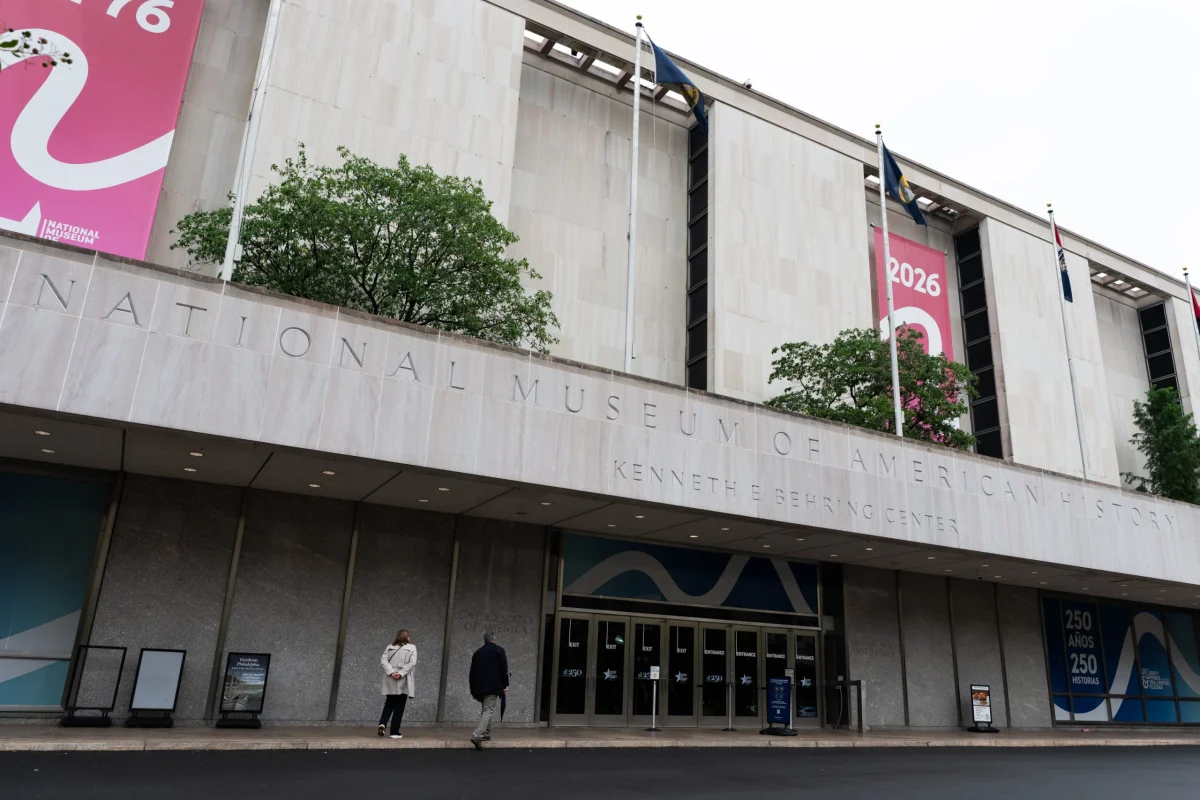
The revered Smithsonian Institution, a global beacon of culture and history, finds itself ensnared in an escalating political maelstrom, culminating in the recent resignation of its distinguished Secretary, Lonnie Bunch. This crisis, ignited by criticisms from the Trump administration regarding perceived "ideological capture" within its museums, particularly the National Museum of American History (NMAH), marks a significant departure from the institution’s long-held bipartisan standing. The controversy underscores a deeper national debate about how America’s complex history should be presented to the public, especially as the nation approaches its 250th anniversary.
A Deepening Crisis: The Spark of Controversy
The current tensions reached a boiling point following the release of a blistering 162-page White House report in July 2026, coinciding with the 250th anniversary of the Declaration of Independence. Titled "Saving America’s Story," the report meticulously lambasted the NMAH, asserting it had succumbed to "extreme political activism" and veered away from "straightforward historical education." This official condemnation followed President Donald Trump’s executive order in March 2025, which declared the Smithsonian had been overtaken by "divisive, race-centered ideology."

At the heart of the White House’s critique was the NMAH’s November 2021 exhibit, "The Electric Dr. Franklin." While celebrating Benjamin Franklin’s pioneering contributions to electrical science, the exhibit also candidly addressed his ownership of enslaved people, stating, "Benjamin Franklin’s remarkable scientific accomplishments were, in part, enabled by slavery." More controversially, it speculated that Franklin "may have used enslaved people in his electrical research," noting that while he recorded using family and friends for experiments, "indentured servants and enslaved people in his household could also have been used, although we may never know for certain." This conjecture—that a revered Founding Father might have subjected enslaved individuals to potentially painful electrical shocks—proved to be an "eye-catching" detail seized upon by critics.
Beyond the Franklin exhibit, the White House report cited other NMAH displays as evidence of its "ideological capture." These included the "Girlhood (It’s Complicated)" exhibit, which featured a 6-year-old girl’s diary entry expressing fear about "getting boobs" and wishing for a "nonexistent penis." Another exhibit on gay history drew fire for including a "chrome and rubber crotch harness designed for sadomasochism." The report also highlighted the museum’s use of a "Museums as a Site for Social Action Toolkit," a staff training document linking museums to "white supremacy, hetero-patriarchy, abuse of labor, colonization, imperialist theft of art and artifacts, destruction or absencing of alternative ways of interpreting or representing art and artifacts, structural racism and other oppressions." These examples, the administration argued, illustrated a museum mission skewed towards identity politics and away from a unifying national narrative.
Chronology of Escalation: From Academic Debate to Political Firestorm
The Smithsonian, a sprawling complex of 21 museums, nine research centers, and a zoo, drawing approximately 15 million visitors annually and boasting a collection of over 157 million artifacts, has historically maintained a unique position above partisan disputes. While not entirely immune to controversy—the 1995 uproar over the National Air and Space Museum’s planned "Enola Gay" exhibit stands as a notable exception—the institution largely retained bipartisan support as a steward of American heritage. However, the events of the past few years have shattered this "institutional exceptionalism."

- 1964: The National Museum of History and Technology opens on the National Mall, grappling from its inception with a dual mission: showcasing technological advances and telling a broader historical narrative.
- 1980: The museum is renamed the National Museum of American History (NMAH), but the internal tension over its core identity and narrative strategy persists.
- 1999: Journalist David Brooks publishes a scathing critique in the Weekly Standard, accusing the museum of becoming a "museum of multicultural grievance" that neglected major historical events and figures in favor of focusing on "the oppression of some ethnic outgroup or disfavored gender."
- 2001-2002: In response to growing criticism, the Smithsonian convenes a blue-ribbon commission, which in 2002 recommends a "transformation" for the NMAH, advocating for a chronological introductory exhibit that would "celebrate America’s remarkable strengths and achievements while also treating fairly and responsibly the ways in which America may have failed to meet the high standards it has proclaimed for itself."
- Post-2002: The NMAH struggles to implement a unifying chronological narrative. Curators, often specialized in material culture, resist a "great-man-of-history" approach, favoring more episodic or subject-area exhibits. Efforts to enlist leading academic historians to craft an overarching narrative prove unsuccessful, with historians concerned about appearing triumphalist or supporting an "America-first agenda." The museum ultimately adopts a thematic approach, dividing the national story into standing exhibits like "American Enterprise," "American Democracy," and "Many Voices, One Nation."
- March 2020: The Smithsonian closes its museums due to the COVID-19 pandemic.
- Summer 2020: Following the murder of George Floyd and nationwide protests, the Smithsonian, under Secretary Lonnie Bunch (the first African American to lead the institution, appointed in 2019), embarks on a significant push to re-evaluate its priorities through the lens of diversity, equity, access, and inclusion (DEAI). Bunch launches "Smithsonian Cares" and discusses creating a Chief Diversity Officer position and standardizing DEAI training.
- October 2021: The Smithsonian’s Office of Government Relations reports bringing objects to the White House for a temporary display recognizing LGBTQ+ Pride Month, signaling close collaboration with the Biden administration on DEAI initiatives. The National Portrait Gallery revises signage for historical figures like Henry Laurens to reflect their involvement in chattel slavery, exemplifying the institution’s commitment to a more candid historical narrative.
- November 2021: The "The Electric Dr. Franklin" exhibit opens at the NMAH, including the controversial speculation about Franklin’s use of enslaved people in experiments.
- 2023-2024: Republican Congressman Garret Graves, serving on the Smithsonian Board of Regents, expresses growing concern that the institution is operating within an ideological "bubble," becoming overly partisan and neglecting a celebratory view of American achievements. He warns against politicizing the Smithsonian.
- Late 2024: Donald Trump wins the presidential election, signaling a potential shift in federal oversight.
- March 2025: President Trump signs an executive order instructing Vice President J.D. Vance to purge the Smithsonian of "improper ideology" and "divisive, race-centered ideology."
- May 2025: Trump announces his intention to fire Kim Sajet, director of the National Portrait Gallery, for being "a highly partisan person, and a strong supporter of DEI." Sajet resigns to shield the institution, despite Trump lacking the direct authority to remove her.
- August 2025: The White House issues a 120-day ultimatum to replace "divisive or ideologically driven language with unifying, historically accurate and constructive descriptions" in Smithsonian exhibits.
- July 4, 2026: The White House releases its 162-page report, "Saving America’s Story," specifically targeting the NMAH and its director, Anthea Hartig, with an exhaustive list of criticisms.
- Late July 2026: Two House committees, the House Oversight Subcommittee on Delivering on Government Efficiency and the House Administration Committee, hold back-to-back hearings. Republican members vehemently lambast NMAH Director Anthea Hartig, questioning exhibit items like the "crotch harness" and the 6-year-old girl’s diary entry. Rep. Tim Burchett (R-TN) displays images of controversial exhibits, while Rep. Nancy Mace (R-SC) asks if "images of sexual fetishes are appropriate for children." Rep. Brandon Gill (R-TX) criticizes the staff training toolkit for labeling "politeness" as a feature of "white supremacy culture." Democratic members, including Rep. Jasmine Crockett (D-TX) and Rep. Kweisi Mfume (D-MD), fiercely defend the Smithsonian, with Mfume vowing to "sacrifice his life" to protect the museum. That same week, Trump signs an executive order directing the Department of the Interior to erect signs outside the museum "warning visitors about the ideological capture."
- Late August 2026: Interior Secretary Doug Burgum sends a letter to the Smithsonian’s Board of Regents, declaring that other federal agencies "cannot in good conscience continue to support the Smithsonian under current leadership."
- September 8, 2026: Smithsonian Secretary Lonnie Bunch announces his resignation at age 73, citing the "stressful" environment.
The Smithsonian’s Unique Structure and Funding Vulnerability
The Smithsonian Institution operates with a unique governance structure, designed to maintain its independence. It is governed by a 17-member Board of Regents, chaired by the Chief Justice of the Supreme Court, and includes the Vice President, six members of Congress (three from each party), and nine private citizens. This design aims to buffer the institution from direct executive branch interference.
However, this independence is significantly tempered by its financial reliance on the federal government. The Smithsonian receives over $1 billion annually, accounting for approximately 62% of its total funding. This substantial federal allocation makes the institution highly susceptible to political pressure, especially in an era of intense partisan division. Warnings of deep budget cuts, voiced by administration officials and some congressional Republicans, loom large, posing a direct threat to the Smithsonian’s operations, research, and future projects, including the planned National Museum of the American Latino.
The resignation of Secretary Lonnie Bunch, a highly respected figure lauded for his leadership in establishing the National Museum of African American History & Culture, underscores the immense pressure facing the institution. His departure at a critical juncture leaves a leadership vacuum and intensifies the uncertainty surrounding the Smithsonian’s future direction.

The Evolving Narrative of American History
The core of the conflict revolves around differing philosophies on how to interpret and present American history. For decades, the NMAH has grappled with defining its "unifying national narrative." Early critiques, like David Brooks’ in 1999, lamented a perceived shift away from celebrating "defining moments" and "prominent figures" towards a "multicultural grievance" approach. The 2002 blue-ribbon commission echoed calls for a more coherent and balanced narrative that would "celebrate America’s remarkable strengths and achievements" while also addressing its failures.
However, museum professionals and many academic historians have moved away from a purely triumphalist or "great-man-of-history" approach, favoring more nuanced, inclusive, and critical interpretations. This shift seeks to incorporate the experiences of marginalized groups, acknowledge historical injustices, and present a more complex, multi-faceted understanding of the past. The post-2020 emphasis on Diversity, Equity, Access, and Inclusion (DEAI) within the Smithsonian reflected this broader trend in academia and progressive cultural institutions. As Kim Sajet, former director of the National Portrait Gallery, explained, the murder of George Floyd prompted a collective institutional introspection: "What are the stories that we’re telling and were we being honest and fair in recounting those stories? We all looked at it through this lens."
Critics, however, view this as an ideological deviation. Former Congressman Garret Graves articulated this perspective, emphasizing America’s "remarkable experiment" and calling for a celebration of its "net victory for the world," while acknowledging "grave sins." The White House report explicitly called for a "basic consensus view that is not ideological or politicized, but presents the facts of history… as accurately as possible with minimal present-day bias." It advocates for telling the "whole story… including the good and the bad," but within a framework that avoids what it perceives as overly critical or divisive narratives.

Broader Implications and the Road Ahead
The battle over the Smithsonian is more than just a dispute over museum exhibits; it is a microcosm of the wider culture wars gripping the United States. It raises fundamental questions about who controls historical narratives, the role of federal institutions in shaping national identity, and the balance between academic freedom and political accountability.
The Trump administration’s aggressive posture—including executive orders, a detailed report, public lambasting of museum directors, and threats of funding cuts—represents an unprecedented level of political intervention into the affairs of the Smithsonian. This approach has drawn parallels from some historians, like Yale’s David Blight, to historical attempts by authoritarian regimes to control cultural institutions.
The immediate implications are profound. The Smithsonian’s ability to operate autonomously and pursue its scholarly mission is imperiled. The departure of Secretary Bunch signals a potential chilling effect on leadership and curatorial decisions, as future leaders may shy away from engaging with sensitive or complex historical topics to avoid political backlash. The institution’s reputation as a neutral arbiter of history, a "trusted source for critical conversations," is under threat, potentially alienating visitors who perceive it as politicized.

Looking ahead, the composition of the Board of Regents will be crucial. With several citizen slots vacant or soon to be, and Vice President J.D. Vance actively involved, the board’s future appointments will heavily influence the selection of Bunch’s successor and the institution’s strategic direction. Chief Justice John Roberts, as chair, faces the challenge of navigating these turbulent waters while upholding the Smithsonian’s integrity.
As the nation approaches its 250th anniversary, the question of how America’s premier history museum will tell the nation’s story remains "up for grabs." The current conflict forces the American people to confront a vital choice: whether to embrace a complex, evolving understanding of their history, including its triumphs and its injustices, or to demand a more curated, unifying narrative, potentially at the cost of academic freedom and historical completeness. As former Portrait Gallery director Kim Sajet muses, "There will be a moment when the American people will have to stand up and decide, is this what they want?" The outcome of this battle will undoubtedly shape not only the future of the Smithsonian but also the broader discourse around American identity for generations to come.




 Ana Megawati
 Joko Widodo
 Eva Lovia
 Jia Lissa
 Pevita Pearce