
 Yuyun Lusiyani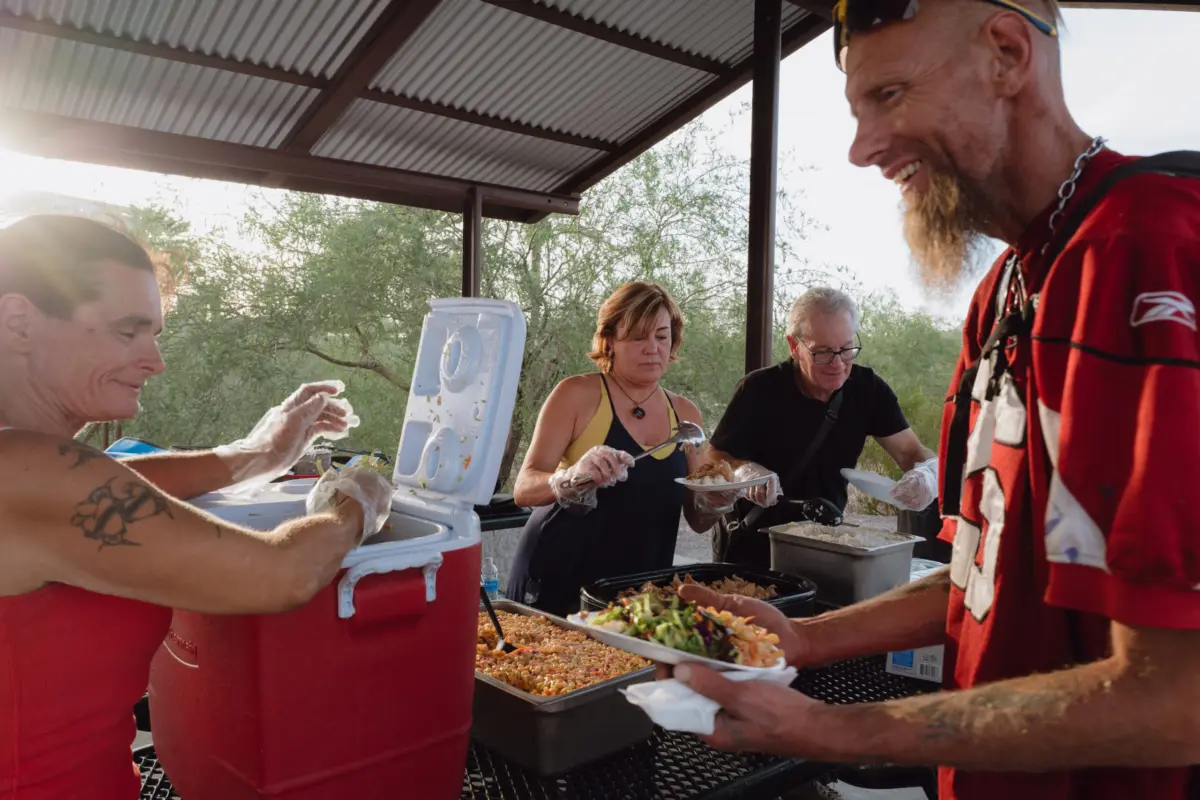
For over a year, Austin Davis’s phone has served as an unexpected, round-the-clock lifeline for hundreds of desperate families across the sprawling Phoenix metropolitan area, a stark symbol of a systemic failure to address family homelessness in Maricopa County. The 26-year-old poet and advocate has inadvertently become the de facto emergency hotline, fielding pleas from parents living in cars, storage units, or on the streets, all after exhausting official channels that promise help but deliver months-long waits. His journey from passionate activist to the last resort for vulnerable families underscores a critical breakdown in the region’s social safety net, as detailed in a recent investigation by ProPublica.
The Unofficial Hotline: A Portrait of Desperation
Davis’s inbox is a harrowing testament to the human cost of housing insecurity. A school employee, unable to find shelter space for a homeless family, inquired if Davis could cover a hotel room. A mother of five, making a storage unit her family’s precarious home, was directed to Davis by a homeless services organization. Another mother, panhandling with her six children, received his number from sympathetic passersby, texting him, “I feel like the worst mother in the world.” These are not isolated incidents but a daily deluge, revealing a profound inadequacy within Maricopa County’s established support systems.
Nearly every individual reaching out to Davis reports the same frustrating journey: they first contacted 211, the statewide information and referral service, only to be met with the grim reality that shelter or housing placement could be months away. This bureaucratic impasse effectively funnels the most vulnerable directly to Davis, whose personal phone has become an emergency shelter switchboard. The irony is palpable; even caseworkers, teachers, social workers, police, and hospital staff – professionals embedded within the very systems designed to help – are now referring families to Davis. In a striking indictment of the official infrastructure, even personnel from 211 and the Family Housing Hub, the primary entry point for homeless families, have redirected people to his grassroots operation. This situation highlights not just a gap, but a chasm, between the stated purpose of these agencies and their practical ability to provide immediate assistance.
Maricopa County’s Growing Crisis

The statistics paint a grim picture of escalating need. Maricopa County, home to nearly 5 million people, recorded 2,103 individuals in homeless families this year, the highest figure since 2015. These numbers, compiled locally and reported to the federal government through the annual Point-in-Time (PIT) count, are widely acknowledged to be an undercount. The PIT count, conducted on a single night by volunteers, often misses families who are intentionally trying to remain out of sight – sleeping in cars, motels, or doubling up with others – to protect their children and avoid stigma. The true scope of family homelessness is therefore likely far greater, a hidden crisis unfolding beneath the surface of official data.
As of late September, close to 200 families were on the waitlist for shelter in the county. This figure itself is incomplete, excluding those unable to even get on the list due to stringent eligibility criteria, those who were deemed "not homeless enough" despite lacking stable housing, or those who, after a frustrating initial call to 211, simply gave up. The eligibility criteria for placement on the shelter waitlist are set by the Family Housing Hub, which is operated by UMOM, a major local nonprofit. Solari, the nonprofit managing the statewide 211 line, defers to UMOM on these critical guidelines, creating a complex web of responsibility that often leaves families entangled and without aid.
The surge in family homelessness is not an isolated phenomenon but reflects broader economic pressures exacerbated by recent global events. The Phoenix metropolitan area has experienced significant population growth, leading to soaring housing costs, with rents and home prices outpacing wage growth. Inflation has further eroded the purchasing power of low-income families, making it increasingly difficult to afford basic necessities, let alone stable housing. Many families finding themselves homeless have recently faced eviction, lost jobs, or fled domestic violence, underscoring the multifaceted nature of the crisis. These factors collectively contribute to a strained housing market where a single unexpected expense or life event can push a family from stability into destitution, highlighting the fragility of many households’ financial situations.
The System’s Stumbling Blocks: A Bureaucratic Maze
The formal mechanism for addressing homelessness in many communities, including Maricopa County, is typically a "Coordinated Entry System." This system, often accessed through a central number like 211, is designed to streamline access to housing and services, assess needs, and prioritize individuals based on vulnerability. However, in practice, as demonstrated by ProPublica’s findings, the system in Maricopa County is failing. The promise of coordinated entry is often replaced by long waitlists, repeated interviews, and a lack of immediate options, particularly for families.
Candice Ortiz’s ordeal vividly illustrates these systemic failures. For months, she tirelessly sought stable shelter and housing, the persistent uncertainty taking a severe toll on her 8-year-old son, who was hospitalized for heat exhaustion and missed crucial school days. Ortiz recounted calling 211 repeatedly, forced to answer the same invasive questions about her living situation, only to receive generic information readily available online. Her desperate pleas for shelter were met with bureaucratic semantics: a Family Housing Hub worker reportedly told her that since she and her children were sleeping in their car, they were not technically "homeless" by their criteria. Another informed her the waitlist was simply full.

In June, seeking refuge from Phoenix’s scorching 117-degree heat, Ortiz visited a cooling center. A representative directed her to UMOM, which operates an emergency shelter for families. She spent her last $20 on a rideshare, only to be told upon arrival that she wasn’t "in the system" and no space was available. UMOM, citing client privacy, declined to comment on individual cases, but Ortiz’s experience is indicative of a broader pattern of families being bounced between agencies without tangible help. Even when a glimmer of hope appeared in late August, when the Phoenix Rescue Mission, a nonprofit offering programs for homeless individuals, showed her an apartment, it was quickly extinguished. A worker later informed her that funding for the unit had run out, as evidenced by text messages reviewed by ProPublica. Phoenix Rescue Mission did not respond to requests for comment, leaving Ortiz and her children once again without a stable home.
Advocacy on the Front Lines: Austin Davis’s Battle
In the face of these systemic shortcomings, Austin Davis, through his small nonprofit AZ Hugs, has become a relentless, albeit controversial, force. Working distinctly "outside the system," Davis and his volunteers organize nightly meal distributions for homeless individuals at a suburban Phoenix park. This direct action, while providing essential sustenance, has frequently drawn the ire of local authorities. The City of Tempe has issued Davis 35 citations for trespassing and holding picnics without permits. In 2024, he accepted a plea deal, pleading guilty to one permit violation, leading to the dismissal of other charges, but not before spending three nights in jail.
His commitment to direct aid led to further legal action. In 2025, Davis, alongside two other homeless advocates, filed a lawsuit against Tempe, alleging violations of their free speech rights through these citations for feeding people in parks. The lawsuit prompted the city to revise its permit ordinance, and Davis subsequently withdrew his legal challenge. These confrontations underscore Davis’s conviction that direct, immediate aid cannot wait for bureaucratic approval, even if it means challenging local ordinances.
In recent months, Davis has intensified his efforts to highlight what he terms the "family homelessness crisis." He leverages social media platforms to raise money, often thousands of dollars in a single night, to pay for hotel rooms for families, many with young children, who would otherwise be forced to sleep in their cars or on the streets. He openly admits he cannot help everyone, emphasizing that a much larger, coordinated effort involving established nonprofits, local governments, and state officials is desperately needed. However, he sees little evidence of such a unified response materializing.
Seeking Official Intervention: The Petition to Governor Hobbs

Recognizing the limitations of individual action, Davis attempted to galvanize a broader official response in early April by launching an online petition. The petition, addressed to Arizona Governor Katie Hobbs, a Democrat, implored her to declare a state of emergency to address family homelessness. With over 5,000 signatures, it became a significant public appeal.
In June, a volunteer from AZ Hugs attended a fundraiser for Governor Hobbs, who is campaigning for re-election, to hand-deliver a letter detailing the petition’s demands. The letter articulated the potential benefits of such an emergency declaration, suggesting it could unlock critical funding for emergency shelter and streamline access to the overburdened Family Housing Hub. The appeal was deeply personal and urgent: "I implore you to consider the children who endure extreme heat without safe shelter," the letter stated, highlighting the deadly Arizona summers. "No parent should be told to wait months for assistance while temperatures reach life-threatening levels." This direct outreach underscored the desperation felt by advocates and families alike, pushing for an executive response to an escalating humanitarian crisis.
Official Responses and Resource Allocation
Despite the passionate appeals, Austin Davis has reported no direct engagement from the Governor’s office or from leaders of larger nonprofit organizations to collaborate on a broader solution. He expresses profound frustration at their silence, viewing it as a "disservice" to families in crisis and a missed opportunity for collective action. The only communication he receives from official channels, he notes, continues to be requests from caseworkers hoping he can provide shelter for families they themselves cannot assist.
Governor Hobbs’s press secretary, Liliana Soto, responded to inquiries, stating that emergency declarations are typically reserved for natural disasters and might not be an appropriate mechanism for addressing homelessness. While acknowledging the gravity of the situation, Soto affirmed that the Governor is "deeply aware" of these challenges. Since assuming office in 2023, Governor Hobbs has overseen the allocation of at least $245 million statewide towards initiatives such as eviction prevention, affordable housing development, emergency shelter, and rapid rehousing programs. Soto emphasized the Governor’s belief that "no family, especially families with infants or young children, should be left without a safe place to go during the summer heat."
While the allocation of significant funds is a positive step, the effectiveness of these programs in directly alleviating the immediate crisis of family homelessness, particularly the lack of emergency shelter, remains a point of contention for advocates like Davis. The distinction between long-term housing solutions and urgent, short-term shelter can be crucial when families are literally on the streets. The official responses, while acknowledging the problem and detailing financial commitments, do not seem to directly address the immediate, critical gap in emergency shelter capacity that Davis and the families he serves encounter daily. This disconnect highlights the challenges of translating large-scale policy and funding into timely, on-the-ground relief for those in dire need.

The Human Cost: Impact on Children
The most devastating consequence of this crisis falls squarely on children. Research unequivocally demonstrates that homelessness inflicts severe and lasting harm on a child’s development. The constant instability, exposure to unsafe environments, lack of consistent nutrition, and chronic stress disrupt brain development and growth. This can lead to permanent changes in the brain and body, impacting cognitive abilities, emotional regulation, and physical health. Children experiencing homelessness are more likely to suffer from anxiety, depression, developmental delays, and behavioral problems.
Furthermore, their education is severely disrupted. Frequent school changes, lack of a stable place to study, and the trauma of their situation often lead to academic setbacks, increased absenteeism, and higher dropout rates. For children like Candice Ortiz’s 8-year-old son, who faced hospitalization for heat exhaustion and missed school, the immediate physical dangers combine with long-term educational and psychological damage. Parents interviewed expressed profound anguish over their children’s suffering, acutely aware of the detrimental impact of their precarious living conditions. The cycle of poverty and homelessness is often perpetuated across generations, making timely intervention not just a matter of immediate relief but an investment in future societal well-being.
Temporary Relief, Enduring Challenges
In September, Austin Davis’s AZ Hugs managed to secure a significant, albeit temporary, solution: an overnight shelter at the First United Methodist Church of Mesa. This facility offers space for at least six families, providing a crucial respite from the elements and the streets. On a recent evening, families arrived with vehicles laden with their entire lives. Inside a large, air-conditioned room, volunteers had meticulously set up canopy tents, complete with cots, pillows, and blankets. A warm dinner of chicken penne pasta offered a moment of normalcy. A mother and her two children showered before retreating into their tent, zipping it closed against the outside world. Gradually, the room settled into a quiet hum as other families, some with toddlers, found their temporary sanctuary.
Yet, this vital haven comes with a caveat: families must vacate by 6 a.m. This daily displacement underscores the stopgap nature of the solution. While providing a critical night’s rest, it offers no long-term stability or pathway out of homelessness. Davis himself acknowledges that these efforts are merely a "Band-Aid on a much bigger problem." He continues his nightly social media pleas, raising thousands of dollars at all hours to fund hotel stays, reflecting a relentless personal commitment that cannot realistically substitute for comprehensive public policy and institutional support.

Looking Ahead: A Call for Coordinated Action
The situation in Maricopa County reveals a profound societal challenge where individual compassion is filling gaps left by overburdened or inadequate official systems. Austin Davis’s story is a powerful narrative of grassroots activism, but it also serves as a critical alarm bell. The increasing number of homeless families, the ineffectiveness of official referral systems, and the dire consequences for children demand an urgent, multi-pronged approach.
This crisis calls for enhanced collaboration and accountability from all stakeholders: government agencies, large nonprofits, and community organizations. There is a pressing need for increased funding directed specifically towards immediate emergency shelter for families, alongside robust prevention programs and expedited pathways to stable housing. A critical review of eligibility criteria for shelter waitlists and an overhaul of the Coordinated Entry System to ensure efficiency and accessibility are paramount.
The current reliance on individuals like Austin Davis, while heroic, is unsustainable and indicative of a system under severe strain. Maricopa County, and indeed Arizona as a whole, must move beyond temporary fixes and fragmented efforts to build a truly resilient and compassionate safety net that ensures no family, especially those with young children, is left to face the devastating realities of homelessness alone. The challenge is immense, but the moral imperative to protect the most vulnerable members of society could not be clearer.

 Ana Megawati
 Joko Widodo
 Eva Lovia
 Jia Lissa
 Pevita Pearce