
 Yuyun Lusiyani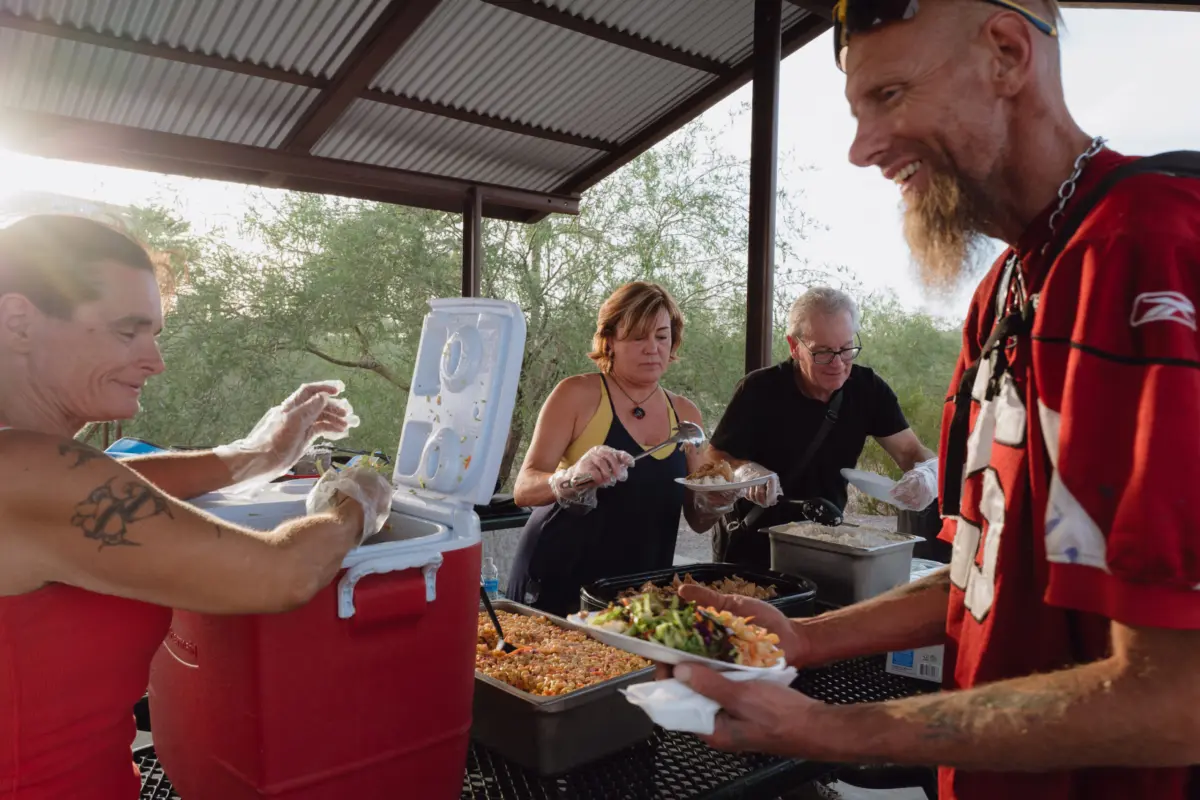
For nearly a year, the personal phone of Austin Davis, a 26-year-old poet and fervent advocate for homeless individuals, has transformed into an urgent, unofficial hotline, inundated with hundreds of desperate pleas for assistance from across the sprawling Phoenix metropolitan area. These calls and texts paint a stark picture of a critical humanitarian failing, revealing a systemic breakdown in official support channels designed to aid vulnerable families. The narratives are heartbreakingly consistent: a school employee seeking shelter for a homeless family, a mother of five living in a storage unit, or a mother panhandling with six children, all directed to Davis after exhausting the formal avenues of help. "I feel like the worst mother in the world," one such message conveyed to him, encapsulating the profound despair many experience.
The System’s Failure: A Crisis of Access and Capacity
The overwhelming majority of those reaching out to Davis report a similar experience: they first contacted 211, the official statewide information and referral service, only to be met with the grim reality of months-long waiting lists for shelter or housing placement. This bureaucratic bottleneck forces families into precarious situations, often leaving them to sleep in cars, on the streets, or in unsafe makeshift accommodations. The investigative journalism by ProPublica corroborated these findings, highlighting that inquiries through official channels, including 211 and the Family Housing Hub, seldom result in immediate or tangible assistance, fostering a pervasive sense of hopelessness among those most in need.

The gravity of this situation is underscored by the diversity of individuals who now rely on Davis. Caseworkers, teachers, social workers, police officers, and even hospital staff, all professionals ostensibly equipped to navigate social services, have resorted to contacting Davis, recognizing his unique ability to provide immediate, albeit temporary, relief. Disturbingly, even personnel from the official channels themselves – 211 and the Family Housing Hub – have been observed referring families to Davis, tacitly acknowledging the inadequacy of their own systems. This phenomenon transforms Davis from a passionate individual advocate into a de facto emergency response network, filling a void that established governmental and non-profit organizations are struggling, or failing, to address.
Austin Davis: A Grassroots Movement Against Bureaucracy
Davis’s journey to becoming this advocate of last resort is deeply rooted in his personal commitment to direct action. He operates his small non-profit, AZ Hugs, outside traditional bureaucratic frameworks, focusing on immediate, tangible aid. One of AZ Hugs’ primary initiatives is hosting nightly meal distributions for homeless individuals at "The Hill," a park in suburban Phoenix. While vital, these efforts have not been without conflict. Tempe city officials have cited Davis 35 times for offenses such as trespassing and holding picnics without permits, leading to a legal battle that saw him spend three nights in jail in 2024. In 2025, Davis, alongside other advocates, filed a lawsuit against Tempe, arguing that the citations infringed upon their free speech rights to feed people in public parks. This legal challenge ultimately led the city to revise its permit ordinance, and Davis subsequently withdrew his lawsuit, marking a partial victory for grassroots advocacy.
Beyond direct food aid, Davis has intensely focused on what he terms the "family homelessness crisis." Through relentless fundraising on social media platforms, he gathers money to pay for hotel rooms, offering a crucial respite for families, many with young children, who would otherwise face the perils of sleeping outdoors or in vehicles, especially amidst Arizona’s extreme temperatures. He candidly admits that he cannot assist everyone, emphasizing the urgent need for a far broader, collaborative effort involving local and state officials, as well as established non-profits. However, he observes a disheartening lack of evidence that such a comprehensive response is materializing.

The Escalating Crisis in Maricopa County
The plight of homeless families in Maricopa County is not merely anecdotal; it is a documented, escalating crisis. The latest figures compiled locally and reported to the federal government indicate that the number of people in homeless families reached 2,103 this year, marking its highest level since 2015. This figure, however, is widely considered an undercount. The Point-in-Time (PIT) count, typically conducted on a single night by volunteers, often misses individuals and families who deliberately try to remain out of sight due to fear, shame, or a desire to protect their children. The true scope of family homelessness is therefore likely far greater, representing a hidden population struggling silently.
As of late September, nearly 200 families were trapped on a county-wide waitlist for shelter, a number that excludes countless others who either couldn’t get onto the list, were deemed ineligible (such as those sleeping in cars who were told they were "not actually homeless"), or became disillusioned after unhelpful interactions with 211 and never called back. Solari, the non-profit operating the statewide 211 line, clarified that eligibility criteria for shelter waitlist placement are set by the Family Housing Hub, which is managed by UMOM New Day Centers, a prominent local non-profit. This organizational structure, while designed to streamline services, appears to inadvertently create barriers for the most vulnerable.
The Devastating Impact on Children

The human cost of this crisis is particularly acute for children. The reporter interviewed over 30 families, all expressing profound anxieties about the toll their unstable living situations were taking on their children. Extensive research consistently demonstrates that homelessness inflicts severe and lasting harm on children, disrupting crucial brain development and growth. The trauma, stress, and instability associated with homelessness can lead to permanent changes in the brain and body, affecting cognitive function, emotional regulation, and physical health. Children experiencing homelessness are at a higher risk for developmental delays, academic struggles, and chronic health conditions. They also face increased exposure to violence, exploitation, and psychological distress, including higher rates of anxiety, depression, and post-traumatic stress disorder (PTSD). The lack of a stable home environment also severely impacts their educational attainment, social development, and overall well-being, perpetuating cycles of poverty and disadvantage.
Candice Ortiz’s harrowing experience exemplifies these devastating effects. For months, she tirelessly sought stable shelter and housing, witnessing firsthand the deterioration of her 8-year-old son’s health and education. After spending a day exposed to Phoenix’s scorching heat, he was hospitalized for heat exhaustion, and his school attendance suffered significantly. Ortiz’s attempts to navigate the official system were met with repeated frustration. She recounted calling 211 numerous times, answering the same invasive questions, only to receive generic information readily available online. A worker at the Family Housing Hub even told her that sleeping in her car with her children did not qualify her as "actually homeless," an egregious misinterpretation of the lived reality of homelessness. Another worker informed her the waitlist was simply "full."
In June, seeking refuge from the extreme heat at a Phoenix cooling center, Ortiz was advised to go to UMOM, which operates an emergency shelter for families. She spent her last $20 on a rideshare to the facility, only to be told she wasn’t "in the system" and that no space was available. UMOM, citing client privacy, declined to comment on individual family cases. Later, in late August, Ortiz connected with the Phoenix Rescue Mission, another non-profit offering programs for homeless individuals. She was shown an apartment, offering a fleeting glimmer of hope, only for a mission worker to inform her shortly thereafter that funding had run out, as evidenced by text messages reviewed by ProPublica. The Phoenix Rescue Mission did not respond to requests for comment regarding this incident.
Official Responses and the Limitations of Current Efforts

UMOM, a significant recipient of government funding, received over $7 million in government grants during the last fiscal year. In response to the summer’s extreme heat, which saw temperatures soar to 117 degrees, UMOM allocated 23 shelter units and approximately a dozen tents for families. This initiative, part of the city of Phoenix’s broader heat relief efforts, reportedly assisted nearly 300 households. However, this program, while critical, was designed as a temporary measure and is now winding down, leaving a critical gap as the need for shelter persists year-round.
Recognizing the urgent need for a more comprehensive and sustainable response, Austin Davis initiated an online petition in early April, urging Arizona Governor Katie Hobbs, a Democrat, to declare a state of emergency on family homelessness. The petition garnered over 5,000 signatures, reflecting widespread public concern. In June, a volunteer from AZ Hugs attended a fundraiser for Governor Hobbs, who is seeking re-election, to personally deliver a letter detailing the petition’s demands. The letter specifically called for an emergency declaration to unlock crucial funding for immediate emergency shelter and advocated for streamlining access to the Family Housing Hub. "I implore you to consider the children who endure extreme heat without safe shelter," the letter passionately stated. "No parent should be told to wait months for assistance while temperatures reach life-threatening levels."
However, the Governor’s office provided a cautious response. Liliana Soto, Governor Hobbs’ press secretary, stated that emergency declarations are typically reserved for natural disasters, suggesting that such a declaration might not be the appropriate mechanism for addressing homelessness. Soto affirmed that the Governor is "deeply aware" of the challenges, noting that since taking office in 2023, Hobbs has allocated at least $245 million statewide towards initiatives such as eviction prevention, affordable housing, emergency shelter, and rapid rehousing for individuals experiencing housing insecurity. "The governor believes no family, especially families with infants or young children, should be left without a safe place to go during the summer heat," Soto’s statement concluded.
Despite these assurances and allocations, Davis expresses profound frustration. He reports receiving no communication from the Governor’s office or from other prominent non-profit leaders regarding a collaborative effort. Instead, the calls continue to come from caseworkers hoping he can provide solutions. He views the silence from other organizations as "frustrating" and a "disservice" to families in crisis, arguing that a more unified and visible acknowledgment of the problem is essential.

A Band-Aid on a Gaping Wound: The Future of Family Shelter
In response to the relentless demand and the systemic gaps, Davis’s organization, AZ Hugs, initiated an overnight shelter program in September at the First United Methodist Church of Mesa. This vital, albeit limited, facility offers space for at least six families, providing a secure, air-conditioned environment for a night’s rest. On a recent evening, families arrived with vehicles packed with their meager belongings. Inside a large room, volunteers had set up canopy tents equipped with cots, pillows, and blankets, and offered a warm dinner of chicken penne pasta. A mother and her two children quietly showered before zipping themselves into their tent. Gradually, other families, some with toddlers, settled in, and the room grew silent, offering a temporary reprieve from the harsh realities of their lives. Yet, the temporary nature of this relief is stark: families must vacate the premises by 6 a.m. the following morning, returning to the uncertainty of their search for permanent shelter.
Davis himself acknowledges that this crucial initiative, like his hotel room funding, is merely a "Band-Aid" on a much larger, systemic problem. The reliance on individual advocates and small, grassroots efforts to address a crisis of this magnitude raises critical questions about the effectiveness and accountability of the established social safety net. The ethical implications of official agencies directing desperate families to a private individual highlight a profound failure in public service delivery.
The ongoing surge in family homelessness in Maricopa County points to a complex interplay of factors, including rising housing costs, economic instability, and insufficient support systems for those fleeing domestic violence or facing job loss. Addressing this crisis requires not only increased funding but also a fundamental re-evaluation of current policies and bureaucratic processes. Streamlining access to services, expanding shelter capacity with dignity and long-term solutions, and implementing preventative measures to stem the tide of new homeless families are paramount. Without a concerted, collaborative effort from all stakeholders – government, large non-profits, and the community – the unofficial lifeline provided by individuals like Austin Davis, while heroic, will remain a testament to a system in profound disarray, leaving countless families vulnerable and children suffering the irreversible consequences of instability and neglect. The imperative for comprehensive and compassionate solutions has never been more urgent.

 Ana Megawati
 Joko Widodo
 Eva Lovia
 Jia Lissa
 Pevita Pearce