
 Yuyun Lusiyani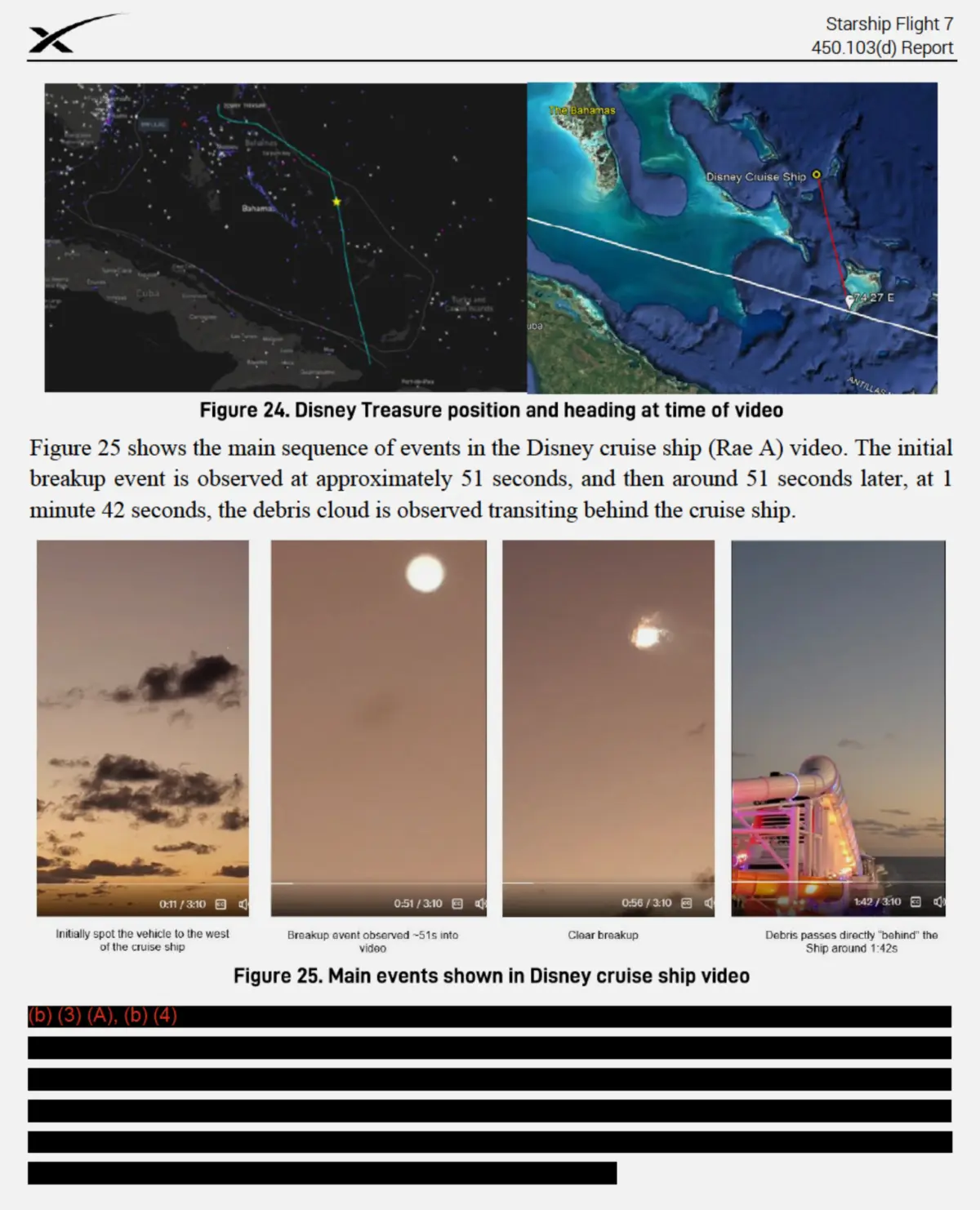
When SpaceX’s colossal Starship rocket dramatically disintegrated over the Caribbean last year, the immediate aftermath wasn’t just a spectacle for space enthusiasts; it became a crucial data point, captured by an unlikely network of civilian observers. Videos uploaded by airline passengers, vacationing tourists, and local residents showcased flaming fragments streaking across the sky. Even commercial airline pilots, navigating their routes, documented the fiery fallout as their aircraft were compelled to alter course, scrambling to evade the potential hazard. This unforeseen trove of public footage, including perspectives from Disney and Royal Caribbean cruise ships, and even a Club Med resort, later played a pivotal, albeit surprising, role in SpaceX’s post-explosion efforts to meticulously count and track the dispersed debris, according to a report obtained by ProPublica.
The Caribbean Incidents: A Chronology of Mishaps
The incidents in question refer to a series of test flights that underscored the ambitious, yet inherently risky, nature of developing next-generation spacecraft. SpaceX’s Starship program, envisioned by CEO Elon Musk as humanity’s primary vehicle for colonizing Mars and enabling lunar missions, relies on an aggressive "iterative" development approach, often involving real-world test flights to identify and resolve engineering challenges. While this strategy has historically allowed SpaceX to innovate rapidly, it also comes with a higher propensity for spectacular failures in the early stages.
The seventh test flight of Starship, specifically, ended in an explosive failure that sent a shower of sparkling debris across a wide swath of the Caribbean airspace. The report, acquired by ProPublica through a Freedom of Information Act (FOIA) request to the Federal Aviation Administration (FAA), vividly describes the sequence: a fireball, followed by a glittering cascade of fragments. Maps included in the report precisely pinpointed the locations from which these public images were captured. This geographic referencing proved instrumental for SpaceX, providing critical insights into how the debris tumbled through the atmosphere and where it ultimately impacted after the initial blast. The report notes, "At 1 minute 42 seconds, the debris cloud is observed transiting behind the cruise ship," a clear indication of the proximity of civilian vessels to the unfolding event.
Federal regulations mandate that such detailed reports be submitted in the wake of any rocket failure. These documents are designed to comprehensively describe the incident and delineate the landing zones of any hazardous debris. This information is paramount for the FAA, the primary regulatory body overseeing commercial space launches, as it strives to maintain the safety of increasingly congested air traffic corridors. The rapid expansion of the commercial space industry, with companies like SpaceX pushing the boundaries of rocket technology, presents a complex challenge for regulators tasked with protecting both terrestrial populations and airborne vehicles.
Indeed, last year saw not just Flight 7, but also Flight 8 of Starship experience similar catastrophic failures, scattering debris over areas frequented by commercial airline traffic across the Caribbean. These repeated incidents prompted a significant regulatory response. Before the planned ninth flight, the FAA proactively and substantially increased the size of the airspace it designated as a pre-launch no-fly zone. This expanded exclusion area, a testament to the heightened safety concerns, was determined using data provided by SpaceX itself, augmented by sophisticated modeling from the Space Force, the branch of the U.S. military responsible for national space interests, to predict potential debris fall patterns.
Moriba Jah, a professor of aerospace engineering at the University of Texas at Austin, commented on this adjustment, stating that nearly doubling the pre-launch no-fly zones "only makes sense if the prior margin was judged inadequate rather than just unlucky." His observation highlights a critical underlying question about the initial safety assessments and the adequacy of the protective measures in place.
The Unconventional Investigators: Public Footage to the Rescue
The reliance on civilian-captured videos for post-mishap analysis represents a unique convergence of public engagement and high-stakes aerospace engineering. In an era dominated by ubiquitous smartphones and social media, dramatic events often find their way online instantaneously, offering myriad perspectives. For SpaceX, these unplanned contributions from tourists enjoying their vacations or locals going about their daily lives proved invaluable.
The Starship Flight 7 incident was particularly visible, occurring over a popular tourist region. Imagine passengers on a Disney cruise, expecting fireworks or perhaps a sunset, suddenly witnessing a fiery explosion in the sky. Or guests at a Club Med resort, with their cameras ready for tropical vistas, inadvertently documenting a rocket’s demise. These amateur recordings, often raw and unedited, provided granular details that might have been difficult or impossible to obtain through official tracking systems alone. By correlating these videos with their timestamps and the known locations of the recording devices (e.g., specific cruise ship itineraries, resort locations), SpaceX could triangulate and map the debris trajectory with greater precision.
The fact that SpaceX utilized these public videos suggests a gap in their proprietary tracking capabilities during the critical "debris cloud phase" of the explosion. As Professor Jah pointed out, "I would read it as evidence their own tracking did not carry cleanly through the debris cloud phase, so they used the public to fill the gap." This reliance underscores both the limitations of even advanced tracking systems in chaotic, high-energy events and the unexpected utility of crowd-sourced information in modern incident response. While not a primary data source, the visual confirmation from multiple angles allowed engineers to validate or refine their models of how the rocket fragmented and dispersed.
FAA’s Critical Role and Evolving Safety Protocols
The FAA stands at a crucial nexus, balancing the imperative to foster innovation in the burgeoning commercial space sector with its overarching mission of ensuring public and aviation safety. The agency’s preventive measure of closing airspace during launches is a standard protocol, but the Starship incidents forced it to react swiftly to clear areas after unforeseen failures.
Earlier this year, the FAA issued a stark warning, indicating that rocket launches could "significantly reduce safety" for airplanes. This came after ProPublica’s earlier report revealed that 21 commercial aircraft appeared to execute sudden turns to exit or avoid an FAA-designated emergency no-fly zone in the minutes following the Flight 7 explosion. Such disruptions, both to flight paths and potentially to passenger safety, are projected to become increasingly frequent. SpaceX, for instance, has ambitious plans to launch Starship up to 76 times annually from Cape Canaveral, Florida. This exponential increase in launch frequency demands an equally robust and adaptable safety framework.
The FAA’s response, particularly the expansion of no-fly zones, reflects a dynamic regulatory environment trying to keep pace with technological advancements. The agency defines its no-fly zones (closed pre-launch) and its "debris response areas" (closed post-mishap) based on predictive models. The incidents of Flights 7 and 8 clearly demonstrated that the previous models and associated safety margins were insufficient, necessitating a significant revision. This iterative adjustment of safety protocols mirrors the iterative development process of the rockets themselves, albeit with much higher stakes involving public safety.
The Growing Collision Course: Air Traffic and Rocket Debris
The Caribbean, a vibrant hub for both tourism and commercial aviation, presents a particularly challenging environment for frequent rocket launches. Its skies are crisscrossed by numerous flight paths connecting North and South America, Europe, and various island nations. The potential for a mid-air encounter between an aircraft and rocket debris, however remote, carries catastrophic implications.

The reported need for 21 planes to make sudden maneuvers underscores the real-time risks. Even if no direct impact occurred, such evasive actions can cause turbulence, passenger discomfort, and, in extreme cases, structural stress on the aircraft. More broadly, unexpected airspace closures or sudden diversions lead to significant operational costs for airlines, including increased fuel consumption, delays, and schedule disruptions. As the volume of space launches increases, these "disruptions" could evolve from isolated incidents into a systemic challenge for air traffic management.
The FAA’s warning about reduced safety is not merely theoretical; it’s a recognition of the growing interface between two vastly different modes of transportation operating in the same upper atmospheric domain. Effective coordination, precise debris prediction, and transparent communication become paramount to mitigate these risks.
SpaceX’s "Iterative" Approach Under Scrutiny
A significant revelation from the Flight 8 mishap report casts further light on SpaceX’s development philosophy. The report indicated that prior to that flight’s explosive failure, SpaceX did not possess a "test stand" capable of fully simulating a "full Starship mission" for its engines. While the subsequent text on this page was heavily redacted, Moriba Jah suggested this implies that "some part of the engine’s actual flight behavior was being verified for the first time in flight rather than on the ground."
This detail points to a core tenet of Elon Musk’s engineering philosophy: "build, launch, iterate, repeat." This approach prioritizes rapid development and real-world testing over exhaustive, time-consuming ground simulations. While it has allowed SpaceX to achieve remarkable feats, such as reusability and high launch cadence, it also entails a higher tolerance for early-stage failures during test phases.
John Crassidis, an aerospace engineering professor at the University at Buffalo, speculated that launching without a fully capable test stand was likely "a cost-saving decision." He elaborated on the trade-offs inherent in Musk’s hybrid approach, which combines the "old school" method of launching and fixing issues post-flight with the "newer approach" of extensive simulations and ground tests. "Doing too much of the old school can lead to too many mishaps and cost overruns," Crassidis noted, while "doing too much of the new school leads to long times to get things done and a reduction in flexibility." The Starship incidents illustrate the delicate balance SpaceX attempts to strike, and the regulatory challenges that arise when this balance leans too heavily towards flight-testing critical components.
The Transparency Debate: Redactions and Public Trust
ProPublica’s efforts to obtain the mishap reports for Starship flights 7, 8, and 9 through a FOIA request highlight a broader issue of transparency in the commercial space industry. While the FAA did release the documents, the vast majority of all three reports were heavily redacted. The agency cited exemptions in the law designed to protect confidential business information from public disclosure. Crucially, these redactions were, in part, a direct result of SpaceX’s objections, as the FAA allowed the company to challenge the release of information it deemed proprietary.
Among the withheld information were SpaceX’s estimates of where debris fell during these three rocket failures. This lack of transparency is a significant concern for experts like Moriba Jah. "Withholding the underlying debris estimates makes it impossible for anyone outside SpaceX and FAA to check whether that pattern is improving or repeating," he argued. Given that the regulator itself had already revised its safety margins once, Jah emphasized that "the public has a real interest in seeing the data behind both the old margin and the new one."
The inability to independently verify debris trajectories and impact zones limits the public’s and independent experts’ ability to assess the true safety margins and the effectiveness of revised protocols. It raises questions about accountability and whether the current regulatory framework adequately balances commercial interests with public safety and the right to information.
Expert Perspectives on Safety and Strategy
The insights from aerospace engineering professors provide crucial context to the technical and regulatory challenges. Ron Madler of Embry-Riddle Aeronautical University underscored the value of the public videos, stating they could help SpaceX "either confirm their breakup models or possibly to improve them." This iterative refinement of models is vital for enhancing predictive accuracy and, consequently, improving safety.
Professor Jah’s emphasis on the need for public access to debris data points to a fundamental aspect of regulatory oversight: independent verification. Without this, the public and external experts are forced to rely solely on the conclusions drawn by the company and the regulator, which can erode trust, especially after repeated mishaps. The question isn’t just if safety margins are being improved, but how and to what extent, which requires data.
Crassidis’s analysis of SpaceX’s "old school" versus "new school" approach to testing encapsulates the philosophical debate at the heart of rapid aerospace development. While speed is a competitive advantage, the consequences of misjudging the balance can be severe, not only in terms of financial cost but also, critically, in terms of safety.
Broader Implications for Commercial Spaceflight
The Starship incidents and the ensuing regulatory responses have significant implications for the future of commercial spaceflight. As more companies enter the space race and launch cadences increase, the pressure on regulatory bodies like the FAA will only intensify. The current incidents serve as a stark reminder that even with advanced technology, space launches remain complex and inherently risky endeavors.
SpaceX has consistently stated its commitment to learning from its mistakes and improving Starship’s reliability with each test. In December, the company affirmed on X (formerly Twitter) its dedication to "responsibly using airspace during launches and reentries, prioritizing public safety to protect people on the ground, at sea, and in the air." While these statements reflect a commitment, the incidents and the subsequent regulatory adjustments highlight the ongoing tension between ambitious timelines for lunar and Martian missions and the meticulous, often slow, process of ensuring absolute safety.
The integration of civilian-captured footage into official investigations, the expansion of no-fly zones, and the ongoing debate about data transparency underscore a pivotal moment for the commercial space industry. As humanity reaches further into the cosmos, the terrestrial challenges of managing risks, ensuring safety, and maintaining public trust will be as critical as the technological breakthroughs themselves. The Starship explosions over the Caribbean were not just dramatic visual events; they were profound lessons in the complex interplay of innovation, regulation, and public responsibility.

 Ana Megawati
 Joko Widodo
 Eva Lovia
 Jia Lissa
 Pevita Pearce