
 Yuyun Lusiyani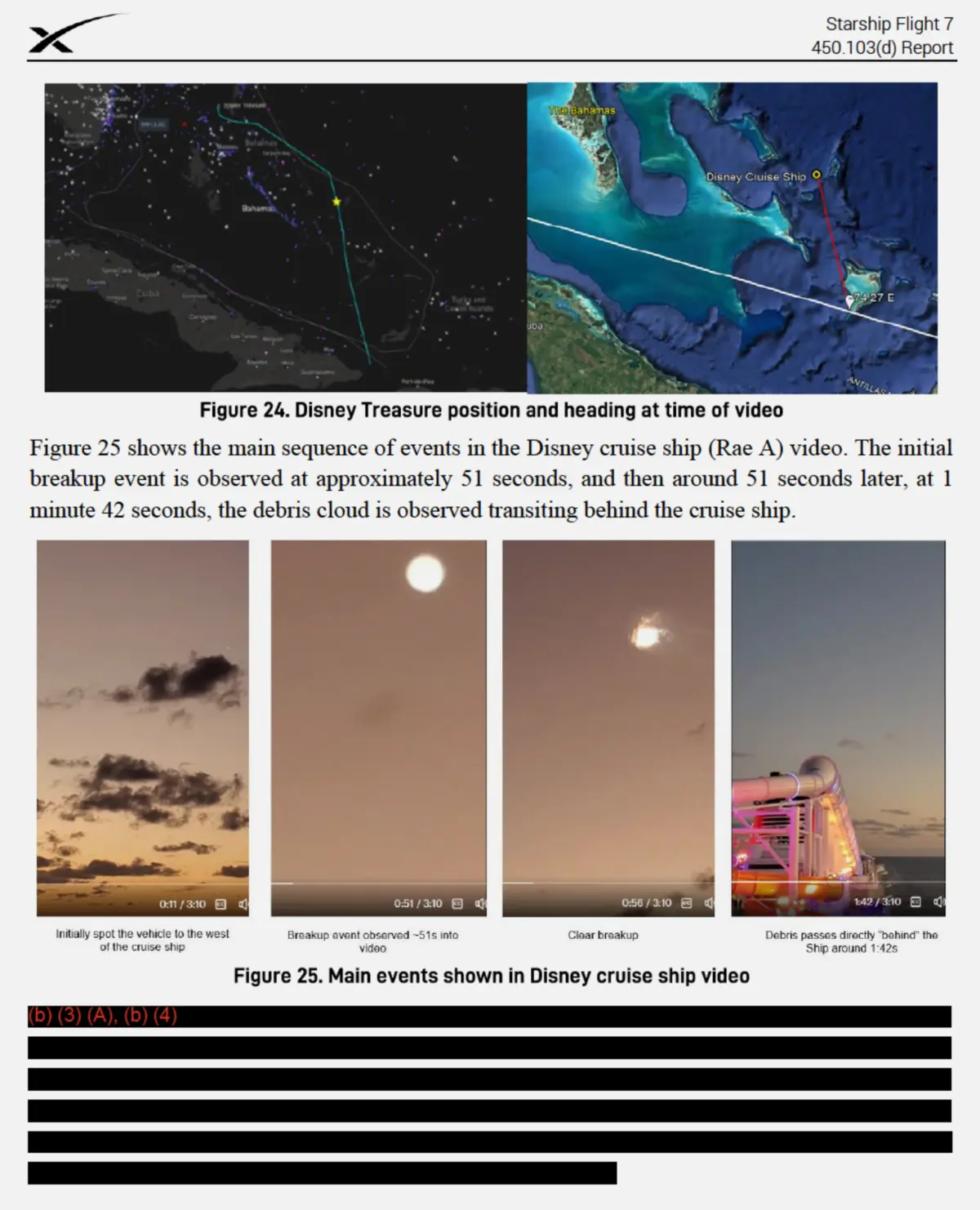
When SpaceX’s monumental Starship rocket ruptured over the Caribbean last year, the dramatic event was not only a spectacle of flaming debris streaking across the sky but also a critical incident that sent ripples through air traffic corridors. Videos captured by bewildered airline passengers, vacationers on island resorts, and cruise ship guests depicted fiery fragments raining down, with some commercial airline pilots reportedly recording the chaotic aftermath as their aircraft were forced into evasive maneuvers to avoid the peril. This visual documentation, initially a viral internet phenomenon, subsequently played an unexpected yet pivotal role in SpaceX’s official efforts to trace and account for the scattered remnants of its colossal rocket, underscoring significant challenges in airspace management and commercial space safety.
The Caribbean Sky Incident: A Fiery Spectacle and Its Aftermath
The seventh test flight of SpaceX’s Starship, an ambitious undertaking in the development of the world’s most powerful rocket designed for deep-space missions to the Moon and Mars, met an untimely end shortly after launch. Instead of reaching its intended orbital trajectory, the 120-meter-tall spacecraft experienced a catastrophic failure, disintegrating into a shower of incandescent debris. The visual impact was profound, with footage from sources as diverse as Disney and Royal Caribbean cruise ships, and even a Club Med resort, capturing the dramatic fireball and subsequent sparkling descent.
These unsolicited public recordings proved invaluable to SpaceX, according to a report obtained by ProPublica from the Federal Aviation Administration (FAA) through a Freedom of Information Act (FOIA) request. The report, which SpaceX submitted to the FAA within two weeks of the incident, details how these citizen-captured videos were instrumental in mapping the debris field. "At 1 minute 42 seconds, the debris cloud is observed transiting behind the cruise ship," the report states, illustrating the precision with which these external observations aided in reconstructing the event. The inclusion of maps pinpointing the locations from which these images were shot highlights the utility of such crowd-sourced data in understanding the complex dynamics of debris dispersal after a high-altitude explosion. This reliance on public footage suggests a gap in the company’s proprietary tracking capabilities, particularly during the critical "debris cloud phase," as noted by Moriba Jah, a professor of aerospace engineering at the University of Texas at Austin. "I would read it as evidence their own tracking did not carry cleanly through the debris cloud phase, so they used the public to fill the gap," Jah commented.
Regulatory Scrutiny and Airspace Safety Concerns
The FAA, the primary regulatory body for commercial space launches in the United States, mandates such detailed incident reports following rocket failures. These documents are crucial for describing the sequence of events and, critically, for identifying where hazardous debris may have landed. This information is foundational to the FAA’s overarching mission: to maintain the safety of the nation’s busy air traffic corridors, especially amidst the accelerating growth of the commercial space industry. Companies like SpaceX are not merely developing rockets; they are pioneering a new era of space exploration and commercialization, with aspirations extending to regular lunar and Martian travel, alongside more frequent satellite deployment missions.
The implications for aviation safety are substantial. During typical rocket launches, the FAA proactively closes specific segments of airspace to prevent any conflict with air traffic. However, the unexpected nature of test flight failures, particularly those involving massive spacecraft like Starship, often necessitates rapid, reactive closures and rerouting of aircraft. The incidents involving Starship flights 7 and 8, both of which fragmented over areas frequented by commercial airlines in the Caribbean, served as stark reminders of the inherent risks. ProPublica previously reported that 21 aircraft were observed making abrupt turns to exit or circumvent an FAA-designated emergency no-fly zone in the immediate aftermath of the Flight 7 explosion, underscoring the severity of the disruption.
In response to these incidents, particularly the debris scattering over the Caribbean from Flights 7 and 8, the FAA significantly expanded the pre-launch no-fly zones for subsequent Starship launches. Before Flight 9, the agency nearly doubled the size of the restricted airspace, a measure that aerospace experts viewed as a direct acknowledgment of previous safety margins being insufficient. "Nearly doubling those pre-launch no-fly zones only makes sense if the prior margin was judged inadequate rather than just unlucky," Professor Jah observed. These expanded zones, defined in conjunction with data from SpaceX and advanced modeling from Space Force, aim to more accurately predict potential debris fall patterns and enhance public safety.
The Challenge of Transparency and Proprietary Data
The public’s right to information and the need for regulatory transparency have emerged as significant points of contention in the aftermath of these incidents. ProPublica’s efforts to obtain the mishap reports for Starship flights 7, 8, and 9 through FOIA requests were met with extensive redactions by the FAA. Citing exemptions in the law that protect confidential business information, the agency blacked out the vast majority of all three reports. These redactions were, in part, a direct result of SpaceX’s objections, as the FAA allowed the company to challenge the release of information it deemed proprietary.

Notably, the FAA refused to disclose SpaceX’s own estimates of where debris fell during these three rocket failures. This lack of transparency has drawn criticism from experts who argue that it impedes independent assessment of safety protocols. "Withholding the underlying debris estimates makes it impossible for anyone outside SpaceX and FAA to check whether that pattern is improving or repeating," said Professor Jah. He emphasized the public interest in this data, especially given that the regulator has already revised its safety margins once. Without access to such critical information, it remains unclear how close any commercial airplanes might have come to falling debris, or whether SpaceX’s internal predictions for debris dispersal are improving with each subsequent test. The redacted reports further complicate efforts to ascertain whether the debris from Flight 7 landed where SpaceX and the FAA initially anticipated, reinforcing the perception that public videos were essential in filling critical informational gaps.
Engineering Philosophies Under Review: Speed vs. Safety
Beyond the immediate safety concerns, the reports also shed light on SpaceX’s iterative development approach, a philosophy often characterized by rapid prototyping and "test, learn, iterate" cycles. The mishap report for Flight 8, which also ended in an explosive failure and scattered debris near the Bahamas, contained a crucial revelation: prior to that flight, SpaceX lacked a "test stand" capable of fully testing the rocket’s engines for a complete Starship mission. While the remainder of that page was heavily redacted, the implication, as interpreted by Professor Jah, is significant: "it means some part of the engine’s actual flight behavior was being verified for the first time in flight rather than on the ground."
This strategy, while potentially accelerating development, introduces inherent risks. John Crassidis, an aerospace engineering professor at the University at Buffalo, suggested that launching a rocket without a fully capable test stand might have been "a cost-saving decision." He elaborated on the two prevailing approaches in rocket development: the "old school" method of launching and then addressing issues as they arise, and the "newer approach" involving extensive simulations and ground tests to preempt problems. Crassidis noted the delicate balance: "Doing too much of the old school can lead to too many mishaps and cost overruns," while "Doing too much of the new school leads to long times to get things done and a reduction in flexibility." Both Flights 7 and 8, involving the same Starship model, ended due to engine-related failures, which seemingly validates the concerns raised about the adequacy of pre-flight testing.
SpaceX, while not directly responding to specific requests for comment on these reports, has consistently affirmed its commitment to learning from its tests and improving Starship’s reliability. In December, the company reiterated on X (formerly Twitter) its dedication to "responsibly using airspace during launches and reentries, prioritizing public safety to protect people on the ground, at sea, and in the air." This statement underscores the company’s awareness of its responsibility, even as its ambitious launch schedule—seeking to launch Starship up to 76 times a year from Cape Canaveral, Florida—presents escalating challenges for air traffic management.
Broader Implications for Commercial Space and Future Outlook
The incidents involving Starship, coupled with the FAA’s subsequent warnings and expanded no-fly zones, highlight a critical juncture for the burgeoning commercial space industry. As private entities push the boundaries of space exploration and commercialization, the regulatory framework, designed primarily for a slower-paced, government-led space program, faces unprecedented pressure. The FAA’s warning that rocket launches could "significantly reduce safety" for airplanes is not merely a caution but a direct reflection of the escalating risks posed by increased launch frequency and the sheer scale of next-generation rockets.
The reliance on public-sourced videos for critical post-mishap analysis also raises questions about the adequacy of current tracking technologies and the need for more robust, independent monitoring systems. While citizen journalism offers valuable insights, it should not be a primary mechanism for critical safety data collection by space operators or regulators.
The ongoing tension between rapid technological advancement, exemplified by SpaceX’s aggressive development timeline, and the imperative for public and aviation safety, overseen by the FAA, will continue to define the landscape of commercial space. As Starship progresses towards its ambitious goals of interplanetary travel, the lessons learned from these early test failures and the regulatory responses will be instrumental in shaping future launch operations. Ensuring transparent data sharing, strengthening pre-flight verification processes, and maintaining dynamic yet robust airspace management protocols will be paramount to balancing innovation with the fundamental commitment to public safety. The future of commercial space hinges not just on technological prowess, but equally on the industry’s and its regulators’ ability to adapt and learn from every flight, successful or otherwise.

 Ana Megawati
 Joko Widodo
 Eva Lovia
 Jia Lissa
 Pevita Pearce