
 Yuyun Lusiyani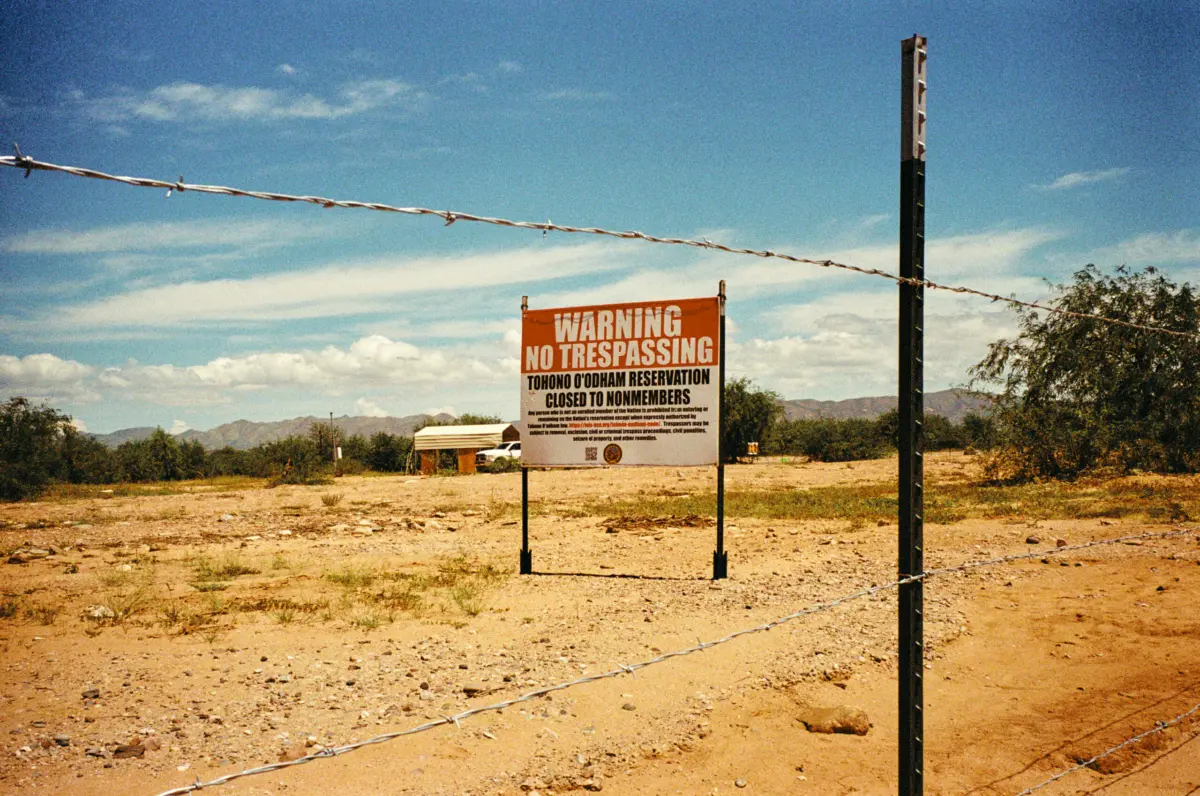
At 4:59 a.m. on August 25, Verlon Jose, the deeply respected chairman of the Tohono O’odham Nation in Southern Arizona, received an email from Henry N. Laxdal, the acting chief patrol agent for the U.S. Border Patrol’s Tucson Sector. The message, delivered with a stark 60-second notice, informed him that government contractors were already en route to the Nation’s southern boundary to commence soil testing for a proposed 62-mile border wall. Laxdal’s email offered the tribe the opportunity to have cultural monitors observe the work, but unequivocally stated that such observation must not impede government operations, underscoring a commitment to "ongoing coordination" even as construction was set to begin. This swift, almost instantaneous deployment ignited a profound confrontation, escalating a long-standing dispute into an immediate crisis for the Indigenous nation.
Jose, 59, was already aware of the impending incursion. An hour prior, tribal members had reported a convoy of vehicles heading south through the reservation, with social media channels quickly corroborating the accounts. The caravan was not merely composed of work trucks and drilling rigs; it included a significant presence of U.S. Border Patrol vehicles, signaling a coordinated federal operation. This deployment, undertaken despite ongoing legal challenges and the tribe’s vehement opposition, represented a severe breach of trust and an overt challenge to the Tohono O’odham Nation’s inherent sovereignty.
Historical Context and Cultural Significance

The Tohono O’odham people have inhabited the vast expanse of the Sonoran Desert for millennia, with their ancestral lands stretching from what is now Southern Arizona deep into Mexico’s Sea of Cortez. Their profound connection to this land is not merely historical but deeply spiritual, woven into their ceremonies, traditions, and daily life. The contemporary international border, an arbitrary line drawn through their homeland, has long complicated their existence, dividing families, sacred sites, and traditional travel routes. Approximately 14,000 of the Nation’s 37,000 enrolled members reside on tribal land west of Tucson, while another 3,000 live in Mexico, necessitating routine border crossings for cultural ceremonies, family visits, and economic activities. The proposed 62-mile wall threatens to permanently sever these vital connections, destroying landscapes considered sacred and disrupting an entire way of life.
For decades, the Tohono O’odham Nation has attempted to navigate the complex geopolitical realities of its border-straddling territory. Rather than outright confrontation, tribal leaders had, for a quarter-century, engaged in a nuanced, often uneasy, collaboration with the Department of Homeland Security (DHS). This cooperation involved allowing the reservation to serve as a testing ground for various homeland security measures, from vehicle barriers along its southern boundary to state-of-the-art surveillance towers and law enforcement partnerships with Border Patrol and Immigration and Customs Enforcement (ICE), including the renowned "Shadow Wolves" unit. These measures were implemented with the understanding that they would preclude the need for a physical wall, aiming to strike a balance between tribal security concerns and federal border mandates. However, this history of collaboration now appears to have been cast aside by the Trump administration’s aggressive push for a contiguous border wall.
Escalation of Federal Action and Tribal Resistance
The first definitive indication that the Nation’s status as the longest unwalled section of the Arizona border was about to change came in February, when U.S. Customs and Border Protection (CBP) informed the tribe of its plans to seal off the reservation entirely. The project was slated to receive substantial funding, reportedly nearly $52 billion from a large appropriations bill often referred to as "Trump’s One Big Beautiful Bill Act," specifically earmarked for border infrastructure.

In a bid to avert the crisis, Tohono O’odham elected leaders sought direct engagement with federal officials. A meeting with DHS Secretary Markwayne Mullin, himself an enrolled citizen of the Cherokee Nation, initially offered a glimmer of hope. Chairman Jose recalled thinking, "Maybe we can work with this guy." However, Mullin’s message was unambiguous: the wall would be built, and Justice Department attorneys were prepared to defend the project all the way to the Supreme Court. Council member Vivian Juan-Saunders vividly recalled Mullin’s stern warning, "Don’t mess with me." Mullin’s office declined to comment on this exchange.
The message grew even more direct during a subsequent meeting with CBP Commissioner Rodney Scott. According to Jose, Juan-Saunders, and council member Jesse Navarro, Scott explicitly threatened that if the tribe pursued legal action to oppose the wall, the Nation risked losing access to three critical border gates. These gates, essential for tribal members to travel to and from Mexico for cultural and familial purposes, are maintained at the discretion of CBP. This alleged threat, which CBP also declined to comment on, underscored the administration’s hardline stance and its willingness to exert considerable pressure.
The Legal Battle and Disputed Assurances
Despite these intimidations, the Tohono O’odham Nation filed a comprehensive lawsuit on June 16 in the U.S. District Court for the District of Columbia, seeking to halt the "Tucson 5" project, a $1.3 billion contract awarded to Sullivan Land Services Co. (SLS and SLSCO), a Texas firm with a history of Republican political donations and significant border wall contracts during the previous Trump administration. The tribe argued that the wall would illegally reduce the size of its reservation, a power reserved solely for Congress, and constituted an enduring act of trespass on sovereign lands, threatening to destroy irreplaceable sacred cultural sites. Their legal team contended that the administration’s plans disregarded decades of tribal cooperation with DHS and were particularly egregious at a time when CBP itself was reporting record-low border apprehensions, with Border Patrol "encounters" hitting their lowest levels in over 50 years under the Biden presidency. The Nation’s interim chief of police, James Cook, further supported this, stating in a sworn declaration a 90% drop in illegal entry reports and a near disappearance of smuggling-related crimes.

Conversely, Benjamin S. Hollinder, a senior Border Patrol official, argued in a sworn declaration that the absence of a wall on the Nation created a "funneling effect," channeling smugglers onto the reservation, a dynamic that would intensify once other sections of Arizona were walled off. He claimed this vulnerability made the area a "desirable area for [transnational criminal organizations] to operate."
As the Nation sought a preliminary injunction to bar border wall activity until the litigation was resolved, DHS filed a notice on the eve of a July 22 hearing. This notice affirmed the waiver, in whole or in part, of over 30 federal laws to expedite the project, including several critical statutes mandating tribal consultation, environmental protection (such as NEPA, the National Environmental Policy Act), and cultural preservation (such as NHPA, the National Historic Preservation Act, and ARPA, the Archaeological Resources Protection Act). The government’s legal filings acknowledged its long history of "cooperatively" working with the tribal government but asserted that the Nation "does not hold veto power over the United States’ sovereign duty to secure its borders."
Trump administration attorneys argued that an injunction was premature, suggesting that planning was ongoing and potential issues could still be addressed. They insisted that construction would be confined to the Roosevelt Reservation, a 60-foot-wide zone along the U.S. side of the border where CBP was authorized to construct barriers. Riyaz Kanji, the tribe’s lead attorney, countered that the Roosevelt Reservation did not extend onto tribal land, and even if it did, the rugged terrain would force construction far beyond the 60-foot boundary. Kanji forcefully argued that DHS, despite its sweeping powers, could not override a sovereign government, calling the administration’s plans a "blatant and unprecedented disregard for the tribe’s rights."
Justice Department attorney Adam R.F. Gustafson responded by claiming the tribe had previously approved a barrier, and the current question was merely about its type, which DHS had the authority to decide. He reiterated the department’s "commitment" to consultation and claimed they took "very seriously the tribe’s views." The judge, seemingly swayed by DHS’s assurances, decided against granting the injunction, stating, "I don’t think the government is trying to go outside of that 60-foot strip," and requested more time to deliberate.

"Resistance is Futile": A Provocative Stance
The perceived good faith articulated in court by government attorneys sharply contrasted with the actions and attitudes of some federal officials. Within hours of the judge’s denial of the emergency injunction on August 14, James Percival, General Counsel of the Department of Homeland Security, posted a celebratory meme on social media platform X (formerly Twitter). The image featured a cybernetic Star Trek supervillain, "the Borg," accompanied by the ominous caption: "RESISTANCE IS FUTILE." Percival’s accompanying text declared, "We respect tribal sovereignty but not to the detriment of border security. This wall is getting built. Our authority is beyond dispute." This provocative public statement starkly revealed the administration’s true stance, effectively dismissing the legal and cultural grievances of the Tohono O’odham Nation.
A History of Cooperation, Now Undermined
The O’odham had every reason to suspect that the government would not be as mindful as it claimed. Just two days after the meeting with DHS Secretary Mullin, a border wall contractor had "inadvertently disturbed a cultural site" west of the reservation. The crew had bulldozed a 70-foot swath through the Las Playas Intaglio, a 200-foot-long earthen etching in the shape of a fish, estimated to be at least 6,500 years old. This site was well-marked and known to area archaeologists, highlighting a profound disregard for cultural heritage that foreshadowed future actions. Wynona P. Larson Yazzie, an O’odham tribal elder, Marine Corps veteran, and former tribal police officer who had organized prayer runs to the intaglio, had visited the site just a day before its destruction. The incident deeply shook the community and intensified fears about the impending wall’s impact.

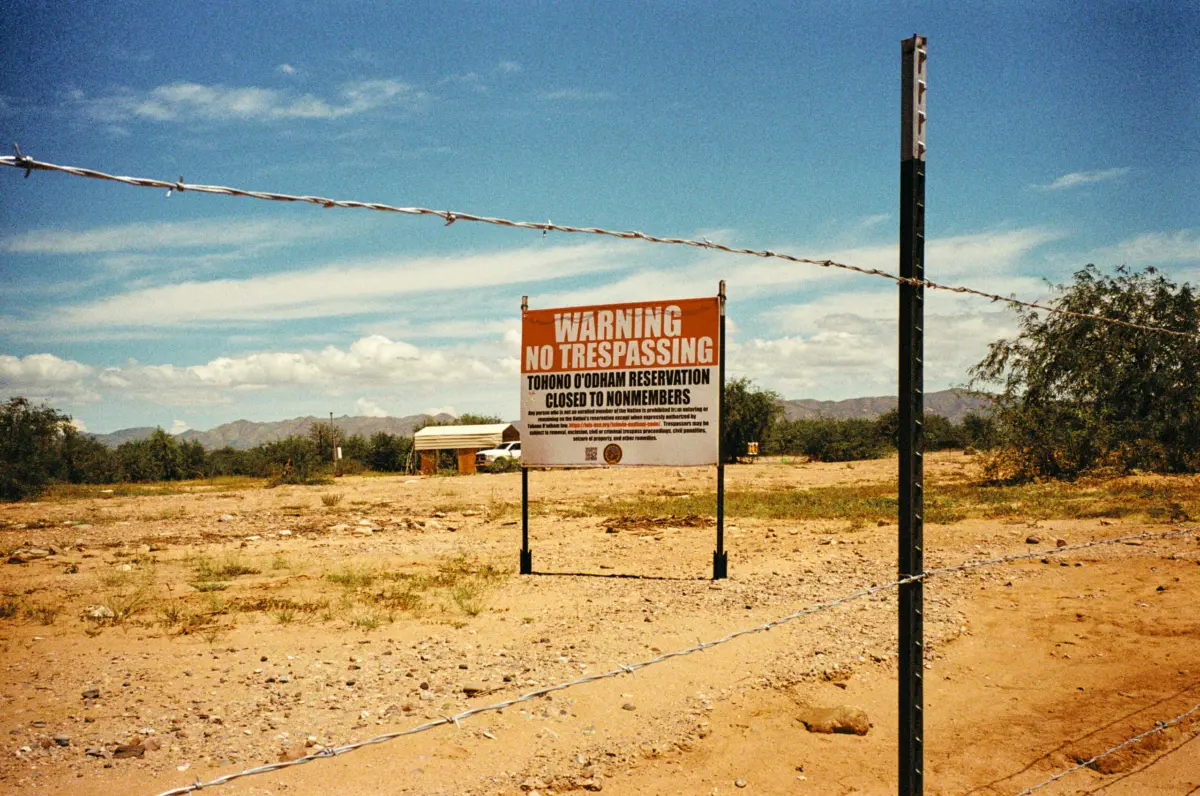
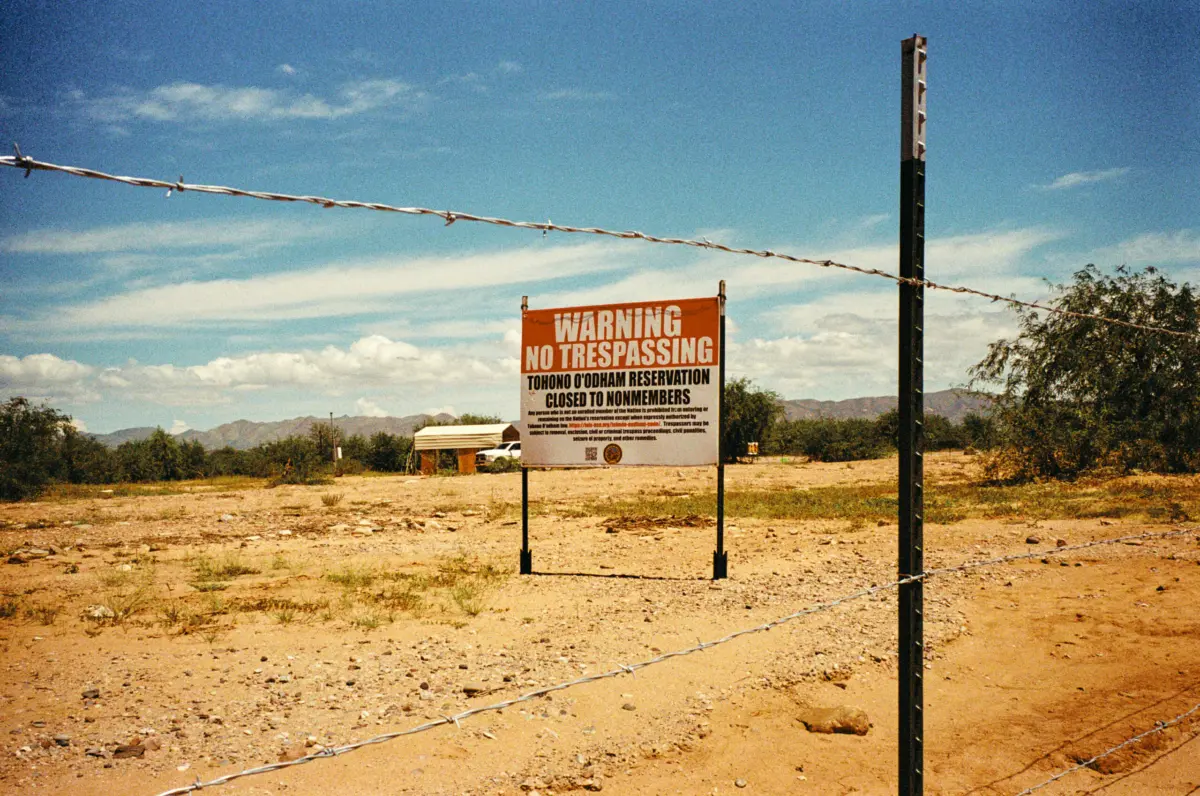
On August 6, Larson Yazzie saw a disturbing court filing from the tribe’s attorneys, warning that in four days, government contractors would enter the reservation for soil tests, "exploiting" the judge’s reflection period. In response, tribal leaders erected dozens of 8-foot-wide "no trespassing" signs along the main access roads leading through the reservation to the border.
The Tadai Me:i Prayer Camp: A Spiritual Stand
In the face of what felt like an inevitable federal advance, Larson Yazzie, joined by Amy Juan, a longtime O’odham activist, began making plans of her own. Juan, 40, had grown up witnessing the gradual militarization of the border, from the placement of a locking gate at Ko:li Ki:jig, a traditional crossing, after 9/11, to the establishment of Border Patrol "forward operating bases" and checkpoints throughout the reservation. She had seen human rights groups document arrests, deportations, and abuse of U.S.-born tribal members by Border Patrol agents, allegations CBP did not respond to. For Juan, the Nation’s past collaborations with DHS had come at a heavy cost to safety and civil liberties, without delivering true security.
Driven by deep spiritual conviction, Larson Yazzie and Juan established a prayer fire, a significant O’odham tradition convened in times of communal struggle, at the symbolic border gate of Ko:li Ki:jig. They called it Tadai Me:i – "roadrunner on fire." The camp, lit on August 9 as contractors prepared to enter, was a humble site with cots, chairs, a cooler, and a canopy. Someone was always awake to tend the sacred flame, fueled by sugai (creosote bush). The atmosphere was one of quiet ceremony, morning prayers, and nightly cleanses, a stark contrast to the aggressive federal presence.

However, the camp was not without internal apprehension. Some legislative council members feared it could attract outsiders and lead to a physical confrontation, reminiscent of the Standing Rock Sioux protest, a scenario they dreaded given the desert’s harsh conditions and the potential for violence. Collin Quasule, a 24-year-old camp visitor, voiced a common fear: "My fear is that they gonna start shooting us." He shared videos of federal agents trailing him, stopping him without cause, and refusing to accept his legal identification.
Surveillance and Intimidation
The federal response to the prayer camp was swift and pervasive. The first drone sighting was recorded on August 10, at 11:43 p.m. Over the next 13 days, two spiral notebooks filled with more than 1,000 minute-by-minute observations compiled by tribal members, documenting a steady escalation of DHS surveillance and intimidation.
During the camp’s first seven days, nearly 665 observations were recorded, predominantly detailing federal agents buzzing around the location. Agents parked and watched, with at least one reported snapping photos of campers. Video evidence later corroborated an agent engaged in this activity. Mexican security forces, both military and police, were also observed conversing with Border Patrol agents across the international boundary, at times seemingly exchanging information or photographs.

Amy Juan noted, "Surveillance has heightened. Drones, helicopters, a lot of air activity." The air activity included marked CBP choppers and what appeared to be military Black Hawks. Drones, often handheld quadcopters, were deployed directly over the camp, even during prayer song ceremonies. On the fourth night, a gathering of over 100 people, including members of distant sister tribes, was held. The evening was peaceful until an elder couple reported being stopped at a checkpoint a half-mile outside the reservation while returning home. Agents, conducting an "immigration check," asked for tribal IDs and inquired about the "ceremony going on down south." This unusual encounter, given the checkpoint’s infrequent staffing and the rarity of tribal ID requests, caused many at the gathering to leave immediately, fearing late-night interactions with Border Patrol.
On August 12, Juan received a call about a caravan of six trucks with Texas plates, escorted by an unmarked government SUV. Tribal authorities intercepted the convoy and escorted them off the land, confirming the unmarked vehicle’s driver was a Border Patrol agent. This was one of nearly a dozen such interceptions by tribal police over a three-day period, demonstrating the Nation’s efforts to assert jurisdiction.
The situation intensified dramatically on August 25, when the Border Patrol delivered its one-minute notice. Larson Yazzie rushed to the border, only to be stopped by an agent who had laid a spike strip in the road. When the tribal police department’s interim chief arrived, he too was blocked by a Border Patrol roadblock manned by supervisors, including two from BORTAC, the agency’s SWAT-style special operations wing. These agents, drawn from a cadre that had participated in citywide sweeps in Minneapolis and Chicago, where three people had died, wore desert camouflage, masks, and tactical gear. The tribal police chief was only permitted to record after promising not to interfere. He observed three drilling rigs operating beyond the 60-foot Roosevelt Reservation zone that government attorneys had assured the judge would not be breached. He also encountered Bureau of Indian Affairs agents, who claimed to be on orders from Washington, D.C., to "preserve the peace and monitor activities."
The prayer camp, which had been extinguished after its initial seven-day ceremony, was immediately relit. On August 26, Davy Cross, a 57-year-old tribal member, observed at 4:33 a.m. at least five drones, initially visible with red lights, then going dark as they descended, their rotors audible and drafts felt. These were soon replaced by an airplane and a helicopter. Later that morning, a convoy of Border Patrol and construction vehicles arrived, with over 30 Border Patrol vehicles forming a semicircle around the camp, complemented by Mexican state police across the international boundary. A video of this encirclement spread widely across social media, showcasing the overwhelming display of force.

The tribe’s attorneys filed an urgent appeal, arguing that the Trump administration was making "a mockery" of the court’s expectation of "consultation and cooperation." Liz Quiroga, a 28-year-old tribal member, described the scene as "true dystopia," as the logbook filled with observations of constant Border Patrol presence, unmarked vehicles, suspected "undercovers," and relentless aerial surveillance by helicopters, planes, and drones.
Contrasting Responses: Tohono O’odham vs. Big Bend
A striking contrast emerged with developments in Texas. The Trump administration’s plans to build a wall through Big Bend National Park had united an unusual coalition of environmental nonprofits, river guides, hunters, ranchers, and local sheriffs in opposition. Just one week before the armed convoy descended on the Tohono O’odham reservation, Republican Governor Greg Abbott announced a pause on the controversial Big Bend project after discussions with the DHS secretary. Abbott publicly stated, "There are technology tools that don’t include barriers. Think of drones, think of fiber optics." Subsequently, a judge granted a preliminary injunction halting construction in Big Bend while a lawsuit proceeded.
For Amy Juan, this disparity was deeply ironic. For two and a half decades, the Tohono O’odham Nation had been the "laboratory" for the very technology Abbott now championed as an alternative to a physical wall. Yet, when tribal leaders presented this argument, they were dismissed and told the wall was inevitable. "What makes Texas the exception to us is very clear," Juan observed. "It’s good old boy conversations that are happening between the politicians and the CBP commissioners and Markwayne Mullin." This sentiment underscored a profound sense of injustice, highlighting how political influence and racial dynamics appear to dictate federal responses to border wall construction.

Broader Implications for Tribal Sovereignty and Justice
The ongoing conflict on the Tohono O’odham Nation represents a critical juncture for tribal sovereignty, cultural preservation, and human rights in the United States. The federal government’s unilateral decision to proceed with border wall construction, overriding tribal opposition and waiving dozens of federal laws, sets a dangerous precedent. It demonstrates a willingness to disregard established legal frameworks and treaty obligations in the pursuit of a national security agenda, effectively reducing tribal sovereignty to a conditional privilege rather than an inherent right.
The surveillance and intimidation tactics deployed against tribal members engaged in peaceful prayer further raise serious concerns about civil liberties and the militarization of Indigenous lands. The psychological toll of constant monitoring, the presence of heavily armed tactical units, and the questioning of tribal members about their ceremonial activities create an environment of fear and suppression. This approach undermines the very notion of "ongoing coordination" and "good faith" negotiations, replacing them with a narrative of federal dominance and forced compliance.
While the legal challenge continues, the Tohono O’odham Nation has ceased attempts to physically remove border wall contractors from its lands, a pragmatic decision in the face of overwhelming federal force. However, the Tadai Me:i prayer camp endures, a steadfast symbol of spiritual resistance and cultural resilience against what tribal members perceive as a government siege. The drones continue to fly, the convoys pass, and the quiet determination of the Tohono O’odham people remains, underscoring a battle not just for land, but for identity, dignity, and the future of their ancestral homeland. The events unfolding in Southern Arizona serve as a stark reminder of the ongoing struggle for justice and self-determination faced by Indigenous communities in the shadow of national policies.

 Ana Megawati
 Joko Widodo
 Eva Lovia
 Jia Lissa
 Pevita Pearce