
 Lina Irawan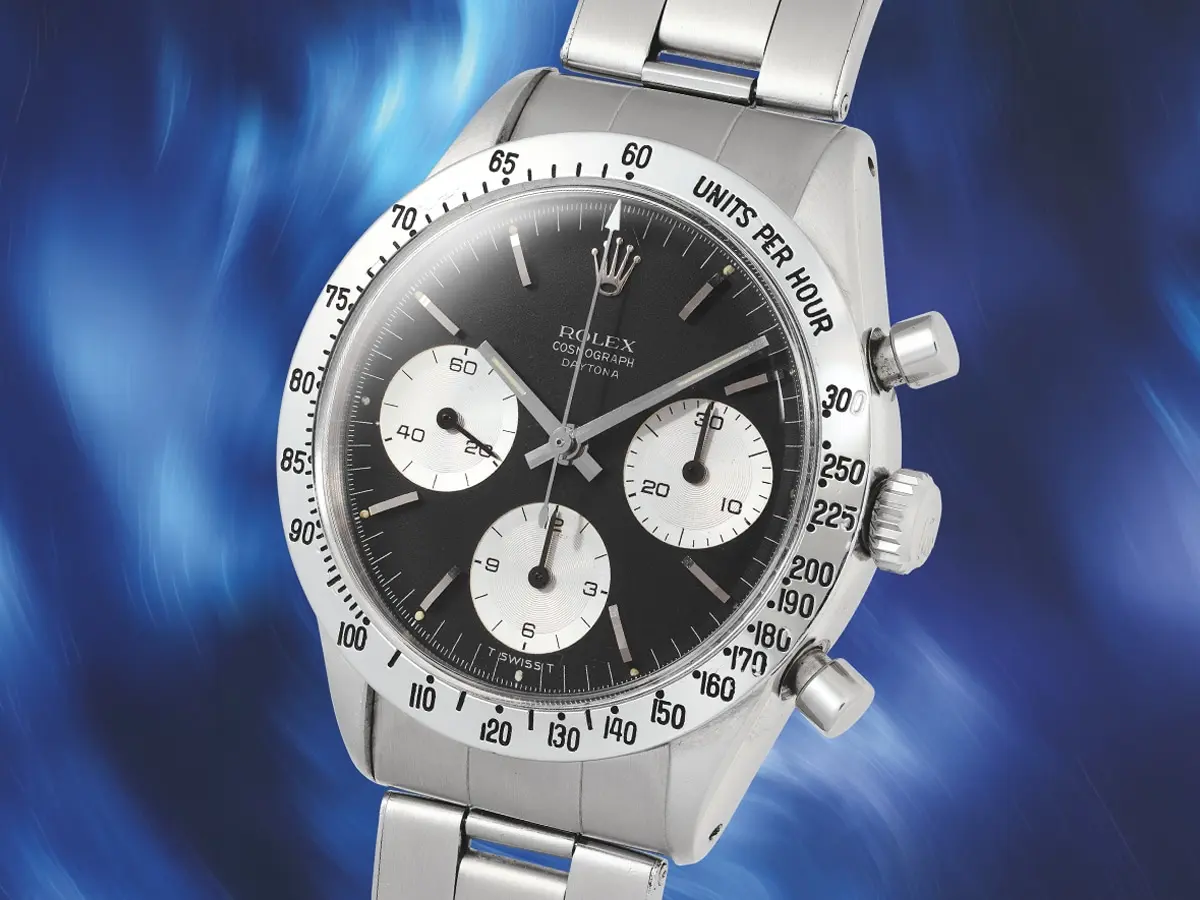
The intersection of automotive history and horological excellence is set to reach a new milestone this December as Jerry Seinfeld, the world-renowned comedian and preeminent Porsche collector, consigns a cornerstone of motorsport history to the auction block. The timepiece in question, a Rolex Cosmograph Daytona Reference 6239, holds a singular position in the annals of racing: it is the first known documented example of a Rolex Daytona presented to a winning driver following a major endurance race. Awarded to the legendary British driver Victor “Quick Vic” Elford after his landmark victory at the 1968 24 Hours of Daytona, the watch will be a centerpiece of "The New York Watch Auction: XV," hosted by Phillips in Association with Bacs & Russo on December 5 and 6, 2026. With a pre-sale estimate of USD$100,000 to USD$200,000, the auction represents a rare opportunity for collectors to acquire a "trophy watch" with an unbroken chain of provenance linking it to the very dawn of the Rolex-Daytona partnership.
The Genesis of a Motorsport Icon
To understand the significance of the Elford Daytona, one must look back to the early 1960s, a period when Rolex was struggling to establish its chronograph as a dominant force in the market. When the Reference 6239 was introduced in 1963, it was originally branded simply as the "Cosmograph." In an effort to capture the burgeoning American market and the excitement of the "Space Age," Rolex briefly considered naming the watch the "Le Mans" in 1964, a nod to the famous French 24-hour race. However, the brand’s focus eventually shifted toward the Daytona International Speedway in Florida, leading to the official adoption of the "Daytona" moniker on the dial around 1965.
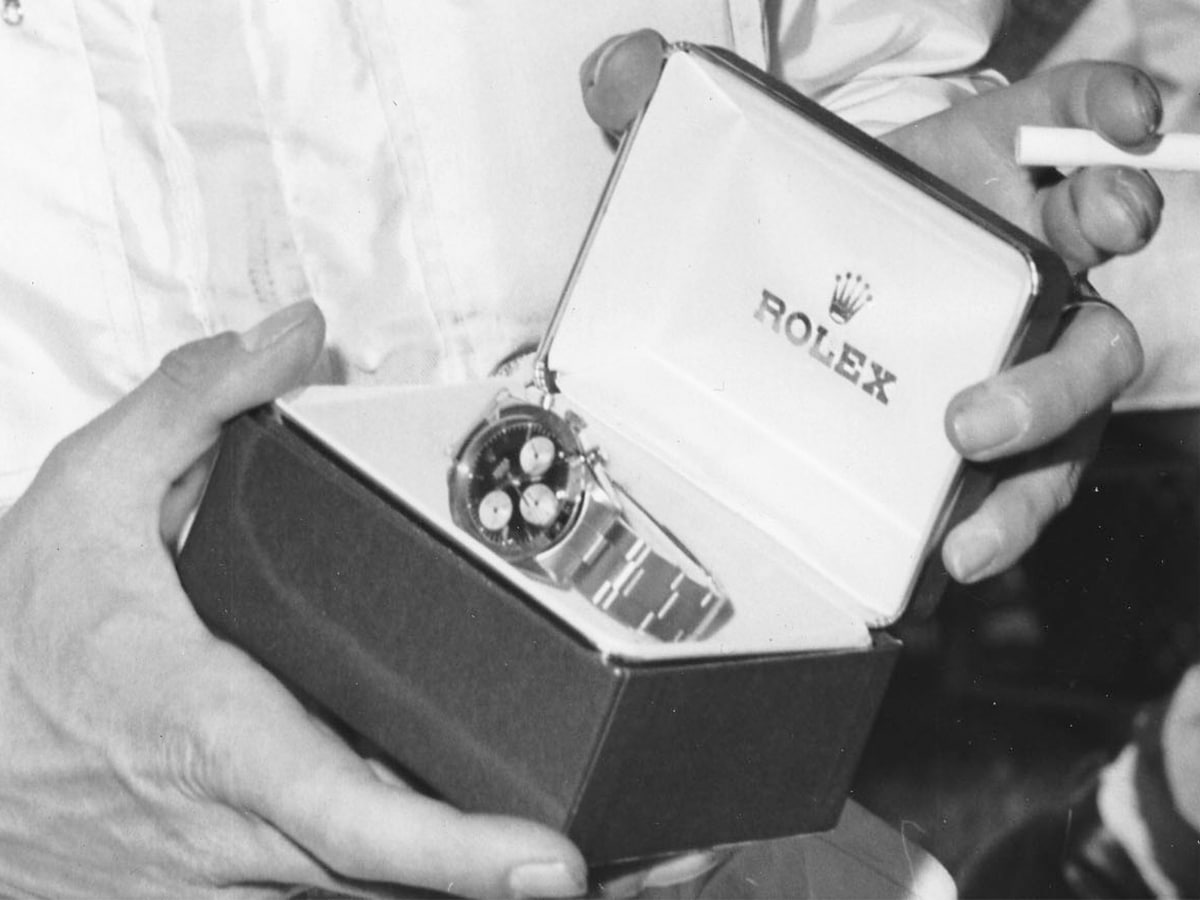
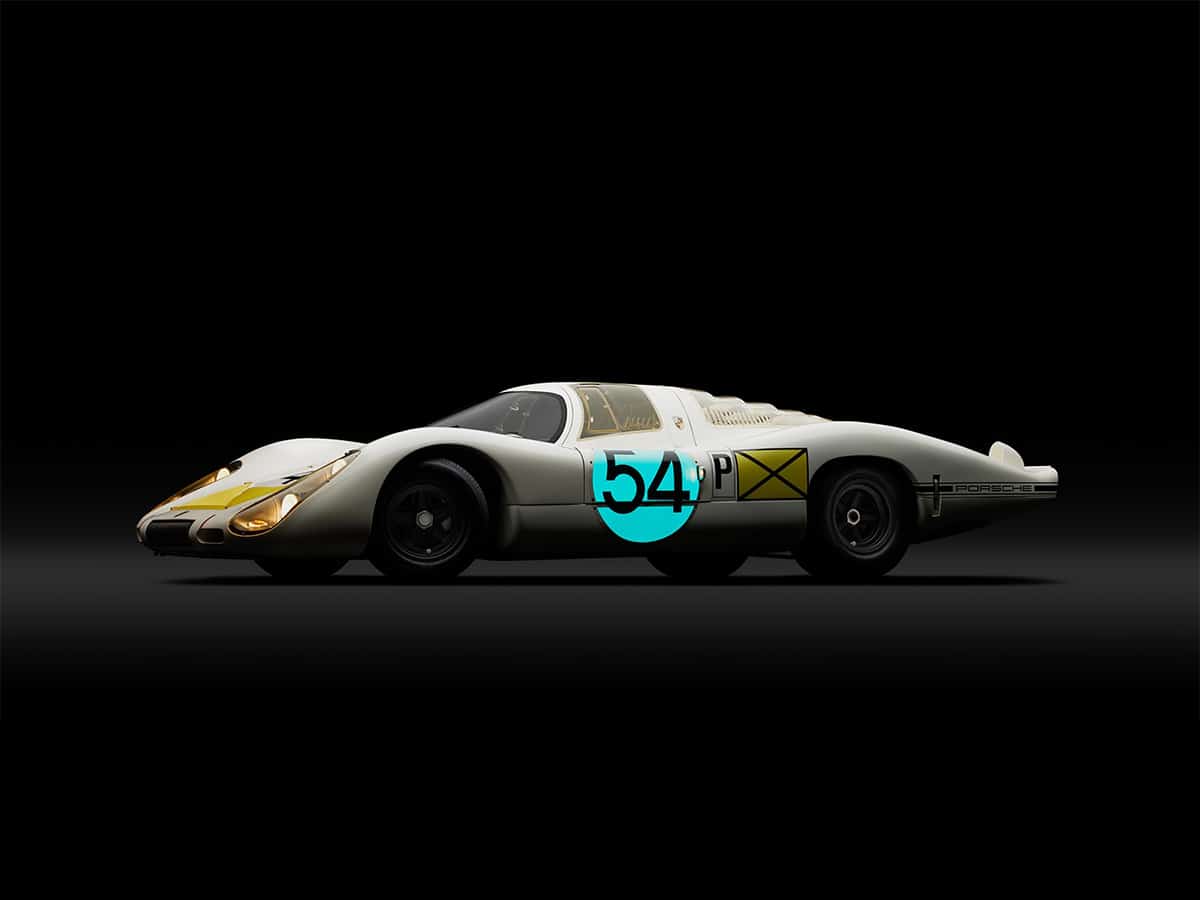
Despite this branding shift, the tradition of awarding a Rolex Daytona to the winners of the Florida race was not yet an institutionalized practice. While drivers had received Rolex timepieces in previous years, the 1968 race won by Vic Elford is widely recognized by historians as the definitive starting point of the modern tradition where a Rolex Daytona is presented on the podium. Elford’s victory in the Porsche 907 Langheck marked the first time a driver was documented receiving this specific model as a direct reward for a victory at the Speedway, cementing the watch’s status as the "original" winner’s Daytona.
Vic Elford: The Man and the 1968 Victory
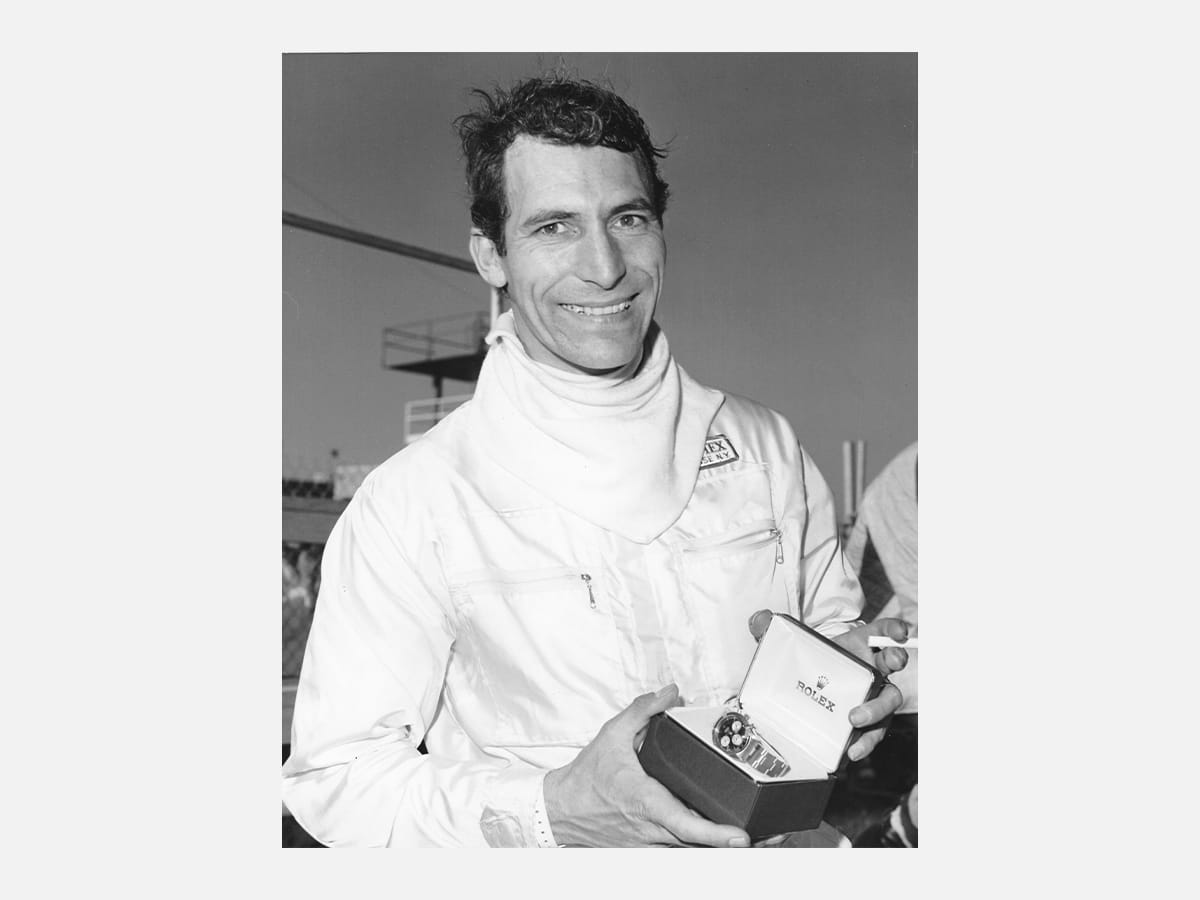
Victor Elford, affectionately known as “Quick Vic,” was one of the most versatile and accomplished drivers of the 20th century. His 1968 season is often cited as one of the greatest single years in racing history. In a span of just a few months, Elford won the Monte Carlo Rally, the Targa Florio, and the 24 Hours of Daytona. His victory at Daytona was particularly significant for the German manufacturer Porsche.
Driving the Porsche 907 Langheck (longtail) prototype, Elford led a 1-2-3 finish for the factory team. This victory was Porsche’s first-ever overall win in a 24-hour endurance race, a feat that served as the technical and psychological springboard for their eventual dominance at the 24 Hours of Le Mans in 1970. The 1968 Daytona race was a grueling test of man and machine, and Elford’s performance solidified his reputation as a master of endurance. The Rolex Reference 6239 he received on the podium was not merely a luxury gift; it was a functional tool and a badge of honor that he wore for years, symbolizing the moment Porsche became a global powerhouse in sports car racing.
The Seinfeld Stewardship and the Reunion of History
Jerry Seinfeld’s involvement with the watch is a testament to his meticulous nature as a historian and collector. Seinfeld’s passion for Porsche is well-documented, but his acquisition of the Elford Daytona was part of a larger quest to reunite significant artifacts of racing history. In 2014, Seinfeld purchased the actual race-winning 1968 Porsche 907 Langheck at auction. Recognizing that the car and the watch were two halves of the same historical event, he set out to track down Vic Elford’s original Rolex.
After successfully acquiring the watch from Elford, Seinfeld held both the car and the timepiece in his private collection for nearly a decade. "They made history together," Seinfeld remarked regarding the duo. "It has been a privilege to be the steward of both, and I’m excited to see this watch begin its next chapter with another collector." This sentiment follows the recent sale of the Porsche 907 Langheck by Gooding & Company at Pebble Beach for USD$3,305,000. With the car now in the hands of a new owner, Seinfeld has chosen to pass the watch to the next generation of horological enthusiasts.

Technical Specifications and Sympathetic Restoration
The Rolex Cosmograph Daytona Reference 6239 is a masterpiece of mid-century industrial design. It was the first Rolex chronograph to feature a tachymeter scale engraved on the metal bezel rather than printed on the dial, a change intended to improve legibility for professional racing drivers. The Elford example features a stainless steel case and is powered by the legendary Valjoux 72 manual-wind movement, a caliber renowned for its reliability and precision.
During Seinfeld’s ownership, the watch underwent a "sympathetic restoration" performed by world-class vintage experts. The goal was not to make the watch look new, but to return it to the exact condition it was in when Elford held it aloft on the Daytona podium in 1968. This meticulous process included:
- Hand Color-Matching: The hour and minute hands were carefully color-matched to the original tritium luminous markers on the dial, ensuring a cohesive and period-correct patina.
- Crystal Replacement: A period-correct "Tropic 21" domed acrylic crystal was fitted to replace later service components.
- Bracelet Repair: A single loose rivet on the original riveted Oyster bracelet was secured, preserving the structural integrity of the historic band.
- Box and Papers: Seinfeld also sourced a period-correct Rolex presentation box to complete the set.
Crucially, the watch is accompanied by an exceptional level of documentation. This includes a 2010 letter from Rolex U.S.A. verifying that this specific serial number was the one presented to Elford for his 1968 win. Additionally, a signed letter of provenance from Vic Elford himself and a 2005 Rolex service invoice provide a clear, unbroken history of the watch’s journey from the racetrack to the Seinfeld vault.
The Auction Market and Phillips’ Dominance
The timing of the auction is significant, as the market for "provenance-heavy" vintage watches continues to outpace the broader luxury market. Phillips in Association with Bacs & Russo has established itself as the global leader in this niche. The auction house famously handled the sale of Paul Newman’s personal Rolex Daytona Reference 6239 in 2017, which realized a staggering USD$17.75 million, setting a world record at the time.
Paul Boutros, Phillips’ Deputy Chairman and Head of Watches, Americas, emphasized the unique appeal of the Elford-Seinfeld provenance. "Bearing truly extraordinary provenance as the first known Rolex Daytona presented for a motorsport victory, it is one of the most compelling trophy watches ever to come to auction," Boutros stated. He noted that while "Paul Newman" dials often command higher prices due to their aesthetic rarity, the Elford Daytona’s value lies in its "tangible link to a defining moment in Porsche racing history."
The estimate of $100,000 to $200,000 is considered by many analysts to be a conservative starting point. Given Seinfeld’s celebrity status and the watch’s foundational role in the Daytona legend, industry insiders expect spirited bidding that could push the final hammer price significantly higher.
Broader Implications and Historical Legacy
The sale of the Vic Elford Rolex Daytona reflects a growing trend in high-end collecting: the convergence of the automotive and horological worlds. For many collectors, a watch is no longer just a timepiece; it is a "mechanical witness" to history. This specific Reference 6239 witnessed the birth of Porsche’s endurance legacy and the formalization of Rolex’s most successful marketing partnership.
Furthermore, the auction highlights the importance of "stewardship" in the collecting world. Jerry Seinfeld’s decision to restore the watch to its 1968 specifications, rather than leaving it in a neglected state or over-polishing it, sets a standard for how historically significant artifacts should be treated. As the watch prepares to cross the block in New York, it carries with it the ghosts of the high-banked turns of Daytona and the roar of a flat-eight Porsche engine.
The New York Watch Auction: XV will likely be remembered as a pivotal moment for the Rolex Daytona. Whether purchased by a dedicated watch enthusiast, a Porsche aficionado, or a museum, the Vic Elford Daytona remains a singular artifact—a piece of stainless steel that captures the speed, danger, and triumph of 1960s motorsport. As the gavel falls in December 2026, the next chapter of this "Quick Vic" legacy will begin, continuing a story that started on a Florida podium nearly sixty years ago.




 Yuyun Lusiyani
 Ana Megawati
 Joko Widodo
 Eva Lovia
 Jia Lissa
 Pevita Pearce