
 Jia Lissa
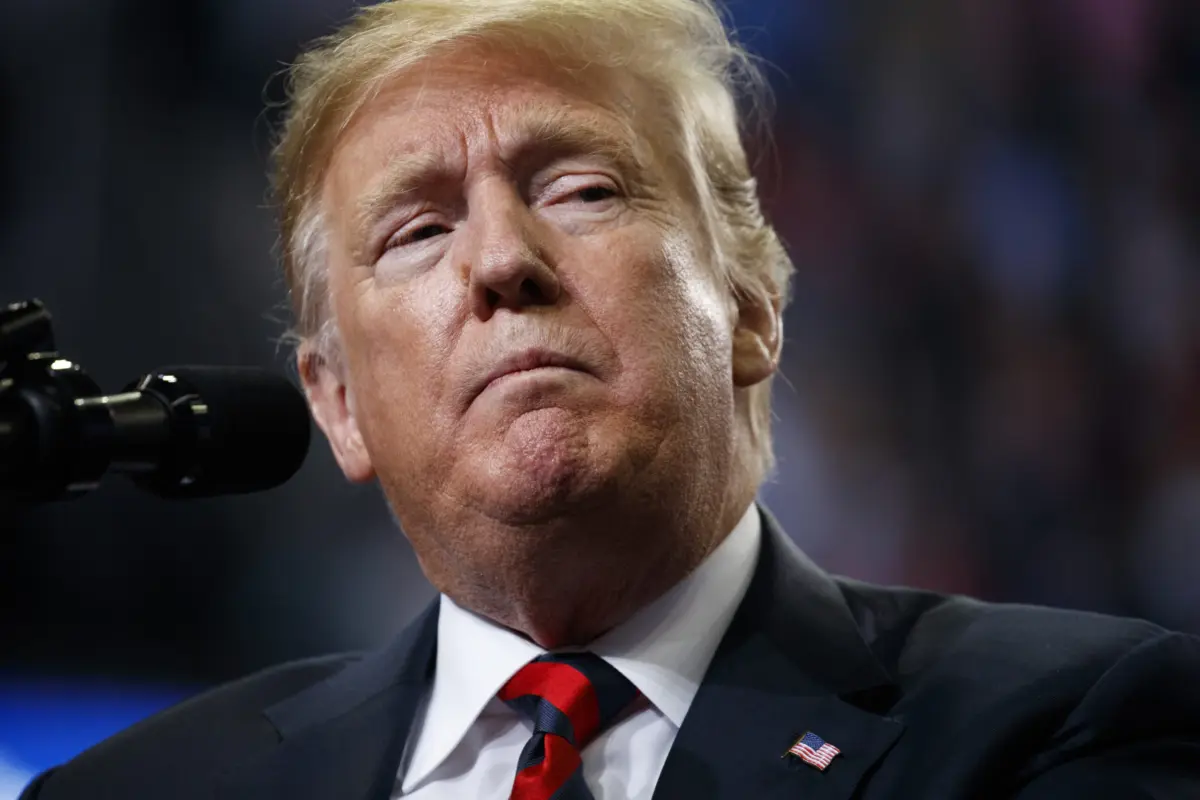
Federal authorities have apprehended a 24-year-old Kansas resident following a series of violent online threats directed at Donald Trump, just days before the former president was scheduled to appear at a high-profile campaign event in the Wichita area. The suspect, identified as Jaden J. Read of Clearwater, Kansas, was taken into custody on Saturday after law enforcement received tips regarding social media posts that explicitly detailed plans for an assassination attempt. The arrest underscores a period of heightened vigilance for the United States Secret Service and federal law enforcement agencies as they grapple with a significant surge in political threats across the country.
The threats surfaced shortly after the Republican National Committee (RNC) updated its website on Friday to reveal the specific location of a rally intended to support Senator Roger Marshall. According to the official schedule, the event was set for Monday evening at the Heartland Credit Union Arena in Park City, a municipality located just outside the Wichita city limits. The disclosure of the venue appears to have triggered a series of aggressive responses on social media platforms, leading to the federal investigation and subsequent arrest of Read.
Specific Allegations and the Nature of the Threats
According to the criminal complaint and statements from the U.S. Attorney’s Office for the District of Kansas, the investigation began when a Crime Stoppers tip alerted authorities to comments made on Facebook. These comments were posted in response to local news coverage regarding the upcoming political rally. On a post by KAKE News, Read allegedly wrote, "Let’s shoot Trump, honestly, where’s our shooter? I’m tired of living this money life." This initial statement was followed by a more specific and alarming post in which the suspect claimed to have acquired firearms. "I just got a 308 and 305 round and I’m killing this pedo," the post allegedly read, referencing specific ammunition types often associated with long-range rifles.
The digital trail did not end there. Authorities discovered additional threatening comments on a Facebook post by KWCH 12 News, another local media outlet covering the rally logistics. In these interactions, Read allegedly expressed a willingness to carry out the act personally, stating, "Can we shoot him in Kansas please I will myself." Perhaps most concerning to federal investigators was a subsequent comment suggesting premeditation and tactical planning: "IK [I know] where your speech will be. Already mapped out roofs around. Finna get kirked since yall couldn’t help him."
The mention of "mapping out roofs" prompted an immediate escalation in the law enforcement response. Following the attempted assassination of Donald Trump in Butler, Pennsylvania, in July 2024, where a gunman utilized an unsecured rooftop, federal agencies have become hypersensitive to any rhetoric involving elevated positions or perimeter surveillance of event venues.
Chronology of the Investigation and Arrest
The timeline of events highlights the rapid coordination between local citizens, media organizations, and federal law enforcement. The sequence began on Friday when the RNC finalized the details for the Park City rally. Within hours of the location being publicized, the threatening comments began to appear on the social media pages of Wichita-based news stations.
By Saturday morning, the Crime Stoppers tip had been vetted and forwarded to the Federal Bureau of Investigation (FBI) and the U.S. Secret Service. Investigators were able to trace the Facebook profile to Jaden J. Read in Clearwater, Kansas. Clearwater is a small city in Sedgwick County, located approximately 20 miles southwest of Wichita.
Law enforcement moved quickly to neutralize the potential threat. On Saturday afternoon, Read was arrested without incident in Clearwater. He was subsequently transferred into federal custody. Under federal law, making threats against a former president or a major presidential candidate is a serious felony. Read is currently being held pending a formal detention hearing, where a judge will determine if he poses a continued flight risk or a danger to the community.
Legal Framework and Official Responses
The prosecution of such cases typically falls under 18 U.S.C. § 871 (threats against the President) or 18 U.S.C. § 879 (threats against former Presidents and certain other persons). These statutes are designed to protect the integrity of the executive branch and the safety of individuals under Secret Service protection, regardless of their current office.
U.S. Attorney Ryan A. Kriegshauser, representing the District of Kansas, issued a stern warning following the arrest. "Political violence and threats of political violence will not be tolerated," Kriegshauser stated in a formal release. He emphasized the distinction between protected speech and criminal conduct, noting that while the First Amendment protects "robust disagreement," there are clear legal boundaries regarding the incitement of violence and true threats. "I caution people to stay within the bounds of constitutionally protected speech," he added.

The judicial process for Read will involve a preliminary hearing and a detention hearing. In cases involving threats against high-ranking political figures, federal prosecutors often argue for "pretrial detention," citing the gravity of the threats and the potential for the individual to carry out the acts if released. The mentions of specific ammunition and the mapping of rooftops are likely to be central pieces of evidence used by the government to argue that the threats were "true threats" rather than mere hyperbole.
The Secret Service and the Climate of Increased Threats
The arrest of Jaden Read coincides with a period of unprecedented strain on the U.S. Secret Service. In a recent interview on CBS’s 60 Minutes, Secret Service Director Sean Curran revealed a staggering statistic: threats against the president and other protected individuals have increased by approximately 40% in the current political era.
Curran attributed much of this volatility to the evolution of digital communication. "The world is different than what it was 20 years ago," Curran remarked. "You know, social media changes people." The director explained that social media provides a platform for rapid radicalization and allows individuals to broadcast their intentions to a wide audience, which both complicates and aids law enforcement efforts. While it allows for quicker identification of some suspects, the sheer volume of threats can overwhelm investigative resources.
The agency has been under intense scrutiny following security lapses at previous events. As a result, the protective details for major candidates have been significantly bolstered. The security perimeter for the Heartland Credit Union Arena rally was expected to be one of the most stringent in the region’s history, involving multiple layers of local, state, and federal law enforcement, as well as advanced surveillance technology.
Context of the Wichita Rally
The rally in Park City was organized as a pivotal campaign stop for Senator Roger Marshall, a staunch ally of Donald Trump. Kansas, traditionally a Republican stronghold, remains a key focus for the party’s efforts to maintain control of Senate seats and galvanize the base ahead of national elections.
Donald Trump’s visits to the Midwest often draw large crowds, necessitating complex logistical planning. The Heartland Credit Union Arena, with a capacity for several thousand attendees, presents unique security challenges, including its proximity to major highways and surrounding industrial structures. The news of a local resident allegedly mapping out these very structures for a violent act added a layer of tension to an already polarized political environment.
Despite the arrest, the rally was expected to proceed with heightened security measures. Political analysts suggest that such incidents often have a dual effect: they underscore the dangers of current political rhetoric while simultaneously reinforcing the resolve of the candidate’s supporters.
Broader Implications for Political Discourse and Security
The case of Jaden J. Read is emblematic of a broader national trend where digital platforms serve as the primary medium for political grievances that occasionally cross into criminal territory. For law enforcement, the challenge lies in distinguishing between "keyboard warriors"—individuals who post inflammatory content without the intent or means to act—and "lone wolf" actors who pose a genuine physical threat.
The role of "Crime Stoppers" and public vigilance in this case highlights a shift in how these threats are mitigated. As social media companies face pressure to moderate violent content, the reliance on citizen reporting and local news monitors has become a critical component of the federal security apparatus.
Furthermore, this incident may lead to increased calls for legislative reviews regarding how social media platforms handle threats against public officials. While the U.S. Attorney emphasized the First Amendment, the legal definition of a "true threat" continues to be tested in the digital age. A "true threat" is generally defined by the Supreme Court as a statement where the speaker means to communicate a serious expression of an intent to commit an act of unlawful violence to a particular individual or group. The specific details provided in Read’s alleged posts—mentioning a .308 rifle and specific locations—move the rhetoric closer to that legal threshold.
As the legal proceedings against Read move forward in the Kansas federal court system, the incident serves as a stark reminder of the volatile intersection of social media, political fervor, and public safety. For the residents of Wichita and the attendees of the Monday rally, the arrest provides a measure of reassurance, yet it also highlights the persistent shadow of political violence that continues to loom over the American electoral process.


 Nila Kartika Wati

 Eva Lovia

 Lina Irawan

 Yuyun Lusiyani

 Ana Megawati

 Joko Widodo
