
 Eva Lovia
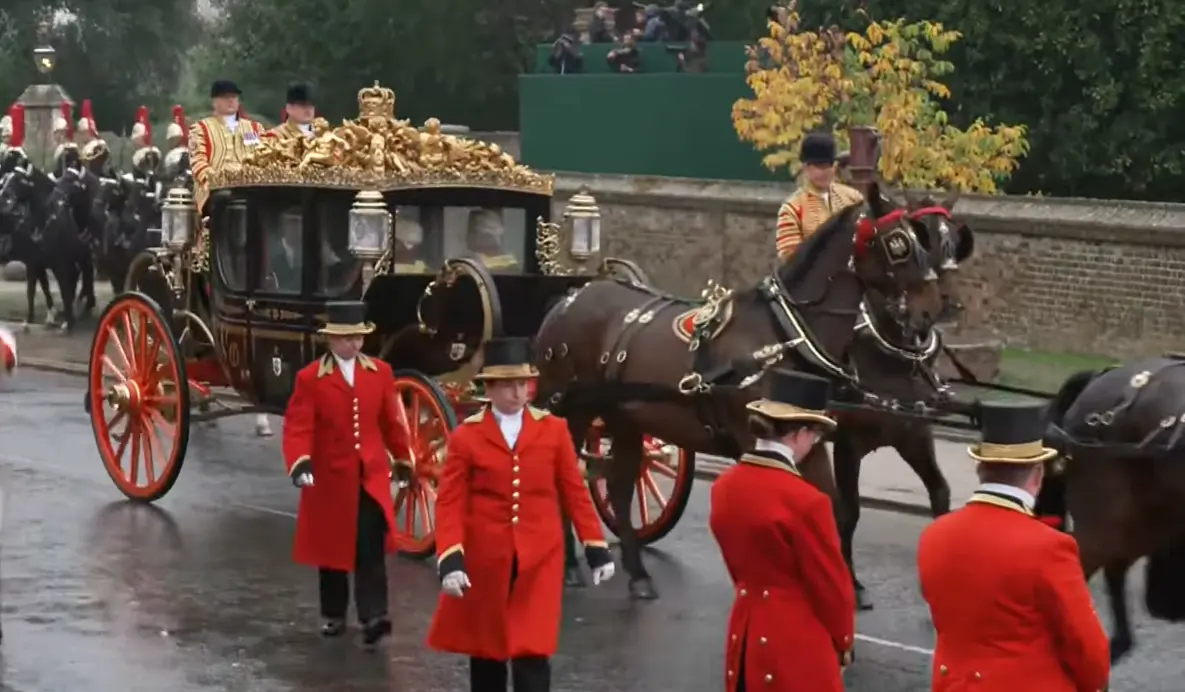
The Prince and Princess of Wales recently participated in a significant royal procession, utilising one of the Crown’s more technologically advanced, yet outwardly traditional, ceremonial carriages: the Australian State Coach. This distinctive vehicle played a role in the welcoming of the Sultan of Oman for a state visit, underscoring the enduring diplomatic ties between the United Kingdom and the Sultanate. The journey through Windsor on Tuesday, October 20, saw the Prince and Princess of Wales sharing the enclosed coach with two senior Omani dignitaries, a testament to the formal nature of the occasion and the shared significance of the event.
Accompanying Their Royal Highnesses were Sayyid Theyazin bin Haitham Al Said, the Sultanate of Oman’s Deputy Prime Minister for Economic Affairs, and Sayyid Loay bin Ghalib Al Said, the Secretary General of the Diwan of the Royal Court. Their presence in the Australian State Coach alongside the future King and Queen highlighted the importance placed on the delegation’s comfort and the symbolic gesture of shared journeying. This five-carriage procession was a central element in the ceremonial welcome extended to His Majesty Sultan Haitham bin Tarik of Oman, marking a crucial moment in the celebration of a long-standing bilateral relationship.
The strategic deployment of various Royal Family coaches during such high-profile visits is a carefully orchestrated element of statecraft. While King Charles III, accompanied by Sultan Haitham bin Tarik, travelled in the historic Irish State Coach, Queen Camilla shared the Scottish State Coach with Oman’s Deputy Prime Minister for Defence Affairs, Sayyid Shihab bin Tariq Al Said. This distribution of royal and visiting dignitaries across different carriages signifies the layered importance of each pairing and the overarching message of hospitality and mutual respect. However, the Australian State Coach, chosen for the Prince and Princess of Wales, carries a unique narrative, being a generous gift from the Australian people to the late Queen Elizabeth II.
A Legacy of Commonwealth Friendship: The Australian State Coach
The Australian State Coach was formally presented to Queen Elizabeth II in 1988, a significant gesture by Australia to commemorate its bicentenary. This milestone marked 200 years since the establishment of the First Fleet at Sydney Cove in 1788, a pivotal moment in the nation’s history and its enduring connection to the British Crown. The presentation of such a substantial and symbolic gift underscored the deep constitutional, historical, and cultural ties that bind Australia to the British Royal Family, a relationship that has evolved over centuries.
While at first glance the Australian State Coach presents the quintessential image of a horse-drawn royal conveyance, its design incorporates several surprising modern technological advancements. This blend of traditional aesthetics with contemporary engineering distinguishes it from many of the older, more ornate carriages within the Royal Collection. The enclosed nature of the coach offers significant protection from the elements, a practical consideration that enhances the comfort of its occupants, particularly during unpredictable weather conditions, as experienced during the recent visit. This feature allows for a more pleasant journey compared to some of the open-top historical carriages, where passengers are exposed to wind and rain.
The internal amenities of the Australian State Coach are a testament to its forward-thinking design. It is equipped with modern features such as electric windows, a sophisticated heating system, and hydraulic suspension. These elements work in concert to provide a remarkably smooth and comfortable ride, a stark contrast to the often jarring and less comfortable experiences of passengers in centuries-old vehicles. The hydraulic suspension, in particular, absorbs a significant amount of road shock, ensuring a refined journey even on less-than-perfect surfaces. This combination of time-honoured craftsmanship, evident in its exterior elegance, and cutting-edge technology creates a unique ceremonial vehicle that balances tradition with the practicalities of modern travel.
A Comparative Study: Modern Comfort Meets Historic Grandeur
The Australian State Coach’s emphasis on passenger comfort and its integration of modern technology places it in a distinct category when compared to some of the Royal Family’s more iconic, albeit less practical, vehicles. The most prominent of these is undoubtedly the Gold State Coach, a celebrated fixture in the Royal Collection and a symbol of unparalleled royal pageantry. Commissioned for King George III and completed in 1762, the Gold State Coach is an extraordinarily elaborate and heavily gilded carriage. Its sheer opulence and historical significance have made it an indispensable feature of major royal ceremonies, most notably coronations.
However, the Gold State Coach, with its immense historical weight and ornate, static design, is not engineered for comfort. Its age and construction mean that journeys aboard can be notoriously uncomfortable, with passengers often experiencing significant jolting and vibration. This contrasts sharply with the Australian State Coach, which, despite its ceremonial function, was conceived with the comfort of its occupants as a primary consideration. While both vehicles serve as potent symbols of monarchy, the Australian State Coach offers a more contemporary approach to royal transport, prioritising a refined experience for those within its walls.
Furthermore, the Australian State Coach is distinguishable from other State Coaches used during the same procession. The Irish State Coach, which carried King Charles and Sultan Haitham, and the Scottish State Coach, utilized by Queen Camilla, each possess their own unique historical provenance and design characteristics. The Irish State Coach, for instance, dates back to 1890 and is known for its distinctive dark blue and gold livery. The Scottish State Coach, built in 1969, offers a more contemporary design, though still adhering to royal ceremonial standards. The Australian State Coach, however, stands out due to its specific origin as a gift from a Commonwealth nation and its deliberate incorporation of modern amenities.
The State Visit: A Timeline of Diplomatic Engagement
The State Visit of His Majesty Sultan Haitham bin Tarik to the United Kingdom is a multifaceted event designed to strengthen the already robust relationship between the two nations. The itinerary, spanning several days, typically includes a blend of ceremonial engagements, political discussions, and cultural exchanges.
Day 1: Arrival and Formal Welcome
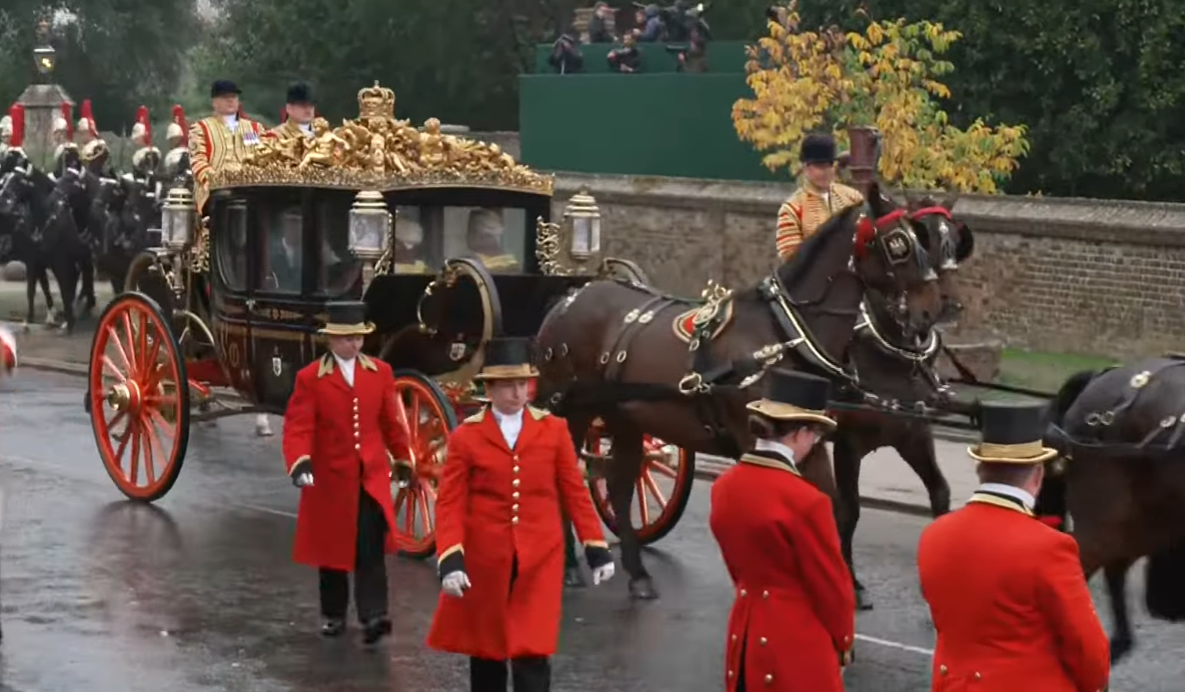
The initial day of the visit is often dedicated to the formal welcoming ceremonies. Upon arrival, His Majesty the Sultan would have been greeted by members of the Royal Family, usually at a designated arrival point such as Windsor Castle or Buckingham Palace. This is followed by a State Drive, a significant part of which involves the ceremonial procession. The procession observed on October 20, passing through Windsor, served as a public display of the strong diplomatic ties and the high regard in which the Sultanate of Oman is held. The Prince and Princess of Wales’ participation in this procession, utilising the Australian State Coach, underscores their role in representing the younger generation of the British monarchy and their engagement with international diplomacy.
The Procession’s Route and Significance
The procession route, commencing from Datchet Road and proceeding through Windsor town before culminating at Windsor Castle’s Quadrangle, was a carefully chosen path designed to maximise public visibility and showcase the ceremonial grandeur. Upon arrival at the Quadrangle, the visiting Sultan would have received a formal military welcome, typically involving an inspection of the Guard of Honour and a display of military precision. This segment of the visit is symbolic, reflecting the defence cooperation and shared security interests between the UK and Oman.
Day 1 (Continued): Ceremonial Proceedings and Royal Engagement
Following the military welcome, the Prince and Princess of Wales would have joined King Charles and Queen Camilla for further ceremonial proceedings. These often include formal greetings, exchanges of gifts, and discussions. The presence of William and Catherine alongside the senior royals and the visiting Sultan demonstrates a united front in fostering international relations and signifies the continuity of these important diplomatic bonds across generations.
Subsequent Days: Deepening Bilateral Cooperation
The remainder of the State Visit would typically involve a more intensive schedule of engagements. This includes high-level talks between government ministers from both nations, focusing on key areas of cooperation such as defence, trade, investment, and regional security. Oman’s strategic location in the Middle East makes its partnership with the UK particularly important for maintaining stability and promoting economic ties in the wider region. Discussions would likely delve into current geopolitical challenges, opportunities for increased trade, and potential for joint initiatives in areas like renewable energy or technology.
Cultural and Social Dimensions
State Visits also incorporate elements designed to promote cultural understanding and people-to-people connections. This might include visits to cultural institutions, educational establishments, or events showcasing the heritage of both nations. Such interactions help to build a deeper appreciation and familiarity between the peoples of the UK and Oman, fostering goodwill beyond the formal political and economic spheres.
Broader Impact and Diplomatic Implications
The State Visit of the Sultan of Oman to the United Kingdom is more than just a series of ceremonial events; it is a potent diplomatic tool that reinforces a strategic partnership. The enduring relationship between the two countries is built on a foundation of shared history, mutual respect, and common interests, particularly in areas of security and trade. Oman’s role as a stable partner in a strategically vital region makes its relationship with the UK of paramount importance for regional and global stability.
Economic Ties: The United Kingdom and Oman have a significant trade relationship, with opportunities for further growth in sectors such as finance, technology, and advanced manufacturing. State visits provide a platform for leaders to discuss investment opportunities and explore avenues for economic collaboration, potentially leading to increased job creation and economic prosperity in both nations. The Sultanate’s Vision 2040 economic diversification plan presents significant opportunities for British businesses to engage with the Omani market.
Defence and Security Cooperation: The two nations share a strong history of defence cooperation, encompassing joint military exercises, intelligence sharing, and mutual support in maintaining regional security. Given Oman’s proximity to sensitive geopolitical hotspots, its role in maritime security and counter-terrorism efforts is crucial. The State Visit serves to reaffirm and strengthen these vital security partnerships, ensuring continued collaboration in addressing shared threats.
Cultural Exchange and Soft Power: Beyond the hard power of defence and economics, State Visits also play a crucial role in promoting cultural understanding and fostering goodwill. The presence of the Prince and Princess of Wales, along with other senior royals, in prominent ceremonial roles, serves to project an image of continuity, tradition, and engagement. This "soft power" element is vital in building long-term relationships and fostering positive perceptions between nations.
The choice of the Australian State Coach for the Prince and Princess of Wales during this particular procession, while seemingly a minor detail, adds a layer of Commonwealth connection to the proceedings. It subtly reinforces the enduring bonds within the broader Commonwealth of Nations and highlights Australia’s continued role as a close ally and partner. The carriage, a symbol of generosity and historical connection, serves as a tangible reminder of these multifaceted relationships. Ultimately, the State Visit of the Sultan of Oman is a sophisticated display of diplomacy, where every element, from the choice of carriage to the tenor of the discussions, is designed to strengthen a vital bilateral partnership and project an image of stable, cooperative international relations.



 Nila Kartika Wati

 Lina Irawan

 Yuyun Lusiyani

 Ana Megawati

 Joko Widodo
