
 Eva Lovia
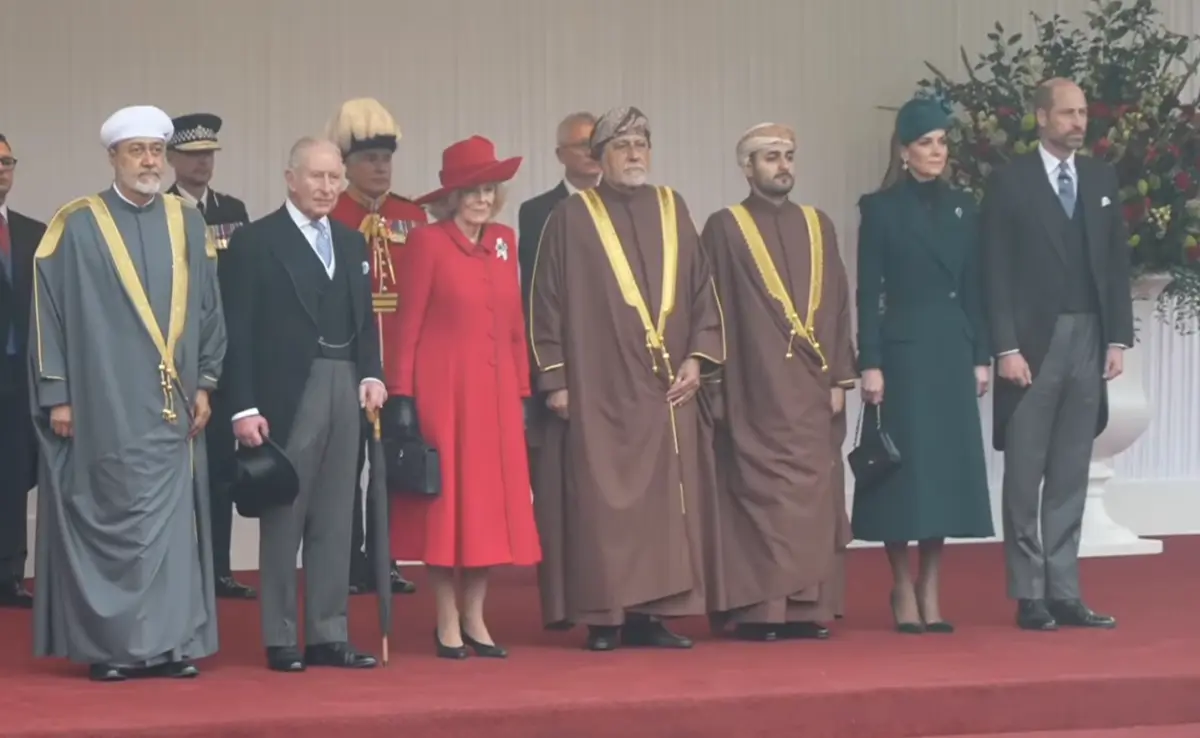
The Princess of Wales, Catherine, marked the commencement of a significant State Visit by His Majesty Sultan Haitham bin Tarik of Oman to the United Kingdom with a poignant sartorial choice, selecting a historically rich jewel that has graced the necks of several prominent royal women. The striking Prince of Wales Feather Brooch, an intricate piece adorned with diamonds and emeralds, was prominently displayed against a dark green coat dress, underscoring the significance of the occasion and its deep connection to British royal tradition. This selection not only showcased Catherine’s impeccable taste but also served as a subtle yet powerful nod to the enduring legacy of the monarchy and its historical ties.
The State Visit, a crucial diplomatic engagement, began with the Prince and Princess of Wales undertaking the important initial duty of welcoming Sultan Haitham bin Tarik to the UK. Their role extended beyond a mere greeting, as they travelled to the Sultan’s London residence to escort him for the formal ceremonies. This early involvement highlighted the personal commitment and strategic importance placed on this bilateral exchange by the British Royal Family and the government. The Prince and Princess then accompanied His Majesty to Windsor Castle, where His Majesty King Charles III extended the official royal welcome, a grand affair steeped in tradition and protocol. The State Visit, which commenced on this day, is scheduled to span several days, featuring a comprehensive programme of events designed to strengthen diplomatic and economic ties between Oman and the United Kingdom.
A Brooch Steeped in Royal History
The Prince of Wales Feather Brooch is not merely an accessory; it is a repository of royal history, having been passed down through generations of prominent royal women. Its origins trace back over 150 years, to 1863, when it was presented to Alexandra of Denmark upon her marriage to Albert Edward, the then Prince of Wales, who would later become King Edward VII. The gift was a gesture of affection and esteem from the people of North Wales, a region deeply connected to the title of Prince of Wales.
The brooch itself is a masterpiece of craftsmanship. Its central oval features the iconic Prince of Wales feathers, rendered in brilliant diamonds, with the distinctive tips of the feathers accentuated by vibrant emeralds. For this particular occasion, Catherine chose to attach the detachable emerald drop, a feature that adds an extra dimension of grandeur and historical resonance to the piece. This is not the first time the Princess has worn this significant brooch; she has showcased it on several prior occasions since 2022, often favouring it for high-profile State Visits, a testament to its symbolic weight and aesthetic appeal.
A Legacy Worn by Queens and Princesses
The historical lineage of the Prince of Wales Feather Brooch is particularly noteworthy. Following Alexandra’s tenure as Princess of Wales, the brooch found a new custodian in Queen Elizabeth The Queen Mother, who held a particular fondness for the piece. Her appreciation for its design and history ensured its continued prominence within the royal collection.
A pivotal moment in the brooch’s journey occurred in 1981 when it was presented to Lady Diana Spencer upon her marriage to the then Prince Charles. Diana, a style icon whose fashion choices captivated the world, famously adapted the brooch, wearing it as a pendant, a testament to her innovative and personal approach to jewellery. This reinterpretation further cemented the brooch’s status as a versatile and cherished royal heirloom.
Post-Diana, the brooch continued its passage through royal hands. Following her marriage to King Charles in 2005, Camilla, now Queen Camilla, also adopted the brooch into her own collection of significant royal jewellery. Her wearing of the piece underscored its enduring appeal and its place as a valuable link to the past, connecting contemporary royal women to their predecessors.
The Omani State Visit: A Diplomatic Cornerstone
The State Visit of Sultan Haitham bin Tarik of Oman represents a significant diplomatic event for the United Kingdom. Such visits are meticulously planned and serve multiple purposes, including fostering strong bilateral relations, promoting trade and investment, and discussing matters of mutual interest on the international stage. Oman, a strategically important nation in the Middle East, has long-standing historical ties with the UK, dating back to the 19th century. These historical connections have evolved into a modern-day partnership characterised by cooperation in areas such as defence, trade, and cultural exchange.
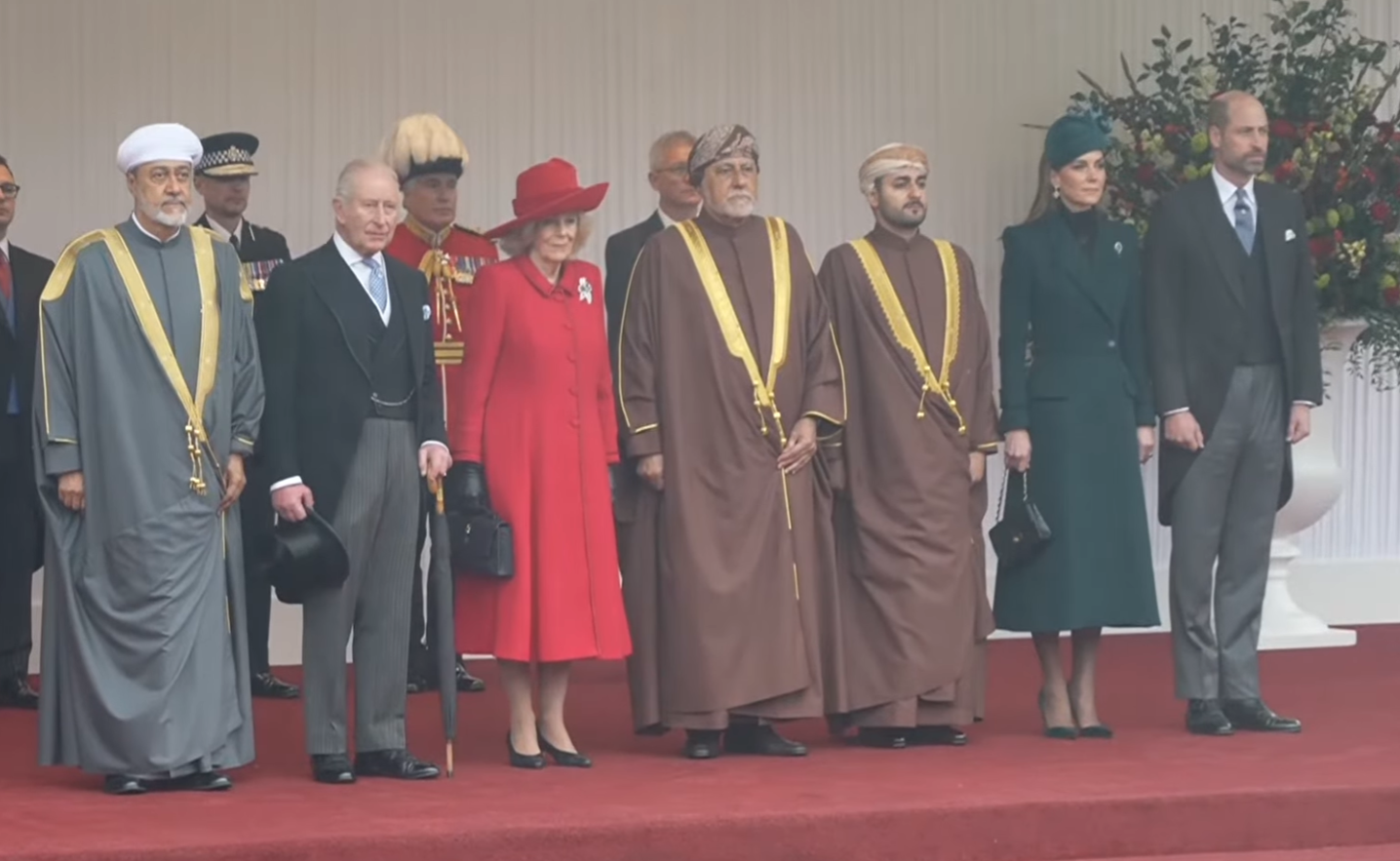
The programme for the State Visit is designed to be comprehensive, reflecting the depth and breadth of the UK-Oman relationship. It typically includes high-level meetings with government officials, engagements with business leaders, and cultural exchanges. The ceremonial welcome at Windsor Castle, where the Prince and Princess of Wales played a key role, is a cornerstone of the formal proceedings, setting a tone of respect and partnership. The inclusion of a carriage procession further amplifies the pageantry and symbolism associated with such high-level diplomatic engagements.
Following the initial welcome, a luncheon hosted by King Charles and Queen Camilla provided an intimate setting for further discussion and relationship building. The culmination of the first day’s events was a glittering State Banquet held at Windsor Castle. These banquets are elaborate affairs, attended by members of the Royal Family, dignitaries, and prominent figures from various sectors, serving as a grand finale to the initial day of the visit and a platform for reinforcing diplomatic bonds through shared tradition and hospitality.
The Princess of Wales’s Strategic Jewellery Choices
Catherine’s selection of the Prince of Wales Feather Brooch for this State Visit is indicative of her thoughtful approach to royal style. Her jewellery choices are rarely arbitrary; they often carry symbolic meaning, connect her to historical narratives, or pay homage to her predecessors. In choosing this particular brooch, she not only aligned herself with a lineage of esteemed royal women but also subtly underscored the historical depth of the UK’s relationship with Oman.
The Prince of Wales Feather Brooch, with its connection to the title itself, serves as a powerful symbol of continuity and heritage. Its diamond and emerald embellishments speak to the prestige and significance of the wearer. By choosing to wear the emerald drop, Catherine amplified the brooch’s presence and historical gravitas, ensuring it was a focal point of her ensemble. This decision can be interpreted as a deliberate act of honouring tradition while simultaneously projecting a modern and confident image of the monarchy.
Her past engagements have demonstrated a similar penchant for historically significant pieces. From the Cambridge Lover’s Knot Tiara, a piece closely associated with Princess Diana, to other heirlooms that have graced royal women for centuries, Catherine consistently demonstrates an understanding of the power of jewellery to communicate narratives and reinforce the enduring strength of the monarchy. Her choices are a blend of personal style and strategic diplomacy, allowing her to connect with the past while confidently stepping into her role as a future Queen.
Broader Implications and Analysis
The successful execution of State Visits, such as the one hosted for the Sultan of Oman, holds significant implications for a nation’s standing on the global stage. These visits are not merely ceremonial; they are potent tools of diplomacy that can lead to tangible benefits in terms of trade agreements, security cooperation, and enhanced cultural understanding. For the United Kingdom, maintaining strong relationships with key international partners like Oman is crucial for economic prosperity and geopolitical stability.
The presence of the Prince and Princess of Wales at the forefront of these diplomatic engagements signifies the evolving role of the younger generation of royals in representing the Crown. Their active participation, coupled with their personal charisma and global appeal, contributes to the enduring relevance and soft power of the British monarchy. Catherine’s choice of the Prince of Wales Feather Brooch, in this context, can be seen as a subtle yet effective way to weave the historical narrative of the monarchy into the fabric of contemporary diplomatic efforts. It reinforces the notion of continuity and legacy, demonstrating that the institution is built upon a deep and rich history, while simultaneously looking towards the future.
The attention garnered by such sartorial choices also highlights the significant influence of royal style on public perception and international media. While the primary focus of a State Visit remains on diplomatic objectives, the visual elements, including the fashion choices of key figures, inevitably capture global attention. Catherine’s ability to blend personal elegance with historical resonance ensures that these moments are not only aesthetically pleasing but also strategically impactful, reinforcing the image of a modern, outward-looking, and historically grounded monarchy. The successful navigation of these diplomatic waters, marked by both substance and style, underscores the continuing importance of the Royal Family in Britain’s international relations.



 Nila Kartika Wati

 Lina Irawan

 Yuyun Lusiyani

 Ana Megawati

 Joko Widodo
