
 Yuyun Lusiyani
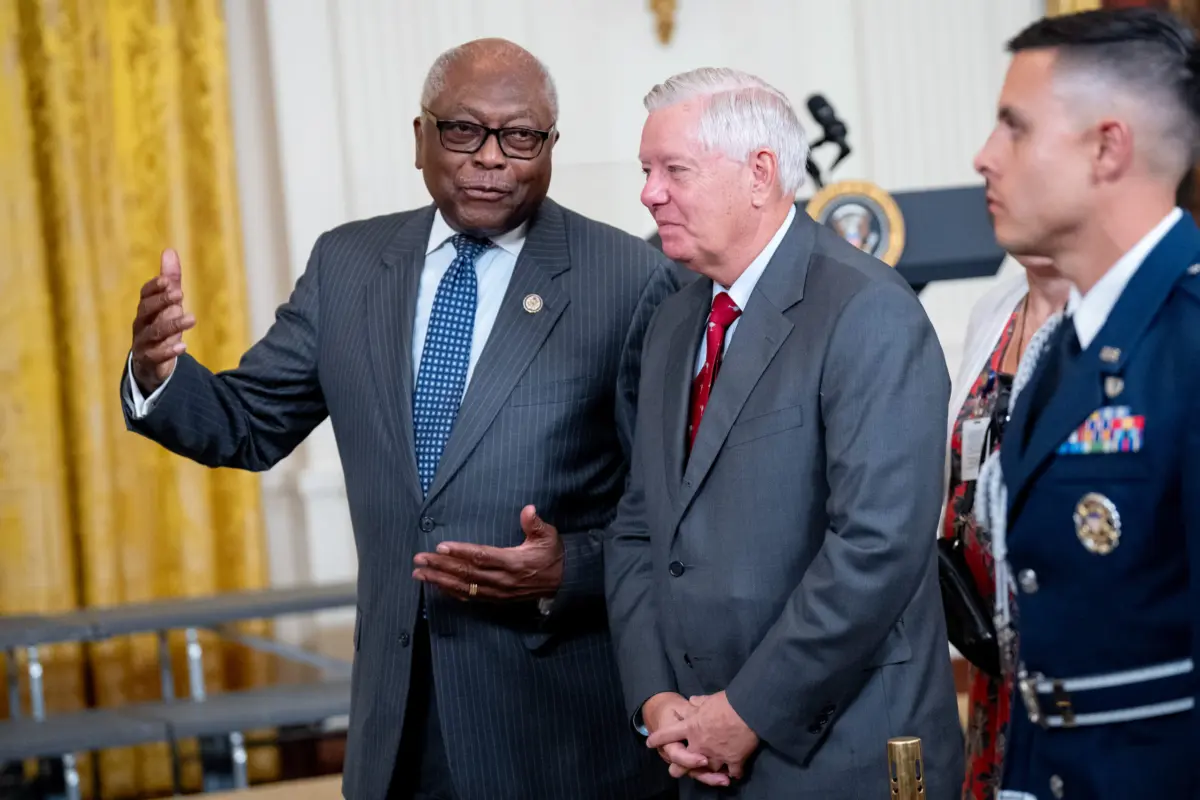
A clandestine FBI investigation into an alleged widespread bribery scheme involving a Hawaiian naval defense contractor, Navatek, and some of Washington’s most influential lawmakers, including the late Sen. Lindsey Graham, Rep. James Clyburn, and Rep. Joe Wilson, was abruptly shut down following a sweeping purge of anti-corruption teams within the FBI and Department of Justice under the Trump administration. This explosive revelation, brought to light by ProPublica’s extensive review of thousands of legal documents, internal company emails, and numerous interviews, paints a stark picture of alleged “pay-to-play” politics at the highest levels of government and a subsequent dismantling of the very mechanisms designed to prosecute such corruption.
The Heart of the Allegations: The Graham Dinner
At the center of the investigation was a private dinner on March 3, 2020, at the upscale Charlie Palmer Steak in Washington, D.C. Sen. Lindsey Graham, then a powerful Republican from South Carolina, met with two executives and a lobbyist from Navatek. The meeting, lasting a mere 45 minutes, reportedly came with a steep price tag: a prerequisite commitment of $40,000 in campaign contributions to Graham’s reelection bid. Martin Kao, Navatek’s CEO, expressed a cynical view of the encounter in an email to associates the day prior, stating, “Shoot all he has to really do is stop by and say ‘yes.’ That should only take a minute and he’s on his way. We don’t need to pretend we give a shit about each other.”
Kao’s recollection to the FBI, detailed during his debriefings, suggested his confidence was not misplaced. Graham, he claimed, agreed to direct a $10 million government contract towards Navatek in South Carolina. In return, Graham allegedly requested a total of $100,000 in campaign donations from Kao. This alleged quid pro quo served as the initial focal point for an FBI investigation launched in early 2025, which would later uncover a broader pattern of alleged bribery across Capitol Hill.
Navatek’s Grand Ambition and "The Method"
Navatek, founded in Hawaii in the 1970s, had once thrived on its connections with powerful local figures like the late Sen. Daniel Inouye. By 2019, when Martin Kao assumed ownership, the company was in search of new political patrons to revive its fortunes. Kao, despite lacking a technical background — he started as CFO and openly admitted disinterest in the company’s technology, once fabricating stories about a youth spent selling newspapers for street gangs — possessed an audacious vision. He aimed to transform Navatek from a $10 million company into a billion-dollar defense contractor within three years, a goal a former engineer described as the ambition of an "absolute megalomaniac."
To achieve this, Kao devised a systematic strategy he dubbed "the method." This approach involved establishing Navatek offices in the states or districts of influential members of Congress, partnering with local universities, and crafting proposals for federally funded research. With the added legitimacy of academic collaboration and the guidance of well-connected lobbyists, Navatek would then solicit federal research funding from these lawmakers.
Kao confessed to the FBI that these deals were often struck in intimate, face-to-face meetings with politicians or their trusted staff. In exchange for "generous campaign donations" from Navatek executives, family members, and lobbyists, lawmakers would insert specific, detailed language into defense budgets. This language, while not explicitly naming Navatek, would describe work so precise that Navatek became the only logical choice for the eventual government contract. Furthermore, congressional staff would allegedly "backchannel" with the Navy after the bills passed, ensuring that contracting offices directed the money to Navatek, effectively circumventing the competitive bidding process, according to emails seen by ProPublica.
Under Kao’s leadership, Navatek’s "method" initially proved highly successful. The company, which had been in a rebuilding phase, secured $40.7 million in new government contracts in 2020 alone. Duke Hartman, a Navatek executive who attended the dinner with Graham and was later named a subject of the FBI probe, meticulously tracked the company’s progress and requested funds using extensive color-coded spreadsheets. Kao specifically identified Hartman as someone with deep knowledge of the "impropriety of the business model," and these spreadsheets provided the FBI with a detailed roadmap of Navatek’s congressional ties, listing Graham as a "key supporter" in South Carolina.
A Web of Influence: South Carolina’s Power Players
Navatek primarily targeted lawmakers from smaller states who held positions on powerful appropriations committees, such as Sen. Susan Collins of Maine (whose conduct ProPublica previously reported was also probed by the FBI), because they controlled significant budgetary power with fewer constituents to appease. South Carolina’s senior senator, Lindsey Graham, fit this profile perfectly. As Eric Schiff, a former Navatek executive, noted, “You can get access to Lindsey Graham.”
Beginning in early 2019, Kao, Hartman, and other Navatek executives approached the offices of Graham, Clyburn (a leading Democrat), and Wilson (an influential Republican on defense spending) — all key members of the South Carolina delegation. They partnered with the University of South Carolina on a joint research project, seeking $9.5 million in federal funding. Internal company records reveal an ambitious plan to secure up to $90 million in South Carolina alone, by extending this initial project for two more years and green-lighting two additional proposals.
The $9.5 million "power and energy" proposal promised cutting-edge research on distributing power for advanced naval systems, which Graham’s office later lauded as essential for "the fights of the future." However, a former executive with direct knowledge of the work stated that Navatek had "zero people" capable of performing the pitched research, and their initial output "looked like a college senior’s graduation project." Graham’s office referred questions about the work’s quality to the Navy and the university, while the Office of Naval Research remained silent.

Despite the alleged lack of expertise, Congress moved forward. In May 2019, Willie Lyles III, Clyburn’s legislative director, informed Navatek that the House Appropriations Committee would endorse funding for a "modular and scalable integrated power and thermal system," language that appeared verbatim in the House report three days later. In September, Graham’s Senate Appropriations Committee followed suit, setting aside $9.5 million for "Talent and Technology for Navy Power and Energy Systems." FBI agents noted the technical description accompanying this allocation was almost identical to text found in Hartman’s internal spreadsheets two months prior, suggesting Navatek may have ghostwritten it.
After the Senate advanced its budget, Navatek allegedly sent bourbon to several lawmakers, including Graham and Collins, a likely violation of Senate gift rules, which both offices denied receiving. Clyburn later received a $102.60 fruit basket from Edible Arrangements. The final spending bill, including $9.5 million for Navatek’s project, passed on December 19, 2019. Intriguingly, at this point, no significant donations had yet been made to Clyburn, Wilson, or Graham.
This quickly changed. Within days, an executive pledged $750 to Wilson’s campaign, followed by $3,500 from Kao and his lobbyist. Kao then planned a massive $300,000 political fundraising spree for early 2020. He secured private meetings with Graham, Wilson, and Clyburn, where he aimed to solicit significantly more federal funding. Kao told the FBI that each lawmaker subsequently requested $100,000. He explained Navatek’s strategy of delayed donations: "We became clever in our own right and figured out how to dangle the carrot until we saw some assurance that the Ask was in the budget."
To arrange the Graham meeting, Kao enlisted veteran South Carolina lobbyist Michael Tongour, a law school friend of Graham. Tongour confirmed that a $40,000 contribution was required to secure a private dinner, and Kao readily agreed, needing only a "yes" from the Senator. Kao described these discussions as "very frank and oddly not at all awkward… everyone knows the deal."
The FBI’s Sweeping Investigation Takes Shape
In early 2025, the FBI initiated a comprehensive bribery investigation on Capitol Hill, with the Graham steakhouse dinner as its nexus. Kao, facing prison time for fraud and campaign finance violations, confessed to federal agents that his business model revolved around bribing public officials for government contracts, often for "worthless" research. He implicated some of Congress’s most powerful figures from both parties, detailing campaign cash-for-contracts deals not only with Graham but also with Clyburn and Wilson.
Kao specifically recalled Graham stating, "This is how much I want, and how much I am going to give you," according to agent notes from a late 2024 debrief. While Kao’s admissions would constitute a vast criminal bribery scheme, proving them in court is a challenge, partly due to recent Supreme Court rulings that have made corruption convictions more difficult by requiring explicit evidence of a quid pro quo. Kao’s motivation for a reduced sentence also presented a hurdle for prosecutors.
However, the two experienced anti-corruption FBI investigators on the case found Kao’s confession largely consistent with a trove of records seized from Navatek. They formally designated two former Navatek executives, Duke Hartman and Joshua Knight, as subjects of the bribery investigation. While Graham, Clyburn, and Wilson were not yet formally designated subjects, agents were actively investigating their interactions with Kao and indicated to their superiors that the lawmakers could become subjects in the future, according to ProPublica’s review of records. The details of this investigation had never been publicly reported until now.
The Unprecedented Purge: A Case Abruptly Halted
Before the investigation could fully gain momentum, the newly returned Trump administration almost immediately began dismantling the specialized FBI and Department of Justice teams dedicated to public corruption. This move, widely seen as an act of revenge for previous investigations into Trump himself, had a direct and devastating impact on the Navatek probe.
The two experienced agents on the case, Michelle Ball and Kevin Gounaud, were swept up in the purge. Ball was fired in October 2025, and Gounaud was pushed out in early 2026. Through their lawyer, both agents declined to comment. The career prosecutor assisting them, Kate Fifield of the Justice Department’s anti-corruption section, quit after Trump appointees reportedly forbade the section from filing any new cases. Fifield, who had been wrapping up a high-profile prosecution of a retired Navy admiral for bribery, had considered deploying undercover agents to gather irrefutable evidence in the Navatek case – a critical step given the legal complexities of proving quid pro quo.
Today, with the anti-corruption units gutted and their authority revoked, there is no one left to investigate Kao’s explosive allegations. The case is effectively dead, a casualty of the Trump administration’s abandonment of public corruption prosecution.
Official Responses and Strenuous Denials
The White House referred ProPublica’s questions to the FBI and DOJ. The Department of Justice, without addressing specific details of the investigation, stated, “Under President Trump, the Justice Department is rooting out the weaponization, corruption, and institutional rot that ran rampant under Joe Biden’s two-tiered system of justice.” FBI spokesperson Ben Williamson dismissed Kao’s claims as “half baked” and “misleading,” adding that personnel removals were solely due to unethical conduct or undermining the mission.

Representatives for the accused lawmakers vehemently denied any wrongdoing. Jami LaRue, Clyburn’s communications director, stated that “whatever a donor may think or say, a donation would never cause Congressman Clyburn to increase his support for the donor’s request.” She added that Clyburn assists institutions in his district and would not be swayed by "the crimes and lies of an imprisoned fraudster."
David Snider, Wilson’s communications director, did not address detailed questions but asserted that “Congressman Wilson does and has always abided by campaign donation regulations set forth by the Federal Election Commission.”
Taylor Reidy, who served as Lindsey Graham’s communications director and now holds the same post for his sister, Darline Graham (appointed to fill his seat after his death earlier this year), maintained that “any allegations of quid-pro-quo behavior or wrongdoing by the late Senator Lindsey Graham or his staff are simply false.” She characterized the accusations as “ravings of a convicted felon” and stated her office was never contacted by the FBI. She added that after Kao’s arrest, Graham’s campaign disgorged his donations.
Michael Tongour, the lobbyist who arranged the Graham dinner, confirmed elements of Kao’s account, including the exchange of an envelope of checks and Graham’s brief attendance. However, he adamantly denied witnessing any explicit, illegal deal. “I would remember that forever,” Tongour said, insisting Graham supported Navatek’s requests because they benefited the state. Tongour severed ties with Navatek immediately after Kao’s arrest.
The University of South Carolina, which partnered with Navatek, also denied knowledge of any political contributions, stating its “sole objective… was to expand our research enterprise.”
The Lingering Shadow: Aftermath and Unanswered Questions
Martin Kao is indeed the only individual to face prison time in this sprawling saga. He pleaded guilty in 2022 to illegal campaign donations and a loan fraud scheme, receiving an 87-month sentence in 2025. From federal detention, Kao bitterly remarked to ProPublica, “[It’s] corruption at its best. But I am the only one rotting in prison.”
Kao’s arrest in September 2020 plunged Navatek into chaos, leading lobbyists, universities, and congressional offices to cut ties. Sen. Susan Collins, who faced a tight reelection bid, denied wrongdoing and called Kao a “convicted liar” after ProPublica’s earlier report on her alleged involvement.
Amidst Navatek’s collapse, executive Duke Hartman and his partner Joshua Knight started a new military research company in South Carolina called Integer Technologies in 2021. Integer’s inaugural project was the very one Navatek had brokered with Graham. Hartman, who was never criminally charged, settled a civil lawsuit from his former employer for $425,000, admitting no wrongdoing.
Integer Technologies has since thrived. Last year, it reported $81 million in contracts and projected an increase to $375 million by 2030, forging partnerships with universities across multiple states. The University of South Carolina now hails its collaboration with Integer as a “model for public-private success.” Integer also continues to cultivate ties with powerful politicians, with Hartman posting a photo on LinkedIn in late 2024 with Speaker of the House Mike Johnson, praising leaders who “really care for the people they serve.” Johnson’s office did not respond to comment requests.
The chilling conclusion of the FBI’s investigation raises profound questions about accountability for public officials and the integrity of the nation’s anti-corruption mechanisms. With powerful figures untouched and the alleged architect of the scheme, Martin Kao, serving time while his former associates prosper, the case stands as a stark testament to the vulnerability of justice when political will shifts. The implications extend beyond individual allegations, casting a long shadow over the efficacy of checks and balances designed to prevent the commingling of political influence and personal gain within the halls of power.



 Nila Kartika Wati

 Eva Lovia

 Lina Irawan

 Ana Megawati

 Joko Widodo
