
 Yuyun Lusiyani
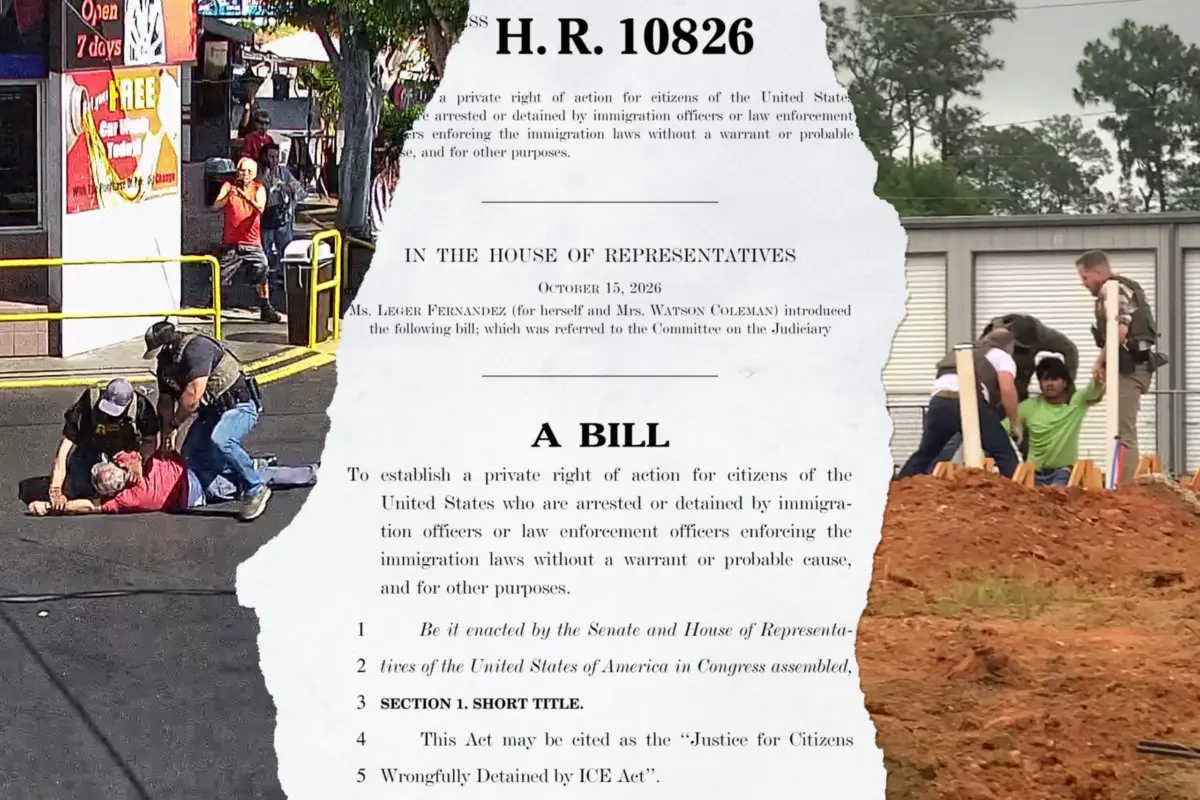
A significant legislative effort aimed at bolstering the rights of U.S. citizens against wrongful detention and arrest by immigration agents has been launched in the House of Representatives. Last week, a New Mexico Democrat introduced a bill designed to streamline the process for citizens to sue federal immigration authorities and the government, marking a critical step toward enhanced accountability within the nation’s immigration enforcement framework. This initiative, officially titled the Justice for Citizens Wrongfully Detained by ICE Act (H.R. 10826), directly credits investigative journalism for illuminating the systemic issues it seeks to address, bringing into sharp focus the often-impenetrable shield of immunity federal agents have historically enjoyed.
The Catalyst: ProPublica’s Revealing Investigations
The impetus for this legislation stems directly from a series of in-depth investigations conducted by ProPublica. Congresswoman Teresa Leger Fernández (D-NM), the bill’s primary sponsor, explicitly cited these reports as the "catalyst" for her legislative action. Earlier this month, ProPublica published findings revealing that more than 500 U.S. citizens had been subjected to warrantless detentions by immigration agents during the second Trump administration alone. This alarming figure underscored a broader pattern of alleged civil rights violations and procedural lapses within Immigration and Customs Enforcement (ICE) and other components of the Department of Homeland Security (DHS). The investigations highlighted cases where individuals, despite possessing valid proof of U.S. citizenship, were arrested, detained, and sometimes even subjected to deportation proceedings, often for extended periods and without due process. These revelations painted a troubling picture of an enforcement system operating with insufficient checks and balances, where the fundamental rights of citizens could be jeopardized.
Deconstructing the Justice for Citizens Wrongfully Detained by ICE Act
The proposed Justice for Citizens Wrongfully Detained by ICE Act (H.R. 10826) seeks to fundamentally reshape the legal landscape governing interactions between citizens and immigration enforcement. Its core provisions are multifaceted, addressing several key areas of concern:
- Rolling Back Protections: The bill aims to dismantle the existing legal protections, primarily qualified immunity, that currently shield immigration agents and the federal government from lawsuits. Qualified immunity, a doctrine developed by the Supreme Court, often makes it exceedingly difficult to sue government officials for constitutional violations unless the specific conduct in question has been "clearly established" as illegal in prior court rulings. By limiting these protections, the legislation intends to create a more level playing field for citizens seeking redress.
- Establishing Minimum Compensation: Recognizing the profound and often devastating impact of wrongful detention, the bill proposes to establish a minimum level of compensation for individuals who successfully win their lawsuits against the government or its agents. This provision acknowledges that the trauma, financial hardship, and reputational damage inflicted by wrongful detention warrant not just an acknowledgment of wrongdoing, but also substantive financial recompense, moving beyond the current discretionary and often inadequate awards.
- Extending the Statute of Limitations: The legislation also seeks to extend the statute of limitations for such cases, providing victims more time to gather evidence, seek legal counsel, and file their claims. Wrongful detentions can be complex, often involving bureaucratic hurdles, language barriers, and a fear of retaliation, which can delay a victim’s ability to pursue legal action. An extended timeline would offer a more realistic window for justice.
- Reallocating Unspent ICE Funding: In a pointed move, the bill includes a provision to claw back any unspent Immigration and Customs Enforcement funding from President Donald Trump’s so-called "One Big Beautiful Wall Act." This reappropriation reflects a legislative intent to redirect resources away from what some critics view as aggressive and potentially misdirected enforcement strategies, and towards ensuring accountability and protecting civil liberties.
Congresswoman Leger Fernández introduced the bill with the support of co-sponsor Rep. Bonnie Watson Coleman (D-NJ), signaling a bipartisan Democratic effort to push for these reforms.
The Current Legal Landscape: Obstacles to Accountability
Under the existing legal framework, suing federal officers for wrongful arrests, excessive force, or other constitutional violations is notoriously difficult. Federal agents frequently invoke qualified immunity, which requires plaintiffs to prove that the officer violated a clearly established statutory or constitutional right, and that a reasonable officer would have known their conduct was unlawful. This high bar often results in cases being dismissed before they even reach a jury. Furthermore, federal agents have the ability to move cases from state to federal court, where the legal standards for suing federal officials can be even more stringent.
The primary avenue for citizens to sue federal agents for constitutional violations is through a "Bivens action," derived from the 1971 Supreme Court case Bivens v. Six Unknown Named Agents. However, subsequent Supreme Court rulings have severely curtailed the scope of Bivens, limiting it to a narrow set of circumstances and making it increasingly challenging for plaintiffs to succeed. This judicial narrowing has effectively created a significant gap in accountability for federal agents, including those involved in immigration enforcement. Local prosecutors also face hurdles when attempting to bring charges against federal agents, as these agents can claim federal supremacy and immunity, often leading to cases being transferred to federal jurisdiction or dropped.
This legal labyrinth has meant that people accusing immigration agents of wrongdoing can currently sue only in highly specific, often exceptional, circumstances. Previous legislative attempts by Democrats to reform or eliminate qualified immunity for federal law enforcement, such as those introduced by Senator Ed Markey and Representative Ayanna Pressley, or Senator Sheldon Whitehouse and Representative Hakeem Jeffries, have failed to gain sufficient traction in Congress, underscoring the political and legal challenges inherent in reforming this area of law.
A Pattern of Wrongful Detentions: Data and Demographics
The ProPublica investigations that inspired this bill brought to light not just isolated incidents, but a disturbing pattern of U.S. citizens being detained by immigration authorities. Beyond the more than 500 citizens detained in warrantless arrests during the second Trump administration, the reports detailed that over 100 citizens were held after agents questioned the validity of their citizenship claims, often despite readily available evidence. Particularly concerning was the revelation that at least 70 children and teenagers were among those wrongfully detained. These numbers are likely conservative, as comprehensive federal data on such incidents is not systematically collected or publicly released, making it difficult to ascertain the full scope of the problem.
The demographics of those affected often include individuals from marginalized communities, people of color, and those with limited English proficiency, who may be disproportionately targeted or less equipped to navigate the complex legal and administrative challenges of proving their citizenship while in detention. These detentions can result from mistaken identity, overzealous enforcement, or a disregard for proper verification procedures, leading to profound emotional trauma, financial ruin, job loss, and family separation. For children, the experience can be particularly harrowing, leaving lasting psychological scars.
Last year, prompted by an earlier ProPublica investigation that found more than 170 citizens had been detained by immigration agents, congressional Democrats initiated a wide-ranging investigation into these practices. This ongoing congressional scrutiny provides additional context and corroboration for the systemic issues that Leger Fernández’s bill aims to rectify.
Voices on the Bill: Advocates and Agencies
Congresswoman Leger Fernández articulated the fundamental principle driving her legislation in an interview with ProPublica: accountability. "We know that when there are consequences, bad actors start behaving better because they don’t want to face those consequences," she stated, emphasizing that the bill is not just about addressing past wrongs but also about deterring future misconduct. She further warned that without such legislative intervention, agents "will continue to violate the law, to violate their own policy, and to violate the Constitution without any consequences." This stance resonates with civil liberties advocates and organizations like the American Civil Liberties Union (ACLU), who have long argued that qualified immunity fosters a culture of impunity within law enforcement.
Conversely, the Department of Homeland Security (DHS), the parent agency of ICE, has maintained a consistent defense of its operations. When asked about the legislation and the underlying allegations, DHS reiterated its claims that it is not intentionally arresting U.S. citizens and defended its immigration operations as "highly targeted." This official response suggests a narrative that frames wrongful detentions as rare anomalies rather than systemic issues, downplaying the implications of the ProPublica findings. However, critics argue that even if unintended, the sheer volume of documented cases points to a failure in protocols, training, or oversight that allows such "mistakes" to occur repeatedly. Law enforcement unions typically oppose measures that would reduce protections for their members, arguing that such changes could expose agents to frivolous lawsuits and hinder their ability to perform their duties effectively, though no specific statement has been made by such groups regarding this particular bill.
Broader Implications and the Path Forward
The Justice for Citizens Wrongfully Detained by ICE Act carries significant implications across several domains. For individuals, its passage could represent a monumental shift, providing a clearer and more accessible path to justice and compensation for those whose constitutional rights have been violated by immigration authorities. It would empower citizens and potentially reduce the chilling effect that fear of retaliation or the futility of legal action currently imposes.
For federal agencies like ICE, the bill could necessitate a fundamental reevaluation of training protocols, arrest procedures, and oversight mechanisms. The prospect of increased liability and financial consequences for wrongful detentions could compel a greater emphasis on due process, citizenship verification, and respect for civil liberties. It might also lead to a more cautious approach in enforcement actions, particularly in situations where citizenship status is ambiguous.
Politically, the bill faces an uphill battle. While it enjoys support from within the Democratic caucus, particularly among progressives and those advocating for immigration reform, it is likely to encounter strong opposition from Republicans and potentially some moderate Democrats who are wary of diminishing protections for federal agents. The debate around qualified immunity has been contentious, often framed as a conflict between accountability and effective law enforcement. The bill’s provision to claw back ICE funding could also be a point of significant partisan disagreement. Its journey through Congress will be a test of political will and a barometer of the current legislative appetite for reforming federal law enforcement accountability.
Ultimately, the introduction of the Justice for Citizens Wrongfully Detained by ICE Act underscores the critical role of investigative journalism in shining a light on government practices and inspiring legislative change. It highlights a persistent tension between national security imperatives and the protection of fundamental civil liberties, a tension that Congress is now being called upon to resolve through meaningful legal reform. The outcome of this legislative effort will significantly shape the future of accountability for immigration enforcement in the United States.




 Nila Kartika Wati

 Eva Lovia

 Lina Irawan

 Ana Megawati

 Joko Widodo
