
 Jia Lissa
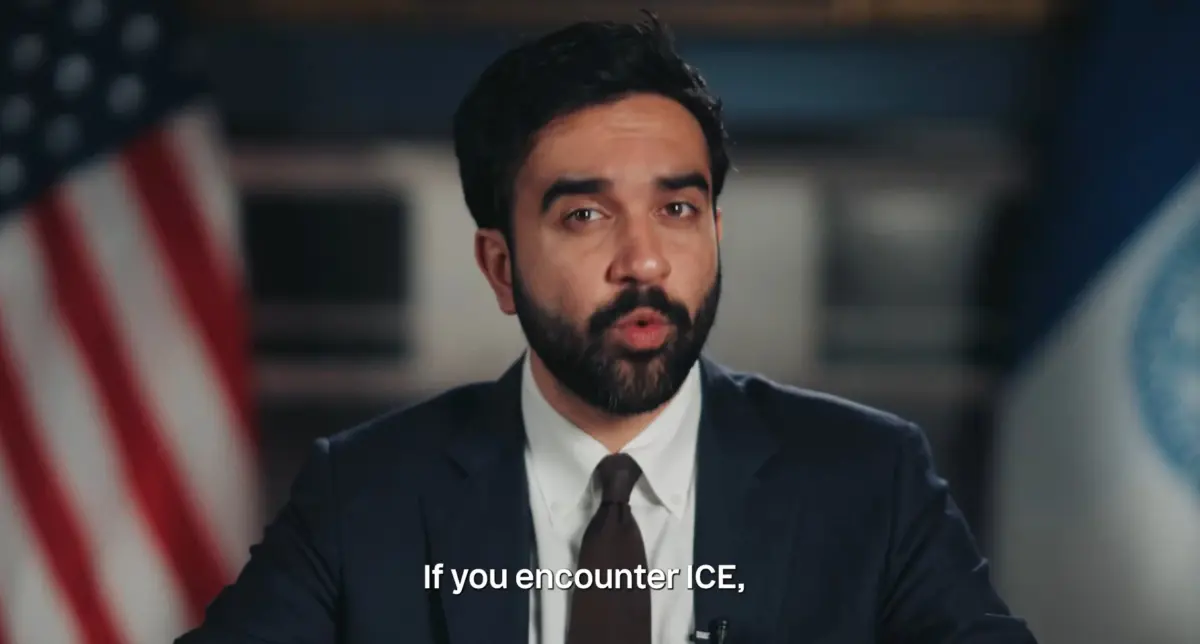
New York City Mayor Zohran Mamdani has ignited a fierce national debate following the release of a Spanish-language public service announcement providing specific instructions to residents on how to navigate encounters with federal immigration authorities. The video, published on Friday, October 23, 2026, offers a step-by-step guide for individuals approached by Immigration and Customs Enforcement (ICE) agents, emphasizing constitutional protections and the limitations of federal reach within private spaces. While the Mayor’s office framed the initiative as an essential "Know Your Rights" campaign intended to maintain public order and safety, the move has drawn swift and severe condemnation from Republican lawmakers and conservative commentators who characterize the advice as an attempt to obstruct federal law enforcement.
The controversy arrives at a moment of heightened tension in New York City regarding immigration policy and federal oversight. In the video, Mayor Mamdani, speaking directly to the camera in Spanish, outlines the legal distinctions between judicial warrants and administrative requests. He explicitly advises New Yorkers that ICE agents are not permitted to enter private residences or workplaces without a warrant signed by a judge. "In a document, look for the words ‘United States District Court’ and a judge’s signature," Mamdani states in the clip. "You can ask the officers to pass the order under the door. If they do not have a judicial warrant, you can leave the door closed and say, ‘I do not consent to your entry.’"
The Mayor further instructs residents on how to conduct themselves during interactions in public spaces, reminding them of their Fifth Amendment rights. "Second, you have the right to remain silent. If ICE stops you on the street, ask, ‘Am I free to go?’ If the agent says yes, walk away calmly," he continues. The video concludes with a recommendation that individuals consult with legal counsel before signing any federal documents or making statements regarding their immigration status.
Chronology of Escalating Tensions
The release of the video is not an isolated event but rather the culmination of several weeks of friction between the City of New York and federal immigration agencies. Earlier in October 2026, a high-profile incident involving an ICE discharge of a firearm during an attempted apprehension of an undocumented migrant in Brooklyn resulted in widespread civil unrest. The migrant, who was in a vehicle with his young son at the time of the shooting, was wounded, sparking protests across all five boroughs.
Following that incident, Mayor Mamdani’s administration faced intense pressure from progressive advocates and civil rights organizations to take a more defiant stance against federal enforcement actions that they argued endangered bystanders and undermined community trust in local government. The "Know Your Rights" video appears to be the administration’s formal response to those calls for action.
By midday Friday, shortly after the video was uploaded to the Mayor’s official social media channels, the political reaction began to intensify. By 2:00 PM, several high-ranking members of the U.S. Senate and House of Representatives had issued statements condemning the Mayor’s actions, setting the stage for a broader legislative and rhetorical battle over the limits of municipal authority in federal immigration matters.
Legal Context and the Sanctuary City Framework
The advice provided by Mayor Mamdani rests on established constitutional principles, specifically the Fourth Amendment’s protection against unreasonable searches and seizures and the Fifth Amendment’s right against self-incrimination. Under current U.S. law, an administrative warrant (often signed by an ICE official rather than a judge) does not grant law enforcement the authority to enter a private home without consent. This legal nuance is a frequent point of contention in sanctuary jurisdictions like New York City, where local laws often prohibit city agencies from cooperating with federal "detainer" requests unless a judicial warrant is presented.
New York City’s status as a sanctuary city has evolved significantly over the last decade. Since the mid-2010s, the city has expanded its "Right to Counsel" programs, which provide public funding for legal representation for immigrants facing deportation. According to data from the New York City Mayor’s Office of Immigrant Affairs (MOIA), approximately 3.1 million immigrants reside in the city, making up nearly 40% of the total population. Of these, an estimated 500,000 are undocumented. The city argues that by ensuring these residents feel safe interacting with local police and healthcare providers without fear of deportation, the overall safety of the city is enhanced.
However, critics argue that these policies create a "two-tier" justice system where federal laws are selectively ignored by local executives. The use of taxpayer resources to produce and distribute instructional videos in foreign languages specifically designed to limit the efficacy of federal agents is, according to opponents, a bridge too far.

Congressional and Political Reactions
The backlash from Republican leadership was immediate and pointed. Senator Rick Scott (R-FL) was among the first to respond, sharing the video with a scathing critique of the Mamdani administration. "Unbelievable," Scott wrote. "The Mayor of New York is openly helping illegal aliens evade @ICEgov and undermine the law. Radical Democrats are doing EVERYTHING in their power to recreate Biden’s open border disaster." Scott’s comments reflect a broader GOP narrative that links municipal sanctuary policies to federal border management, a central theme of the 2026 political cycle.
Representative Nick LaLota (R-NY), whose district includes parts of Long Island, echoed these sentiments while drawing a comparison to international crises. "NYC is becoming more like Paris every day," LaLota stated. "Today, the socialist mayor is using taxpayer resources to instruct illegals, in Spanish, how to evade accountability. Biden’s open border, canceling Remain in Mexico, sanctuary city policies and free hotels, healthcare and lawyers for illegals isn’t compassion. They’re policy choices that are making us more like France."
The rhetoric on social media was even more aggressive. Prominent conservative influencers and commentators characterized the Mayor’s video as a form of "sedition" or "obstruction of justice." Mike Lee (R-UT) noted that "at no point in this video is anyone urged to abide by the laws of the United States," arguing that the message was not intended for the benefit of the American public. Others, such as Ryan Fournier and Nick Sortor, called for immediate federal intervention, with some even suggesting that the Mayor’s security clearances or federal funding for the city should be revoked.
Analysis of Implications for Federal-Local Relations
The conflict highlights a deepening constitutional crisis regarding the "anti-commandeering" doctrine, which holds that the federal government cannot compel state or local governments to enforce federal regulatory programs. While the Supreme Court has historically upheld the right of states to refuse participation in federal enforcement, the act of a Mayor actively "coaching" residents to refuse cooperation represents a more proactive approach to local autonomy.
From a policy perspective, the Mamdani administration’s move may lead to several outcomes:
- Litigation: The Department of Justice (DOJ) may seek an injunction against the city, arguing that the Mayor is actively interfering with federal law enforcement operations.
- Budgetary Retaliation: Congressional Republicans have already signaled a desire to withhold federal law enforcement grants from "non-compliant" cities.
- Operational Shifts by ICE: If federal agents find it increasingly difficult to execute warrants in residential areas due to increased public awareness of their rights, the agency may shift its tactics toward more aggressive workplace enforcement or "at-large" arrests in public transit hubs, potentially leading to further public confrontations.
Broader Socioeconomic Impact
The debate also touches upon the economic strain currently felt by New York City. Critics of the Mayor, including some local residents, have expressed frustration that the administration is focusing on immigration advocacy while the city grapples with a high cost of living, a housing shortage, and infrastructure challenges. "New Yorkers are paying a fortune in rent, struggling with the cost of living, and dealing with a thousand other problems," remarked one social media critic. "And Mamdani is busy making videos about ICE."
Conversely, supporters of the Mayor argue that the economic stability of the city is tied to its immigrant workforce. Industries such as construction, hospitality, and healthcare rely heavily on immigrant labor. Proponents suggest that mass deportation efforts or a climate of fear would lead to a labor vacuum, further driving up costs for all New Yorkers. They maintain that educating the public on their constitutional rights is a fundamental duty of a municipal leader, regardless of the political sensitivity of the subject matter.
As the video continues to circulate, the Mamdani administration has shown no signs of retracting the message. A spokesperson for the Mayor’s office reiterated on Friday evening that "transparency regarding the law is not a crime" and that the city remains committed to protecting all its residents from "unconstitutional overreach."
The ongoing culture war surrounding ICE and sanctuary policies shows no signs of abating. With the 2026 midterms approaching and immigration remaining a top-tier issue for voters, the standoff between New York City Hall and federal authorities is likely to serve as a primary flashpoint in the national discourse over law, order, and the definition of American citizenship.


 Nila Kartika Wati

 Eva Lovia

 Lina Irawan

 Yuyun Lusiyani

 Ana Megawati

 Joko Widodo
