
 Jia Lissa
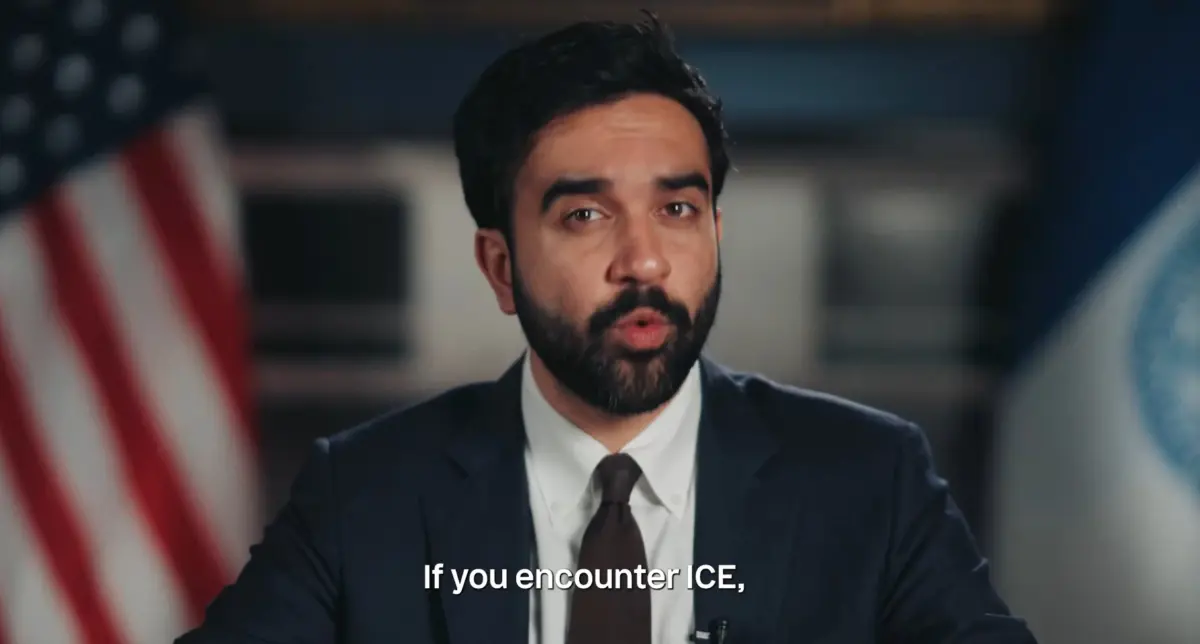
New York City Mayor Zohran Mamdani has ignited a significant political firestorm following the release of a high-production digital video, delivered entirely in Spanish, which provides specific instructions to New Yorkers on how to interact with U.S. Immigration and Customs Enforcement (ICE) agents. The video, distributed across the Mayor’s official social media platforms on Friday, offers a step-by-step guide for residents who may face encounters with federal immigration authorities in private residences or on public streets. While the Mayor’s administration frames the initiative as a "Know Your Rights" campaign intended to ensure due process and public safety, Republican lawmakers and conservative commentators have characterized the move as an attempt to obstruct federal law enforcement and undermine national security.
The controversy comes at a time of heightened tension in New York City regarding immigration policy, sanctuary status, and the boundaries of municipal authority in the face of federal enforcement actions. By providing explicit strategies for evading detention and questioning, Mamdani has positioned the city in direct opposition to federal immigration priorities, a move that critics argue crosses the line from civil rights advocacy into active interference with law enforcement operations.
The Core Advice: Navigating Federal Encounters
In the video, Mayor Mamdani speaks directly to the camera, addressing the city’s Spanish-speaking population. He outlines two primary scenarios: an encounter at a private residence and an encounter in a public space. Mamdani emphasizes the legal requirements for entry into private property, advising residents to demand documentation before allowing agents inside.
“In a document, look for the words ‘United States District Court’ and a judge’s signature,” Mamdani explains in the clip. “You can ask the officers to pass the order under the door. If they do not have a judicial warrant, you can leave the door closed and say, ‘I do not consent to your entry.’” This advice targets the distinction between an administrative warrant (which does not grant the right to enter a home without consent) and a judicial warrant signed by a judge.
The second portion of the video addresses street-level encounters. Mamdani reminds viewers of their Fifth Amendment rights, stating, “Second, you have the right to remain silent. If ICE stops you on the street, ask, ‘Am I free to go?’ If the agent says yes, walk away calmly.” He concludes the instructional segment by urging residents to seek legal counsel before engaging with any federal documentation, adding, “Speak with a lawyer before signing any documents or making any decisions about your immigration status or case.”
A Chronology of Escalating Tensions: The Catalyst for the Video
The release of the video is not an isolated incident but rather the culmination of a series of escalations between the City of New York and federal immigration authorities throughout 2026. A pivotal moment occurred earlier this month when an ICE operation in a residential neighborhood resulted in the shooting of an undocumented migrant. Reports indicated that the man’s young son was in the vehicle at the time of the discharge, an event that sparked widespread protests across the five boroughs.
The shooting led to a breakdown in communication between City Hall and the Department of Homeland Security (DHS). Mayor Mamdani, who has long campaigned on a platform of strengthening New York’s sanctuary city protections, used the incident to argue that federal enforcement actions were creating an atmosphere of fear that discouraged residents from cooperating with local police (NYPD) or accessing essential services like healthcare and education.
Following the shooting, the Mayor’s office saw an uptick in requests from community organizations for clearer guidance on legal rights. The video released on Friday appears to be the administration’s formal response to those requests, aiming to codify the "Know Your Rights" (KYR) framework into official city policy. However, the timing and delivery of the message have provided ammunition for political opponents who view the Mayor’s actions as a provocation.
Political Firestorm: Congressional and Influencer Responses
The reaction from the Republican establishment was swift and severe. Senator Rick Scott (R-FL) was among the first to denounce the video, linking it to broader national debates over border security. “Unbelievable,” Scott wrote in a social media post sharing the clip. “The Mayor of New York is openly helping illegal aliens evade @ICEgov and undermine the law. Radical Democrats are doing EVERYTHING in their power to recreate Biden’s open border disaster.”
Representative Nick LaLota (R-NY) expanded on this criticism, drawing a comparison between the current state of New York City and European cities facing similar migration challenges. “NYC is becoming more like Paris every day,” LaLota stated. “Today, the socialist mayor is using taxpayer resources to instruct illegals, in Spanish, how to evade accountability. Biden’s open border, canceling Remain in Mexico, sanctuary city policies and free hotels, healthcare and lawyers for illegals isn’t compassion. They’re policy choices that are making us more like France and House Democrats are in on it.”
The rhetoric from conservative influencers was even more pointed. Figures such as Ryan Fournier and Nick Sortor accused the Mayor of "coaching" individuals to commit federal crimes. Some commentators, including the account known as DC_Draino, went as far as to label the Mayor’s actions as "sedition," suggesting that his guidance was part of a larger strategy to influence the 2030 census and future electoral cycles. Senator Mike Lee (R-UT) also weighed in, noting that the video failed to urge compliance with U.S. laws, stating, “At no point in this video is anyone urged to abide by the laws of the United States. Because it was not made for the benefit of the people of the United States.”

The Legal and Constitutional Landscape of ‘Know Your Rights’
At the heart of the debate is a fundamental disagreement over the legality of "Know Your Rights" information. Legal experts note that the advice provided by Mayor Mamdani is largely a reflection of established Constitutional protections. The Fourth Amendment protects individuals from unreasonable searches and seizures, which includes the requirement of a judicial warrant for entry into a home. Similarly, the Fifth Amendment grants the right against self-incrimination, which applies to all persons within the United States, regardless of immigration status.
However, the controversy arises when these rights are packaged as a guide for evading specific law enforcement agencies. Federal law, specifically 8 U.S.C. § 1324, prohibits the "harboring" or "shielding from detection" of undocumented individuals. Critics of the Mayor argue that by using city resources to broadcast instructions on how to avoid ICE, the administration may be skirting the edge of this federal statute.
Proponents of the Mayor’s video argue that informing residents of their rights is a public service that prevents potential civil rights violations by federal agents. They point to past instances where administrative warrants were used to gain entry into homes under the guise of judicial authority, a practice that various courts have criticized. In this view, the Mayor is not obstructing justice but ensuring that justice is carried out according to the letter of the law.
Economic and Social Context: NYC in 2026
The political backlash is amplified by the ongoing economic pressures facing New York City. By late 2026, the city’s budget has been heavily strained by the costs associated with the migrant crisis, which began in earnest in 2022. Current estimates suggest the city has spent over $5 billion on emergency housing, legal services, and humanitarian aid for new arrivals.
This fiscal reality has created a divide among New Yorkers. While a significant portion of the electorate supports the city’s humanitarian efforts, others, including many long-term residents and rent-burdened families, have expressed frustration. Social media reactions highlighted this sentiment, with some users pointing out that while the Mayor is focused on immigration videos, the city continues to struggle with high costs of living and infrastructure challenges.
"New Yorkers are paying a fortune in rent, struggling with the cost of living, and dealing with a thousand other problems," wrote one observer. "And Mamdani is busy making videos about ICE. New Yorkers deserve better than this."
Sanctuary Policies and the Comparison to European Models
The reference by Rep. LaLota to New York City becoming "more like Paris" reflects a growing trend in American political discourse that compares U.S. urban centers to European cities that have experienced social unrest related to immigration. In France, the tension between secular state policies and immigrant communities has frequently resulted in large-scale protests and debates over "integration."
By invoking this comparison, Republican critics are framing Mamdani’s policies as a precursor to social fragmentation. They argue that sanctuary city policies create "parallel societies" where federal laws do not apply, thereby eroding the social contract. The Mamdani administration, conversely, argues that New York’s strength lies in its diversity and its historical role as a gateway for immigrants, asserting that protecting all residents—regardless of status—is essential for maintaining the city’s economic and social vitality.
Broader Implications for Federal-Local Governance
The confrontation between Mayor Mamdani and federal authorities represents a significant stress test for the American system of federalism. As cities like New York, Chicago, and Los Angeles double down on sanctuary policies, the friction with federal agencies like ICE and the Department of Justice (DOJ) is expected to increase.
This latest incident may lead to further legal challenges. In the past, the federal government has attempted to withhold law enforcement grants from sanctuary cities, a move that resulted in years of litigation. With the 2026 midterm elections approaching, the issue of immigration enforcement is set to remain a central theme, with New York City serving as a primary battleground for the "culture war" mentioned by analysts.
For now, the Mamdani administration shows no signs of retracting the video. A spokesperson for the Mayor’s office stated that the city remains committed to "protecting the constitutional rights of every New Yorker" and will continue to provide resources to help residents navigate the complexities of the immigration system. As the video continues to circulate, the debate over the limits of mayoral power and the responsibilities of local government in federal matters shows no sign of abating.


 Nila Kartika Wati

 Eva Lovia

 Lina Irawan

 Yuyun Lusiyani

 Ana Megawati

 Joko Widodo
