
 Yuyun Lusiyani
Lonnie Rouse shuffled into a wood-paneled conference room at the Washington state Capitol in March 2018, his body a testament to nearly two decades spent at one of the nation’s most contaminated nuclear sites. For years, medical experts had linked his debilitating neurological disease—manifesting as a stutter, a pronounced limp, and even the loss of teeth from biting into a banana—to his exposure to a cocktail of hazardous chemicals at the Hanford Site. This day, however, brought a glimmer of hope: then-Gov. Jay Inslee was about to sign a bill that promised to fundamentally alter the arduous path to workers’ compensation for individuals like Rouse.
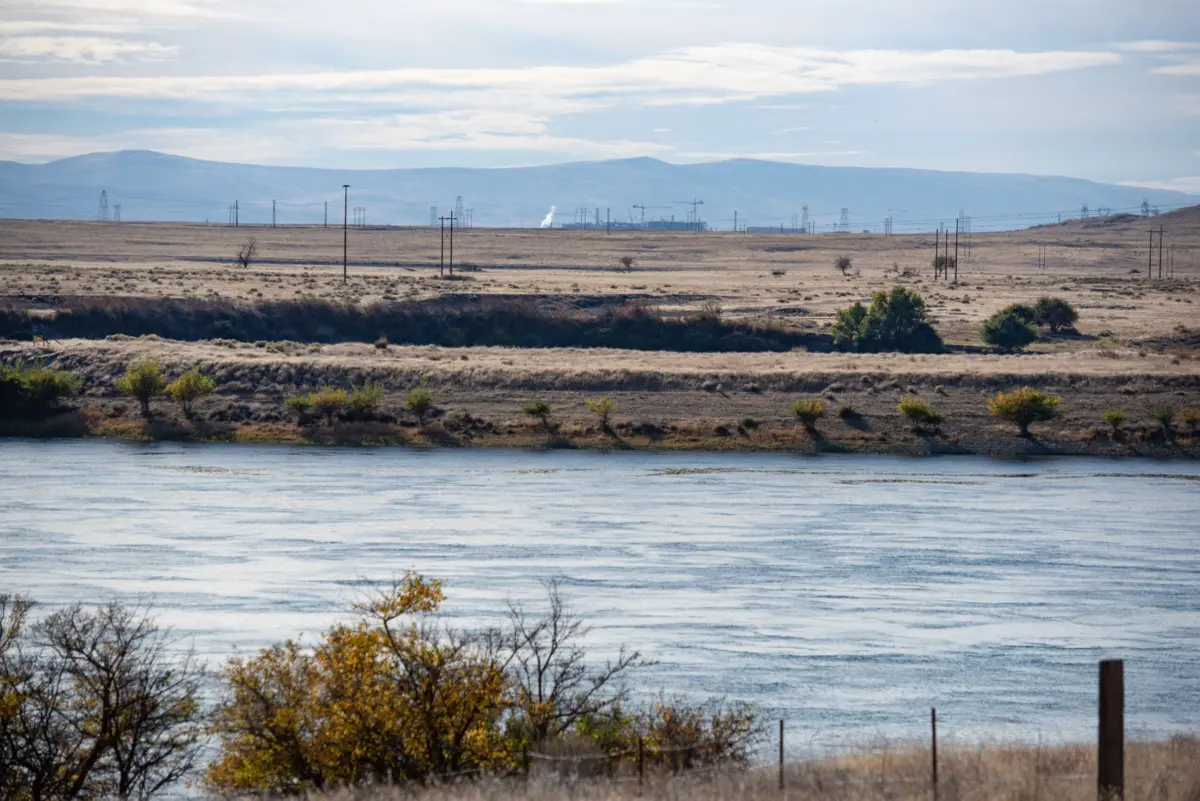
The Hanford Site, a now-decommissioned Department of Energy (DOE) nuclear weapons production plant in south-central Washington, stands as a monument to Cold War ingenuity and its enduring environmental cost. It was here that two-thirds of the plutonium for the nation’s nuclear arsenal, including the atomic bomb dropped on Nagasaki, Japan, was produced. After its operational closure in the late 1980s, Hanford embarked on one of the largest and most expensive toxic waste remediation efforts in U.S. history, a cleanup projected to continue until at least 2086. Rouse was among the thousands of workers tasked with this monumental undertaking, monitoring radioactive waste and packaging plutonium, often in conditions so toxic that he recounted rubber melting off his boots from corrosive spills. His tenure exposed him to at least 48 potentially hazardous chemicals, with tanks of radioactive sludge regularly "burping" chemical vapors into the air, causing symptoms ranging from nausea and headaches to nosebleeds and loss of consciousness.
The Struggle for Recognition: A Decades-Long Battle
Rouse’s journey to this moment of legislative change was long and fraught. His initial workers’ compensation claim in 2009 had been denied, forcing him to exhaust his retirement savings and declare bankruptcy. He was not alone; thousands of Hanford workers, afflicted with severe illnesses attributed to their exposure, faced similar obstacles. For years, the burden of proof lay squarely on the workers to demonstrate a direct causal link between their illnesses and their workplace exposures—a nearly impossible task given the complex and often delayed onset of radiological and chemical-induced diseases. The U.S. Congress, recognizing the inherent health risks associated with radiation at DOE sites, had passed the Energy Employees Occupational Illness Compensation Program Act (EEOICPA) in 2000, offering limited medical care and one-time payouts up to $400,000. However, this federal program often proved insufficient for long-term care and wage replacement.

Washington state’s workers’ compensation system, by contrast, offered the potential for steady wage replacement or a lifetime pension, benefits that could far exceed federal caps. It was this disparity, coupled with the DOE’s consistent challenges to claims and attempts to shift blame, that spurred state lawmakers into action.
The Presumption Law: A Legislative Lifeline
The bill signed by Governor Inslee in March 2018, House Bill 1723, was a landmark piece of legislation. It flipped the burden of proof, instructing state agencies to presume that certain cancers, neurological diseases, and respiratory illnesses were caused by working at Hanford. This meant the Department of Energy, acting as the self-insured employer, would now have to prove that something other than the job had made the workers sick if it wished to deny their claims. This "presumption law" model is typically reserved for first responders like firefighters, who face regular exposure to carcinogens and extreme conditions. Experts, including Washington state representative Gerry Pollet, a co-founder of the Hanford cleanup watchdog group Heart of America Northwest and a sponsor of the 2018 law, noted that they were unaware of any other state extending such protections to radiological workers.
The initial law specifically applied to Hanford. However, the federal government challenged its constitutionality, arguing it was discriminatory. In response, Washington lawmakers passed an expanded version in 2021 (Senate Bill 5890), encompassing all workers at "radiological hazardous waste facilities" statewide, including other nuclear sites. Despite this broader scope, Hanford workers continue to represent the vast majority of claimants, accounting for roughly 75% of the 428 claims filed since 2018, according to the state Department of Labor and Industries (L&I).
The Department of Energy’s Unrelenting Opposition

Despite the clear intent of the presumption law, a joint investigation by Cascade PBS and ProPublica reveals a disturbing pattern: the Department of Energy continues to systematically challenge and prolong workers’ compensation claims, often for years, through a relentless cycle of recommended denials and subsequent legal appeals.
State data obtained by the newsrooms, though limited to the period from 2023 onwards, paints a stark picture: out of 102 new claims filed by Hanford workers, the DOE did not recommend approving a single one. While the state, which holds the final authority, ultimately overruled the DOE and approved 75% of these claims, the DOE subsequently appealed all but seven of those approvals. This aggressive litigation strategy extends beyond new claims, with the DOE fighting existing ones as well.
This pattern is not only emotionally taxing for workers but also incredibly expensive. The DOE has reportedly spent millions of taxpayer dollars on outside lawyers and expert testimony to dispute these claims. Records indicate that a single law firm, Wallace, Mann, Capener, Bishop & Debney, has received nearly $10 million from the DOE between 2018 and 2025 for handling these appeals. Furthermore, a group of three physicians and an industrial hygienist collectively earned over $1.7 million testifying against Hanford workers since the presumption law’s enactment, with one "go-to" expert witness doctor alone earning more than $200,000 from the DOE last year.
The DOE’s arguments in these appeals often attempt to shift blame onto the workers themselves, citing factors such as smoking, drinking, obesity, or genetics as alternative causes for their illnesses. In Lonnie Rouse’s case, the energy department attributed his neurological condition to alcoholism and family conflicts, arguments that the state appeals agency ultimately found unpersuasive. Despite receiving most of his back pay in 2024, Rouse’s legal battle, which has involved over 20 DOE appeals contesting various aspects of his claim, remains unresolved, leaving him hesitant to touch the awarded funds.
Dying While Under Appeal: The Ultimate Injustice

Perhaps the most tragic aspect of the DOE’s litigation strategy is its persistence even after a worker’s death. The investigation found that approximately 152 workers’ claims remain in legal limbo, approved by the state but still under appeal by the DOE. Half of these workers are deceased, yet the DOE continues to fight, denying their surviving families crucial benefits.
Isidoro Mata Jr., who spent nearly three decades demolishing buildings at Hanford, was diagnosed with thyroid cancer in 2015, an illness recognized by the state’s presumption law. His claim was approved in 2019, but the DOE immediately appealed, arguing that "medical opinion supports denial of this claim as not related to the distinctive conditions of employment." While the state mandated payment of his wages and medication costs, the DOE filed a separate motion to halt these benefits during the appeal, contending it was likely to prevail based on a doctor’s examination that the state found "lacking in objective findings."
Mata’s daughter, Sara Chilcoat, recounted the harrowing experience of her father battling for his life while simultaneously fighting the DOE in court. "He was fighting for his life while they were trying to do that," Chilcoat stated, expressing her anger. Court records show Mata missed three meetings with DOE lawyers in 2020 due to chemotherapy treatments. The DOE eventually dropped its appeal in December, but less than three months later, Mata died, his family left to contend with the lingering trauma and the emotional toll of the protracted legal battle.
Kathleen Kersey, who worked at Hanford for a decade during both its production and cleanup phases, also faces a protracted battle. Her work involved measuring radiation, but she notes her safety training neglected other hazards like chemical vapors. Diagnosed with multiple sclerosis, a neurological disorder covered by the presumption law, her 2019 claim was approved by the state, only to be appealed by the DOE. She remains one of the 152 workers awaiting resolution, with no back wages paid. "I feel depleted and disgusted," Kersey said, reflecting on the appeals process. "It makes me feel like I’m worthless. I have no value."
Official Reactions and Future Prospects

Washington State Attorney General Nick Brown acknowledged the significant pushback from the DOE on "essentially almost every single case." He expressed hope that a stacking up of DOE losses in higher courts might eventually deter the volume of their litigation.
Gerry Pollet, the state representative, did not mince words, calling the DOE’s actions "despicable" and "criminal," lamenting that the law he sponsored has fallen short of its intended goal. "This was supposed to have ended a decade ago," he said, referring to the ongoing suffering of sick Hanford workers. "It’s even worse than it was 10 years ago."
Carrie McCausland, a spokesperson for the Washington State Department of Labor and Industries, confirmed that regulators have met twice with DOE staff following questions from Cascade PBS and ProPublica. She stated that "agency staff are concerned and are right now assessing the severity of patterns we’ve seen," indicating potential future actions. These could include placing the DOE on an improvement plan or, more drastically, revoking its ability to directly accept and pay out claims. Such a move would force contractors employing Hanford workers to join the state-managed fund or seek independent state approval, potentially limiting the DOE’s direct power to appeal, though contractors would retain that right.
Charlynn Hull, an attorney with Smart Law, which represents the majority of Hanford workers’ compensation claimants, including Rouse and Kersey, noted that she had observed no change in the DOE’s aggressive behavior, even under the Biden administration. She highlighted the immense emotional burden placed on the children and spouses of deceased workers, who are often forced to relive their loved ones’ suffering during appeal testimonies. "It’s tormenting to them, in many ways, to relive how awful that experience was, especially with the cancer-related death," Hull said, questioning, "When does this end?"
The DOE, in a statement, maintained that it is following "all applicable local, state, and federal laws" and "has a long and successful record of accomplishment of protecting human health and the environment." However, this statement rings hollow for workers like Lonnie Rouse and families like the Matas, who continue to fight for justice against a federal agency seemingly determined to deny accountability, even in the face of overwhelming evidence and protective state legislation. The ongoing cleanup at Hanford continues to demand sacrifices, but the enduring legal battles underscore a profound ethical question about the true cost of nuclear legacy and the government’s responsibility to those who bore its burden.




 Nila Kartika Wati

 Eva Lovia

 Lina Irawan

 Ana Megawati

 Joko Widodo
