
 Yuyun Lusiyani
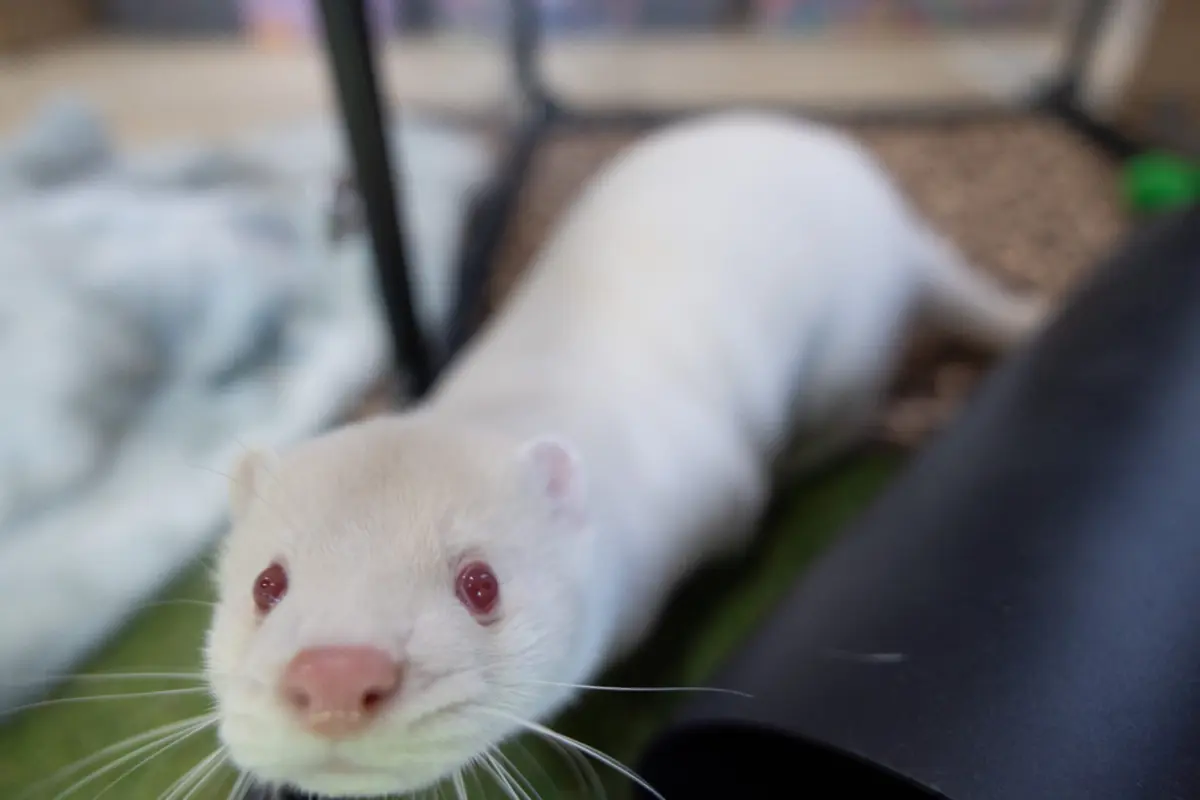
The specter of a global pandemic, potentially deadlier than COVID-19, looms large as an unchecked outbreak of the highly pathogenic H5N1 avian influenza rages on a mink farm in Utah. For over two months, thousands of mink at C&T Fenn Farms, located approximately an hour south of Salt Lake City, have been silently succumbing to a strain of bird flu that has already claimed two human lives in the United States. This perilous situation, brought to light by a ProPublica investigation, has exposed a cascade of critical missteps by state and federal officials, whose actions have been decried by experts as "irresponsible" and "puzzling," effectively "playing with fire" in the face of an escalating public health threat.
The Evolving Threat of H5N1 and the Role of Intermediate Hosts
The H5N1 strain of avian influenza, which has ravaged American poultry barns for the past four years, has demonstrated a concerning capacity for zoonotic spillover. While it has infected and killed two individuals who contracted it directly from sick animals, the virus has, thus far, not shown sustained human-to-human transmission. Its current genetic makeup primarily favors avian cells, preventing it from efficiently colonizing human throats and noses, where coughing and sneezing could reliably spread droplets. However, this delicate equilibrium is precariously balanced. Experts warn that a single, opportune mutation could grant H5N1 a critical foothold in human hosts, potentially sparking a pandemic far more lethal than the recent COVID-19 crisis.
For such a catastrophic mutation to occur, the virus typically requires an intermediate host—an animal species susceptible to viruses from both birds and humans. These hosts, often housed in crowded conditions, become genetic mixing vessels where the virus can rapidly evolve. Each new infection increases the probability of mutations that could confer novel traits, including enhanced transmissibility to humans. Should such a strain emerge, it would then need access to human populations and sufficient time to spread undetected before public health measures could be implemented.
Mink: A Perfect Petri Dish for Viral Evolution

Alarmingly, this "perfect petri dish" currently exists in the form of mink farms. Mink possess respiratory systems with cellular receptors remarkably similar to those found in humans, making them uniquely vulnerable to avian influenza strains and highly efficient incubators for viral adaptation. Historically, mink have been implicated in the transmission and evolution of various influenza viruses, and they were notable vectors in the early stages of the COVID-19 pandemic, infecting both other mink and humans. The crowded, often stressful conditions typical of fur farms further exacerbate this risk, creating an ideal environment for rapid viral replication and mutation.
The current outbreak at C&T Fenn Farms in Utah, which has persisted for over two months, involves thousands of mink. This extended, uncontrolled circulation of H5N1 within a highly susceptible mammalian population presents an unprecedented opportunity for the virus to acquire the necessary mutations for human-to-human spread.
A Chronicle of Official Inaction and Public Health Neglect
The timeline of the Utah outbreak reveals a troubling pattern of delayed, inadequate, and opaque official responses. Utah agriculture officials were first alerted to mink deaths due to bird flu at C&T Fenn Farms in mid-August, according to communications obtained through state public records laws. This discovery should have triggered an immediate and robust public health intervention.
Under federal guidelines, if a single chicken tests positive for such a virulent strain of bird flu, the entire flock must be culled to prevent broader spread and protect public health. Poultry farmers are typically reimbursed for these losses. However, no federal rules or established protocols exist for managing H5N1 outbreaks in mink. This regulatory vacuum has left state officials to navigate a high-stakes public health crisis with insufficient guidance and resources.
Utah State Veterinarian Amanda Price, tasked with managing the response, sought assistance from the U.S. Department of Agriculture (USDA), which typically leads on bird flu outbreaks involving poultry and cattle. However, USDA officials informed Price that they did not regulate mink, nor did they possess an approved vaccine for the species. Despite the grave public health implications, officials from the Centers for Disease Control and Prevention (CDC) communicated with Price’s counterparts in the state health department, who were less directly involved in the farm-level outbreak, but never directly engaged with Price herself. Price, in turn, did not proactively reach out to the CDC for direct consultation.

Crucially, rather than prioritizing public health and containment, Utah officials appear to have placed the interests of the fur farming business at the forefront. Price expressed deep empathy for the farm’s owner, Chad Fenn, stating to ProPublica, "It has been devastating. This is his life’s work that he’s seeing be destroyed. I really hope that you understand the humanity behind this situation." This sentiment, while understandable on a human level, starkly contrasts with the aggressive containment strategies typically employed for highly pathogenic zoonotic diseases.
Flu experts universally condemned this approach, unequivocally stating that the farm should have been ordered to cull its mink, a measure that countries like Finland and Spain have swiftly implemented in similar H5N1 outbreaks on fur farms. However, Utah officials never seriously considered depopulation. A representative from the fur trade reportedly warned Price that such an action would decimate the business and, ultimately, the entire industry, given the decades-long investment in breeding unique genetic lineages of mink. Price defended the state’s inaction, noting that USDA officials did not explicitly urge culling or convey that bird flu in mink posed a greater risk than infections in other animals like ducks or cows.
The Perilous Neglect of Workers and Public Transparency
The lack of decisive action extended to the protection of human workers. Despite clear guidance from the CDC urging surveillance for symptoms among exposed individuals, Utah officials failed to monitor mink farmworkers. This omission is particularly egregious given the nature of mink farming: mink are aggressive, solitary animals that can bite, scratch, and sneeze, posing a direct and significant exposure risk to workers. A Spanish-speaking "minkero" working on a nearby farm vividly illustrated this danger, displaying scars from mink bites and scratches.
The state’s policy on worker monitoring has been influenced by complaints from the agriculture department that proactive surveillance annoyed farmers. Pamela Gomez Pinedo, a respiratory disease epidemiologist for Utah’s health department, noted that active monitoring had made farmers reluctant to cooperate. Consequently, a 2025 agreement between the Utah Department of Agriculture and Food and the state health department stipulated that information about bird flu outbreaks would be shared only if health officials refrained from tracking workers’ health, unless evidence of human-to-human transmission was already present. This policy effectively creates a blind spot, as CDC epidemiologists have pointed out, questioning how human infections could be detected without testing. Price reiterated this stance, stating, "If we started seeing people actively dying from this, obviously that would change how we respond to this."
The consequences of this inaction are already evident. A ProPublica reporter, investigating the situation, identified a worker at the Utah mink farm with a visibly red eye, a telltale symptom of H5N1 infection present in over 90% of human cases, often as the sole manifestation. When ProPublica informed the farm owner, Chad Fenn, he contacted the Utah County Health Department. Fenn later told ProPublica that the department did not recommend testing, attributing the red eye to dust and advising testing only if other symptoms like a cough or sore throat developed. This response directly contradicts CDC recommendations for testing individuals with such symptoms following exposure.

Further compounding the issue is the alarming lack of transparency surrounding the outbreak. While the USDA updated a bird flu dashboard to show positive mink cases in Utah, neither federal nor state officials made any public announcement. Communications obtained by ProPublica show that Utah officials actively sought to keep the outbreak quiet, explicitly stating that not declaring an emergency would "may alert animal rights groups." Willy Lanier, a public health veterinarian with the state health department, instructed colleagues to maintain a "closer hold" on information than for poultry or dairy outbreaks. The effectiveness of this secrecy was underscored when a spokesperson for the Utah County Health Department, when asked about the outbreak, responded, "That would be news to me."
Scientific Underpinnings of the Threat: Mutation and Reassortment
The H5N1 strain responsible for the Utah outbreak has been genomically linked to the same lineage that has been circulating widely in dairy herds since 2024. These dairy cows, unlike poultry, are not culled when infected, and their meat can still be sold, even though researchers have found the virus in their tissues. USDA officials maintain that beef for human consumption is safe, arguing the virus concentrates in parts of the animal not typically consumed. However, Chad Fenn confirmed that mink at his farm are routinely fed raw organs from livestock, including cows, raising the possibility of contaminated beef as the source of infection for the mink.
Mink airways are particularly concerning because they possess an abundance of the type of cell receptors targeted by seasonal human influenza viruses. A 2024 study on the dairy strain of H5N1 revealed that a single mutation could shift the virus’s preference from avian-type receptors to human-type receptors. Moreover, studies involving ferrets, close relatives of mink, have shown that the virus can acquire mutations enabling it to efficiently attack human-type cell receptors. While the exact evolutionary leap required for sustained human-to-human transmission remains uncertain, mink are considered prime candidates for facilitating this dangerous transition.
Another significant risk is "reassortment," a process where two different influenza viruses co-infect the same cell and swap large segments of their genetic code. This can lead to the emergence of entirely new, potentially more dangerous strains. The early start to the flu season in September, compared to the usual November onset, exacerbates this risk by increasing the likelihood of H5N1 mixing with seasonal human influenza viruses. Jennifer Nuzzo, director of the Pandemic Center at the Brown University School of Public Health, warned that "having this circulate amid human flu season is not great" for this very reason.
A Failure of "One Health" and a Call for Policy Reform

The current situation in Utah represents a stark failure of the "One Health" approach, a global imperative that recognizes the interconnectedness of human, animal, and environmental health. Experts worldwide advocate for this integrated strategy to address zoonotic threats, yet in Utah, this framework has evidently collapsed. Erin Sorrell, a senior scholar at the Johns Hopkins Center for Health Security, lamented the absence of a "leader of this ‘one health’ team to take charge," noting that this leadership vacuum "is going to allow the virus to continue to circulate, potentially adapt and potentially spill over into another host, whether it’s avian, mammalian or human.”
The government’s response to the current H5N1 outbreak stands in stark contrast to its handling of COVID-19 outbreaks on mink farms in 2020, including C&T Fenn Farms. During the COVID-19 crisis, federal officials actively engaged with Utah, conducting research, setting up traps for escaped mink, and extensively testing both animals and workers. These efforts successfully tracked viral spread and mutation, even identifying human-to-human transmission originating from mink. The USDA justified its current reduced involvement by stating that the H5N1 virus at that time lacked "significant" potential for human-animal transmission, a position that many experts now find deeply concerning given the evolving nature of the virus.
The initial genomic data from the mink lung and brain samples sent to a USDA lab did not show particularly alarming mutations. However, with two months of unchecked viral circulation, experts emphasize the urgent need for new genetic samples to assess how the virus has evolved. John Korslund, a retired USDA official who coordinated the COVID-19 response on mink farms, stressed the importance of knowing "what the virus has done, from when it started to today. Are we getting accumulated mutations making the virus more dangerous?" Gail Hansen, a former Kansas state public health veterinarian and epidemiologist, added, "As long as it continues to go mink to mink, then it becomes more and more likely that it could jump to a human."
The decision not to cull the mink, driven by the economic concerns of the fur industry, highlights a dangerous prioritization. Neil Vora, executive director for the Preventing Pandemics at the Source Coalition, articulated this ethical dilemma: "Fur farms are to produce pelts purely for luxury goods, to make fancy coats. It’s absurd that we’re willing to gamble with the lives of millions of people just to keep an industry alive.” While the domestic fur industry has faced challenges, the Senate is currently considering a Farm Bill that seeks to expand market opportunities for mink farmers by undoing a federal prohibition on subsidizing the fur trade, further entrenching an industry now recognized as a significant pandemic risk.
The virus continues to spread on the Utah farm, albeit at a slower pace, posing an ongoing and evolving risk. Experts like Tom Peacock, an avian influenza researcher at the Pirbright Institute, expressed extreme caution, stating, "I would want a full on hazmat suit if I were on that farm. Or, preferably, I’d rather not to be on that farm.” Meghan Davis, an epidemiologist at Johns Hopkins University, succinctly summarized the precarious situation: "We might get lucky, and a response that is not robust may not have dire consequences. But we may get unlucky.”
The situation in Utah is not merely an isolated agricultural incident but a stark illustration of systemic vulnerabilities in pandemic preparedness and a dangerous prioritization of private business interests over collective public health. The scientific community is clear: the current H5N1 strain, unchecked in a susceptible intermediate host like mink, presents an escalating, potentially catastrophic risk. Without immediate and decisive action—including culling infected animals, robust worker surveillance, transparent communication, and a clear regulatory framework—the United States risks becoming the unwitting incubator for the next global health crisis, a consequence that could dwarf previous pandemics. The time for proactive intervention, guided by a true "One Health" philosophy, is now, before the gamble of inaction exacts an unimaginable toll.




 Nila Kartika Wati

 Eva Lovia

 Lina Irawan

 Ana Megawati

 Joko Widodo
