
 Eva Lovia
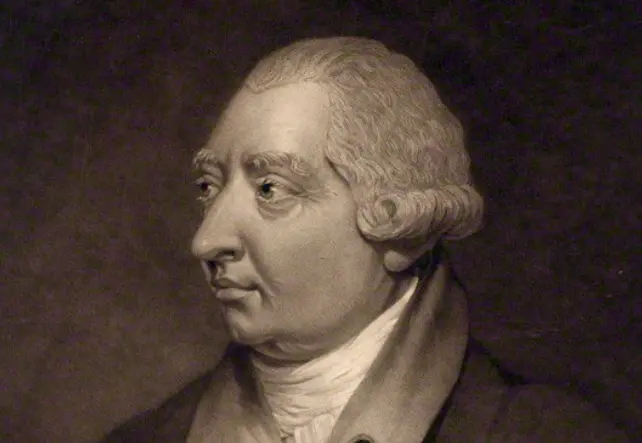
The year 1781 marked a pivotal moment in humanity’s understanding of the cosmos. The meticulous observations of astronomer William Herschel led to the groundbreaking discovery of a celestial body previously unknown to science, a discovery that would expand the known boundaries of our Solar System and spark a fascinating debate over its nomenclature. This newly identified planet, lurking in the distant reaches of space, was initially proposed to be christened Georgium Sidus, a direct tribute to King George III of Great Britain. This proposed name, while ultimately unsuccessful, offers a compelling window into the intricate relationship between scientific advancement, royal patronage, and the evolving traditions of astronomical naming conventions in the late 18th century.
Herschel’s identification of this seventh planet, which we now know as Uranus, was an astronomical triumph. For centuries, Saturn had been considered the outermost known planet. Its discovery therefore not only added a new member to the celestial family but fundamentally altered the perceived scale and structure of the Solar System. The implications were profound, suggesting that the universe might hold even more wonders yet to be unveiled. The initial impulse to name this significant discovery after the reigning monarch underscores the crucial role of royal support in fostering scientific endeavors during that era. In 18th-century Britain, the patronage of the Crown could significantly influence the resources available to scientists, fund expeditions, and lend prestige to groundbreaking research.
The Genesis of Georgium Sidus
William Herschel, a German-born astronomer who had settled in Britain, made his monumental discovery on March 13, 1781. While conducting a systematic survey of the night sky from his observatory in Bath, he observed an object that differed from the stars he was cataloging. Its slow, steady movement across the celestial sphere indicated it was a planet, not a fixed star. Initially, Herschel believed he had discovered a comet, a common enough celestial phenomenon. However, as he continued his observations and others independently verified his findings, it became clear that this was no fleeting comet but a substantial, distant world.
The prevailing scientific and societal norms of the time naturally led Herschel to consider how best to honor this discovery and its patrons. King George III, who reigned from 1760 to 1820, was known for his interest in science and his support of institutions like the Royal Society. He had, for instance, granted a royal charter to the Society of Antiquaries in 1773 and was generally seen as a proponent of intellectual pursuits. It was within this context that Herschel, with the encouragement of Nevil Maskelyne, the Astronomer Royal, proposed naming the new planet Georgium Sidus. The Latin phrase translates to "George’s Star" or "George’s Heavenly Body," a clear and direct acknowledgment of the King’s presumed support and a way to immortalize his reign in the celestial sphere.
Maskelyne, a respected figure in astronomical circles, believed that such a dedication would be a fitting recognition of the King’s benefaction to science. He wrote to Herschel in support of the idea, seeing it as a means to secure continued royal favor for astronomical research. The proposed name was indeed adopted by many in Britain, appearing in astronomical almanacs and publications. This reflected a national pride in the discovery and a desire to associate it with the British Crown, a powerful symbol of the era.
The International Resistance to a Royal Moniker
However, the enthusiasm for Georgium Sidus was far from universal, particularly beyond the shores of Great Britain. Many astronomers across continental Europe found the proposal problematic for several key reasons. The most significant objection was the departure from a long-established tradition of naming celestial bodies after figures from classical mythology.
Since antiquity, planets visible to the naked eye – Mercury, Venus, Mars, Jupiter, and Saturn – had been named after Roman gods, who in turn were largely derived from their Greek counterparts. This mythological nomenclature provided a sense of continuity and universality to astronomical understanding. Introducing a name tied to a contemporary monarch, especially one from a rival nation like Britain, was seen by many as an unprecedented and inappropriate deviation. It risked politicizing a universal scientific endeavor.
Furthermore, there was a linguistic nuance that weakened the proposed name. The Latin word sidus broadly means "star" or "celestial body." While technically accurate, it lacked the specificity to clearly denote a planet. The other planets had names that unequivocally identified them as such. The term Georgium Sidus could be interpreted as a particularly bright star or some other luminous object, rather than a distinct planetary body. This ambiguity contributed to the resistance from the international astronomical community.
The Rise of Uranus: A Mythological Resonance
The challenge to Georgium Sidus was met with an alternative proposal from Johann Elert Bode, a prominent German astronomer. In 1782, just a year after Herschel’s discovery, Bode suggested the name Uranus. This choice was rooted in Greek mythology, where Uranus (Ouranos) was the primordial god of the sky, the father of Cronus (the Greek equivalent of Saturn), and the grandfather of Zeus (the Greek equivalent of Jupiter).
Bode’s reasoning was astute. By naming the new planet after the sky god, he connected it to the existing pantheon of planetary deities. This created a logical mythological lineage: Uranus was the father of Saturn, and Saturn was the father of Jupiter. This provided a coherent, mythical framework for the Solar System’s planetary names, aligning the new discovery with the established tradition. This mythological connection offered a more universal and enduring appeal than a name tied to a specific, contemporary monarch.
The proposal of Uranus resonated with astronomers seeking a name that transcended national boundaries and historical periods. It offered a sense of order and classical continuity that Georgium Sidus lacked. While the transition was not immediate, and Georgium Sidus continued to be used in British scientific literature for some time, the name Uranus gradually gained traction internationally. By the early 19th century, it had become the accepted and universally recognized name for the seventh planet.
The Broader Implications: Science, Monarchy, and Tradition
The episode surrounding the naming of Uranus offers valuable insights into several key aspects of the late 18th century.
Royal Patronage and Scientific Progress: The initial proposal for Georgium Sidus vividly illustrates the symbiotic relationship between monarchy and scientific inquiry. Royal endorsement and financial support were often crucial for the advancement of scientific research. Herschel himself benefited significantly from royal patronage. Following his discovery, King George III granted him an annual pension of £200, which allowed Herschel to dedicate more time and resources to his astronomical pursuits. This financial security enabled him to continue his groundbreaking work, including the discovery of nebulae and star clusters, and the construction of increasingly powerful telescopes. The King also appointed Herschel as his private astronomer, further solidifying his position and providing access to resources.
The Evolution of Scientific Naming Conventions: The naming debate highlights the dynamic nature of scientific traditions. While mythology had provided a long-standing framework for naming celestial bodies, the discovery of new planets challenged these conventions. The international scientific community, through discourse and consensus, ultimately favored a system that emphasized universality and classical heritage over nationalistic or contemporary tributes. This process demonstrates the self-correcting mechanisms within science, where established practices are weighed against new discoveries and broader principles.
Chronology of the Discovery and Naming Debate:
- March 13, 1781: William Herschel discovers the planet, initially believing it to be a comet.
- April 1781: Herschel continues observations, and other astronomers confirm the object’s planetary nature.
- May 1781: Herschel proposes the name Georgium Sidus in honor of King George III.
- Late 1781 – Early 1782: The name Georgium Sidus gains acceptance and usage within Britain.
- 1782: German astronomer Johann Elert Bode proposes the name Uranus, referencing Greek mythology.
- Early 19th Century: The name Uranus gradually gains international acceptance, supplanting Georgium Sidus.
- Mid-19th Century: Uranus becomes the firmly established and universally recognized name for the planet.
Impact on Astronomical Understanding: The discovery of Uranus significantly expanded the known Solar System, pushing its boundaries much further than previously imagined. This discovery spurred further investigations into the outer reaches of the Solar System and paved the way for future discoveries, such as Neptune. It also reinforced the idea that the Solar System was a more complex and expansive entity than earlier astronomers had conceived, fueling the quest for more distant celestial bodies.
A Glimpse into a Bygone Era
While King George III’s name was not ultimately etched into the celestial map as the namesake of a planet, his reign was undeniably marked by significant scientific progress, partly facilitated by his patronage. The story of Uranus’s naming is more than just a historical anecdote; it is a testament to the intricate interplay of scientific curiosity, political influence, and cultural traditions. It underscores how the pursuit of knowledge, even on the grandest cosmic scale, is often shaped by the human contexts in which it occurs. Had Herschel’s initial proposal prevailed, our understanding of the Solar System would carry a distinctly different historical echo, a constant reminder of a time when the naming of stars could be intimately linked to the fortunes of earthly kings. Instead, the name Uranus endures, a celestial beacon connecting us to the ancient myths and the universal quest to map the heavens.



 Nila Kartika Wati

 Lina Irawan

 Yuyun Lusiyani

 Ana Megawati

 Joko Widodo
