
 Eva Lovia
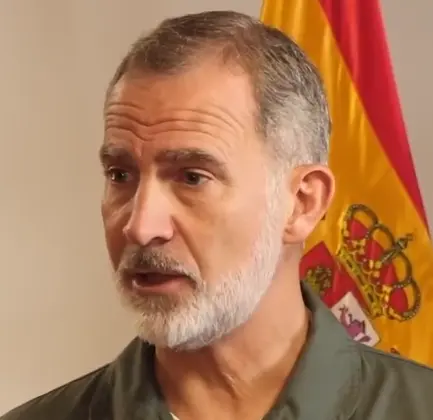
Spain’s monarch, His Majesty King Felipe VI, has officially declared a period of two days of national mourning in response to the devastating high-speed train collision that occurred on the morning of October 28th. This solemn decree signifies the profound impact of the tragedy on the nation and underscores the gravity of the loss of life and the extensive injuries sustained. The King’s order mandates that flags be flown at half-mast from midnight on October 29th until the conclusion of October 31st at all official buildings across the country and aboard all vessels of the Spanish Navy. This symbolic gesture serves as a national expression of grief and solidarity with the victims and their families.
The catastrophic incident, which unfolded near the town of Urda in the province of Toledo, has claimed the lives of at least 68 individuals, with dozens more sustaining injuries. The collision took place shortly before 9:00 AM local time, shattering the morning calm and plunging communities into shock and sorrow. The immediate aftermath saw an unprecedented mobilization of emergency services, with rescuers working tirelessly through the day and into the night to extricate survivors and recover the deceased.
The Catastrophic Collision: A Chronology of Events
The tragic sequence of events began on a busy high-speed rail corridor. At approximately 8:54 AM local time, a RENFE (Red Nacional de los Ferrocarriles Españoles) train, en route from Madrid to Seville, collided with the rear of a stationary Iryo train. The Iryo service was also travelling between Madrid and Seville and had come to a halt near Urda. Initial reports indicate that the RENFE train, which carried a substantial 397 passengers, struck the Iryo train, carrying 147 passengers, with immense force. The precise circumstances leading to the RENFE train’s failure to stop or slow down remain under intense investigation.
King Felipe VI was reportedly engaged in an official duty when news of the disaster reached him. He immediately suspended his engagements to address the unfolding tragedy. Upon confirmation of fatalities within the initial hours of the accident, the King conveyed his deepest condolences to those affected and expressed his unwavering support for the hundreds of emergency personnel and volunteers involved in the extensive rescue and recovery operations. As dusk settled over Spain, the tireless efforts of rescuers continued, a testament to the nation’s commitment to its citizens. Simultaneously, a palpable sense of community emerged as people queued at blood donation centers, eager to offer assistance to the injured.
Official Responses and International Condolences
The declaration of national mourning by King Felipe VI represents the highest official response to the tragedy. The decision to fly flags at half-mast is a time-honoured tradition, signifying national grief and respect for the departed. This act of remembrance is intended to unify the country in its sorrow and offer a collective space for mourning.
Beyond Spain’s borders, the devastating news prompted swift expressions of sympathy from international leaders. King Haakon VIII of Norway, a known friend of King Felipe, extended his condolences to the Spanish monarch and the people of Spain. Similarly, the Grand Duke of Luxembourg conveyed his heartfelt sympathies, underscoring the global recognition of the gravity of the incident. These messages of solidarity highlight the interconnectedness of nations and the shared human response to such profound loss.
Investigating the Cause: Human Error and Systemic Failures
As the immediate rescue and recovery efforts continued, the focus of authorities began to shift towards understanding the root cause of the collision. Spain’s Minister of Transport, Oscar Puente, faced early criticism for his seemingly immediate attribution of blame to human error. While human factors are often a component of such accidents, premature pronouncements can complicate investigations and potentially overlook systemic issues.
Preliminary information suggests that several trains on the high-speed line in the vicinity of Urda had been halted prior to the incident. Despite these existing halts, permission was reportedly granted for the RENFE train to proceed. This detail has become a critical point of inquiry, raising questions about communication protocols, traffic management systems, and the decision-making processes that allowed the RENFE train to advance into a potentially hazardous situation.
The investigation is likely to scrutinize several key areas:
- Signaling and Control Systems: Were the signaling systems functioning correctly? Were there any malfunctions or failures that could have contributed to the accident?
- Communication Protocols: Was there clear and effective communication between train operators, control centers, and relevant authorities regarding the status of trains on the line?
- Operational Procedures: Were standard operating procedures followed by the RENFE train crew and the control center?
- Human Factors: While acknowledging the potential for human error, the investigation will seek to understand the context and contributing factors that may have led to any mistakes. This could include fatigue, training, or environmental conditions.
- Infrastructure: While less likely to be the primary cause in a high-speed collision of this nature, the condition of the track and associated infrastructure will also be examined.
The Spanish railway network, particularly its high-speed AVE (Alta Velocidad Española) lines, is generally regarded as modern and safe, built to stringent European standards. The country has invested heavily in its high-speed rail infrastructure, connecting major cities and fostering efficient intercity travel. This collision, therefore, represents a significant and deeply concerning anomaly within this established safety record.
Supporting Data and Context: Spain’s High-Speed Rail Network
Spain boasts one of the most extensive high-speed rail networks in the world, second only to China. The AVE system, launched in 1992, has transformed travel within the country, offering a competitive alternative to air and road transport. The network comprises over 3,000 kilometers of track, connecting cities such as Madrid, Barcelona, Seville, Valencia, and Malaga.
High-speed trains, while offering immense benefits in terms of speed and efficiency, also operate under demanding conditions. They travel at speeds that can exceed 300 kilometers per hour (approximately 186 miles per hour). This necessitates sophisticated safety systems, rigorous maintenance schedules, and highly trained personnel. Collisions at such speeds are invariably catastrophic, leading to severe damage and a high likelihood of fatalities and extensive injuries.
The specific lines involved in the incident, connecting Madrid to Seville, are part of the historic AVE network and are known for their high volume of traffic. The presence of two different operators, RENFE (the state-owned incumbent) and Iryo (a newer private operator), on the same lines highlights the evolving landscape of the Spanish rail market, driven by European Union liberalization policies. While competition can lead to benefits for consumers, it also places an increased emphasis on the seamless coordination and robust safety oversight of all operators sharing the infrastructure.
Broader Implications and Future Outlook
The immediate implications of this tragedy are multifaceted. Firstly, there is the profound human cost – the lives lost, the families shattered, and the physical and psychological scars borne by the survivors. The national mourning period is a crucial step in acknowledging this grief and providing a framework for collective healing.
Secondly, the incident will undoubtedly trigger a thorough review of safety protocols and operational procedures across Spain’s high-speed rail network. The investigation’s findings will be critical in identifying any systemic weaknesses and implementing necessary corrective measures. This could lead to enhanced training, updated technology, stricter communication protocols, or revised operational guidelines. The goal will be to ensure that such a devastating event is not repeated.
Thirdly, the collision may have implications for public confidence in rail travel. While the safety record of high-speed rail in Spain has been strong, a tragedy of this magnitude can erode public trust. Transparent communication about the investigation’s progress and the implementation of safety improvements will be vital in reassuring passengers.
Finally, the incident serves as a stark reminder of the inherent risks associated with high-speed transportation, even in technologically advanced systems. It underscores the absolute necessity of vigilance, meticulous attention to detail, and an unwavering commitment to safety at every level of operation. As Spain mourns its losses, the nation will also look towards the future, committed to learning from this tragedy and reinforcing the safety and reliability of its vital transportation infrastructure. The coming weeks and months will be critical as investigators piece together the events of that fateful morning, seeking answers and laying the groundwork for a safer future on Spain’s railways.



 Nila Kartika Wati

 Lina Irawan

 Yuyun Lusiyani

 Ana Megawati

 Joko Widodo
