
 admin
admin
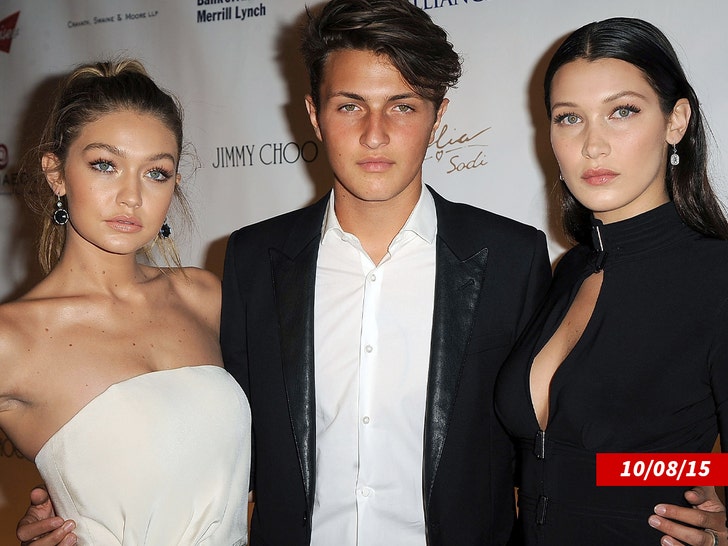
Anwar Hadid, the prominent model and younger brother to supermodels Gigi and Bella Hadid, has initiated legal proceedings to secure a temporary restraining order against a woman he alleges escalated from persistent online harassment to a terrifying home invasion. The incident, which Hadid claims involved the woman being found inside his bedroom while he slept, highlights the severe challenges public figures face regarding personal safety and privacy in an increasingly interconnected world. The legal action, documented in court filings obtained by various media outlets, details a disturbing two-year pattern of unwanted contact that culminated in physical intrusion.
Chronology of Escalation: From Digital Harassment to Physical Intrusion
The alleged campaign of harassment against Anwar Hadid reportedly commenced on or around December 31, 2023. According to the court documents, the woman initiated contact through various social media platforms. Hadid’s initial response was to block her, a common measure taken by individuals, especially public figures, to mitigate unwanted online attention. However, this action, rather than deterring the alleged stalker, purportedly led to a concerning escalation.
Throughout 2024 and 2025, after being blocked, the woman allegedly circumvented Hadid’s attempts to distance himself by creating multiple new Instagram accounts. These new profiles were then used to continue sending him messages, demonstrating a persistent and calculated effort to maintain contact despite clear indications of disinterest. The nature of these messages, as described in the legal filings, reportedly included overtly possessive and suggestive statements, such as "Zaddy, come find me." Beyond direct messages, the woman is accused of tagging locations associated with Hadid, imitating his personal photographs, and even reposting content involving members of his internationally recognized family. Hadid consistently maintained that he never responded to any of these messages and never extended an invitation for contact, underscoring the unsolicited and unwelcome nature of the interactions.
The digital harassment, while unsettling, took a dramatically more sinister turn on December 14, 2025. At approximately 10:54 PM, Hadid alleges he was asleep when his dog began barking, an alert that would soon reveal a profound breach of his personal security. Waking to the disturbance, Hadid claims he discovered the woman standing inside his bedroom. The court documents describe her as having a blanket over her head, an detail that adds to the chilling nature of the alleged intrusion. In a moment of extreme vulnerability for Hadid, the woman reportedly uttered words to the effect of, "I know you must be scared right now; God sent me," and asserted that they were "meant to be together." This alleged statement, imbued with a delusional and possessive undertone, underscored the gravity of the situation and the woman’s perceived connection to Hadid.
Reacting with shock and fear, Hadid immediately contacted 911. A police report was subsequently filed, initiating an official investigation into the alleged home invasion and stalking. This incident represents a critical escalation from online harassment to a direct and physical threat to Hadid’s safety and sanctity of his home. The trauma of such an event, especially when one is asleep in their own residence, cannot be overstated.

The alleged incidents did not cease with the December home invasion. According to the court documents, the woman reportedly returned to the vicinity of Hadid’s residence in January 2026. This subsequent appearance led to her arrest by law enforcement officials. Alarmingly, the filings indicate that even after her release, she allegedly returned once again, demonstrating a continued pattern of disregard for legal boundaries and personal safety. These repeated attempts to approach Hadid’s property, even after police intervention, paint a picture of an individual seemingly undeterred by legal consequences, further necessitating the pursuit of a restraining order.
The Legal Process: Seeking a Restraining Order
In response to this escalating pattern of alleged harassment and intrusion, Anwar Hadid filed for a temporary restraining order. A restraining order is a court order issued to protect a person from harassment, abuse, or threats. It typically prohibits the restrained individual from contacting, approaching, or coming within a certain distance of the protected person. The primary goal of such an order is to ensure the safety and peace of mind of the victim.
However, in this specific instance, a judge initially denied the temporary restraining order. This denial is not uncommon and does not necessarily indicate a lack of merit in Hadid’s claims. Often, judges require a formal hearing where both parties can present evidence and arguments before issuing a full, long-term restraining order. A temporary restraining order, or TRO, is usually granted ex parte (without the other party present) based on immediate and compelling evidence of danger. The initial denial might suggest that while the allegations are serious, the judge sought more detailed testimony or evidence that could be presented during a scheduled hearing to establish an immediate and irreparable harm. This upcoming hearing will be crucial for Hadid to present his full case, supported by the police reports and documented instances of online and physical harassment, to persuade the court that a permanent protective order is warranted. The legal system often balances the need for immediate protection with the due process rights of the accused, leading to a more thorough review in a formal hearing.
Anwar Hadid: Navigating Fame and Vulnerability
Anwar Hadid, born in 1999, is a prominent figure in the fashion and entertainment industries. As the youngest sibling of supermodels Gigi and Bella Hadid, and son of real estate developer Mohamed Hadid and television personality Yolanda Hadid, he was born into a family with significant public recognition. Anwar himself has forged a successful career as a model, gracing runways for major fashion houses and appearing in high-profile campaigns. Beyond modeling, he has also ventured into music, releasing his own compositions and showcasing a diverse range of artistic talents.
The Hadid family name carries immense weight in popular culture, synonymous with global fame, high fashion, and an extensive social media presence. While this affords certain opportunities and privileges, it also inherently brings a heightened level of public scrutiny and, as this case illustrates, potential vulnerability to obsessive behavior. Celebrities, by the very nature of their profession, share aspects of their lives with millions, fostering a sense of familiarity among their admirers. For some individuals, this perceived connection can tragically morph into a delusional belief of a personal relationship, leading to stalking and, in extreme cases, dangerous intrusions. Anwar Hadid’s experience serves as a stark reminder that fame, irrespective of its allure, comes with significant security challenges that can profoundly impact personal well-being.

The Broader Context of Celebrity Stalking in the Digital Age
Anwar Hadid’s alleged ordeal is not an isolated incident but rather a troubling manifestation of a persistent societal issue: stalking, particularly as it intersects with celebrity culture and the pervasive influence of social media. Stalking, defined as a pattern of repeated and unwanted attention, harassment, or contact that causes fear or distress, affects millions globally. Statistics from organizations like the National Center for Victims of Crime (NCVC) in the United States indicate that approximately 1 in 6 women and 1 in 17 men will experience stalking in their lifetime. While these statistics encompass the general population, public figures, by virtue of their visibility, are disproportionately targeted.
The advent and rapid proliferation of social media platforms have fundamentally altered the landscape of stalking. Before the digital age, stalkers often relied on physical presence, letters, or phone calls. Today, platforms like Instagram, Twitter, and TikTok provide direct, unfettered access to celebrities, blurring the lines between fan engagement and obsessive behavior. The ability to create multiple accounts, track public posts for location tags, and engage in "parasocial relationships"—one-sided relationships where a fan feels they know a celebrity intimately despite no real interaction—fuels a dangerous illusion of closeness. This digital proximity can empower individuals with malicious intent, providing them with tools to gather personal information and engage in harassment that might otherwise be impossible. The anonymity afforded by online aliases also emboldens some stalkers, making it harder to track and deter them until their actions escalate to physical threats.
Legal Frameworks and Challenges in Combating Stalking
Combating stalking involves a complex interplay of legal frameworks, law enforcement response, and victim advocacy. Most jurisdictions have specific anti-stalking laws that define the prohibited conduct and prescribe penalties. These laws typically require a pattern of behavior that causes a reasonable person to fear for their safety or the safety of others. The challenge often lies in proving intent and the "pattern" aspect, especially when initial incidents are online and seemingly innocuous.
In cases like Hadid’s, where online harassment escalates to physical intrusion, criminal charges for trespassing, burglary, or even attempted assault can be pursued in addition to civil remedies like restraining orders. However, securing convictions can be arduous. Prosecutors must often present a compelling narrative of escalating behavior, supported by digital forensics, witness testimonies, and police reports. The initial denial of a temporary restraining order, as seen in Hadid’s case, underscores the rigorous evidentiary standards courts apply, aiming to protect both the alleged victim and the due process rights of the accused. Legal experts often emphasize the importance of meticulous documentation by victims – saving screenshots of messages, logging dates and times of incidents, and promptly reporting every instance to law enforcement – to build a robust case.
Security and Psychological Implications for Public Figures
The alleged incidents involving Anwar Hadid highlight the profound security and psychological implications for public figures. Celebrities frequently invest heavily in private security, gated communities, and advanced surveillance systems. However, as Hadid’s case demonstrates, even these measures may not always be sufficient against a determined individual. The feeling of safety and privacy, fundamental human rights, is severely eroded when one’s home is breached. The psychological toll of living under the constant threat of being watched, followed, or intruded upon can lead to severe anxiety, paranoia, post-traumatic stress, and a pervasive sense of vulnerability. For someone like Hadid, whose life is already largely public, such an event can be deeply traumatizing, forcing them to re-evaluate their personal boundaries and trust.
The broader implications extend to the industry as a whole. Such incidents prompt renewed discussions within celebrity circles and security firms about enhancing protective measures, leveraging technology for early detection of threats, and educating public figures on best practices for managing their online presence. It also shines a light on the mental health aspects of individuals who engage in stalking, often driven by delusion, obsession, or psychological disorders, necessitating a multi-faceted approach that includes law enforcement, mental health professionals, and legal interventions.
The Road Ahead: Awaiting the Hearing
The legal journey for Anwar Hadid is far from over. The judge’s initial denial of a temporary restraining order means that a more comprehensive hearing will be scheduled. During this hearing, Hadid and his legal team will have the opportunity to present a detailed account of the alleged two-year campaign of harassment, supported by the police reports, social media evidence, and his personal testimony regarding the home invasion and subsequent incidents. The court will then weigh this evidence against any defense presented by the woman or her legal representatives.
The outcome of this hearing will not only determine whether Anwar Hadid receives the protective order he seeks but will also send a clear message regarding the seriousness with which the legal system addresses the escalation of online harassment to physical intrusion. This case serves as a poignant reminder of the darker side of fame and the critical importance of robust legal protections for all individuals, particularly those who find themselves unwilling targets of obsessive and dangerous behavior in the public eye. The focus remains on ensuring Hadid’s safety and privacy as the legal process unfolds.


 Jia Lissa
 Yuyun Lusiyani
 Joko Widodo
 Eva Lovia

 Pevita Pearce