
 admin
admin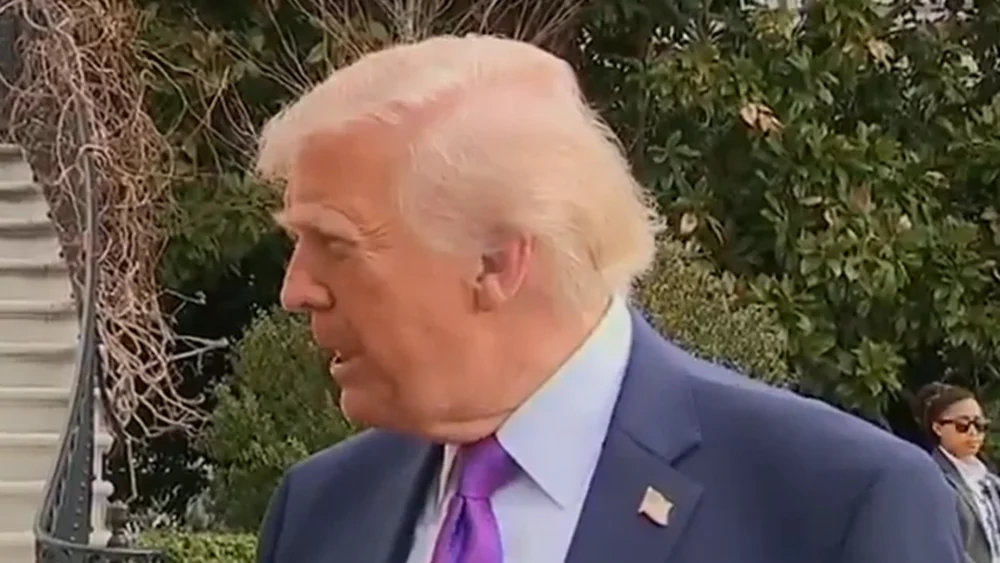
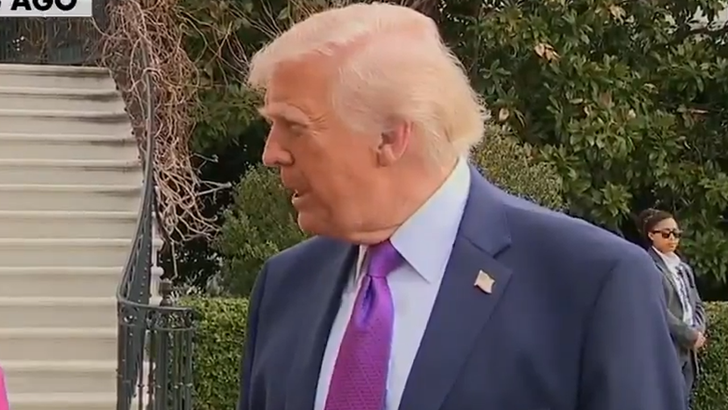
A preliminary military inquiry has reportedly determined that the United States was responsible for a devastating Tomahawk missile strike on a girls’ elementary school in Minab, Iran, last month, an incident that tragically claimed the lives of at least 170 individuals. This finding, first reported by The New York Times, starkly contradicts initial assertions by President Donald Trump, who had previously blamed Iran for the attack. Confronted by reporters outside the White House on Wednesday, President Trump professed ignorance regarding the ongoing investigation and disavowed any personal responsibility for the strike. His evasive responses — "For what?" when asked about taking responsibility, and "I don’t know about it" after clarification — have ignited a firestorm of controversy and intensified calls for transparency and accountability amidst an already fraught geopolitical landscape.
The Deadly Strike on Minab: A Humanitarian Catastrophe
The catastrophic event unfolded on February 28, 2026, when a precision missile struck the Minab girls’ school in Iran. Initial reports from Iranian state media and confirmed by international sources, including a tweet from RT citing Mehr News footage, depicted scenes of utter devastation. The Minab district, a port city in Iran’s Hormozgan Province on the Strait of Hormuz, typically a bustling commercial hub, was plunged into mourning as the full scale of the tragedy became apparent. The death toll, exceeding 170, primarily comprising young students and school staff, represents an appalling loss of innocent life and a profound violation of international humanitarian law, which strictly prohibits attacks on civilian infrastructure, particularly educational institutions. Eyewitness accounts, though harrowing, corroborated the suddenness and ferocity of the strike, leaving no doubt about the immense destructive power of the weapon employed. The images circulating globally, showing the obliterated remains of a school that once nurtured young minds, served as a stark reminder of the brutal toll of modern warfare on non-combatants.
President Trump’s Shifting Narrative and Public Denial
In the immediate aftermath of the Minab school bombing, President Trump, in a press conference days after the incident, publicly attributed the strike to Iran. He claimed that Iran possessed Tomahawk missiles, implying self-inflicted damage or an internal miscalculation. This assertion was quickly and definitively debunked by investigative journalism. The New York Times, citing defense intelligence sources, reported on March 9, 2026, that Iran does not, in fact, possess Tomahawk cruise missiles. The advanced long-range weapon is exclusively operated by a select few nations: the United States, the United Kingdom, and Australia. Neither the UK nor Australia is known to be conducting military operations in Iran, leaving the United States as the sole plausible operator of such a missile in the region.
The discrepancy between the President’s initial statement and the emerging facts set the stage for Wednesday’s tense exchange with the press. As reports of the preliminary inquiry’s findings circulated, implicating the U.S. military, President Trump was directly questioned about the ongoing investigation and potential American culpability. His response, "I don’t know about it," after being pressed on taking personal responsibility, marked a significant departure from his earlier, confident assignment of blame. This apparent pivot from firm accusation to feigned ignorance has drawn widespread criticism, raising questions about the administration’s commitment to transparency and its handling of critical military intelligence. The public perception of the President’s demeanor during the press conference, described by some observers as "extra shiny" and visibly stressed, further fueled speculation about the internal pressures and political fallout stemming from the unfolding crisis.
The Unfolding Military Investigation and Its Implications
The preliminary inquiry, reportedly initiated within days of the February 28 strike, represents the initial phase of military incident review. Such inquiries are designed to quickly gather facts, assess immediate operational impacts, and determine whether further, more extensive investigations are warranted. While the specific details of this particular inquiry remain classified, the leak of its findings, particularly those implicating the U.S., suggests a significant and troubling conclusion. Typically, a preliminary inquiry would examine flight paths, launch platforms, targeting coordinates, intelligence leading to the strike, and any potential command and control failures.

The reported finding that a U.S. Tomahawk missile was responsible points to several critical areas of concern. Firstly, it raises questions about the intelligence apparatus that guided the strike. Was the target misidentified? Was there faulty intelligence leading to the belief that the school was a legitimate military objective? Secondly, it brings into sharp focus the operational procedures and rules of engagement (ROE) governing U.S. military actions in the region. How could a strike, presumably aimed at a military target, deviate so catastrophically to hit a civilian school? This could indicate a severe targeting error, a technical malfunction of the missile, or a profound intelligence failure. A full, comprehensive investigation, which would typically follow a preliminary inquiry of this nature, would delve into these aspects in exhaustive detail, interviewing personnel, analyzing flight data recorders (if applicable), and scrutinizing all available intelligence. The existence of such a report, even if preliminary, places immense pressure on the Pentagon and the White House to acknowledge its findings and provide a full accounting to the American public and the international community.
Weaponry Under Scrutiny: The Tomahawk Missile
The Tomahawk cruise missile, developed by Raytheon, is renowned for its advanced capabilities, including precision guidance, long range, and versatile launch platforms (submarines and surface ships). It is designed to strike high-value, fixed targets with exceptional accuracy, often utilizing GPS and terrain contour matching for terminal guidance. Its deployment in the Minab incident, therefore, makes the accidental targeting of a school particularly perplexing and egregious. The very nature of the weapon, built for precision, underscores the severity of the error, whether human or technical.
As The New York Times correctly reported, the Tomahawk missile is not a weapon readily available on the international arms market, nor is it manufactured by a multitude of nations. Its limited proliferation to key U.S. allies—the United Kingdom and Australia—further narrows the potential perpetrators. Both countries maintain strict protocols for the use of such weaponry and have publicly affirmed their non-involvement in offensive military operations within Iranian territory. This leaves the U.S. as the only logical source for the missile, reinforcing the preliminary inquiry’s conclusions and placing the onus squarely on American military command for an explanation. The use of a Tomahawk in this context transforms the incident from a generic "missile strike" into a highly specific event with clear implications regarding its origin and the operational chain of command.
International and Domestic Reactions: A Chorus for Accountability
The implications of a U.S. military strike resulting in the deaths of over 170 Iranian schoolchildren are far-reaching, triggering a cascade of reactions on both the international and domestic fronts.
Iran’s Stance: The Iranian government, already a vocal critic of U.S. military presence and activities in the Middle East, is expected to react with fervent condemnation. Calls for international investigation, reparations, and punitive measures against those responsible are highly probable. This incident will undoubtedly be leveraged by Tehran to bolster its narrative of American aggression and disregard for civilian lives, potentially fueling anti-American sentiment within the country and across the broader region. It could also lead to a dangerous escalation of tensions, with Iran possibly vowing retaliation or intensifying its support for proxy groups in the area.
International Community: Global bodies such as the United Nations, human rights organizations like Amnesty International and Human Rights Watch, and numerous non-governmental organizations have already begun to voice profound concern. There will be strong calls for a full, independent, and transparent investigation into the incident, emphasizing adherence to international humanitarian law and the principles of distinction and proportionality in armed conflict. The targeting of a school, even if accidental, constitutes a grave breach of these laws, and the international community will demand accountability. U.S. allies, while perhaps expressing solidarity, will likely maintain a delicate diplomatic posture, urging de-escalation and clarity, while potentially distancing themselves from any perceived U.S. recklessness.
U.S. Congressional Oversight: Domestically, the revelations are likely to spark intense debate and demands for congressional oversight. Members of Congress, particularly those from the opposition party, are expected to call for immediate hearings, briefings from Pentagon officials, and a thorough public accounting of the incident. Questions will inevitably arise about the chain of command, the intelligence assessments that led to the strike, and the administration’s transparency with the American public. The political fallout could be substantial, particularly in the lead-up to any future elections, given the humanitarian catastrophe involved.
Geopolitical Ramifications and the Path Forward
The Minab school bombing, with the U.S. military now reportedly implicated, threatens to profoundly destabilize an already volatile U.S.-Iran relationship. Decades of animosity, punctuated by economic sanctions, proxy conflicts, and rhetorical clashes, have created a precarious regional balance. An incident of this magnitude, resulting in mass civilian casualties and directly attributable to U.S. military action, could easily trigger a severe escalation. Iran might feel compelled to respond forcefully, whether through direct military action, increased support for regional proxies, or renewed efforts to accelerate its nuclear program.
Beyond the immediate bilateral implications, the incident severely damages U.S. credibility on the global stage. As a nation that often champions human rights and the rule of law, admitting responsibility for such a tragic error is paramount for maintaining international trust. Failure to do so, or continued obfuscation, could erode alliances, embolden adversaries, and undermine diplomatic efforts in other conflict zones. It also raises critical questions about U.S. military doctrine and its commitment to preventing civilian harm in complex operational environments. A full review of targeting protocols, intelligence vetting processes, and accountability mechanisms will be essential to restore confidence and prevent future tragedies.
The path forward demands unequivocal transparency and accountability. The U.S. administration must acknowledge the preliminary inquiry’s findings, initiate a full and independent investigation, and commit to holding any responsible parties accountable. This includes a thorough review of intelligence gathering, targeting procedures, and command decisions. Furthermore, consideration of reparations for the victims and their families, as well as concrete measures to prevent such incidents in the future, will be crucial for demonstrating a commitment to justice and international law. The Minab school bombing stands as a tragic reminder of the devastating consequences of conflict and the immense responsibility that accompanies military power. The world now watches to see how the United States will respond to this profound challenge to its moral authority and its commitment to human life.



 Yuyun Lusiyani
 Joko Widodo
 Eva Lovia
 Pevita Pearce

 Lina Irawan