
 Yuyun Lusiyani
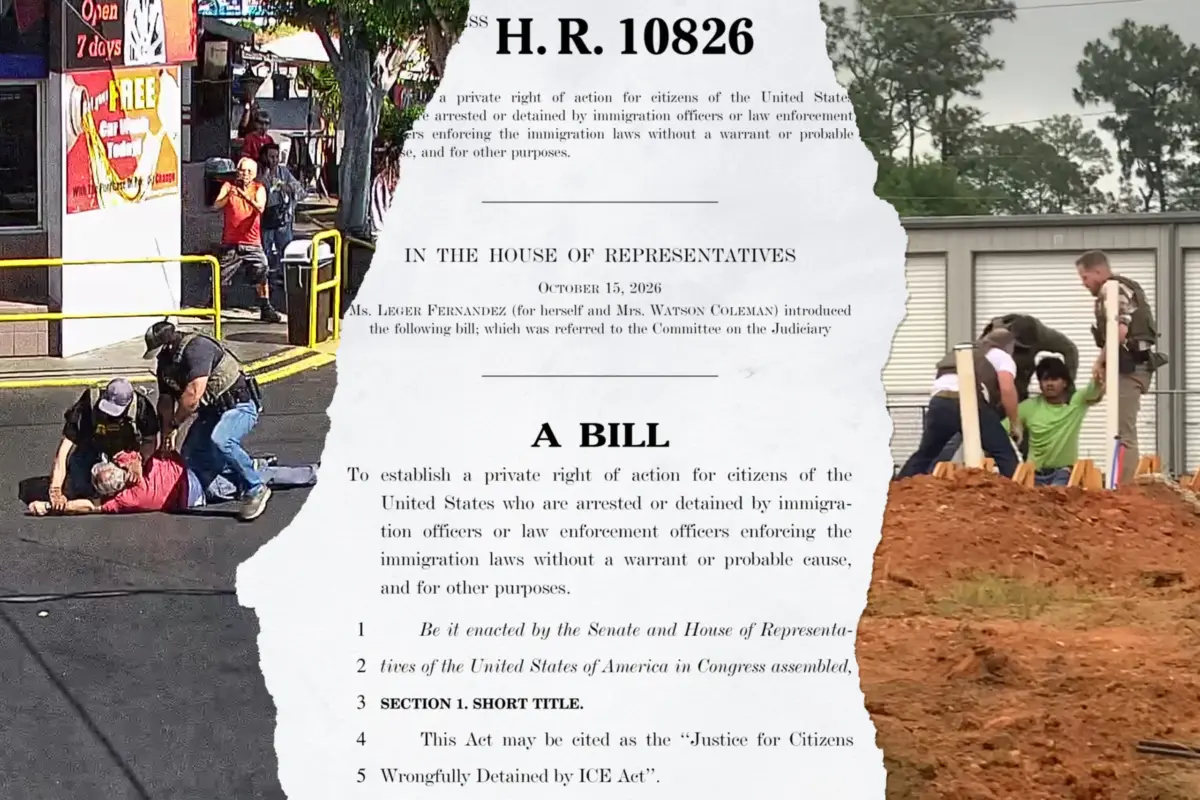
A New Mexico Democrat in the U.S. House of Representatives last week introduced a significant piece of legislation aimed at making it substantially easier for U.S. citizens to sue immigration agents and the federal government for wrongful detentions and arrests. The bill, titled the "Justice for Citizens Wrongfully Detained by ICE Act," was spearheaded by Representative Teresa Leger Fernández, who explicitly credited ProPublica’s investigative journalism as the primary catalyst for its creation. This legislative initiative arrives amidst growing concerns over accountability within federal immigration enforcement and follows a series of reports detailing hundreds of cases of U.S. citizens being unlawfully detained.
The Legislative Proposal: Deconstructing the "Justice for Citizens Wrongfully Detained by ICE Act"
Representative Leger Fernández’s bill (House Bill 10826) represents a comprehensive effort to recalibrate the balance between federal law enforcement authority and individual civil liberties. At its core, the legislation seeks to dismantle the existing legal protections that currently shield immigration agents and the federal government from lawsuits arising from wrongful detentions and arrests. These protections, often referred to as qualified immunity, have historically made it exceedingly difficult for individuals to seek redress in federal court for constitutional violations committed by government officials.
Beyond merely rolling back immunity, the "Justice for Citizens Wrongfully Detained by ICE Act" introduces several critical provisions designed to empower citizens and ensure a more equitable legal process. Firstly, it proposes to establish a minimum level of compensation for individuals who successfully win their lawsuits against the government or its agents. This provision aims to ensure that victims of wrongful detention receive meaningful recompense for the severe disruptions, emotional distress, and potential financial losses incurred, rather than being subjected to protracted and often unrewarding legal battles. The lack of guaranteed compensation has often been a deterrent for individuals pursuing legal action, even when their rights have been clearly violated.
Secondly, the bill seeks to extend the statute of limitations for such cases. This is a crucial amendment, as the complex nature of immigration law and the often-protracted process of proving wrongful detention can consume significant time, frequently exceeding current statutory deadlines. An extended statute of limitations would provide victims with a more realistic window to gather evidence, secure legal representation, and file their claims, recognizing the unique challenges inherent in challenging federal authority.
Perhaps one of the more pointed provisions within the legislation is its directive to reclaim unspent Immigration and Customs Enforcement (ICE) funding from President Donald Trump’s so-called "One Big Beautiful Bill Act." While the specifics of this "Act" are not widely detailed in public discourse, it likely refers to broader appropriations or executive directives during the Trump administration that allocated substantial funds to immigration enforcement initiatives. Reallocating these unspent funds underscores a desire to curb what proponents see as unchecked expansion of enforcement powers and redirect resources towards accountability and redress. The bill was introduced with the support of co-sponsor Representative Bonnie Watson Coleman, a New Jersey Democrat, signaling bipartisan support within the Democratic caucus for addressing these issues.
A Catalyst for Change: ProPublica’s Groundbreaking Investigations
The genesis of the "Justice for Citizens Wrongfully Detained by ICE Act" is inextricably linked to the investigative journalism of ProPublica. Earlier this month, the non-profit news organization published a revealing report that detailed more than 500 instances of U.S. citizens being detained in warrantless arrests during what it termed the "second Trump administration" – a period likely referring to the latter half of his presidency, marked by intensified immigration enforcement. This figure built upon earlier ProPublica investigations that had already highlighted a troubling pattern.
In the previous year, congressional Democrats had already launched a wide-ranging investigation into immigration agents’ detention of U.S. citizens, directly prompted by ProPublica’s initial findings. That earlier investigation had revealed that over 170 citizens had been detained by immigration agents against their will, sparking alarm among civil rights advocates and lawmakers alike. The consistent, meticulous reporting by ProPublica has brought to light not just isolated incidents, but what appears to be a systemic issue, providing concrete evidence that has proven indispensable for legislative action. The organization’s data, which suggested that more than 100 citizens were held after agents questioned their citizenship, and at least 70 children and teens were also detained, painted a stark picture of the human cost of these enforcement practices.
The Scale of the Problem: Wrongful Detentions of U.S. Citizens
The federal government, through its agencies like the Department of Homeland Security (DHS), which oversees ICE, has consistently denied that there is any pattern of immigration agents detaining U.S. citizens. Instead, they often characterize their immigration operations as "highly targeted" and emphasize adherence to protocols. However, the data compiled by ProPublica and other advocacy groups tells a different story.
The 500-plus cases documented by ProPublica are not merely administrative errors; they represent profound violations of fundamental rights. These detentions often stem from various factors, including mistaken identity, agents failing to properly verify citizenship claims, reliance on outdated or inaccurate databases, and sometimes, allegations of racial profiling. For example, individuals with Hispanic surnames or those speaking Spanish have reported being disproportionately targeted, regardless of their citizenship status. These detentions can range from a few hours to several days or even weeks, during which time individuals are held in facilities designed for non-citizens, often without access to legal counsel, and subjected to intimidating questioning.
The psychological toll of such experiences can be immense, leading to trauma, anxiety, and a deep distrust of law enforcement. Economically, wrongful detentions can result in lost wages, job loss, and significant legal fees, even if the individual is eventually released. The federal government’s denial of a "pattern" stands in stark contrast to the lived experiences of hundreds of citizens, highlighting a critical disconnect between official narratives and ground realities. The fact that dozens of children and teenagers were also caught in these detentions adds another layer of ethical and humanitarian concern, emphasizing the indiscriminate nature of some enforcement actions.
Understanding the Legal Landscape: Immunity and Accountability
The difficulty in suing federal officers for wrongful arrests or excessive force, a core issue the bill seeks to address, is deeply rooted in the legal doctrine of qualified immunity. This judicial doctrine protects government officials from liability in civil lawsuits unless their conduct violates clearly established statutory or constitutional rights, and there is no question that a reasonable officer would have known their actions were unlawful. In practice, this means plaintiffs must show that a prior court ruling in their jurisdiction involved nearly identical facts, creating an extremely high bar for accountability.
The Supreme Court first established qualified immunity in 1967, and it has since evolved to become a powerful shield for government officials, including those within ICE and other federal law enforcement agencies. This protection extends not only to civil lawsuits but also makes it challenging for local prosecutors to bring charges against federal agents. Federal agents often claim immunity in response to state charges and can move their cases to federal court, where they frequently receive more favorable treatment.
Currently, individuals accusing immigration agents of wrongdoing can sue only under a very narrow set of circumstances. One avenue, known as a Bivens action, allows individuals to sue federal agents for constitutional violations. However, the Supreme Court has significantly curtailed the scope of Bivens actions over the years, making it applicable only in a few specific contexts and signaling a reluctance to extend it to new situations. This judicial narrowing of avenues for redress has further solidified the need for legislative intervention.
Historical Context and Previous Legislative Efforts
The "Justice for Citizens Wrongfully Detained by ICE Act" is not the first attempt by Democratic lawmakers to address the issue of federal law enforcement immunity and accountability. Over the years, several bills have been introduced in both the House and Senate with similar objectives, though none have successfully navigated the legislative process to become law.
For instance, previous Democratic bills, some championed by figures like Senator Ed Markey and Representative Ayanna Pressley, or Senator Sheldon Whitehouse and Senator Ron Johnson (though the latter pairing typically focuses on different aspects of accountability, often in the context of federal crimes rather than civil immunity for constitutional violations), have sought to end or significantly reform federal law enforcement immunity. These efforts typically gain momentum in the wake of high-profile incidents involving alleged misconduct by federal agents, such as excessive force or wrongful detentions. However, they consistently face strong opposition from law enforcement unions and conservative lawmakers who argue that weakening immunity would expose agents to frivolous lawsuits, hinder their ability to perform their duties effectively, and potentially endanger their lives.
The debate over qualified immunity is often framed as a clash between protecting individual rights and ensuring effective law enforcement. Proponents of immunity argue it is essential for officers to make split-second decisions without fear of personal financial ruin, while opponents contend it fosters a culture of impunity and makes it nearly impossible to hold bad actors accountable. The repeated failure of past bills underscores the deep ideological divide on this issue within Congress.
The Trump administration’s immigration policies, characterized by an "enforcement-first" approach, further intensified this debate. Policies such as increased border patrols, expanded interior enforcement, and the implementation of programs like "Operation Stonegarden" — which provides federal funding to local law enforcement agencies for border security activities — led to a significant increase in interactions between citizens and immigration agents. This heightened level of enforcement, combined with allegations of aggressive tactics, contributed to the surge in documented cases of wrongful detentions of U.S. citizens, thereby providing more impetus for legislative reform.
Official Responses and Counterarguments
In response to inquiries about the new legislation, the Department of Homeland Security (DHS), the parent agency of ICE, reiterated its long-standing position. A spokesperson for DHS repeated claims that the agency is not arresting U.S. citizens and defended its immigration operations as "highly targeted." This official stance suggests that DHS and ICE view the incidents of wrongful detention as isolated anomalies rather than symptomatic of systemic issues. They typically emphasize rigorous training protocols, internal review processes, and their commitment to upholding constitutional rights.
However, critics argue that these internal mechanisms are often insufficient and lack transparency. While DHS and ICE may have internal policies for investigating misconduct, the outcomes of these investigations are rarely made public, leading to a perception of a lack of true accountability. Law enforcement unions, such as the National ICE Council, which represents ICE officers, would likely voice strong opposition to the bill. They typically argue that such legislation would expose their members to undue legal risk, undermine morale, and make it more difficult for agents to carry out their dangerous and complex duties. They might also argue that existing legal avenues, albeit narrow, are sufficient and that the bill represents an overreach into executive branch functions.
Broader Implications: Rights, Remedies, and Reform
The "Justice for Citizens Wrongfully Detained by ICE Act" carries significant implications for civil liberties, law enforcement practices, and the ongoing national debate over immigration. Should it pass, it would represent a landmark shift in the legal framework governing accountability for federal agents, potentially setting a precedent for other federal agencies.
From a civil liberties perspective, the bill offers a crucial pathway for individuals to seek justice and compensation when their constitutional rights are violated. By lowering the bar for suing federal agents and ensuring minimum compensation, it could act as a powerful deterrent against future misconduct, fostering a culture of greater caution and adherence to legal protocols within ICE. Representative Leger Fernández emphasized this point, stating, "We know that when there are consequences, bad actors start behaving better because they don’t want to face those consequences." She further warned that without such legislation, agents "will continue to violate the law, to violate their own policy, and to violate the Constitution without any consequences."
For federal law enforcement, the bill would necessitate a re-evaluation of training, operational procedures, and accountability mechanisms. While it may face resistance, the potential for increased litigation could prompt agencies to invest more in verifying citizenship, improving data accuracy, and ensuring agents are fully aware of the legal boundaries of their authority. The financial implications for the federal government could also be substantial, not only in terms of compensation payouts but also in legal defense costs, potentially incentivizing preventative measures.
The legislation also speaks to a broader movement to reform qualified immunity across all levels of law enforcement. While this bill specifically targets immigration agents, its success could embolden advocates pushing for similar reforms for state and local police officers, reigniting a national conversation about police accountability and the scope of governmental immunity.
The Path Forward: Legislative Hurdles and Public Debate
Despite its compelling objectives, the "Justice for Citizens Wrongfully Detained by ICE Act" faces a challenging path through Congress. With a narrowly divided House and a Senate where most legislation requires bipartisan support to overcome the filibuster, the bill’s passage is far from guaranteed. Strong opposition from Republican lawmakers, who often align with law enforcement interests and prioritize border security, is expected. They are likely to frame the bill as an attack on law enforcement and an impediment to national security.
The public debate surrounding the bill will undoubtedly be intense. Civil rights organizations, immigrant advocacy groups, and legal experts will rally in support, emphasizing the importance of constitutional protections and government accountability. They will likely highlight individual stories of wrongful detention to underscore the human impact of current policies. Conversely, law enforcement groups and conservative media will likely argue against the bill, focusing on the perceived threats to agent safety and national security.
The bill’s ultimate fate will depend on its ability to garner sufficient bipartisan support, a task made difficult by the highly politicized nature of immigration and law enforcement issues. However, its introduction marks a significant step in the ongoing effort to ensure that even in the complex realm of immigration enforcement, the fundamental rights of U.S. citizens remain inviolable and that those who violate them can be held accountable.




 Nila Kartika Wati

 Eva Lovia

 Lina Irawan

 Ana Megawati

 Joko Widodo
