
 Pevita Pearce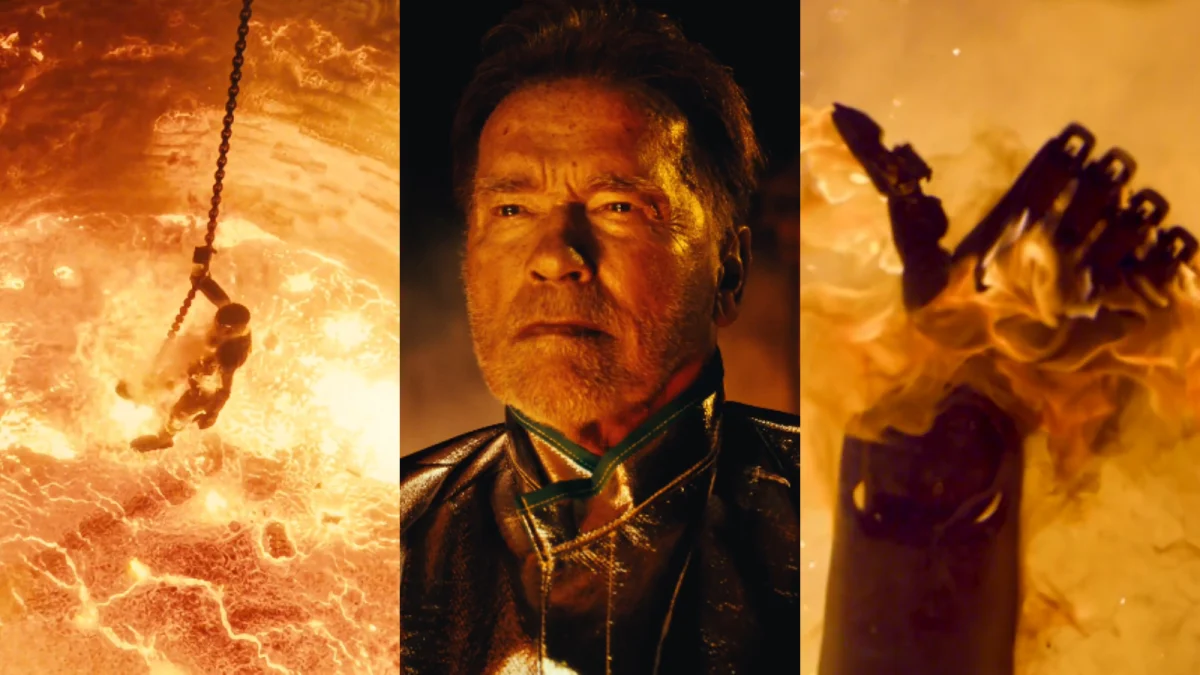
The intersection of cinematic history and cutting-edge robotics reached a symbolic milestone this week as Arnold Schwarzenegger collaborated with Figure, a leading artificial intelligence and robotics company, to oversee the retirement of its F.02 humanoid fleet. In a high-production short film titled F.02 Decommission, the former Governor of California and star of the Terminator franchise brought a sense of narrative closure to a generation of machines that helped propel the company to the forefront of the humanoid industry. The event, which culminated in the robots being submerged into a 75-ton electric arc furnace, served as both a strategic hardware disposal operation and a massive public relations event designed to signal the arrival of the next generation of autonomous technology.
The collaboration began after Figure sought public input via social media regarding the most appropriate way to retire its aging hardware. Schwarzenegger, whose portrayal of the T-800 cybernetic organism remains the definitive cultural touchstone for humanoid robotics, reportedly suggested the molten steel method as an homage to the climax of the 1991 blockbuster Terminator 2: Judgment Day. In the film, Schwarzenegger’s character descends into a vat of molten steel to prevent his technology from being used to create a dystopian future. In the real-world version, the actor appears in protective foundry gear, leading a Figure 02 unit toward its end before delivering the modified catchphrase: “Hasta la vista, Figure 2.”
Strategic Necessity of Hardware Retirement
While the cinematic flair of the decommissioning captured global headlines, the decision to destroy the F.02 fleet was rooted in practical industrial and security concerns. Figure has rapidly iterated on its designs, moving from the original Figure 01 to the highly sophisticated Figure 02, and now toward the F.03 and F.04 models. As the company scales, maintaining a legacy fleet becomes an operational burden.
Engineers at Figure noted that the maintenance of older machines often requires diverted resources, including specialized parts and software support that are better utilized in the development of newer iterations. Furthermore, the protection of proprietary hardware is a paramount concern in the highly competitive robotics sector. Simply disposing of the units in a landfill or selling them for scrap would risk exposing sensitive mechanical designs and integrated sensor arrays to competitors or reverse-engineering efforts. Dismantling each unit manually was deemed too time-consuming, as it would pull core engineering talent away from the development of the F.04 fleet. Consequently, total thermal destruction emerged as the most efficient way to ensure the complete erasure of the proprietary physical architecture.
The Logistics of a High-Temperature Decommissioning
The execution of the decommissioning was not without significant logistical hurdles. Figure initially sought to perform the operation at foundries within the United States and Mexico. However, these facilities rejected the proposal due to the inherent risks associated with the robots’ high-density lithium-ion batteries. When subjected to extreme heat, lithium-ion batteries can cause explosive "thermal runaway" events, releasing toxic gases and potentially damaging industrial equipment.
To overcome this, Figure partnered with a specialized industrial facility in Imatra, Finland, which possessed the necessary safety protocols and equipment to handle the volatile components. The facility utilized a 75-ton electric arc furnace, capable of reaching temperatures sufficient to vaporize or melt all metallic and synthetic components of the humanoid units. This process ensured that the robots were not merely broken, but fundamentally recycled into raw material.
Training for Autonomous Self-Termination
In a departure from the fictional T-800—which required external assistance to be lowered into the steel because its programming forbade self-termination—the Figure 02 units were programmed to complete the task autonomously. This required a specialized training phase at Figure’s headquarters in San Jose, California.
Engineers used motion-capture data from professional stunt performers to teach the robots how to navigate the precarious environment of a foundry. The robots were trained to walk toward the edge of a ledge and jump onto airbags to simulate the final descent. This data was then uploaded to the fleet, allowing the machines to walk to the edge of the electric arc furnace and leap into the molten steel without human intervention. This demonstration of autonomous movement in a high-stakes, non-laboratory environment served as a final testament to the robustness of the F.02’s onboard AI and balance systems.
The Evolution of the Figure Humanoid Line
The destruction of the F.02 fleet marks the end of a pivotal era for the company. The Figure 02 was a significant leap forward from its predecessor, featuring integrated wiring for a more human-like aesthetic, enhanced battery life, and improved torque density in its joints. It was this model that Figure famously deployed in pilot programs at BMW’s manufacturing plant in Spartanburg, South Carolina, where the robots were tasked with inserting sheet metal parts into specific fixtures.
The transition to the Figure 03 and the upcoming F.04 represents a shift toward more domestic and complex task management. The Figure 03 has already demonstrated capabilities in household chores, such as washing dishes and folding laundry, using vision-language models (VLM) to understand and interact with its environment. By clearing out the F.02 inventory, Figure is making physical and financial room for a fleet that is expected to be more capable of "end-to-end" neural network learning, where the robot learns tasks by watching humans rather than being explicitly programmed for every movement.
Commemoration and the Circular Economy
Rather than allowing the metal from the F.02 fleet to be lost to the general scrap market, Figure has announced plans to turn the recovered material into limited-edition keepsakes. This move mirrors a growing trend in the tech industry where "upcycling" legacy hardware into collectible items serves to build brand loyalty and a sense of history. These artifacts will serve as a physical reminder of the F.02’s role in the development of general-purpose AI.
This approach also highlights the sustainability challenges facing the robotics industry. As humanoid robots become more common in industrial and eventually domestic settings, the question of "end-of-life" management becomes critical. The use of electric arc furnaces for recycling represents a step toward a circular economy in high-tech manufacturing, where the raw materials of one generation of machines directly contribute to the fabrication of the next.
Broader Context in the Robotics Industry
The collaboration with Schwarzenegger is part of a broader trend of "spectacle marketing" in the robotics sector. As companies like Tesla with its Optimus bot, Boston Dynamics with the electric Atlas, and various Chinese firms such as Unitree and Agility Robotics compete for investor attention and public trust, the use of pop-culture icons helps to demystify the technology.
The industry has seen a flurry of viral demonstrations recently, ranging from highly scripted combat demos to "stress tests" where CEOs interact physically with the machines. For instance, a recent demonstration of a Chinese T800-inspired robot involved the machine "defending" itself against its own CEO, while influencer Frankie LaPenna recently engaged in a choreographed fight with a humanoid unit. Figure’s approach, however, leans into the "heroic" and "poetic" end of the machine, utilizing Schwarzenegger to bridge the gap between the fears of science fiction and the reality of industrial progress.
Analysis of Implications for AI and Society
The sight of a humanoid robot autonomously jumping into a furnace provides a stark visual of the current state of AI. It demonstrates that the primary challenge is no longer just movement, but the integration of complex decision-making with physical action. While the "self-termination" was a controlled experiment, the underlying tech—vision systems, balance controllers, and path planning—is the same tech that will eventually allow these robots to navigate construction sites or elder-care facilities.
Furthermore, the involvement of a figure as prominent as Arnold Schwarzenegger suggests that the robotics industry is moving out of the "niche tech" phase and into the mainstream cultural consciousness. By acknowledging the Terminator comparisons directly, Figure is attempting to control the narrative surrounding the "rise of the machines," framing it as a collaborative effort between humans and technology rather than a conflict.
The retirement of the F.02 fleet is a clear signal that the pace of innovation in humanoid robotics is accelerating. In the tech world, a "generation" is often measured in years, but in the burgeoning field of AI-driven hardware, it appears to be measured in months. As the F.03 begins its rollout and the F.04 enters the final stages of development, the industry will be watching to see if these machines can move beyond the "viral video" stage and into meaningful, widespread economic utility. For now, the remnants of the F.02 fleet exist only as molten metal and memories, a necessary sacrifice on the altar of technological advancement.




 Jia Lissa
 Yuyun Lusiyani
 Joko Widodo
 Eva Lovia
