
 Nila Kartika Wati
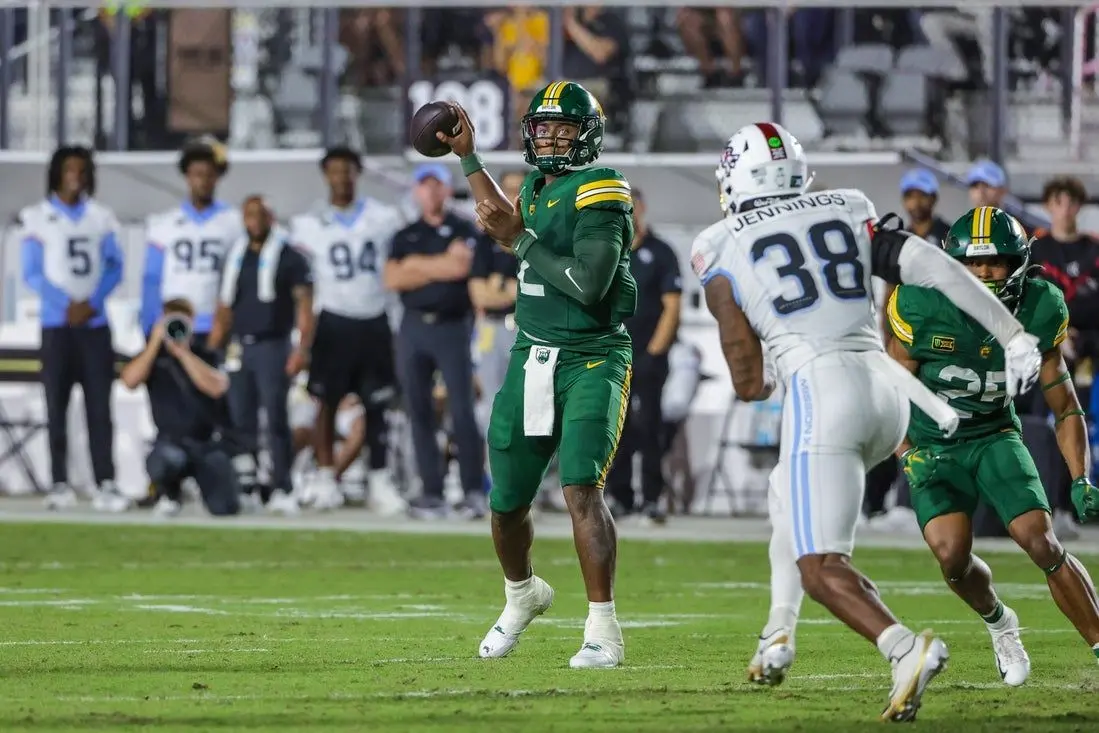
The Baylor Bears, in their first contest under the interim leadership of Joe Klanderman, delivered a resounding performance, dismantling the UCF Knights 41-9 in Orlando on Friday night. Quarterback DJ Lagway, making a significant return to Florida, orchestrated a potent offensive attack, throwing for four touchdown passes and steering the Bears to a dominant victory. This pivotal win marks a significant turning point for Baylor (5-3 overall, 3-2 Big 12) as they navigate a coaching transition, while UCF (4-4 overall, 2-3 Big 12) struggled to find its footing against a revitalized Bears defense.
The coaching change, which saw seventh-year head coach Dave Aranda relieved of his duties on Sunday, ushered in Klanderman, who immediately instilled a defensive intensity that stifled the Knights’ offensive capabilities. UCF’s offensive unit, which had managed a notable upset victory against then-No. 2 BYU just the previous Saturday, was held in check, managing only three Will Stone field goals throughout the entire game. The Baylor defense showcased its prowess by limiting UCF to a mere 281 total yards, a testament to their relentless pressure which resulted in seven sacks and an impressive 12 tackles for loss. This defensive dominance provided a crucial platform for the Bears’ offense to flourish.
DJ Lagway, a prominent transfer from the Florida Gators, demonstrated why he is considered a key asset for the Bears. He completed 16 of his 25 passes for a substantial 319 yards, consistently finding his targets and extending drives. His performance was complemented by a strong showing from his receiving corps. Gavin Freeman was a primary beneficiary, hauling in five catches for 114 yards, including a spectacular long touchdown reception that showcased his explosiveness. Tony Livingston also proved to be a reliable threat, scoring two touchdowns on two receptions, highlighting his effectiveness in the red zone and as a downfield target. The ground game also contributed significantly, with Ryelan Morris accumulating 82 yards on 11 carries, providing a balanced offensive attack that kept UCF’s defense off balance.
On the UCF side, the offensive struggles were palpable, particularly for quarterback Keyone Jenkins. Following his heroics in the upset win against BYU, Jenkins was unable to replicate that magic against Baylor’s swarming defense. He completed 14 of his 21 passes for a modest 82 yards and threw an interception that proved costly. In an effort to spark the offense, Alonza Barnett III entered the game in the second half, completing 8 of his 16 passes for 133 yards. Josh Derry also showed flashes of potential for the Knights, recording 70 receiving yards on three catches, but these individual efforts were not enough to overcome the Bears’ cohesive defensive effort.
Early Momentum and Defensive Dominance
The scoring opened in the first quarter, catalyzed by a crucial defensive play. Baylor’s Devon Jordan intercepted UCF quarterback Keyone Jenkins, marking Jordan’s fourth interception of the season and immediately putting the Bears’ offense in favorable field position. Capitalizing on this turnover, Lagway showcased his dual-threat ability by converting a critical third down with a 10-yard run. The subsequent play saw the Texas native demonstrate his precision, lobbing a 4-yard touchdown pass to a wide-open Tony Livingston, giving Baylor an early lead late in the first quarter. This sequence set the tone for the game, highlighting the synergy between the Bears’ defense and offense.
The second quarter saw Baylor extend its lead and further assert its dominance. Lagway connected with Dre’lon Miller for a significant 36-yard gain, moving the Bears into scoring territory. The methodical eight-play, 63-yard drive was capped by Caden Knighten’s 2-yard rushing touchdown, pushing the lead to 14-0 with 8:58 remaining in the half. UCF managed to register their first first down of the game on the ensuing possession, but their drive stalled, resulting in a 39-yard field goal from Will Stone with 3:24 left before halftime.
Baylor quickly responded, with Jadon Porter making a crucial 53-yard reception that set up Rhett Armstrong for a 45-yard field goal. Armstrong later added another successful kick from 29 yards. However, UCF managed to tack on another field goal just before the half, as Stone connected from an impressive 57 yards with only three seconds remaining, narrowing the deficit to 20-6 at the break. Despite the late field goal, the first half clearly belonged to Baylor, who established a significant advantage in both offensive production and defensive control.
Second-Half Surge and Clinical Execution
The second half commenced with Baylor continuing its offensive onslaught. On the Bears’ opening drive of the third quarter, Lagway displayed his arm talent once again, delivering a precise 21-yard touchdown pass to tight end Tony Livingston, marking his second score of the game and extending Baylor’s lead to 27-6 at the 10:07 mark.
The Bears’ explosive playmaking ability was on full display less than two minutes later. Gavin Freeman, demonstrating exceptional athleticism and speed, hauled in a high seam-pattern throw and sprinted untouched for a remarkable 77-yard touchdown. This spectacular play stretched Baylor’s advantage to a commanding 34-6, effectively sealing the victory for the interim-coached squad. UCF managed to respond with another Will Stone field goal, this time from 35 yards, but it was a mere footnote in the Bears’ overwhelming performance.
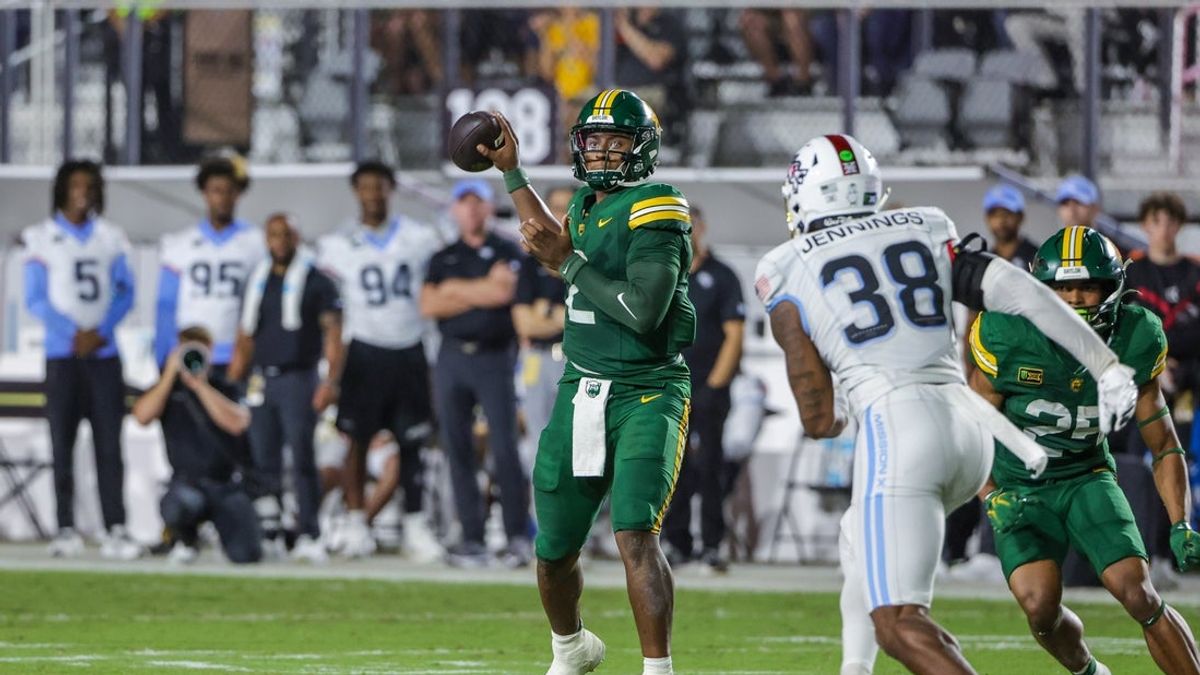
The scoring concluded in the fourth quarter with Matthew Klopfenstein catching a 5-yard pass from DJ Lagway for the quarterback’s fourth and final touchdown of the night, bringing the final score to 41-9. This final touchdown underscored the comprehensive nature of Baylor’s victory, with multiple offensive weapons contributing to the scoreboard.
Coaching Transition and Defensive Identity
The interim appointment of Joe Klanderman represented a significant moment for the Baylor program. Klanderman, who had served as the defensive coordinator under Dave Aranda, stepped into the head coaching role with a clear mandate: to galvanize the team and secure a path to bowl eligibility. His immediate impact was most evident on the defensive side of the ball. The statistics speak volumes: seven sacks and twelve tackles for loss against UCF are not merely impressive numbers; they represent a fundamental shift in defensive intensity and execution. This defensive resurgence is a critical development for Baylor, suggesting that the team can maintain a strong identity and competitive edge even amidst coaching changes.
The decision to part ways with Dave Aranda, a respected figure in college football, after seven seasons signals a desire for a new direction for the Baylor program. While the full implications of this decision will unfold over time, the immediate result under Klanderman suggests a team that is capable of performing at a high level when its core strengths are leveraged. The seven-win threshold for bowl eligibility remains a tangible goal for Baylor, and this commanding victory significantly bolsters their chances.
UCF’s Struggles and Future Outlook
For UCF, this loss represents a setback, particularly following their morale-boosting win against BYU. The inability to generate consistent offensive pressure against Baylor’s defense raises questions about the Knights’ ability to contend in the Big 12 conference, especially against teams that can impose their will defensively. The team’s offensive statistics against Baylor – 281 total yards, with a significant portion coming in garbage time – highlight the need for adjustments and improved execution. Quarterback Keyone Jenkins’ performance, while understandable given the defensive pressure, will likely be a focal point for improvement moving forward.
The Knights’ remaining schedule will present further challenges, and their ability to rebound from this decisive loss will be a key indicator of their resilience. The Big 12 conference is known for its competitive nature, and consistency will be paramount for UCF to achieve its postseason aspirations.
Broader Implications and Program Trajectory
The Baylor Bears’ emphatic victory under interim coach Joe Klanderman carries significant implications for the program’s immediate future and its long-term trajectory. The win not only strengthens their claim for bowl eligibility but also demonstrates the team’s capacity for resilience and adaptability in the face of adversity. The dominant defensive performance suggests that Klanderman’s background as a defensive coordinator has translated into tangible on-field success, potentially influencing the search for a permanent head coach.
For DJ Lagway, this game served as a powerful statement of his impact as a transfer quarterback. His strong performance against a Power Five opponent, particularly in his return to Florida, will likely elevate his profile and provide a significant boost to Baylor’s offensive capabilities. His continued development will be crucial for the Bears’ sustained success.
The outcome also provides a stark reminder of the unpredictable nature of college football. UCF’s dramatic win over a highly ranked opponent the previous week, followed by a comprehensive defeat, underscores the parity and competitive balance within the Big 12. Teams must bring their A-game week in and week out to succeed in this demanding conference.
As the season progresses, the Baylor Bears will aim to build upon this momentum, seeking to secure a winning record and a bowl invitation. The interim coach has provided a compelling audition, and the team has responded with a performance that bodes well for their immediate future. The focus now shifts to maintaining this level of play and consistency as they navigate the remainder of their conference schedule.




 Eva Lovia

 Lina Irawan

 Yuyun Lusiyani

 Ana Megawati

 Joko Widodo
