
 Nana Wu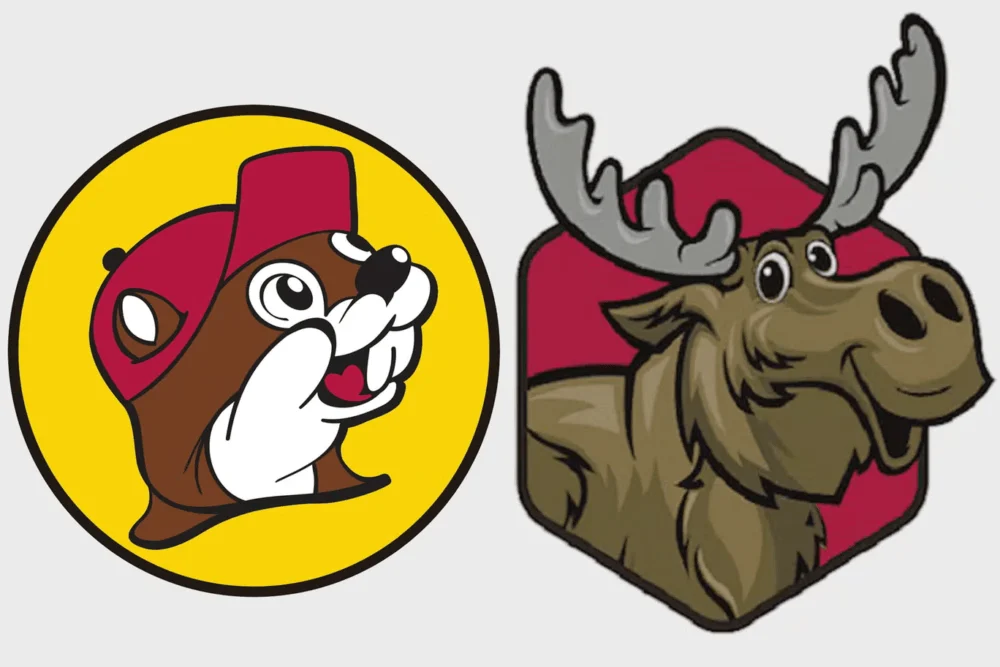
The popular Texas-based gas station and convenience store chain, Buc-ee’s, is once again drawing criticism for its aggressive stance on trademark enforcement, with its latest legal action targeting a small gas station named "Mickey’s." This move has reignited discussions about the company’s broader pattern of litigation against businesses, many of which are significantly smaller, raising questions about the legitimacy and scope of Buc-ee’s trademark claims.
The Latest Legal Battle: Buc-ee’s vs. Mickey’s
The current controversy stems from a lawsuit filed by Buc-ee’s against Mickey’s, a gas station that features a cartoon moose as its mascot. Buc-ee’s, which prominently uses a beaver mascot, alleges that Mickey’s logo and branding infringe upon its own trademarks. The lawsuit claims that Mickey’s logo incorporates "a cartoon animal facing right with wide eyes and a smile, overlaying a round background," and that the gas station "also uses red as a predominant color in its interior and exterior signage, as well as employee uniforms and anthropomorphic representations of its cartoon moose mascot." Buc-ee’s contends that consumers are likely to perceive a connection or association between the two brands, leading to confusion about the source, sponsorship, or affiliation of their products and services, despite the absence of any such relationship.
In addition to the lawsuit, Buc-ee’s has petitioned the U.S. Patent and Trademark Office (USPTO) to cancel Mickey’s existing trademark registrations for its branding. This dual approach—litigation and administrative action—underscores the seriousness with which Buc-ee’s appears to be pursuing its claims.
However, visual comparisons of the logos in question reveal significant distinctions. Buc-ee’s mascot is a beaver, typically depicted within a hexagonal shape, while Mickey’s features a moose, often presented within a circular background. The color palettes, while both potentially utilizing red, also differ in their application and overall scheme. Critics argue that these differences render the claim of consumer confusion highly improbable, particularly given the distinct nature of the animals and the shapes of their respective logos.
A Pattern of Aggressive Litigation
This latest lawsuit is not an isolated incident. Buc-ee’s has a documented history of engaging in trademark disputes with numerous other companies, often smaller entities that may lack the resources to mount a robust legal defense. This pattern has led some to liken Buc-ee’s trademark enforcement strategy to that of companies like Monster Energy, which has also been known for its assertive legal actions to protect its brand.
The core of Buc-ee’s legal arguments often appears to hinge on a broad interpretation of trademark law, asserting rights over the concept of cartoon animal mascots within tangential industries. This expansive view has led to a series of legal challenges against businesses with seemingly minor or unrelated branding elements. While Buc-ee’s has reportedly secured numerous settlements from these legal actions, critics argue that these settlements do not validate the legitimacy of the underlying claims, suggesting they may have been the result of defendants choosing to avoid costly litigation rather than admitting wrongdoing.

Examining the Legal Basis of Buc-ee’s Claims
Trademark law is designed to protect consumers from confusion about the source of goods and services and to prevent unfair competition. For a trademark infringement claim to be successful, a plaintiff must typically demonstrate that the defendant’s mark is "confusingly similar" to the plaintiff’s mark, and that such confusion is likely to occur in the marketplace. Factors considered include the similarity of the marks, the similarity of the goods or services, the strength of the plaintiff’s mark, evidence of actual confusion, and the marketing channels used.
In the case of Buc-ee’s versus Mickey’s, the assertion of confusing similarity appears tenuous upon examination. The fundamental difference between a beaver and a moose, coupled with distinct visual representations and branding elements, challenges the notion that consumers would mistakenly believe that Mickey’s gas station is affiliated with, sponsored by, or originates from Buc-ee’s. The claim that a hexagon is not round, a point raised by critics, highlights the perceived absurdity of Buc-ee’s argument that seemingly minor design choices constitute infringement.
Broader Implications and Industry Reactions
The aggressive trademark enforcement by Buc-ee’s has significant implications for small businesses and the broader competitive landscape. Smaller companies often operate on tighter margins and may not have the financial reserves to engage in protracted legal battles. The threat of litigation, even if based on questionable grounds, can act as a powerful deterrent, forcing businesses to alter their branding or cease operations, thereby stifling innovation and competition.
While Buc-ee’s has cultivated a devoted following, particularly in the Southern United States, its legal tactics have attracted criticism from legal experts and consumer advocates. The company’s approach raises questions about whether it is leveraging trademark law to stifle legitimate competition rather than solely to protect its brand identity from genuine confusion.
There have been no official statements from Mickey’s regarding the lawsuit. However, it can be inferred that the owners of Mickey’s are likely facing a significant challenge and may be preparing to defend their brand against Buc-ee’s legal claims. The outcome of this case could have far-reaching consequences, potentially setting a precedent for how broadly trademark rights can be asserted over cartoon mascots and branding elements in related industries.
The Future of Buc-ee’s Trademark Strategy
The ongoing scrutiny of Buc-ee’s trademark enforcement strategy suggests a need for the company to re-evaluate its approach. While protecting intellectual property is a legitimate business concern, the current pattern of litigation appears to be alienating a segment of the public and raising ethical questions about corporate behavior.
As Buc-ee’s continues to expand its footprint, its legal strategies will likely remain under a microscope. The company’s ability to maintain its positive public image will increasingly depend on its willingness to engage in more balanced and demonstrably justified trademark enforcement, rather than appearing to engage in what critics describe as "trademark bullying." The long-term success of Buc-ee’s may hinge not only on its popular convenience store offerings but also on its commitment to fair business practices and a less litigious approach to brand protection.



 Yuyun Lusiyani
 Joko Widodo
 Eva Lovia
 Jia Lissa
 Pevita Pearce
 admin
admin