
 Jia Lissa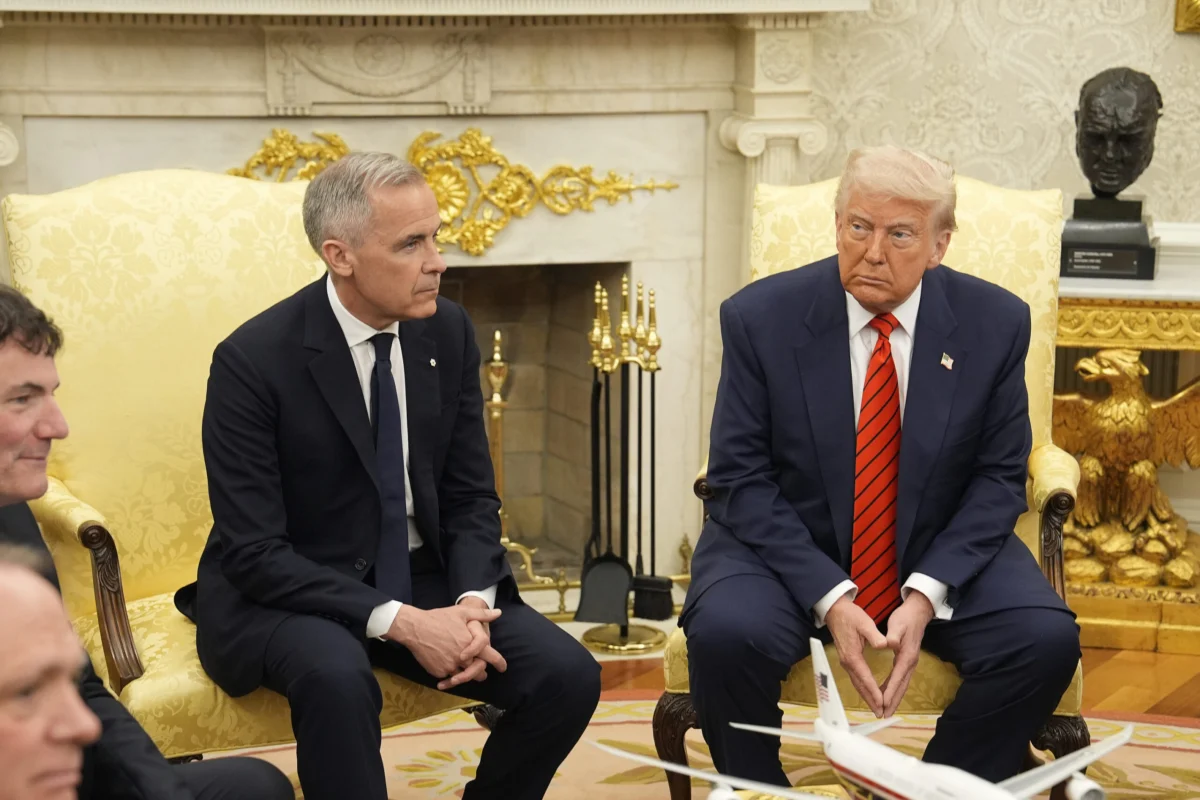
The long-standing economic partnership between the United States and Canada reached a modern nadir early Saturday morning as trade negotiations between the two North American giants collapsed, triggering a high-stakes trade war. Following the breakdown of discussions, Canadian Prime Minister Mark Carney announced that Ottawa would implement "dollar for dollar" retaliatory tariffs on $28 billion worth of American goods, matching the 50% levies imposed by the administration of President Donald Trump. The failure to reach a resolution marks a significant departure from decades of integrated economic policy and threatens to disrupt supply chains that facilitate nearly $1 trillion in annual bilateral trade.
The collapse of the talks follows a week of intense, around-the-clock negotiations intended to avert a massive economic shock. While President Trump had initially set a deadline of 12:01 a.m. Wednesday for the implementation of the 50% tariffs, he had granted a temporary reprieve until Friday to allow negotiators more time to bridge the gap. However, the extension proved insufficient to overcome fundamental disagreements over market access, industrial subsidies, and the reliability of long-term trade commitments.
The Failure of Diplomacy and the "Dollar for Dollar" Response
Prime Minister Mark Carney, a former Governor of the Bank of England and the Bank of Canada who assumed the premiership with a reputation for economic pragmatism, issued a blistering statement shortly after the talks were declared dead. Carney’s rhetoric signaled a definitive end to the "neighborly" approach that has characterized the bilateral relationship for much of the 21st century.
"We have recognized from the beginning that America has changed, and that we will not return to our old relationship," Carney stated late Friday. "Our government understood, before many, that America is altering all its trade relationships—putting tariffs on its closest allies and charging for access to its vast market. We have worked in that context, but Canada will not be intimidated into a deal that undermines our national interest."
The Prime Minister’s office confirmed that the retaliatory measures would target $28 billion in American exports, specifically designed to match the scale of the U.S. tariffs. Carney’s statement emphasized that Canada’s response is intended to protect domestic workers and businesses from what he described as "unfair and uneconomic" demands. "Canada has what the world wants," Carney added. "And we will not allow any nation to determine our future."
The U.S. Perspective: Allegations of "Walk-Backs" and New Demands
The view from Washington was starkly different. U.S. Trade Representative Jamieson Greer placed the blame for the impasse solely on the Canadian delegation. According to Greer, a tentative agreement had been reached earlier in the week, only for Canadian officials to introduce new requirements at the eleventh hour.
"Tonight, Canada declined to finalize the trade deal under the terms agreed earlier this week," Greer said in a formal statement. "Despite the U.S. offer to Canada to receive the best treatment of any major exporter to our market, new demands and walk-backs of other commitments by Canada have upended the careful balance reached in the past days."
The Trump administration has consistently argued that existing trade frameworks have allowed Canada to maintain an unfair advantage in certain sectors, particularly in dairy and lumber, while benefiting from an "open door" to the massive American consumer market. The 50% tariffs are part of a broader "America First" strategy aimed at reducing trade deficits and forcing allies to make concessions that the administration believes will favor American manufacturing.
Economic Context: An $880 Billion Relationship at Risk
The stakes of this trade confrontation are difficult to overstate. According to data from the Associated Press and the U.S. Census Bureau, the two nations traded approximately $880 billion in goods and services in 2025. This relationship is one of the most deeply integrated in the world, with supply chains in the automotive, aerospace, and energy sectors crisscrossing the border multiple times during the production process.
For decades, the automotive industry has functioned as a single North American entity. Parts manufactured in Ontario often travel to Michigan for assembly, or vice versa. Industry analysts warn that a 50% tariff on $28 billion of goods—coupled with Canada’s dollar-for-dollar retaliation—could lead to a sharp increase in the price of consumer vehicles and potentially lead to layoffs on both sides of the border.

Furthermore, Canada remains the largest foreign supplier of energy to the United States, including oil, natural gas, and electricity. While the specific list of goods targeted by the $28 billion in tariffs has not been fully released, the inclusion of industrial materials or energy products could have an immediate inflationary effect on the U.S. economy, which is already grappling with fluctuating commodity prices.
A Timeline of Escalating Tensions
The collapse of the 2026 trade talks is the culmination of months of deteriorating relations between the Trump administration and the Carney government. While trade is the primary driver of the current crisis, several secondary conflicts have fueled the fire:
- The "51st State" Rhetoric: President Trump has frequently used social media and rally speeches to suggest that Canada’s economic reliance on the U.S. makes it a de facto "51st state," a comment that has sparked deep resentment across the Canadian political spectrum.
- The Wildfire Dispute: Environmental issues have also become politicized. President Trump complained bitterly about wildfire smoke drifting from Canadian forests into the United States, at one point suggesting Canada should be held financially liable for the air quality issues in American cities. He even shared an AI-generated image of a massive wall and air filtration system along the northern border.
- The Gordie Howe International Bridge: A symbolic and practical dispute arose over the opening of the Gordie Howe International Bridge, which links Detroit, Michigan, with Windsor, Ontario. The project, intended to streamline trade, became a point of contention when Canada canceled a joint opening ceremony in protest of earlier tariff threats, prompting a sharp rebuttal from the White House.
Domestic Political Pressures and the Midterm Elections
The timing of the trade collapse is particularly significant for the American political landscape. The announcement comes approximately 75 days before the U.S. midterm elections, a period when the administration is under intense pressure to demonstrate the success of its economic policies.
In an apparent effort to mitigate the domestic impact of his trade stance, President Trump announced on Friday that he would lift tariffs on 300,000 metric tons of foreign beef for a 90-day period. The move was designed to lower grocery prices for American consumers ahead of the vote. However, the decision backfired within his own party. Republicans from cattle-producing states slammed the move, arguing that tariff relief for foreign beef would "further harm MAGA" and disadvantage American ranchers who have supported the president’s broader trade agenda.
This internal Republican revolt suggests that the administration is walking a tightrope between its protectionist trade goals and the immediate need to control inflation for voters. The collapse of the Canada talks adds a new layer of volatility to this political calculation.
Broader Implications and Market Reaction
Market analysts expect a volatile opening for North American stock exchanges on Monday. The prospect of a prolonged trade war between the world’s largest and ninth-largest economies has raised fears of a regional slowdown.
"The integration of the U.S. and Canadian economies is so profound that there is no such thing as a surgical strike in a trade war," said Elena Rossi, a senior economist at a leading global consultancy. "When you tax Canadian steel or aluminum, you are taxing the American construction companies that use them. When Canada retaliates, they will likely target politically sensitive sectors in the U.S., such as agriculture or high-tech manufacturing in swing states."
The geopolitical implications are also significant. For decades, the U.S. and Canada have presented a united front on the global stage, particularly within the G7 and NATO. A fractured relationship could weaken North American influence in negotiations with other global powers and signal a permanent shift toward isolationism and bilateralism over multilateral cooperation.
Conclusion: A New Era of North American Relations
As the Sunday deadline for the implementation of the new tariff schedules approaches, there is little sign of a return to the negotiating table. The Carney government appears prepared for a protracted struggle, betting that the resilience of the Canadian economy and the strategic importance of its resources will eventually force a U.S. compromise. Conversely, the Trump administration seems committed to its strategy of maximum pressure, believing that the sheer size of the American market gives it an unassailable advantage.
For businesses and consumers from the Gulf of Mexico to the Arctic Circle, the collapse of these talks marks the beginning of an era of uncertainty. The "Great White North" and the "Land of the Free" are now locked in an economic standoff that will test the strength of their respective economies and the patience of their citizens in the months to come. With the midterms looming and supply chains already strained, the fallout from this week’s failed diplomacy is only just beginning to be felt.


 Yuyun Lusiyani
 Joko Widodo
 Pevita Pearce
 admin
admin
