
 Jia Lissa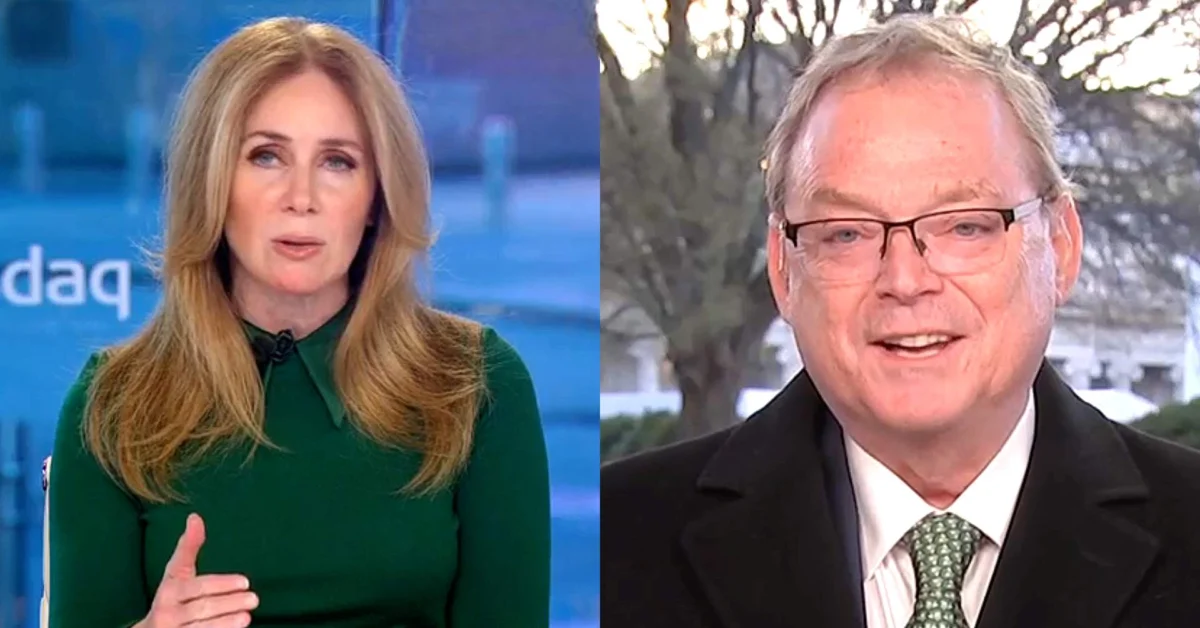
During a high-stakes broadcast of CNBC’s flagship program "Squawk Box" on Tuesday, a sharp exchange occurred between veteran anchor Becky Quick and the Director of the White House National Economic Council, Kevin Hassett. The discussion centered on the economic ramifications of the ongoing military engagement with Iran, specifically focusing on the volatility of global oil markets and the administration’s timeline for a return to price stability. As the conflict, colloquially referred to as "Operation Epic Fury," enters its third week, the discrepancy between the administration’s optimistic forecasts and the current reality of the commodities market has become a focal point for financial analysts and policymakers alike.
The confrontation began when Hassett suggested that West Texas Intermediate (WTI) crude oil prices were slated to drop into the $60 per barrel range by the autumn months. Quick, citing real-time data from the futures market, immediately intervened to clarify that December 2026 contracts were trading significantly higher, near the $75 mark. This fact-check highlighted a broader tension between the executive branch’s messaging regarding the war’s progress and the skeptical outlook maintained by energy traders and global economists.
The Geopolitical Context of Operation Epic Fury
The current military engagement with Iran has reached a critical juncture. Now in its twenty-first day, the conflict has seen significant naval activity in the Strait of Hormuz, a vital maritime chokepoint through which approximately one-fifth of the world’s total oil consumption passes. Recent attacks on oil tankers within the strait have led to immediate spikes in insurance premiums for shipping and have caused intermittent disruptions in the global supply chain.
According to the administration, the military strategy is moving at an accelerated pace. During the interview, Hassett asserted that the United States and its allies have successfully neutralized a substantial portion of Iran’s military capabilities. He further noted that the administration has managed to secure an unprecedented level of international cooperation, claiming that 135 countries in the United Nations—including permanent Security Council members China and Russia—have moved to isolate Tehran without exercising their veto power.
Despite these claims of military and diplomatic success, the economic fallout remains visible. The stock market has experienced heightened volatility as investors weigh the potential for a prolonged disruption against the White House’s insistence that the war will conclude within a four-to-six-week window.
Dissecting the Oil Price Projections
The crux of the disagreement between Quick and Hassett lies in the interpretation of the futures market. WTI crude oil, the benchmark for US energy prices, serves as a primary indicator of market sentiment regarding supply and demand. In a futures contract, buyers and sellers agree on a price for a commodity to be delivered at a specific future date. These prices incorporate "risk premiums"—extra costs associated with the uncertainty of war, political instability, or supply shortages.
Hassett’s assertion that prices would fall into the $60s by the fall suggests a belief in a rapid "normalization" of the market. He argued that the conclusion of hostilities would remove the "terrorism premium" currently baked into energy costs. However, Quick pointed out that the market is not currently pricing in such a drastic drop. On Monday, the WTI December contract was trading north of $75, indicating that professional traders expect elevated prices to persist well into the end of the year and beyond.
Market analysts often point to the "fog of war" as a reason for such price discrepancies. While the administration views the war as a short-term hurdle, energy experts worry about the long-term integrity of Iranian oil infrastructure and the time required for global shipping lanes to return to full capacity. Even if the conflict ends within the predicted six-week timeframe, the logistical backlog of tankers and the replenishment of global inventories could keep prices elevated for months.
Strategic Reserves and International Energy Coordination
To mitigate the surge in gas prices and stabilize the economy, the White House has coordinated a massive release from the Strategic Petroleum Reserve (SPR). Hassett revealed that 35 countries have participated in this coordinated release, a move designed to flood the market with supply and counteract the disruptions in the Strait of Hormuz.
The SPR is an emergency stockpile of petroleum maintained by the U.S. Department of Energy. It is the largest emergency supply in the world, and its utilization is typically reserved for severe energy supply disruptions. Hassett indicated that the volume of the release could increase if market conditions worsen.
However, the effectiveness of SPR releases is often debated by economists. While a release can provide short-term relief, it does not address the underlying structural issues of a supply shock caused by war. Furthermore, the reserves must eventually be replenished, which creates a future demand floor that can prevent prices from dropping as low as the administration might hope.
The Timeline of the Conflict and Economic Repercussions
A significant portion of the CNBC interview focused on the duration of the war. Hassett reiterated President Trump’s stance that the conflict is a "four-to-six-week war" and claimed that the military is currently "ahead of schedule." He cited the fact that tankers are beginning to "dribble through" the straits as evidence that Iranian resistance is waning.
From an economic standpoint, the difference between a one-month war and a six-month war is monumental. A brief conflict allows for a "V-shaped" recovery in energy markets, where prices spike and then return to previous levels. A prolonged conflict, however, risks "demand destruction"—a scenario where energy prices remain so high for so long that consumers and businesses permanently reduce their consumption, potentially triggering a recession.
Hassett acknowledged that there would be "price repercussions" for a few weeks following the end of the war as fuel makes its way to refineries and eventually to the West Coast. He emphasized that the administration has developed contingency plans for various sectors, including the fertilizer industry, which is highly sensitive to natural gas and oil price fluctuations.
Market Reaction and Expert Skepticism
The financial community’s reaction to Hassett’s comments has been one of cautious skepticism. Many analysts argue that the administration’s focus on a $60 price target ignores the complexities of global demand. Even if the Iranian conflict is resolved, other factors—such as OPEC+ production quotas, economic growth in emerging markets, and the transition toward renewable energy—continue to exert upward pressure on crude prices.
The "risk premium" mentioned by Hassett is a critical component of current pricing. This premium is not just about the immediate threat of missiles or naval mines; it is about the long-term stability of the Middle East. If investors believe that the end of this specific war will not lead to lasting peace, they will continue to demand a higher price for oil to compensate for the risk of future flare-ups.
Furthermore, the logistical challenges of the "post-war" period cannot be overlooked. Refineries operate on tight schedules and specific grades of crude oil. Any disruption in the "quality" or "timing" of oil deliveries can lead to bottlenecks, keeping retail gasoline prices high even if the price of raw crude begins to soften.
Broader Implications for the National Economy
The exchange between Quick and Hassett underscores the high stakes of the administration’s economic and foreign policy. Energy prices are a primary driver of inflation. When the cost of oil rises, the cost of transporting goods rises, leading to higher prices for everything from groceries to consumer electronics.
If the administration’s optimistic timeline proves incorrect, the Federal Reserve may face increased pressure to maintain high interest rates to combat energy-driven inflation. This, in turn, could slow down the broader economy, affecting jobs and corporate earnings.
Hassett remains "highly confident" that the situation is under control. He argued that the destruction of Iran’s military capacity and the successful isolation of the regime on the global stage would eventually lead to an "incredible" drop in prices. He even suggested that in the long term, prices could reach the $50s once the threat of regional terrorism is eliminated.
Conclusion: Data vs. Policy Optimism
The CNBC fact-check serves as a reminder of the importance of data-driven reporting in times of crisis. While government officials often project confidence to stabilize markets and maintain public support, the futures markets provide a cold, mathematical counter-narrative based on the collective wisdom of thousands of global participants.
As the third week of the conflict draws to a close, all eyes remain on the Strait of Hormuz and the WTI tickers. Whether the "fall" brings the $60 oil promised by Hassett or the $75+ oil predicted by the futures market will depend on the actual speed of military operations and the resilience of the global energy infrastructure. For now, the "fog of war" remains thick, and the gap between political rhetoric and market reality continues to be a subject of intense debate among investors and the American public.



 Yuyun Lusiyani
 Joko Widodo
 Eva Lovia
 Pevita Pearce
 admin
admin
 Lina Irawan