
 Yuyun Lusiyani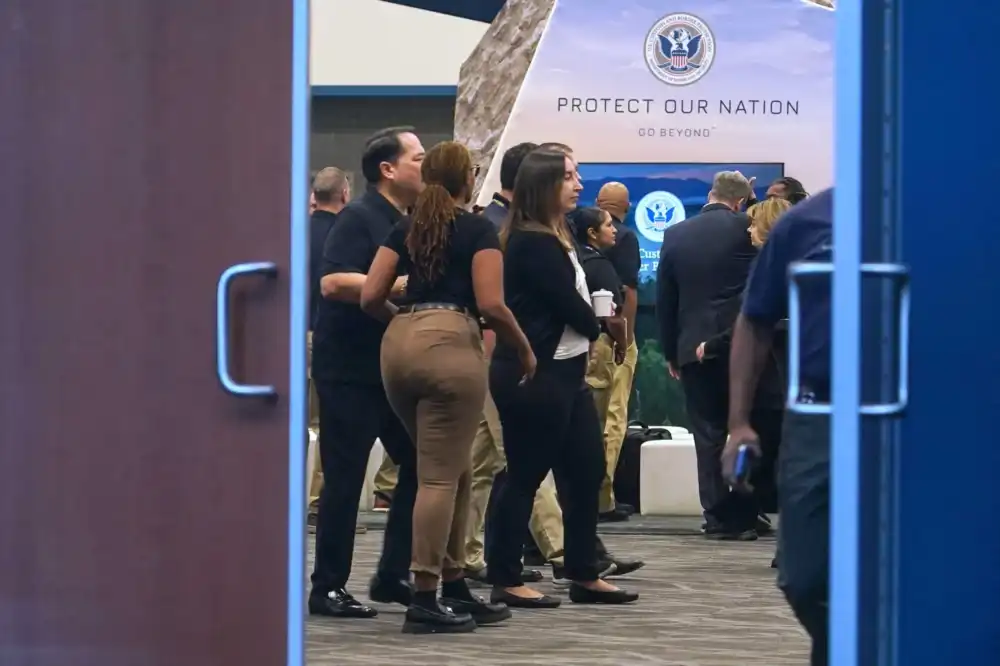
Four prominent House Democrats have issued a forceful demand to the top official of the Federal Bureau of Prisons (BOP), seeking a comprehensive explanation for how the agency intends to confront its "persistent, unsafe conditions" and "pervasive shortage of critical staff." This crisis, legislators assert, has been significantly exacerbated by a pronounced exodus of experienced corrections officers, many of whom are being lured away by more financially attractive opportunities, particularly at Immigration and Customs Enforcement (ICE).
In a detailed six-page letter dispatched last Friday to BOP Director William Marshall III, Representatives Jamie Raskin of Maryland, Lucy McBath of Georgia, Jasmine Crockett of Texas, and Joe Neguse of Colorado articulated their profound concerns. Their questions follow a revealing investigation by ProPublica, which brought to light the alarming trend of federal lockups nationwide losing staff to ICE. The Department of Homeland Security (DHS) agency, during the Trump administration’s monthslong recruitment blitz, offered enticing incentives, including a substantial $50,000 starting bonus and higher salaries, leading to a dramatic increase in its officer and agent numbers—reportedly more than doubling its workforce last year. In stark contrast, the BOP experienced a net loss of over 1,800 workers during the same period, underscoring a critical vulnerability within the nation’s correctional system.
Escalating Concerns Over Safety and Security
The lawmakers’ letter underscores the dire consequences of this staffing drain, stating, “We are deeply concerned that these developments compromise the safety and security of both inmates and staff.” They highlighted that the dwindling existing workforce is increasingly burdened by an "ever-growing use of overtime," a practice that inevitably leads to fatigue, burnout, and an accelerated rate of attrition among essential personnel. This creates a dangerous cycle, where fewer staff members are forced to work longer hours under greater stress, further deterring new recruits and pushing existing officers to seek employment elsewhere.
The representatives elaborated that these pervasive staffing shortages have direct and detrimental impacts on the operational integrity of federal prisons. They pointed to an increase in facility lockdowns, a surge in inmate violence, and a significant reduction in access to vital recidivism-reducing programs for prisoners. These programs, which range from educational courses to vocational training and psychological counseling, are crucial for preparing inmates for successful reintegration into society and reducing reoffending rates. Their curtailment due to staffing issues not only jeopardizes long-term public safety but also undermines the rehabilitative mission of the correctional system.
Beyond the immediate staffing crunch, the congressional inquiry also raised pointed questions regarding the controversial cancellation of the union contract. Critics, as noted by the lawmakers, have characterized this move as appearing "retaliatory," suggesting potential repercussions for staff advocacy. Furthermore, the letter addressed the ongoing and problematic reliance on "augmentation"—a practice where non-corrections staff, such as nurses, teachers, and even plumbers, are compelled to temporarily fill in as corrections officers to bridge critical staffing gaps. This practice not only diverts these professionals from their primary, specialized duties but also places them in potentially dangerous situations for which they are not fully trained, further compromising safety and the quality of services within the prisons.
A Demand for Concrete Answers and Accountability
“We believe these deeply troubling issues require concrete answers,” the lawmakers asserted, setting a firm 30-day deadline for the Bureau of Prisons to provide a written response. This ultimatum signals a heightened level of congressional oversight and an expectation of actionable plans to remedy the systemic deficiencies plaguing the federal prison system.
The legislative pressure echoes persistent calls from prison union officials, who have also vociferously pressed their case for intervention. Union representatives have urged lawmakers to go further, insisting that Director Marshall and his deputy, Josh Smith, be summoned to testify before Congress. Their demand highlights the urgency and severity of the crisis from the perspective of those on the front lines, advocating for direct accountability from BOP leadership.
In response to ProPublica’s inquiries regarding the lawmakers’ letter, the prison agency declined to comment directly, stating it would address its response to Congress. A BOP spokesperson, however, issued a general statement affirming that the Bureau "continues to prioritize efforts" to increase staffing. The spokesperson also defended the practice of augmentation, asserting that some staff will always be required to step in as corrections officers "for the safety and security of staff, inmates and the public," implying it is an unavoidable necessity rather than a symptom of crisis.
Historical Context and Deep-Rooted Challenges
The current staffing crisis is not an isolated incident but rather the culmination of long-standing challenges within the Federal Bureau of Prisons regarding its ability to hire and retain a sufficient workforce. For years, the BOP has struggled to adequately staff its vast network of facilities, which house over 138,000 prisoners and are managed by approximately 34,700 employees. The imbalance between the inmate population and the available staff has been a persistent concern. As of 2023, union officials reported an alarming vacancy rate of roughly 40% for corrections officer positions. This severe understaffing was a primary factor in the federal prison system being placed on the government’s high-risk list by the Government Accountability Office (GAO) that same year, designating it as an agency with "serious vulnerabilities" requiring urgent attention.
In an effort to counteract these chronic shortages, the BOP embarked on a long-term hiring push, implementing various incentives. These included the introduction of signing bonuses, the provision of retention pay for existing staff, and the establishment of a fast-tracked hiring process designed to expedite the onboarding of new recruits. These initiatives initially yielded some positive results. In 2024, the bureau achieved a net increase of more than 1,200 employees, marking its largest workforce expansion in a decade.
However, these gains proved precarious and unsustainable. The financial strain imposed by the cost of hiring incentives, coupled with necessary raises, escalating overtime expenses, and the broader impact of inflation, quickly overwhelmed an already stagnant budget. Early last year, the agency was forced to make the difficult decision to pause its hiring and retention incentives in an attempt to conserve funds. This move, while financially prudent in the short term, threatened to undermine the hard-won staffing improvements from the previous year, signaling a deeper structural financial challenge.
Financial Shortfalls and Operational Impacts
The financial strain intensified throughout the year. By the fall, the consequences of these budgetary pressures became strikingly apparent, as dozens of staff and prisoners began reporting unusual scarcities across federal facilities nationwide. ProPublica’s investigation detailed instances where prisons fell behind on basic utility and trash bills, while others grappled with shortages of staple foods, including eggs and beef. In one particularly alarming incident, a federal prison in Louisiana reportedly came within days of running out of food for its inmates before union officials intervened, successfully urging agency leaders to address the critical supply issue.
In their recent letter, the congressional representatives expressed profound alarm over these reported financial shortfalls and the worsening staffing figures. They noted that last year’s net loss of employees for the bureau was the largest since 2017, according to data ProPublica obtained through an open records request, painting a grim picture of accelerating decline.
With a shrinking workforce, the financial burden of managing federal prisons has disproportionately shifted to overtime costs. A recent report by the Congressional Research Service (CRS) highlighted that in 2025, the federal prison system expended more than $387 million on overtime, a staggering figure that has been surpassed only once in the past decade. This massive expenditure on overtime is a direct consequence of inadequate staffing, forcing existing personnel to work excessive hours to maintain minimal operational levels.
The Human Cost of Overtime and Augmentation
The human cost of this reliance on overtime is significant. Several prison officials, who spoke to ProPublica this month on condition of anonymity, revealed that officers at some facilities are frequently coerced into working two to four double shifts per week. The sheer volume of overtime hours is so extreme that even inmates have expressed concern for the well-being of their guards.
One corrections officer candidly told ProPublica, “The only ones who like it are the predatory inmates. Inmates don’t like super cops, but they at least want to feel like if they are attacked, someone will see it and stop it as quickly as they can. You ain’t getting that with a CO on a double who can barely keep his eyes open.” This poignant statement underscores the dangerous implications of staff exhaustion, not only for the safety of officers but also for the security and protection of the inmate population, creating an environment ripe for exploitation by those seeking to cause harm.
Adding to these concerns, the lawmakers expressed "gravely concerned" about certain strategies employed by BOP leaders ostensibly to save money and minimize the use of overtime. These strategies reportedly included locking down facilities and intentionally skimping on staff, which the lawmakers alleged the bureau then attempted to cover up.
A particularly troubling revelation in the letter concerned an Office of Inspector General (OIG) visit to a federal facility last year. During the inspection, housing units appeared to be well-staffed. However, the lawmakers described this as "a trick," claiming it was achieved only through an extreme and temporary use of augmentation. “Reportedly, after the visit, the facility immediately resumed short-staffing units,” the lawmakers wrote, citing committee staff who had reviewed housing unit staffing and augmentation rosters documenting this “apparent effort to mislead the OIG.” Such allegations of deliberate deception further erode trust in the agency’s leadership and its commitment to transparency and accountability.
The reliance on augmentation, already a contentious issue, reached unprecedented levels last year. According to the Congressional Research Service report, prison employees logged over 700,000 augmentation hours, the highest recorded in any single year for at least a decade. This widespread deployment of non-corrections staff into security roles highlights the depth of the staffing crisis and the extreme measures taken to maintain basic operational functions.
The toll of this practice on individual employees is profound. One former prison official recounted to ProPublica last year his decision to retire rather than endure the pressure of augmentation. He explained that he was forced to abandon his primary duties of resolving discrimination complaints to instead work as an officer on a housing unit two days a week. His departure exemplifies the personal cost and the systemic dysfunction that forces skilled professionals away from their core responsibilities, further compounding the challenges faced by the beleaguered Bureau of Prisons. The combined weight of these issues paints a critical picture of an agency struggling under immense pressure, with significant implications for both correctional integrity and public safety.


 Joko Widodo
 Eva Lovia
 Jia Lissa
 Pevita Pearce
 admin
admin