
 Yuyun Lusiyani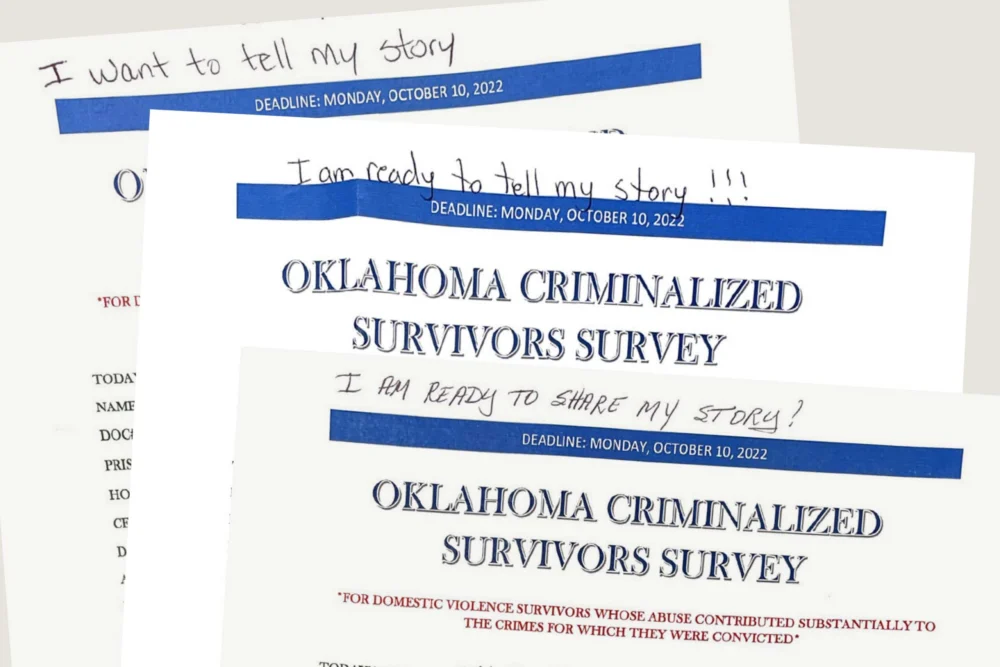
The Oklahoma Survivors’ Act, enacted in 2024, represents a pivotal, albeit complex, legislative achievement in a state long synonymous with stringent criminal penalties and the nation’s highest rates of female incarceration. This groundbreaking law offers a potential pathway for survivors of domestic violence to seek reduced sentences for crimes inextricably linked to their abuse, marking a significant departure from Oklahoma’s historically punitive stance. Its genesis is deeply rooted in the harrowing personal narratives of women like April Wilkens, who has spent over a quarter-century imprisoned at the Mabel Bassett Correctional Center, the state’s largest women’s prison, located in the small prairie town of McLoud, Oklahoma.
McLoud, a community of fewer than 5,000 residents, lies approximately 30 miles east of Oklahoma City, sprawled across a wide expanse of prairie. At its edge, off a rutted road, stands the Mabel Bassett Correctional Center, a formidable complex of concrete and razor wire. It was within these walls that April Wilkens has endured decades of incarceration for the 1998 shooting death of her ex-fiancé, Terry Carlton. Wilkens’ case, according to trial testimony, was marred by a critical omission: her repeated pleas for help from law enforcement regarding Carlton’s documented history of beating, raping, and stalking her were met with indifference. Despite a history of being a victim, she was convicted of first-degree murder and handed a life sentence, a outcome that starkly illustrates the systemic failures the Survivors’ Act now seeks to address.
Oklahoma’s Dual Crisis: High Incarceration and Pervasive Domestic Abuse
Oklahoma consistently holds the unenviable distinction of having the highest rate of female incarceration per capita in the United States, a statistic that has drawn national scrutiny from human rights organizations and criminal justice reform advocates for years. According to data from The Sentencing Project, Oklahoma’s rate of female imprisonment is significantly higher than the national average, often exceeding it by more than double. This alarming incarceration rate is further compounded by Oklahoma’s equally distressing standing as a state with one of the highest rates of domestic abuse. This dual crisis creates a devastating cycle where victims of violence, often with limited resources and support, find themselves entangled in the criminal justice system, frequently as a direct consequence of the abuse they endured.
The contributing factors to Oklahoma’s high female incarceration rates are multifaceted, including stringent "tough on crime" policies, mandatory minimum sentencing laws, and a historical lack of adequate alternatives to incarceration. The human cost of this mass incarceration is immeasurable, tearing apart families and communities, particularly impacting children whose mothers are imprisoned. The financial burden on taxpayers is also substantial, with billions allocated annually to maintaining correctional facilities rather than investing in preventative measures, victim support services, or rehabilitation programs. This punitive environment has historically made ambitious sentencing reform a formidable challenge, particularly in a deep-red state like Oklahoma, which has executed 130 individuals since capital punishment resumed in 1976, marking one of the highest per capita execution rates in the nation. This backdrop underscores the political difficulty of passing any legislation that could be perceived as "soft on crime," making the Survivors’ Act even more remarkable.
The Genesis of the Survivors’ Act: A Prisoner’s Call to Action
The recognition of this intertwined crisis—high rates of female incarceration and domestic violence—began to coalesce into a powerful advocacy movement in Oklahoma. Tulsa attorney Colleen McCarty, deeply troubled by these statistics, recognized a profound opportunity for change. She, along with fellow Tulsa attorney Leslie Briggs, understood that many women in prison might have stories similar to April Wilkens’s, where their criminal actions were a direct, albeit tragic, consequence of their abuse.
In 2022, McCarty and Briggs visited April Wilkens at Mabel Bassett. During this pivotal meeting, the lawyers explained their vision: to champion legislation that could provide a mechanism for survivors of domestic abuse to seek reduced sentences when their crimes stemmed directly from their victimization. Wilkens, a respected and influential figure among the incarcerated women, immediately grasped the profound potential of such an initiative. She understood that for the legislation to gain traction, it needed to quantify the scope of the problem.
Recognizing the urgency and the potential impact, Wilkens embarked on an audacious and unauthorized endeavor. She crafted a simple, yet powerful questionnaire designed to gather information from other prisoners about the abuse they had endured and how it connected to their incarceration. She wanted to know: How many other women at Mabel Bassett had cases like hers, where their trauma and survival instincts led them into the criminal justice system?
Conducting an unauthorized survey carried significant risks, potentially leading to disciplinary write-ups for Wilkens, who otherwise maintained a nearly spotless record. Yet, convinced of its necessity, she deemed it a risk worth taking. Over a weekend that fall, she moved through the prison’s communal spaces—the rec yard, the library, the chow hall—engaging fellow inmates. There was no immediate incentive for the women to fill out the survey, as no law yet existed to help them. There was only Wilkens’s force of personality, her reputation as a leader, and a simple, direct request: "If you’ve experienced domestic violence, and that’s connected to why you’re here, will you fill this out?"
For years, Wilkens had listened to countless women describe the violence they had endured, stories that had barely surfaced in courtrooms, if at all. She could clearly see the intersection between their abuse and the crimes they went on to commit. Many had been prosecuted for "failure to protect" their children from abusive partners, while others had committed crimes alongside their abusers under direct threat or coercion. These narratives underscored a critical intersection between personal trauma and criminal culpability, an intersection often overlooked or actively suppressed in judicial proceedings.
The overwhelming response yielded 156 completed questionnaires. Colleen McCarty recounted reading them in a single sitting, so overwhelmed by the raw, unvarnished accounts of suffering that she had to lie down afterward. When she shared excerpts of these documents, they illuminated systemic blind spots within law enforcement, the judiciary, and public perception that had allowed countless histories of abuse to remain unheard, unacknowledged, and ultimately, unaddressed.
The questionnaires painted a chilling picture of fear and terror:
"The abuse graduated from emotional to verbal to physical to sexual," wrote one woman.
"He said he was going to kill me and hide the body. His wife before me had her nose broken twice," shared another.
"I kept begging for a divorce and he’d threaten to kill my children."
"From the beating I received, my left ear I don’t hear well."
"My children’s father he beat me barely made it out alive."
A fraction of the respondents, like Wilkens, had gone on to kill their abusers:
"I didn’t realize I shot him until the gun went off," one woman recounted.
Another starkly stated, "One night just snapped, shot & killed my husband."
Many described a system that had profoundly failed them, amplifying their trauma within the legal process:
"My lawyer was arrested during my trial. I never even got a chance," wrote a woman whose children were placed in foster care after her arrest.
A woman convicted when Ronald Reagan was president expressed a deep, long-held desire: "Am ready to tell my story. Have been for a long time."
These brief, handwritten testimonials did more than document individual suffering; they provided irrefutable evidence that the justice system had consistently failed to recognize and account for the profound impact of domestic violence on criminal behavior.
From Survey to Statute: The Legislative Journey
Armed with this compelling data, McCarty and Briggs, alongside a growing coalition of advocates, embarked on an intensive two-year legislative campaign. They presented the survey findings to lawmakers, educated stakeholders on the complex dynamics of domestic violence and its profound impact on women’s lives, and meticulously drafted legislation. The core argument was clear: true justice requires understanding the full context of a person’s actions, especially when those actions are shaped by prolonged and severe abuse.
Despite Oklahoma’s conservative political leanings and its established "tough on crime" ethos, the human element of these stories, coupled with the growing fiscal pressure of mass incarceration, helped forge a path for bipartisan support. Advocates emphasized that the Act was not about excusing crime, but about ensuring that sentences were just and proportional, taking into account critical mitigating factors. They highlighted that addressing the root causes of crime, including systemic failures to protect victims, ultimately benefits society more than simply warehousing individuals. After rigorous debate, amendments, and persistent advocacy, the Oklahoma Survivors’ Act ultimately passed into law in 2024, a testament to the perseverance of its champions and the undeniable truth contained within those 156 questionnaires.
The Oklahoma Survivors’ Act: Mechanism and Mandate
Crucially, the Act does not mandate automatic sentence reductions for survivors of domestic violence. Instead, it establishes a formal mechanism for them to petition the courts for relief. Petitioners must demonstrate that domestic abuse was a "substantial contributing factor" in their offense. This requires a thorough re-examination of their case, often decades after the original trial, to present evidence of the pervasive and coercive nature of the abuse. The ultimate decision rests with a judge, who must weigh the evidence of abuse against other factors in the case, exercising judicial discretion.
This legislative framework echoes similar reforms seen in a handful of other states, such as New York’s Domestic Violence Survivors Justice Act. However, its passage in Oklahoma, given the state’s tough-on-crime history and high incarceration rates, is particularly noteworthy. It signals a potential shift in how a traditionally punitive state views the intersection of victimization and criminal culpability. The law’s intent is to offer a meaningful "second look" at sentences for women whose actions, while criminal, were inextricably linked to their desperate struggle for survival against their abusers.
Implementation Challenges and the Path Ahead
Despite the Act’s passage, the journey from legislation to tangible freedom has proven to be fraught with challenges. As of late 2024, many women, including April Wilkens, whose stories were instrumental in its creation, remain incarcerated. This highlights the inherent resistance of entrenched systems to change and the complexities of implementing such a transformative law.
Implementing the Oklahoma Survivors’ Act requires a significant paradigm shift within the entire criminal justice system, moving beyond a purely punitive framework to one that understands the complex interplay of victimhood and culpability. Several hurdles must be overcome for the Act to fulfill its promise:
- Evidentiary Burden: Proving "substantial contributing factor" decades after a crime can be exceedingly difficult, especially when abuse was not adequately documented or acknowledged at the time of trial. Many survivors lacked effective legal counsel or faced court systems unprepared to understand the dynamics of coercive control and trauma.
- Judicial Interpretation: The interpretation and application of the law will inevitably vary among individual judges. Consistent application requires extensive judicial training on domestic violence, trauma-informed practices, and the intent of the Survivors’ Act.
- Prosecutorial Resistance: Prosecutors may resist petitions, arguing for the sanctity of original sentences or challenging the extent to which abuse was a "substantial factor." Balancing the rights of victims of the original crime with the mitigating circumstances of the survivor-petitioner presents a delicate ethical and legal challenge.
- Legal Aid and Resources: Survivors, many of whom are indigent, require robust and specialized legal representation to navigate this complex petition process. Securing adequate funding and resources for legal defense organizations will be critical.
- Systemic Inertia: The broader challenge lies in cultivating a truly trauma-informed approach within the entire criminal justice system, from law enforcement to probation officers, moving beyond a purely punitive framework to one that understands and responds to the complex interplay of victimhood and criminal behavior.
The Oklahoma Survivors’ Act has garnered national attention as a potential model for other states grappling with similar issues of female incarceration and domestic violence. Its success or failure in providing meaningful relief could influence future legislative efforts across the country. More broadly, the Act represents a societal reckoning with past injustices and the failure of systems to protect vulnerable populations. It forces a re-evaluation of what justice truly means for those whose crimes are a direct consequence of prolonged and severe abuse.
The poignant final quote from one of the survey respondents—"I was in a very abusive, sick relationship. I am FREE now."—encapsulates the profound, dual nature of imprisonment for these women: physical confinement, yet often a release from immediate abuse. The ultimate hope of the Oklahoma Survivors’ Act is to extend that freedom beyond the walls of Mabel Bassett, offering a chance at true liberation and restorative justice for those who have endured unimaginable suffering. The ongoing advocacy for women like Wilkens underscores that while the legislative battle may be won, the fight for equitable application and systemic transformation is far from over. The journey toward a justice system that truly understands and responds to the trauma of domestic violence is long, but the Oklahoma Survivors’ Act represents a vital step forward.




 Jia Lissa
 Joko Widodo
 Eva Lovia

 Pevita Pearce