
 Yuyun Lusiyani
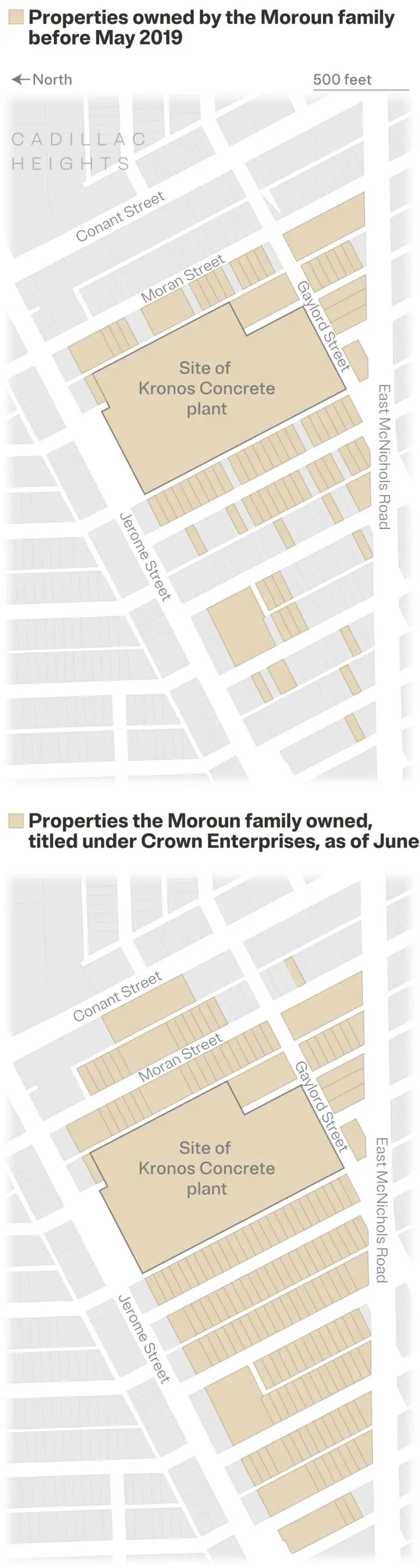
After years of fervent community opposition, Detroit city officials are taking decisive steps to halt the further expansion of a concrete mixing facility owned by the powerful Moroun family, aiming to protect a long-suffering residential neighborhood. The move signals a potential turning point in a protracted battle over land use, environmental justice, and corporate accountability in the city’s Cadillac Heights district.
The Detroit City Council is poised to consider a pivotal rezoning measure that, if approved, would significantly restrict heavy industrial activity at and around the site of the Kronos concrete plant. This proposed change, stemming from a recommendation by planning officials, seeks to reclassify portions of the neighborhood from heavy industrial to light industrial, residential, and commercial uses. While the existing Kronos facility would be permitted to continue operations at its current footprint, the rezoning aims to prevent any future industrial encroachment into areas where families have long resided, despite historical industrial zoning designations.
This critical development follows a comprehensive investigation by BridgeDetroit and ProPublica earlier this year, which brought to light how city officials had facilitated Crown Enterprises, a real estate arm of Detroit’s affluent Moroun family, in acquiring property within Cadillac Heights. The investigation further detailed instances where the city allegedly exhibited leniency when the Kronos facility, a Crown subsidiary, was found to be in violation of environmental regulations. For years, residents have been relentlessly filing complaints and organizing protests, expressing profound frustration over the pervasive dust, relentless noise, and a host of other detrimental issues emanating from the concrete operation.
A Neighborhood’s Decades-Long Struggle Against Industrial Encroachment
Cadillac Heights, a resilient working-class neighborhood in Detroit, has a complex history rooted in both industry and community. Since the 1940s, the area has been zoned for heavy industrial use, largely due to the presence of a rail line that once served the city’s booming manufacturing sector. Despite this official designation, the neighborhood simultaneously thrived as a home for modest single-family houses, attracting generations of families seeking affordable living close to job opportunities. It was here, notably, that Buddy’s Pizza, the iconic birthplace of Detroit-style pizza, first opened its doors, drawing patrons from across the city and embedding itself into the fabric of local life.
However, the industrial zoning created an inherent vulnerability, setting the stage for decades of environmental and social challenges. Over time, the balance between industry and residential life grew increasingly precarious, culminating in the current standoff with the Kronos concrete plant. Residents recall a time when the land now occupied by Kronos was a trucking depot, a less intensive industrial use compared to the current concrete operation.
The Moroun family, through their various entities, has systematically acquired land in Cadillac Heights over many decades. Records indicate that from 1966 to 2018, they gradually consolidated parcels, eventually placing over 160 lots under the ownership of Crown Enterprises. Many of these lots remain barren, contributing to a sense of decline and uncertainty within the community. This slow, steady acquisition strategy intensified significantly following a key land-swap deal with the city in May 2019.
The Controversial Land-Swap Deal and Its Aftermath
The 2019 land deal stands as a pivotal moment in the Cadillac Heights saga. In exchange for Crown Enterprises swapping property in another part of the city – a transaction crucial for allowing automaker Stellantis to establish the first new car plant in Detroit in three decades and potentially create 5,000 new jobs – the city agreed to facilitate Crown’s acquisition of dozens of additional parcels in Cadillac Heights over the subsequent seven years.
City officials have since stated that at the time of this significant land transfer, they were purportedly unaware that Crown’s development plans for the newly acquired Cadillac Heights land included the construction and operation of a concrete facility. Crown, for its part, did not present a specific, detailed plan at the time of the agreement. This lack of transparency or foresight on the part of the city has become a central point of contention, fueling community distrust and accusations of neglect.

Adding further complexity, after the Kronos concrete plant became operational, the City of Detroit in 2022 entered into a first-of-its-kind agreement with Crown. This unique accord granted the company extended periods to rectify any identified environmental or operational issues before incurring penalties or fines. The BridgeDetroit and ProPublica investigation meticulously documented how this agreement effectively allowed Crown to circumvent immediate financial penalties on multiple occasions, despite recurring complaints from residents and documented violations. This arrangement, critics argue, further empowered Crown while disempowering residents seeking immediate relief from the plant’s adverse impacts.
Community Outcry and Documented Violations
The impact of the Kronos plant on the lives of Cadillac Heights residents has been profound and sustained. Residents have lodged approximately 80 complaints with both city and state environmental offices, painting a stark picture of their daily reality. Testimonies describe "literal whiteout conditions" and "dust clouds" that frequently blanket their neighborhood, irritating eyes, impairing visibility, and raising serious concerns about long-term respiratory health. The constant noise from heavy machinery and truck traffic further diminishes their quality of life, transforming once-peaceful homes into zones of industrial intrusion.
Beyond the operational nuisances, residents have also voiced strong disapproval of Crown’s stewardship of the neighborhood. Complaints frequently cite unsecured and messy vacant homes, often owned by Crown, which become magnets for blight and safety hazards, further eroding the community’s fabric.
In response to growing public health concerns, Detroit enacted a new fugitive dust ordinance in 2024, specifically designed to limit pollution from businesses like concrete plants and scrapyards. This ordinance mandates that such operations submit comprehensive plans to control dust and prevent its spread into surrounding neighborhoods. Kronos has, on several occasions, been cited by the city for violating this new ordinance. As recently as October 7, an inspector responding to a complaint found that Kronos had indeed spread dust into the neighborhood and maintained piles of materials that were improperly shielded from view. While Kronos subsequently informed the city that it had addressed the issues by sweeping and watering streets and reducing pile heights, and city spokesperson Georgette Johnson confirmed the problems were corrected, the recurring nature of these violations underscores the ongoing challenges.
The Rezoning Initiative: A Shift Towards Community-Centric Planning
The current rezoning initiative represents a significant pivot in the city’s approach to development in Cadillac Heights, driven largely by persistent community activism and a broader urban planning vision. The effort has been four years in the making and is intrinsically linked to the development of the Joe Louis Greenway, a major walking and biking trail currently under construction that will traverse Detroit.
Council Member Scott Benson, who represents Cadillac Heights, initiated the request to the City Planning Commission in 2023. Initially, his request was a general inquiry into whether industrial zoned areas along the proposed greenway should be reclassified for uses that better support public health and safety. However, as Benson himself acknowledged, "The community came out and said, ‘Yes, we especially want this part done and it abuts the Joe Louis Greenway.’" This powerful surge of community input irrevocably shaped the scope and urgency of the rezoning proposal, directly tying it to the Kronos plant.
On October 22, the City Planning Commission voted to recommend a change to some of the neighborhood’s zoning from heavy industrial to light industrial, which permits less impactful structures like warehouses but explicitly excludes facilities such as concrete plants. The commission also recommended that other lots be designated for residential and commercial purposes. It’s noteworthy that this recommendation was a refinement of an earlier, more restrictive proposal. Earlier in the month, commissioners had unanimously voted to exclude any industrial zoning in the area immediately adjacent to Kronos, a move that would have been more definitively "pedestrian- and transit-friendly." However, at the request of City Planning Commissioner Fred Russell Jr., this was revisited to create a buffer between residents and the existing concrete plant, leading to the current light industrial recommendation.
Corporate Pushback and Legal Threats
Unsurprisingly, Crown Enterprises has vehemently objected to any proposed zoning change. The company’s legal representatives, including attorney Melvin Butch Hollowell, sent letters to Detroit officials in mid-September and again on October 22, explicitly threatening legal action should the city proceed with rezoning. Crown argues that such a change would significantly devalue their property and introduce crippling uncertainty regarding future development plans.

Furthermore, Crown contends that rezoning would constitute a backtracking on the city’s commitment to support their development in Cadillac Heights, especially given the 2019 land-swap deal that facilitated the Stellantis plant. A Crown spokesperson, Kenneth Dobson, stated that the company has invested over $10 million into developing the concrete operation, relying "on the City’s promises and actions of approving our plans for this facility." Dobson asserted that if the zoning changes, Crown would renege on promised community improvements, including new landscaping and sidewalks, claiming such improvements would not be permissible or economically viable under the new zoning. However, city planning staff have countered this, stating that the company could still proceed with these enhancements. Dobson also maintained that readings from Crown’s air monitors have never exceeded the city’s pollution limits and dismissed the numerous complaints as originating from a "small number of people."
Diverse Voices and the Upcoming Public Hearing
The debate surrounding the Kronos plant and the proposed rezoning has been characterized by passionate arguments from various stakeholders. At recent commission meetings, more than 30 individuals, both in favor of and against the zoning change, voiced their perspectives.
Employees of Kronos, such as Terrell Daniel, have passionately argued for the continued allowance of heavy industry in the neighborhood. Daniel, identified in meeting minutes as a Kronos employee, stated at the October 1 meeting that the plant is "bringing back the backbone of Detroit" and providing critical employment opportunities "for guys who never had a chance to work in the city." This perspective highlights the complex trade-offs between economic development and environmental concerns in urban areas.
Conversely, residents and their advocates have underscored their ongoing concerns about air quality, the pervasive dust, and Crown’s perceived track record of neglecting the neighborhood, particularly regarding the maintenance of vacant properties. Sharon Buttry, a prominent organizer in the resident protests against Kronos, expressed mixed feelings. While she welcomed the rezoning of lots, she voiced disappointment that the earlier, more ambitious recommendation for completely excluding industrial zoning did not prevail. Buttry articulated a lingering fear that the latest zoning recommendation, with its allowance for light industrial use, might still leave an opening for Crown to eventually expand its operations. Her sentiment remains clear: "We still want them to shut down or move."
The ultimate decision now rests with the Detroit City Council, which has scheduled a crucial public hearing for November 19. This hearing will provide the final platform for all parties to present their cases before the council members cast their votes, determining the future landscape and character of Cadillac Heights.
Implications and Future Outlook
The resolution of the Cadillac Heights rezoning dispute carries significant implications for Detroit’s urban development, environmental justice, and the delicate balance between corporate interests and community well-being. This case serves as a litmus test for how the city navigates industrial development in historically disadvantaged neighborhoods, particularly as it strives for revitalization.
If the rezoning passes, it could set a powerful precedent, affirming the city’s commitment to prioritizing resident health and quality of life over unchecked industrial expansion. It would signal a shift towards more community-centric planning, especially along transformative projects like the Joe Louis Greenway, which aims to enhance public spaces and connectivity. Conversely, a failure to rezone or a watered-down measure could further entrench industrial blight, perpetuate environmental hazards, and deepen community distrust in city governance.
The legal threats from Crown Enterprises also loom large. Any legal challenge could delay development, incur significant costs for the city, and potentially create a chilling effect on future efforts to rezone industrial areas. The outcome will also be closely watched by other powerful developers and community groups across Detroit and similar post-industrial cities grappling with legacy zoning issues and the pressures of redevelopment.
Ultimately, the decisions made in the coming weeks will shape not just the immediate future of Cadillac Heights but also the broader narrative of Detroit’s ongoing transformation – a narrative that must reconcile its industrial past with an equitable, sustainable future for all its residents.




 Nila Kartika Wati

 Eva Lovia

 Lina Irawan

 Ana Megawati

 Joko Widodo
