
 Pevita Pearce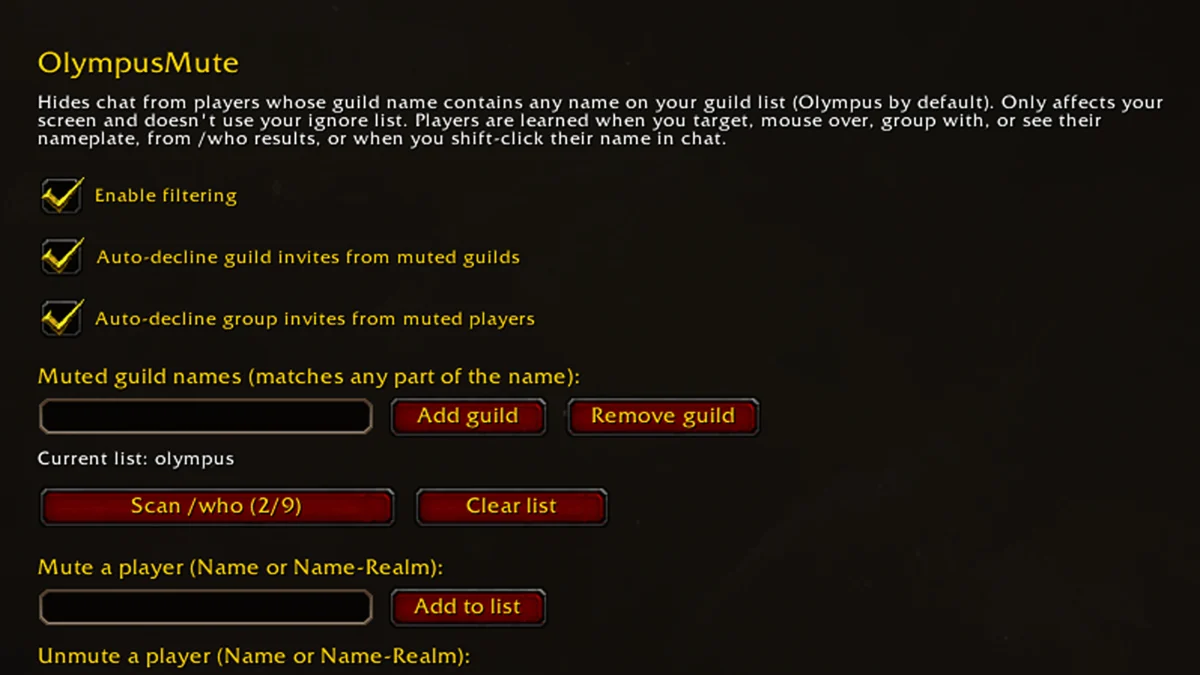
The virtual landscape of World of Warcraft Forever has recently become the staging ground for a significant technological and social confrontation between the followers of high-profile streamer Asmongold and a segment of the general player base seeking a more traditional gameplay experience. At the center of this conflict is the release of a specialized software modification titled "OlympusMute," designed specifically to excise the presence of the "Olympus" guild—a massive collective of players associated with Asmongold—from the user interface of other players. This development follows weeks of escalating tension regarding server stability, chat etiquette, and the fundamental mechanics of player interaction within the newly established "Forever" ecosystem.
The Technical Genesis of OlympusMute
On September 23, 2026, a developer identified as Solastro uploaded OlympusMute to the CurseForge platform, a primary repository for World of Warcraft addons. The mod was not created in a vacuum; it was a direct response to the unique infrastructure of World of Warcraft Forever. Unlike previous iterations of the game, which partitioned players into distinct, isolated realms, the "Forever" model groups players based on rulesets—such as Player vs. Player (PvP) or Roleplay (RP)—rather than individual servers. While this was intended to ensure high population density and vibrant world activity, it inadvertently removed the ability for players to "escape" dominant personalities by simply transferring to a different realm.
OlympusMute functions as a comprehensive client-side filter. While World of Warcraft’s native "Ignore" function is capped at 50 names—a limit that has remained largely unchanged for decades—Solastro’s mod bypasses this restriction entirely. It identifies any character bearing the "Olympus" guild tag and automatically suppresses their communications across all channels, including Say, Yell, Whispers, Trade chat, and Raid Warnings. Furthermore, the mod scrubs visual clutter by hiding chat bubbles in the open world and automatically declining various social interactions, such as guild invitations, group requests, duel challenges, and trade windows initiated by members of the guild.
Chronology of the Conflict
The friction leading to the creation of OlympusMute can be traced back to the launch of World of Warcraft Forever. Asmongold, one of the platform’s most influential content creators, mobilized his fanbase to form the "Olympus" guild. Due to the sheer volume of his followers, the guild quickly expanded into a multi-branch organization, with numerical designations reaching as high as "Olympus XLI" (41).
By mid-September 2026, the presence of thousands of players concentrated under a single banner began to impact the game’s performance. Players reported significant "latency spikes" and "frame-rate drops" in major capital cities like Stormwind and Orgrimmar, attributing the lag to the massive influx of players following the streamer. Beyond technical issues, the social environment of the game was reportedly compromised. Non-affiliated players complained of "chat-flooding," where the sheer volume of Olympus-related recruitment and chatter made general communication impossible. More seriously, accusations of "spam and slurs" within these public channels led to a formal outcry, with some players petitioning Blizzard Entertainment to ban Asmongold or dismantle the Olympus guild structure entirely.
The situation reached a boiling point when Morrigan, a recognized World of Warcraft partner and community figure, shared the OlympusMute mod on social media. Her post, which garnered over 300,000 views within 24 hours, directly tagged Blizzard’s official accounts, stating that "it’s time to do something." This public endorsement transitioned the mod from a niche tool to a focal point of community debate.
The "Streamer Effect" and Server Ecosystems
The "Asmongold Effect" is a well-documented phenomenon in massively multiplayer online (MMO) games. When a high-reach streamer enters a game, they bring a "swarm" of players who often prioritize the streamer’s objectives over the game’s intended social or economic balance. In World of Warcraft Forever, this manifested as "lag-choked fiefdoms," where the sheer density of characters in one location overwhelmed the server’s ability to process draw calls and network packets efficiently.

Data provided by the OlympusMute interface during its promotional phase showed that a single user had silenced 361 players within minutes of entering a populated area. This data highlights the scale of the saturation. In a traditional MMO environment, organic guilds rarely exceed a few hundred active members; the Olympus collective, however, functions more like a digital nation-state, capable of dictating the "meta" and social tone of an entire ruleset.
Official Responses and Satirical Counter-Claims
The response from the subject of the mod was swift. Asmongold, known for his provocative and often satirical commentary on gaming culture, addressed the existence of OlympusMute via his X (formerly Twitter) account. He characterized the mod as a form of "discrimination," jokingly labeling it a "hate crime or racism." His statement, while clearly hyperbolic, touched on a deeper tension within the community: the right of players to organize in large groups versus the right of the individual to an unobstructed gameplay experience.
"Discrimination is a terrible thing and it’s awful that Blizzard would allow something so disgusting," Asmongold wrote. The developer of the mod, Solastro, responded to the post with a brief acknowledgment, thanking the streamer for "spreading the word" about the tool. This exchange underscored the polarized nature of the community—one side viewing the mod as a necessary quality-of-life improvement, and the other viewing it as an elitist tool used to marginalize a specific subculture of the player base.
Blizzard Entertainment has remained largely silent on the specific issue of OlympusMute. Historically, the company has allowed addons that filter chat or modify the user interface, provided they do not automate gameplay or provide a competitive advantage in combat. However, the political pressure from community leaders like Morrigan suggests that the developer may eventually be forced to address the underlying issue of "mega-guilds" and their impact on server infrastructure.
Analysis of Broader Implications
The emergence of OlympusMute represents a significant shift in how MMO communities manage social friction. In the early days of online gaming, moderation was primarily the responsibility of the game developer. However, as communities have grown in size and complexity, the burden of moderation has increasingly shifted to the players themselves.
- The Failure of Traditional Moderation: The fact that players felt the need to create a custom tool to hide an entire guild suggests that the built-in reporting and "ignore" systems are no longer sufficient for the modern "mega-server" era. A 50-person ignore list is an artifact of a time when servers held only 2,000 players; in an environment with tens of thousands of players, such limits are functionally obsolete.
- Client-Side vs. Server-Side Solutions: OlympusMute is a client-side solution to a server-side problem. While it fixes the visual and social clutter for the individual user, it does nothing to alleviate the actual server lag caused by the concentration of players. This highlights a limitation in player-made mods: they can fix the "symptoms" of a crowded game but cannot repair the "disease" of strained hardware.
- The Fragmentation of the "Massively" in MMO: There is a philosophical irony in the use of OlympusMute. MMOs are designed to be shared worlds. By using a mod to "vanish" thousands of other players, the user is effectively turning a multiplayer experience into a semi-private one. This raises questions about the future of the genre: if players begin to use tools to selectively "delete" groups they dislike, the shared reality that defines an MMO begins to fracture.
- The Economic Impact: High-population guilds often dominate in-game economies. By muting all members of a guild like Olympus, players may also be cutting themselves off from a significant portion of the Trade chat and the associated economy. This could lead to the formation of "shadow economies" where different segments of the player base operate in total isolation from one another despite occupying the same digital space.
Conclusion and Future Outlook
The standoff between the Olympus guild and the users of OlympusMute serves as a case study in the evolution of digital communities. It reflects a growing desire for "curated" experiences in online spaces where total immersion is often disrupted by the chaotic influence of celebrity culture. As World of Warcraft Forever continues to evolve, the success or failure of such mods will likely influence how Blizzard Entertainment approaches guild caps, server sharding, and communication tools in future updates.
For now, the "emergency exit" provided by Solastro remains active, allowing players to navigate the cities of Azeroth without the presence of the Olympus "army." Whether this leads to a more peaceful environment or a more divided one remains to be seen, but it is clear that the traditional methods of community management are being rewritten by the players themselves. The situation remains fluid, with the community awaiting a formal policy statement from Blizzard regarding the permissibility of "guild-wide" muting tools and the future of streamer-led organizations within their ecosystem.




 Jia Lissa
 Yuyun Lusiyani
 Joko Widodo
 Eva Lovia
