
 Lina Irawan
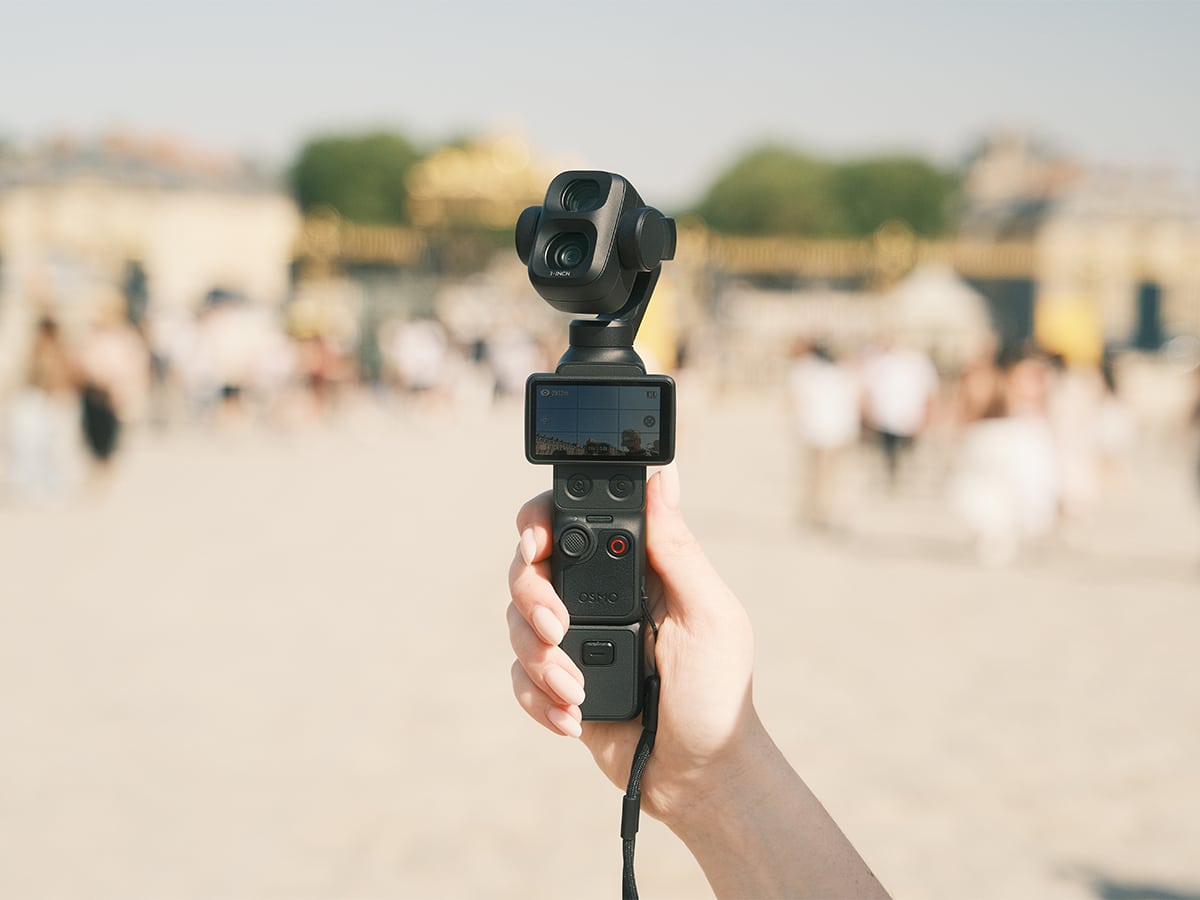
The global leader in civilian drones and innovative camera technology, DJI, has officially expanded its handheld stabilizer lineup with the introduction of the Osmo Pocket 4P. This latest iteration represents a significant pivot from incremental updates toward a high-end imaging engineering philosophy, designed specifically to bridge the gap between consumer-grade vlogging tools and professional cinema cameras. By integrating a dual-camera system and a 1-inch sensor equipped with Lateral Overflow Integration Capacitor (LOFIC) technology, the Osmo Pocket 4P addresses the increasing demand for high dynamic range and optical versatility in a pocketable form factor.
Technical Evolution: From Stabilized Cameras to Pocket Cinema
The trajectory of the Osmo series has been one of rapid miniaturization and sensory enhancement. The lineage began in 2015 with the original Osmo gimbal, which repurposed drone camera technology for handheld use. The series saw a paradigm shift in 2018 with the launch of the first Osmo Pocket, introducing a truly pocket-sized stabilized camera. Following the success of the Osmo Pocket 3 in 2023—which introduced the 1-inch sensor and a rotatable display—the Pocket 4P marks a new "Pro" tier for the brand.
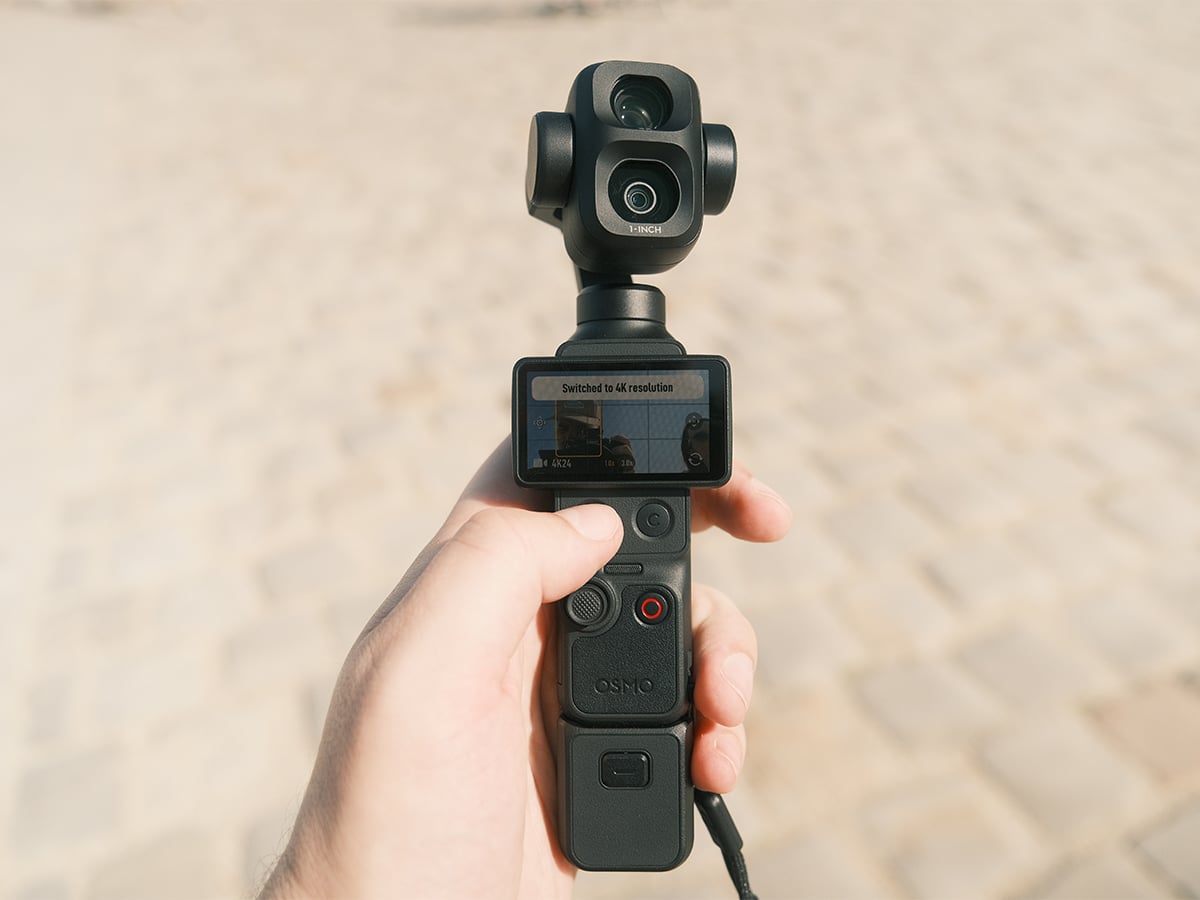
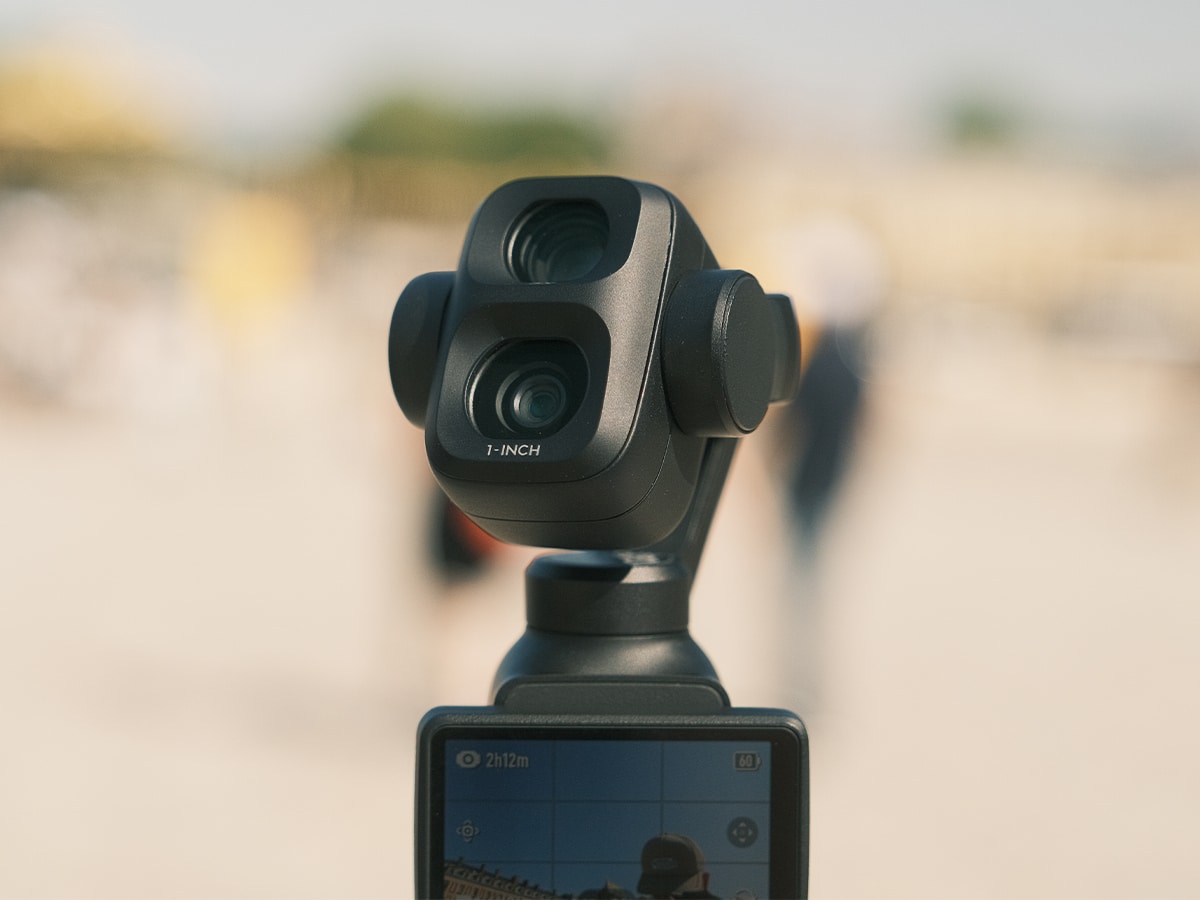
Unlike its predecessors, the Pocket 4P focuses on optical complexity. The inclusion of a secondary 60mm-equivalent medium-telephoto lens marks the first time a dual-lens architecture has been successfully implemented in a mechanical 3-axis gimbal of this size. This development is viewed by industry analysts as a direct response to the sophisticated multi-lens arrays found in modern flagship smartphones, but with the added benefits of superior thermal management, larger sensors, and mechanical stabilization.

Breakthrough Imaging: LOFIC Technology and D-Log 2
The centerpiece of the Osmo Pocket 4P’s wide-angle module is an all-new 1-inch stacked CMOS sensor. While 1-inch sensors have appeared in previous models, the 4P utilizes LOFIC technology to achieve a staggering 17 stops of dynamic range. LOFIC works by managing the "overflow" of light electrons in high-brightness scenarios, preventing highlight clipping that typically plagues small-sensor cameras in high-contrast environments.
This hardware advancement is paired with the D-Log 2 color profile. According to technical documentation provided by DJI, the D-Log 2 curve provides a highlight latitude of 11.3 EV, a specification that aligns with professional cinema standards, including the ARRI LogC4. This allows the Pocket 4P to be integrated into professional post-production workflows where color grading and highlight recovery are paramount. The device also supports a maximum slow-motion capability of 4K at 240 frames per second (fps) on the wide-angle lens, a frame rate usually reserved for high-end cinema rigs costing tens of thousands of dollars.
Dual-Lens Versatility: The 60mm Portrait Solution
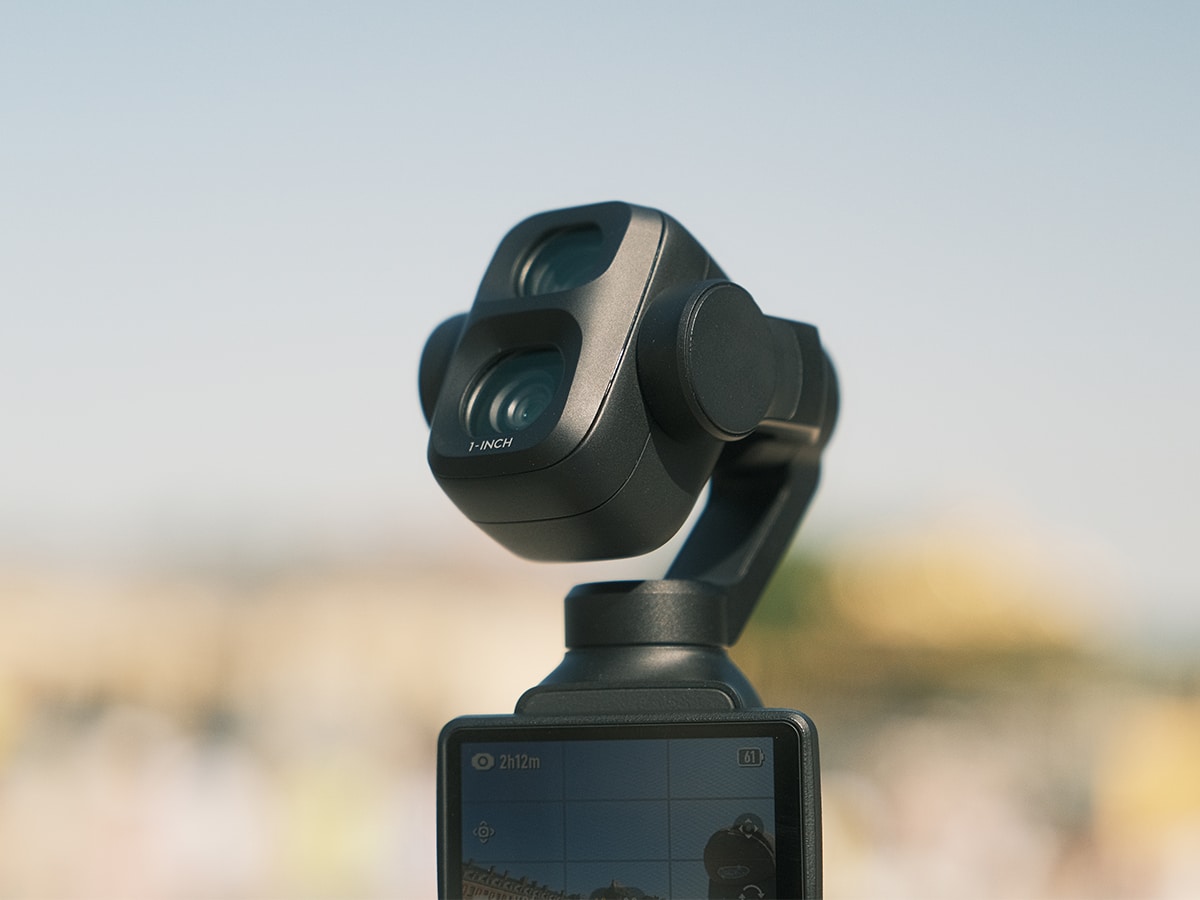
Recognizing that wide-angle lenses—while ideal for vlogging—often distort facial features and lack cinematic compression, DJI has equipped the Pocket 4P with a dedicated 60mm-equivalent f/1.8 medium-telephoto lens. This secondary module utilizes a 1/1.28-inch CMOS sensor.
The 60mm focal length is widely regarded as the "sweet spot" for portraiture and product videography, as it closely mimics the perspective of the human eye. The f/1.8 aperture on this sensor provides a genuine full-frame equivalent depth of field of f/6.3, allowing for organic bokeh (background blur) that does not rely on software-based artificial intelligence. Field tests indicate that this lens provides a natural subject-to-background separation that distinguishes the Pocket 4P from modular competitors that rely on single-lens digital cropping.
Design, Ergonomics, and the Remote Ecosystem
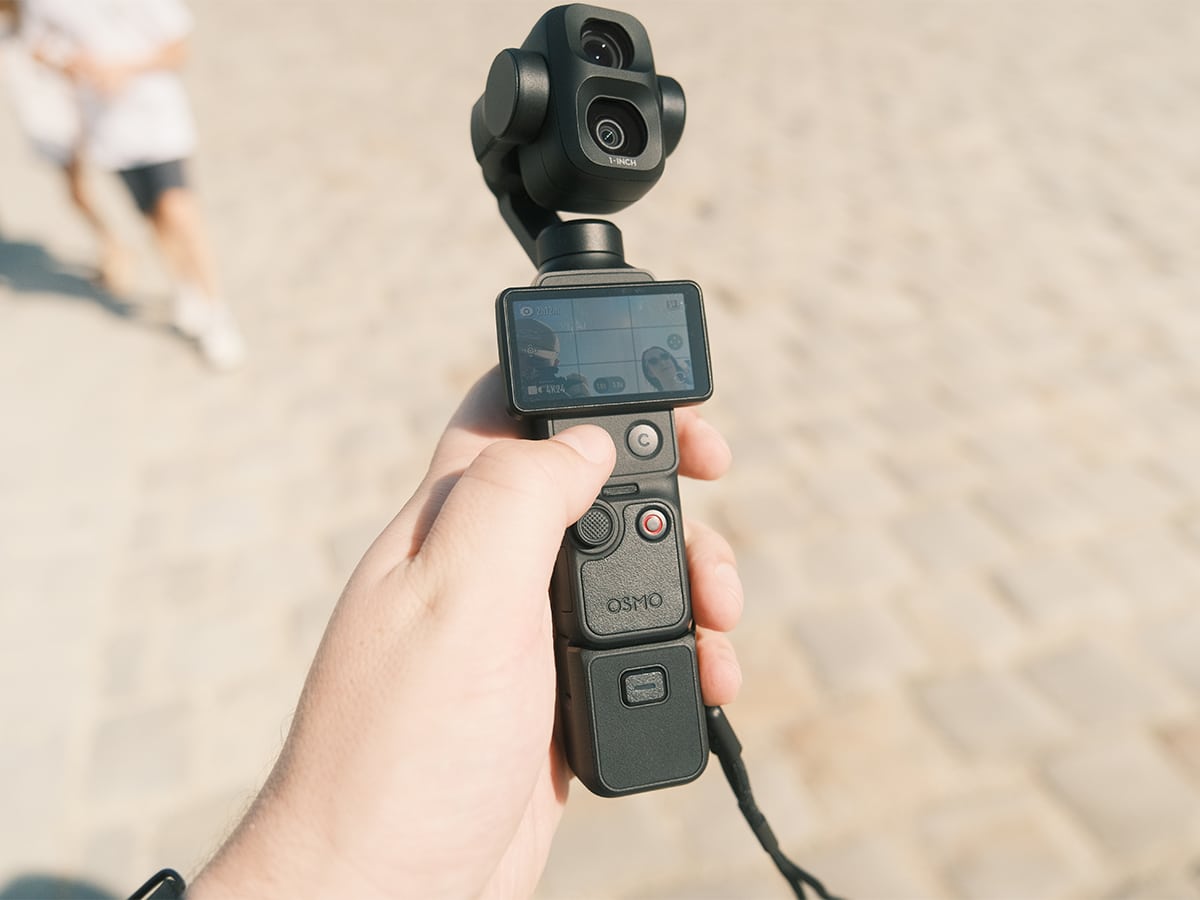
The Osmo Pocket 4P maintains the iconic "lollipop" form factor but sees a slight weight increase to 230 grams to accommodate the dual-lens gimbal assembly and enhanced cooling systems. Despite this, it remains lighter than its primary modular competitor, the Insta360 Luna Ultra.
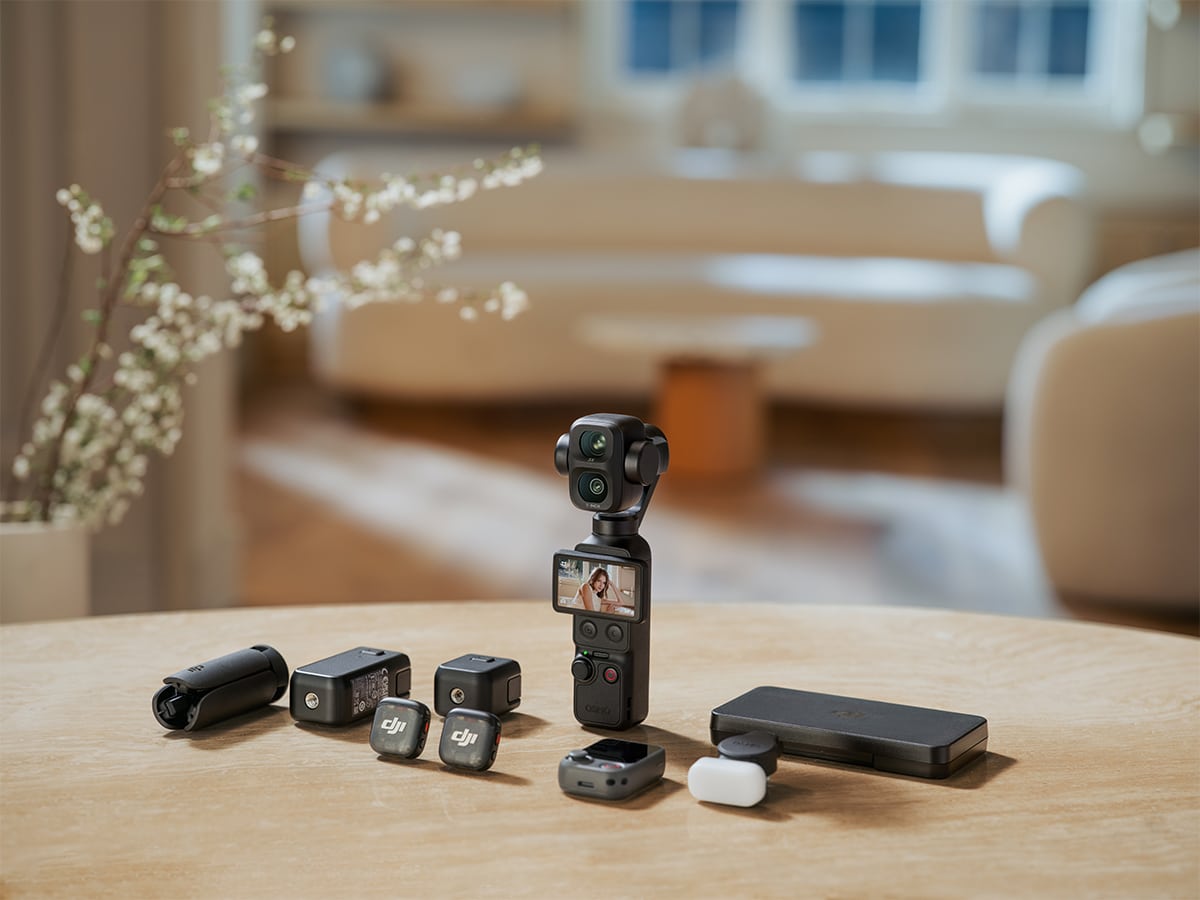
The device features a 2.0-inch rotatable OLED touchscreen with a peak brightness of 1,000 nits, ensuring visibility in direct sunlight. Control is facilitated through a tactile 5D analog joystick and two customizable physical buttons. For professional sets requiring remote monitoring, DJI has introduced the Osmo FrameTap controller. This optional accessory provides a wireless live-view touchscreen with a range of up to 25 meters, allowing directors or solo creators to manage framing, tracking, and settings without touching the camera unit itself.
Integrated Storage and High-Speed Workflow
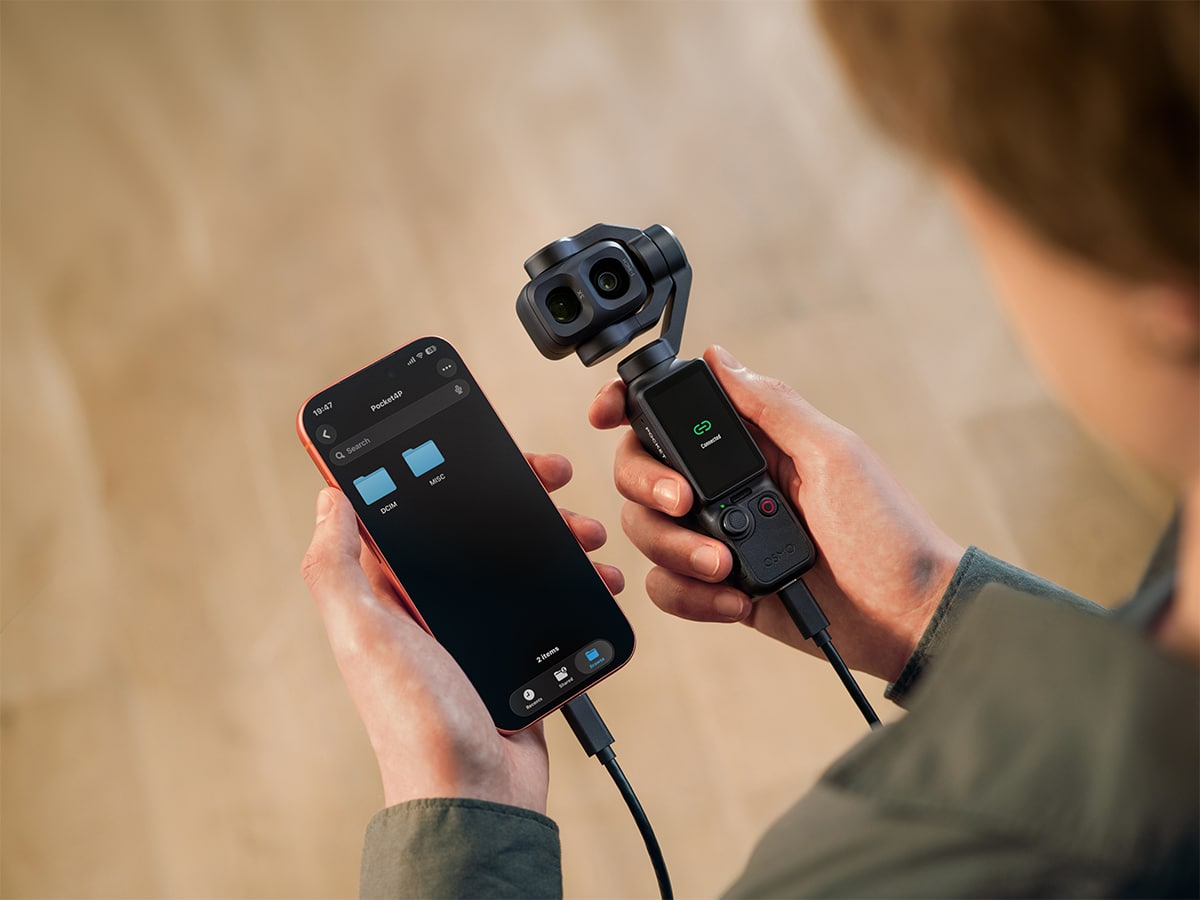
In a departure from traditional reliance on external media, the Pocket 4P includes 103GB of high-speed built-in storage. This internal memory is capable of handling the high bitrates required for 4K/240fps and D-Log 2 recording. For data management, the device supports wired USB 3.1 transfers at speeds up to 800 MB/s, significantly reducing the "downtime" between shooting and editing.
The battery system has also seen an upgrade to a 1,545 mAh capacity. While high-bitrate recording naturally consumes power more quickly, the 4P features rapid charging technology that can replenish the battery to 80% in 18 minutes. For extended shoots, an optional battery handle is available, adding approximately 130 minutes of operating time.
ActiveTrack 8.0 and AI Integration
The Pocket 4P introduces ActiveTrack 8.0, the most sophisticated iteration of DJI’s subject-tracking software. The system now supports tracking across all focal lengths, including the 12x digital zoom range.
Key features of the updated AI suite include:
- Multi-Person Tracking: Automatically identifies and centers groups of up to eight people, adjusting the gimbal to maintain a balanced frame.
- Subject Management: Allows users to register up to three specific subjects via facial recognition, ensuring the gimbal prioritizes them even if they briefly leave the frame or are obscured.
- Face Priority Auto White Balance: Specifically tuned to maintain accurate and consistent skin tones regardless of changing ambient light temperatures.
Market Positioning and Pricing
DJI has positioned the Osmo Pocket 4P aggressively within the premium creator market. The Standard Combo is priced at AUD$959, while the Vlog Combo—which includes additional audio and power accessories—retails for AUD$1,099.
This pricing strategy places DJI at a competitive advantage over modular rivals. For example, the Insta360 Luna Ultra begins at AUD$1,229 for its base kit, representing a $270 premium over the DJI offering. Industry observers suggest that DJI is leveraging its supply chain efficiency to offer professional-grade imaging (the LOFIC sensor and dual lenses) at a price point that remains accessible to mid-tier content creators and independent filmmakers.

Broader Industry Implications
The release of the Osmo Pocket 4P signals a broader shift in the digital imaging industry. As smartphone camera improvements begin to plateau due to physical space constraints, dedicated handheld devices like the Pocket 4P are reclaiming territory by offering superior thermal performance, mechanical stabilization, and larger glass elements.
The inclusion of cinema-grade features like D-Log 2 and 240fps slow motion suggests that DJI is no longer viewing the Pocket series as a mere "vlogging accessory," but as a legitimate B-cam or C-cam for professional productions. By focusing on "imaging first" rather than the modular "gimmickry" seen in some rival products, DJI is doubling down on the core requirements of high-end cinematography: dynamic range, color accuracy, and optical compression.
Conclusion and Future Outlook
The DJI Osmo Pocket 4P stands as a significant milestone in the evolution of miniaturized camera technology. While it faces minor compromises, such as the lack of native 4K vertical shooting without rotating the entire unit, its strengths in raw imaging capability are currently unmatched in the handheld category.
As mobile platforms like YouTube, TikTok, and Instagram continue to demand higher production values, the democratization of 17-stop dynamic range and 60mm optical perspectives will likely influence the visual style of mobile content for years to come. The Osmo Pocket 4P does not just offer a way to record video; it offers a way to capture cinema in a form factor that fits in a pocket.



 Yuyun Lusiyani
 Joko Widodo
 Eva Lovia
 Pevita Pearce
 admin
admin