
 Joko Widodo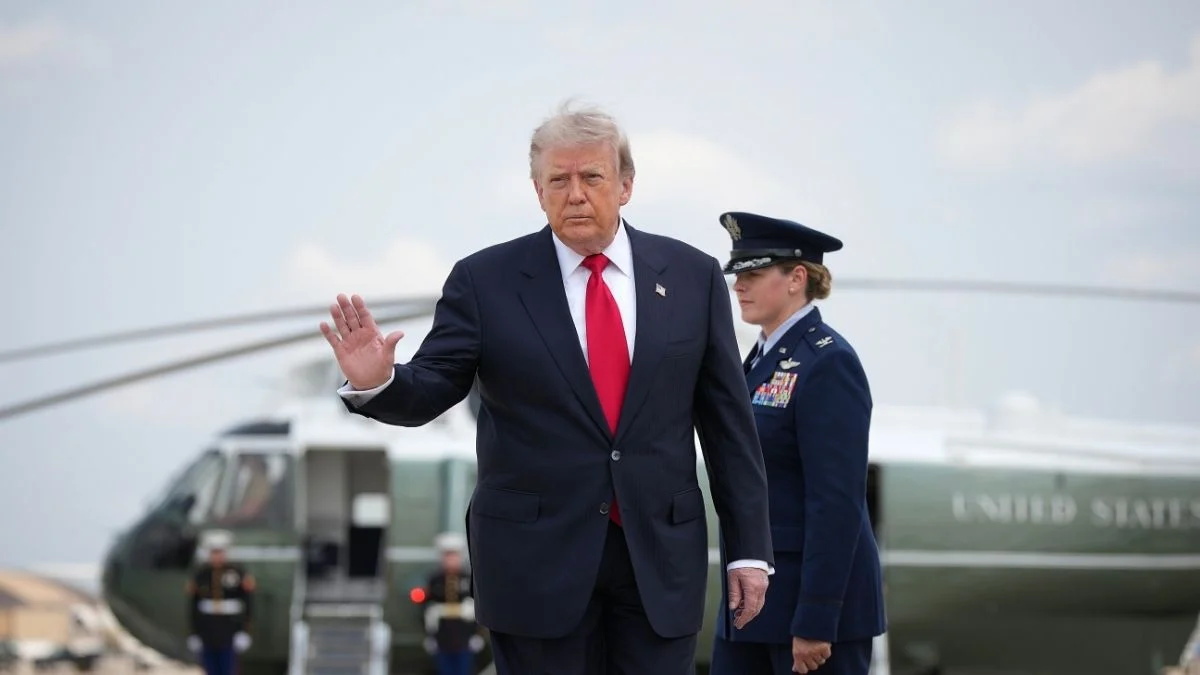
Donald Trump’s recent press briefing devolved into a heated exchange when he berated CBS News reporter Jennifer Jacobs for a question concerning his proposed SAVE Act bill. The incident, which occurred on Monday, marks the latest in a series of public confrontations Trump has had with female journalists, following closely on the heels of a recent clash with CNN’s Kaitlan Collins. This latest episode raises further questions about the former president’s interactions with the press corps and the political implications of his rhetoric.
The SAVE Act: A Contentious Legislative Push
The SAVE Act, a legislative proposal championed by Donald Trump, aims to fundamentally alter the structure of American governance, particularly concerning economic policy and federal spending. While specific details of the bill are subject to ongoing political debate and evolving legislative language, its core tenets often revolve around significant tax reform, deregulation, and a reevaluation of government expenditures. Trump has frequently articulated his vision for the bill on his social media platform, Truth Social, portraying it as a critical component for revitalizing the American economy and asserting national sovereignty.
In a recent post on Truth Social, Trump explicitly called for the Senate to remain in session until the SAVE Act, or a similar legislative package, was passed. He directed his criticism towards Senate Majority Leader Mitch McConnell, urging him not to allow the Senate to adjourn before addressing the bill. Trump’s post stated, “John Thune should not allow the United States Senate to ‘leave town’ until it passes The Save America Act or, far better still, TERMINATES THE FILIBUSTER, where Republicans can then quickly pass everything they ever dreamed of, including a full and deep throated SAVE AMERICA ACT, the Budget, and the ever looming Debt Ceiling disaster, 1929!” This statement underscores his belief in the urgency of his legislative agenda and his willingness to employ aggressive tactics, including the elimination of the filibuster, to achieve his objectives. The reference to the 1929 debt ceiling crisis is a historical allusion often employed by Trump to emphasize the potential for severe economic repercussions if fiscal matters are not addressed proactively.
The Confrontation with Jennifer Jacobs
During a press briefing on Monday, Jennifer Jacobs, a reporter for CBS News, posed a question directly related to Trump’s Truth Social post. She inquired about the rationale behind his insistence that the Senate remain in session to pass the SAVE Act, especially in light of the demanding nationwide campaign schedules for the upcoming midterm elections. Jacobs’ question, framed within the context of electoral priorities, sought to understand the strategic imperative of prioritizing legislative action over electoral campaigning at that specific juncture.
Trump’s reaction to Jacobs’ question was notably sharp and dismissive. Instead of providing a direct answer, he launched into a tirade, questioning the validity of her inquiry. “Why the stupid question you asked? What a stupid question!” he exclaimed, his tone escalating. He then proceeded to belittle the question itself, characterizing it as unintelligent.
While Trump initially insulted the question, he then shifted to a more personal, albeit still critical, observation of Jacobs. He remarked, “For Jennifer to ask such a stupid (question). She’s a smart person. I knew her all the way back in the Iowa days when she said ‘Trump’s gonna win.’ And boy was she right.” This comment, while seemingly acknowledging her past accuracy, was delivered in a context that suggested he felt her current question was a departure from her previously perceived insightful judgment. He then circled back to the substance of the SAVE Act, stating, “So listen, why do I want the Save Act to be done?… If they don’t get it done, it’s going to be a very bad thing for the party.” His explanation framed the bill’s passage as crucial for the Republican Party’s electoral prospects, implying that its failure would lead to significant negative consequences for the party’s standing.
A Pattern of Confrontation with Female Journalists
This incident with Jennifer Jacobs is not an isolated event. It follows a pattern of combative interactions that Donald Trump has had with female reporters throughout his public career, and particularly during his presidency and subsequent political activities. Just days prior to the exchange with Jacobs, Trump engaged in a public spat with CNN correspondent Kaitlan Collins. During a White House event, Trump made a remark about Collins, stating that she “never smiles.” This seemingly innocuous comment was interpreted by many as a dismissive and gendered observation, drawing criticism for its perceived pettiness and its focus on a female journalist’s demeanor rather than her professional inquiries.
Kaitlan Collins addressed Trump’s comment in a subsequent interview on The Daily Show with host Jon Stewart. She articulated a perspective on how such interactions should be handled by the press. “It’s really not about me, and I don’t want it to be about my reaction,” Collins stated. “And so I think if you let it become about that, then it becomes a back and forth between the two of us.” Her remarks highlighted a broader concern among journalists about the potential for personal attacks to derail substantive reporting and create a distracting media spectacle.
The pattern of Trump’s interactions with female reporters has been documented and analyzed extensively. Critics often point to these instances as evidence of a consistent tendency to target women in the media, suggesting a gendered dimension to his confrontational style. While Trump and his supporters often characterize such exchanges as simply his direct and unfiltered way of dealing with the press, the repeated targeting of female journalists has led to accusations of sexism and a deliberate attempt to intimidate or silence critical voices.
Broader Implications and Political Context
The repeated confrontations between Donald Trump and female reporters carry significant implications for the relationship between political figures and the media, as well as for the broader political discourse.
Erosion of Trust and Professionalism: Such exchanges can contribute to a general erosion of trust between the public and both political leaders and the press. When journalists are subjected to personal attacks or dismissive rhetoric, it can undermine their credibility in the eyes of the public and create an environment where substantive policy discussions are overshadowed by personal animosity.
Impact on Journalism: For the journalists involved, these encounters can be personally taxing and professionally challenging. The pressure to maintain composure while being subjected to public criticism or insults can be immense. Furthermore, the focus on personal interactions can detract from the important work of reporting on policy and holding power accountable.
Political Strategy: Some analysts suggest that Trump’s confrontational style with the press is a deliberate political strategy. By attacking journalists, particularly those perceived as critical, he aims to rally his base, portray himself as an outsider battling a hostile establishment, and deflect attention from substantive issues. The repeated targeting of female reporters may also be intended to provoke strong reactions, which can then be amplified by sympathetic media outlets and social media channels.
The Role of the SAVE Act: The specific context of the SAVE Act highlights how legislative priorities can become intertwined with personal attacks. Trump’s strong desire to see the bill passed, coupled with his frustration over perceived obstacles, may have contributed to his heightened reaction to Jacobs’ question. The bill itself, representing a significant policy shift, is a point of contention, and questions about its timing and implementation are legitimate areas of journalistic inquiry.
Historical Precedents: This pattern is not entirely new in political history, but Trump’s consistent and often amplified engagement with the media, particularly through social media, has brought it to the forefront of public attention. The 2016 presidential campaign and his subsequent presidency were marked by numerous instances where he publicly criticized and attacked journalists and news organizations he deemed unfair or biased.
The Mechanics of the SAVE Act and its Political Ramifications
The proposed SAVE Act, as articulated by Donald Trump, represents a significant departure from existing economic policies. While detailed legislative text is often fluid in such proposals, the overarching themes suggest a strong emphasis on reducing the size and scope of the federal government. This could involve substantial cuts to various federal agencies, a rollback of environmental regulations, and potentially a restructuring of social safety net programs.
Trump’s insistence on passing the SAVE Act and his call to terminate the filibuster point to a broader strategy of empowering the Republican Party to enact its agenda without significant opposition. The filibuster, a procedural tool in the Senate that requires a supermajority of 60 votes to end debate on a bill, has historically served as a check on partisan legislation. Its elimination would allow a simple majority to pass legislation, potentially leading to more sweeping policy changes in areas such as taxation, healthcare, and social policy.
The political implications of such a move are profound. On one hand, supporters argue that it would enable the party to fulfill its campaign promises and address critical national issues more efficiently. On the other hand, opponents express grave concerns about the potential for unchecked partisan power, leading to policies that could disproportionately benefit certain groups while marginalizing others. The specter of the "ever looming Debt Ceiling disaster, 1929!" invoked by Trump suggests an awareness of the potential economic instability that can arise from fiscal mismanagement, yet his proposed solutions, including potentially drastic spending cuts or revenue adjustments, could themselves trigger significant economic disruption.
Future Considerations and the Role of the Press
The ongoing interactions between Donald Trump and the press corps will continue to be a focal point of political coverage. The ability of journalists to ask probing questions and receive substantive answers, without facing personal attacks, is crucial for a healthy democracy. The strategy of journalists like Kaitlan Collins, to focus on the issues rather than engaging in personal back-and-forth, represents a professional approach to navigating these challenging dynamics.
The SAVE Act, and indeed any legislative agenda proposed by a prominent political figure, warrants thorough journalistic scrutiny. Questions regarding its economic impact, its potential beneficiaries and those who might be disadvantaged, and its long-term consequences are all essential components of informed public discourse. The manner in which these questions are asked and answered, and the subsequent reactions from political leaders, will continue to shape public perception and the political landscape. The challenge for the media remains to report accurately and objectively, even when faced with personal criticism, ensuring that the focus stays on the substance of policy and governance.




 Jia Lissa
 Yuyun Lusiyani
 Eva Lovia

 Pevita Pearce