
 Lina Irawan
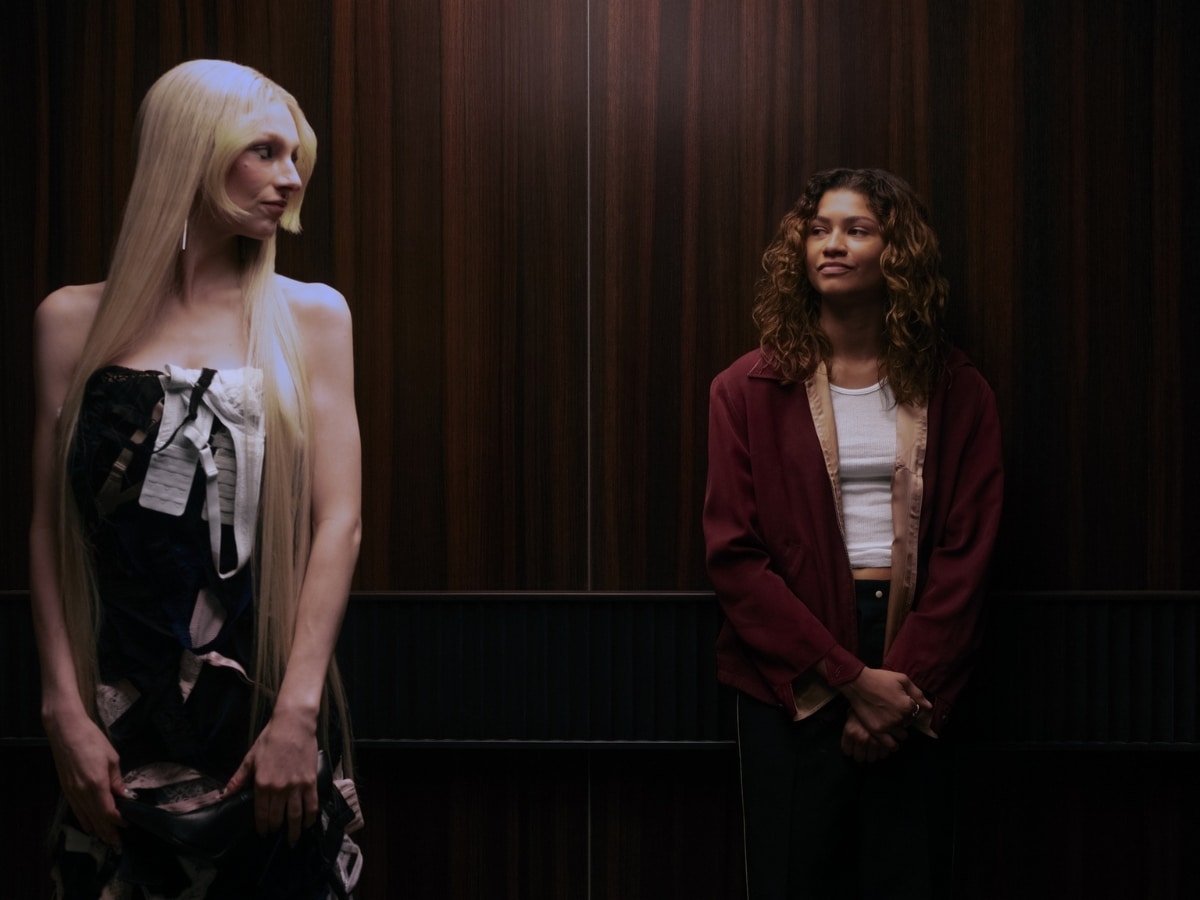
The third season of HBO’s Emmy-winning drama Euphoria has premiered following a tumultuous four-year production hiatus, revealing a series that has undergone a radical transformation in tone, setting, and narrative focus. While the first two seasons were defined by the high-octane, neon-soaked chaos of suburban adolescence, the new installments present a world that is slower, heavier, and significantly more somber. This shift has prompted a sharp divide among television critics and audiences alike, raising fundamental questions about the show’s identity as it moves beyond its original high school premise. Early critical data reflects this uncertainty, with the season currently holding a 42% approval rating on Rotten Tomatoes and a weighted average score of 56 on Metacritic, marking a significant statistical decline from its previous heights.
The Chronology of a Delayed Return
The path to Euphoria Season 3 was marked by a series of unprecedented industry and personal setbacks that extended the gap between seasons to nearly half a decade. Following the conclusion of Season 2 in early 2022, production was initially delayed by the global surge in the careers of its lead actors, including Zendaya, Sydney Sweeney, and Jacob Elordi, all of whom became major cinematic fixtures during the interim. The timeline was further complicated by the 2023 Hollywood labor disputes, including the Writers Guild of America (WGA) and SAG-AFTRA strikes, which brought all creative development to a standstill for several months.

Tragedy also played a role in reshaping the series. The passing of actor Angus Cloud, who portrayed the central character Fezco, and the sudden death of executive producer Kevin Turen necessitated significant script overhauls. Showrunner Sam Levinson reportedly spent the better part of 2024 and 2025 retooling the narrative to account for these losses and the natural aging of the cast. The resulting time jump, which moves the characters into their early twenties, was designed to bridge the gap between the actors’ real-life ages and their fictional counterparts, yet it is this very transition that has become the primary point of contention in the new season’s reception.
Divergent Critical Perspectives
The critical landscape for Season 3 is characterized by a stark polarization. Proponents of the new direction argue that the show has matured alongside its audience. Variety noted that despite the changes, "Euphoria is never not entertaining," suggesting that the series’ inherent magnetism remains intact. Similarly, The Daily Beast offered a more visceral endorsement, describing the season as "tawdry and titillating" while asserting it is "somehow better" than its predecessors. These reviews suggest that for some, the spectacle and aesthetic ambition of Sam Levinson’s direction continue to provide sufficient momentum.
Conversely, a large contingent of critics argues that the show has lost its way. The BBC’s review was particularly blunt, stating the series now has "very little to say, none of it very audacious or compelling," and concluding that it has lost its "zeitgeisty edge." AwardsWatch echoed this sentiment, suggesting that the four-year wait "doesn’t feel particularly worth it" and characterizing the season not as a continuation of the previous "high," but as the "hangover that follows." This metaphor of a "hangover" appears frequently in the critical discourse, framing the new episodes as a bleak examination of life for individuals who may have peaked during their high school years.

Analysis of Tonal and Narrative Shifts
One of the most discussed elements of Season 3 is its departure from the established "Euphoria" aesthetic. Critics have pointed to a "tonal whiplash" that occurs as the show experiments with various genres. The New York Post described certain sequences as "Breaking Bad meets Looney Tunes," highlighting a bizarre, Tarantino-esque opening sequence that reportedly defies the show’s previous groundedness. Furthermore, the inclusion of Western-style motifs and cinematic references has led some analysts to believe that Levinson is prioritizing stylistic experimentation over narrative cohesion.
Forbes reported that the premiere felt like "multiple shows stitched together," noting that the final product lacked the distinct identity that made the first two seasons a cultural phenomenon. Collider expanded on this by arguing that the removal of the high school setting "strips it of its central thesis." In its original form, Euphoria was an exploration of the specific pressures of Gen Z adolescence; by moving into adulthood, the show struggles to define what it is actually about. The comparison to Rugrats All Grown Up has been cited by some as a cautionary tale of what happens when a series built on the intensity of a specific life stage attempts to follow its characters into a more mundane maturity.
Performance and Character Trajectories
Despite the mixed reception of the writing and pacing, the performances of the lead cast remain a focal point of praise. Zendaya, who has already won two Emmy Awards for her portrayal of Rue Bennett, continues to be the season’s strongest asset. The Hollywood Reporter described her performance as "both broad and quietly nuanced," while RogerEbert.com labeled her "the best thing about the season." However, there is a growing consensus that Zendaya’s talent may be overshadowing a narrative that is otherwise failing to support its ensemble.

Sydney Sweeney’s character, Cassie Howard, has also become a subject of intense critical scrutiny, though for different reasons. The season reportedly pushes Cassie into increasingly explicit and controversial territory, involving themes of performative sexuality and online adult content. While Slant Magazine praised Sweeney for her "mix of glassy-eyed self-importance and pitiable self-doubt," other critics have expressed discomfort with the material. There is an ongoing debate regarding whether the show is critiquing the exploitation of young women or participating in it. This contradiction—leaning into spectacle while simultaneously judging it—is a recurring theme in reviews of Sweeney’s arc.
Statistical Data and Industry Implications
The reception of Season 3 carries significant weight for HBO and the broader television industry. During its second season, Euphoria was the second-most-watched show on HBO since 2004, trailing only Game of Thrones. It averaged 16.3 million viewers per episode, a massive figure for a premium cable drama. However, the current critical dip poses a risk to the show’s long-term legacy and its potential for future awards contention.
The 42% Rotten Tomatoes score represents a "Rotten" designation, a sharp contrast to the "Certified Fresh" status of the previous seasons. For a "prestige" drama, such a decline often signals a waning of cultural influence. Market analysts suggest that the long delay may have resulted in a "decay of relevance," where the audience that grew up with the show has moved on, and the new season fails to capture the attention of a younger demographic that was not present for the 2019 premiere.
Broader Impact and the Future of the Series
The existential question surrounding Season 3—"Why does it exist?"—has become the defining theme of the current discourse. IndieWire characterized the season as "spiritually hollow," suggesting that the creative spark that fueled the show’s initial rise has been replaced by a sense of obligation. As the characters navigate a world outside of East Highland High, the stakes feel lower to some and unnecessarily grim to others.
HBO has not yet confirmed whether Euphoria will continue into a fourth season. Given the logistical difficulties of coordinating the schedules of its now-A-list cast and the polarizing reception of the current episodes, some industry insiders speculate that Season 3 may serve as the series’ conclusion. The BBC noted that while catching up with familiar characters may be "satisfying enough" for die-hard fans, the show no longer feels like the essential viewing it once was.
In conclusion, Euphoria Season 3 stands as a testament to the challenges of maintaining a cultural phenomenon over a prolonged period of time. While it continues to offer high-caliber performances and arresting visuals, the loss of its central high school framework and its shift into a fragmented, experimental tone have left it struggling to reclaim its former glory. Whether the remainder of the season can reconcile these disparate elements remains to be seen, but the initial consensus suggests that the "hangover" has officially set in, leaving both the characters and the audience searching for a new sense of purpose.

 Jia Lissa
 Yuyun Lusiyani
 Joko Widodo
 Eva Lovia

 Pevita Pearce