
 Jia Lissa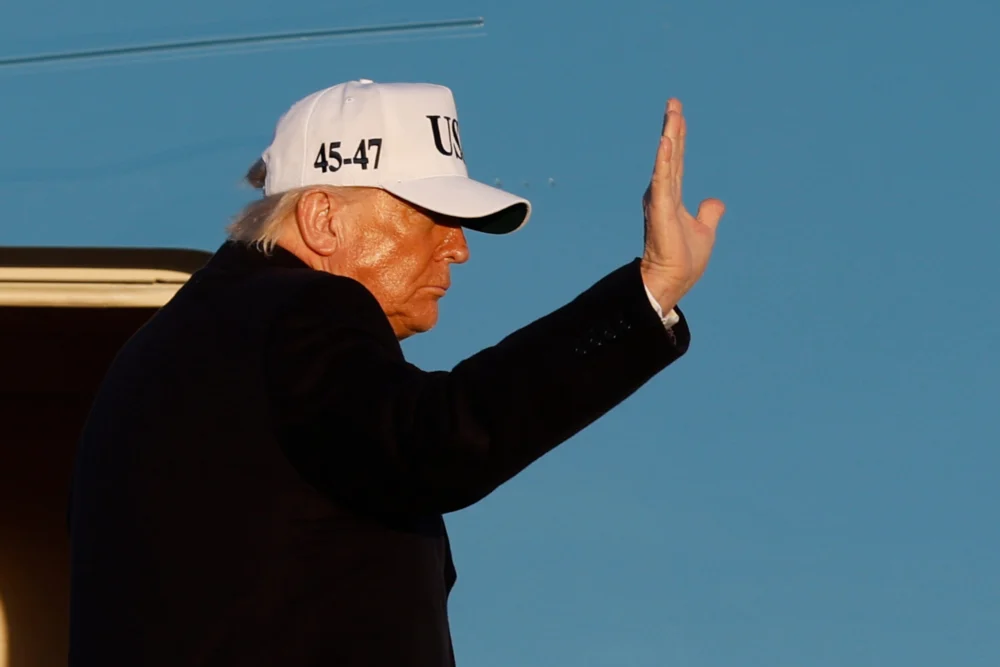
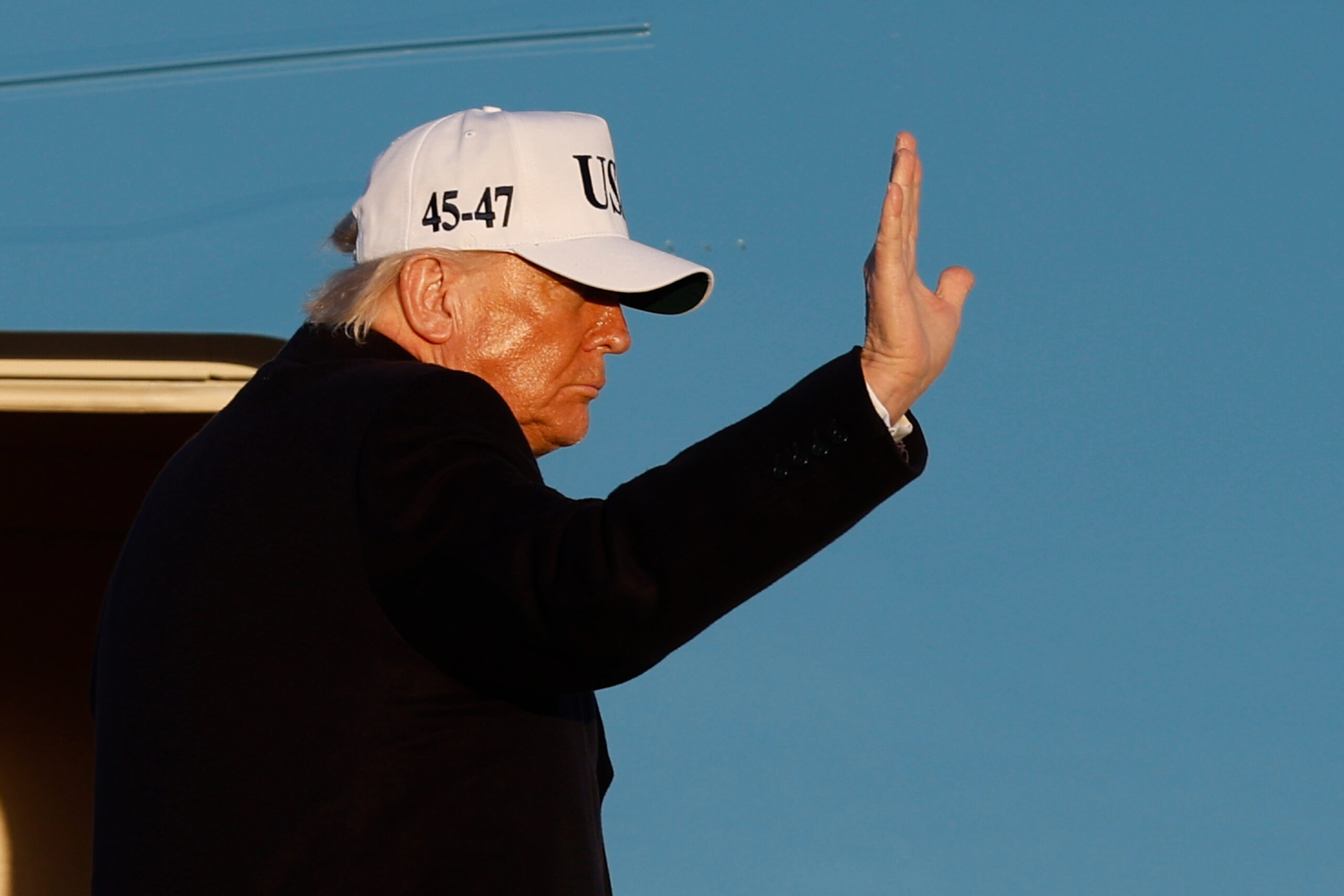
President Donald Trump confirmed on Saturday that he is withholding a formal endorsement in the high-stakes Texas Republican Senate runoff, citing the legislative progress of the SAVE America Act as a primary determining factor. Speaking with NBC News, the President indicated that his support for incumbent Senator John Cornyn (R-TX) is currently contingent upon the Senate’s ability to pass the controversial voting integrity bill, which aims to mandate proof of citizenship and identification for federal elections. The announcement places Senator Cornyn in a precarious position as he faces a primary challenge from Texas Attorney General Ken Paxton, a long-time Trump ally, in a runoff election scheduled for May 26.
The President’s comments underscore a broader strategy of using executive influence to drive legislative priorities through a closely divided Senate. By tying a critical political endorsement to the passage of the SAVE America Act, Trump has effectively turned the Texas Senate race into a referendum on the bill. "A lot has to do with the SAVE America Act. A lot is going to determine—Republicans have to get that passed, because that will secure voting in this country," Trump told reporters, signaling that legislative results will outweigh past loyalty or personal rapport in this specific contest.
The Legislative Catalyst: Understanding the SAVE America Act
The Safeguard American Voter Eligibility (SAVE) Act has become the centerpiece of the Republican Party’s legislative agenda under the Trump administration. The bill seeks to amend the National Voter Registration Act of 1993 to require individuals to provide documentary proof of U.S. citizenship when registering to vote in federal elections. Proponents of the measure argue it is a necessary safeguard to ensure election integrity and prevent non-citizen participation in the democratic process.
For President Trump, the bill is not merely a policy preference but a cornerstone of his administration’s "Election Integrity" platform. In recent weeks, the White House has increased pressure on Senate leadership to bring the bill to the floor for a final vote. The President’s insistence on the bill’s passage reflects a belief that current federal laws are insufficient to prevent registration irregularities.
However, the bill faces a steep uphill battle in the Senate, where the legislative filibuster remains a formidable obstacle. Under current Senate rules, most legislation requires a three-fifths majority—typically 60 votes—to invoke cloture and end debate. With a narrow Republican majority, the SAVE Act cannot pass without either significant Democratic support or a fundamental change to the Senate’s procedural rules.
The Cornyn Pivot: A Reversal on the Filibuster
Senator John Cornyn, a veteran legislator known for his adherence to Senate traditions, has long been a staunch defender of the filibuster. For decades, Cornyn argued that the 60-vote threshold was essential for protecting the rights of the minority party and ensuring that major policy changes had broad, bipartisan consensus. However, the pressure of a primary challenge from the right and the looming necessity of a Trump endorsement appear to have prompted a significant shift in his philosophy.
Last week, Cornyn surprised colleagues and political analysts alike by announcing his support for abolishing or modifying the filibuster specifically to pass the SAVE America Act. In an op-ed published in the New York Post, Cornyn detailed his reasoning, framing the shift as a necessary adaptation to a changing political landscape. "When the reality on the ground changes, leaders must take stock and adapt," Cornyn wrote. He further argued that Democrats have "weaponized" the filibuster to block common-sense legislation that enjoys broad public support.
The timing of Cornyn’s announcement was notable, occurring the same morning President Trump publicly prodded Senate Majority Leader John Thune (R-SD) to show more aggressive leadership on the issue. Thune has expressed skepticism regarding the feasibility of passing the bill, noting that he currently lacks the votes to overcome a Democratic filibuster or to change the rules of the chamber entirely. By aligning himself with Trump’s demands, Cornyn is attempting to differentiate himself from the "establishment" wing of the party and prove his utility to the MAGA movement.
Public Opinion and Supporting Data on Voter ID
While the SAVE America Act remains a flashpoint in Washington, data suggests that the core component of the bill—voter identification—enjoys significant support across the American electorate. According to analysis from CNN’s Harry Enten, the concept of requiring ID to vote transcends the typical partisan divide that characterizes most modern political issues.
Citing data from the Pew Research Center, Enten highlighted that 95% of Republicans and a surprising 71% of Democrats support voter ID requirements. "Normally, you might expect hey, there’d be a big divide by party, with Republicans really for it and Democrats really against it," Enten noted during a recent broadcast. "But not really here."
The broad popularity of voter ID laws provides a strategic advantage for Republicans like Cornyn who are championing the SAVE Act. By framing the debate around "securing the vote," the GOP is tapping into a sentiment shared by a vast majority of Americans, regardless of their political affiliation. This data suggests that if the bill were to reach the floor, the political cost for those opposing it could be substantial, particularly in swing states and competitive districts.
The Texas Runoff: Cornyn vs. Paxton
The endorsement drama comes at a critical juncture for Texas politics. Senator Cornyn, who has served in the Senate since 2002, is facing his most significant intra-party challenge to date. His opponent in the May 26 runoff, Attorney General Ken Paxton, has built a reputation as a fierce defender of the Trump agenda, often leading legal challenges against federal overreach and spearheading election-related litigation.
Paxton’s candidacy is rooted in the narrative that Cornyn is a "RINO" (Republican In Name Only) who has spent too long in Washington’s "swamp." Paxton has frequently pointed to Cornyn’s past support for bipartisan compromises as evidence that he is out of step with the modern Republican base in Texas. Conversely, Paxton has maintained a close relationship with President Trump, who previously supported the Attorney General during his impeachment proceedings in the Texas legislature.
Despite their history, Trump’s comments on Saturday suggest that he is not yet ready to abandon Cornyn. "I like him. I always liked him," Trump said of the Senator. This indicates that while Paxton may be the ideological favorite for many in the MAGA base, Trump views Cornyn’s legislative influence in the Senate as a valuable asset that could be leveraged to achieve his immediate policy goals.
The absence of Senator Ted Cruz from this year’s ballot adds another layer to the state’s political dynamics. Cruz, who is not up for reelection until 2030, has remained relatively quiet on the runoff, allowing the battle between Cornyn and Paxton to serve as the primary indicator of the Texas GOP’s future direction.
Timeline of Recent Events
The path to the current endorsement standoff has been marked by several key developments over the last month:
- Late February: President Trump begins publicly emphasizing the SAVE America Act as his top legislative priority for the spring session.
- Early March: Senate Majority Leader John Thune expresses concern that the bill lacks the necessary 60 votes to clear the Senate.
- March 11: Senator John Cornyn publishes an op-ed in the New York Post officially reversing his stance on the filibuster to support the SAVE Act.
- March 11 (Morning): Trump issues a statement urging Thune to "be a leader" and find a way to pass the voting legislation.
- March 14: Trump speaks to NBC News, explicitly linking his Texas Senate endorsement to the progress of the SAVE America Act.
- May 26: Scheduled date for the Texas Republican Senate runoff.
Broader Implications for the Republican Party
The standoff in Texas is emblematic of a larger transformation within the Republican Party. The traditional emphasis on procedural norms and institutional stability—long championed by figures like Cornyn—is increasingly being supplanted by a "results-oriented" approach that prioritizes the implementation of the President’s agenda at any cost.
If Cornyn succeeds in moving the SAVE America Act forward, it could signal a permanent shift in how the Senate operates, potentially leading to the end of the legislative filibuster as a meaningful check on power. This would have profound implications for future administrations, regardless of party, as it would allow a simple majority to pass sweeping national legislation.
Furthermore, Trump’s "endorsement-for-results" model creates a new precedent for executive-legislative relations. By treating his political capital as a commodity to be traded for legislative victories, the President is asserting a level of control over the primary process that few of his predecessors ever attempted.
As the May 26 runoff approaches, all eyes will remain on the Senate floor. For Senator Cornyn, the next few weeks are not just about passing a bill; they are about securing his political future in a party that has redefined the meaning of loyalty. For Attorney General Paxton, the delay in a Trump endorsement provides a window of opportunity to consolidate the base and argue that his opponent’s sudden shift is a matter of political convenience rather than conviction. Regardless of the outcome, the Texas Senate race has become the definitive stage for the current struggle between the Republican establishment and the populist movement led by Donald Trump.




 Yuyun Lusiyani
 Joko Widodo
 Eva Lovia
 Pevita Pearce
 admin
admin
 Lina Irawan