
 admin
admin
Barry Melrose, a towering figure in the hockey world whose career spanned roles as an NHL player, a Stanley Cup Finalist coach, and one of ESPN’s most beloved and recognizable analysts, passed away at the age of 70. His wife, Cindy Melrose, confirmed the news to ESPN on September 9, 2026, marking the end of an era for a personality whose distinctive voice, sharp insights, and unmistakable style left an indelible mark on the sport. Melrose had retired from his broadcasting duties in 2023 following a diagnosis of Parkinson’s disease, prompting an outpouring of support from across the hockey community. His passing leaves a void in the hearts of fans, colleagues, and players who admired his unwavering passion and profound contributions to the game.
A Career Forged in Grit and Determination
Born on July 24, 1956, in Kelvington, Saskatchewan, Barry Melrose’s journey in hockey began on the rugged rinks of his native Canada, embodying the spirit of a true Canadian hockey player. His early career was characterized by tenacity and a no-nonsense approach, qualities that would define his professional life. Drafted by the Montreal Canadiens in the sixth round (120th overall) of the 1976 NHL Amateur Draft, Melrose spent parts of seven seasons in the NHL as a defenseman, playing for the Toronto Maple Leafs and the Detroit Red Wings. While his NHL playing career, which spanned 300 games and amassed 729 penalty minutes, was not defined by offensive prowess, his physical style, leadership, and willingness to stand up for his teammates earned him respect in locker rooms across the league. He was a quintessential "enforcer" and a reliable presence on the blue line, known for his grit and unwavering commitment.
Before making it to the NHL, Melrose also played in the World Hockey Association (WHA) and honed his skills in various minor leagues, including a significant tenure with the Adirondack Red Wings in the American Hockey League (AHL). It was in the AHL that Melrose began to transition his leadership qualities from player to coach, laying the groundwork for his future endeavors behind the bench. This foundational experience in both major and minor league hockey provided him with a comprehensive understanding of the game from multiple perspectives, which would prove invaluable in his later roles.

From the Ice to the Bench: A Coaching Odyssey
Melrose’s transition to coaching proved to be remarkably successful. After retiring as a player, he immediately took on coaching roles, first as an assistant and then as head coach of the Adirondack Red Wings. Under his guidance, the AHL affiliate of the Detroit Red Wings flourished, culminating in a Calder Cup championship in 1992. This triumph showcased Melrose’s ability to motivate players, implement effective strategies, and build a winning culture, quickly establishing him as a promising coaching talent.
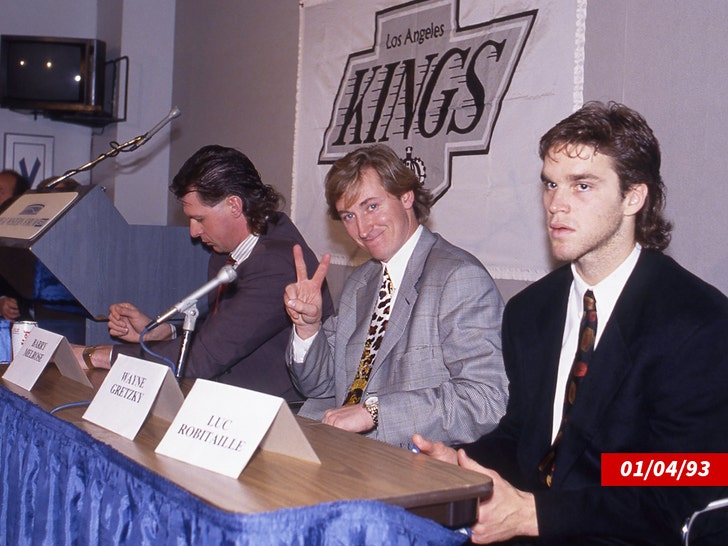
His success in the AHL did not go unnoticed, and in 1992, Melrose was appointed head coach of the Los Angeles Kings. This marked a pivotal moment in his career and for the Kings franchise. Taking the helm of a team featuring the legendary Wayne Gretzky, Melrose injected a renewed sense of purpose and physicality into the Kings. He famously led the team on an improbable run to the 1993 Stanley Cup Final, a historic achievement for the franchise. The Kings, under Melrose’s fiery leadership, captivated the hockey world by battling through formidable opponents like the Calgary Flames, Vancouver Canucks, and Toronto Maple Leafs in dramatic series before ultimately falling to the Montreal Canadiens in a memorable final. This playoff run, characterized by Melrose’s passionate sideline demeanor and the team’s gritty performance, cemented his reputation as a coach who could inspire and deliver results on the biggest stage. Despite the loss, the 1993 Kings team remains one of the most beloved in franchise history, largely due to Melrose’s influence. He coached the Kings for three seasons before his departure in 1995. Melrose would later have a brief, less successful return to coaching with the Tampa Bay Lightning during the 2008-09 season, a stint that highlighted the challenges of translating past success into new environments.
The Voice of Hockey: An Iconic Broadcasting Career
It was in the realm of sports broadcasting that Barry Melrose truly became a household name and an iconic figure to a generation of hockey fans. In 1996, he joined ESPN as a hockey analyst, embarking on what would become a nearly three-decade-long career that redefined hockey commentary. At a time when hockey struggled for mainstream attention in some markets, Melrose’s vibrant personality and profound knowledge made the game accessible and exciting to a broader audience.
Melrose quickly distinguished himself with his distinctive style: the signature mullet, the perfectly trimmed goatee, and an array of flashy, often brightly colored suits that became synonymous with his on-screen presence. More than just a visual spectacle, his analytical approach was direct, honest, and infused with an infectious passion for the sport. He possessed a unique ability to break down complex hockey plays into understandable insights, appealing to both die-hard fans and casual viewers. His catchphrases and enthusiastic delivery made him a fan favorite, while his extensive experience as a player and coach provided him with unparalleled credibility.

For years, Melrose was a fixture on ESPN’s "SportsCenter," "NHL 2Nite," and other hockey-related programming. He became a trusted voice during major events, including the Stanley Cup Playoffs, and played a crucial role in shaping public perception of the game. Even during periods when ESPN did not hold the exclusive NHL broadcasting rights, Melrose remained a prominent voice, covering various hockey events and maintaining his connection with the sport and its fans. His chemistry with co-hosts and fellow analysts was often palpable, creating an engaging and entertaining viewing experience. ESPN lauded Melrose as a "distinctive and trusted" voice, emphasizing his unwavering passion and deep understanding of the game. His presence helped to elevate hockey’s profile, making it a more integral part of the sports media landscape.
A Battle with Parkinson’s and Retirement
In October 2023, Barry Melrose publicly announced his diagnosis of Parkinson’s disease, a progressive disorder of the nervous system that affects movement. The news sent shockwaves through the hockey world and prompted an outpouring of support from fans, players, and colleagues. In a heartfelt statement, Melrose expressed his gratitude for the support he received and announced his retirement from ESPN to focus on his health and spend more time with his family.
His retirement marked the end of an extraordinary run in sports broadcasting. The announcement was met with tributes from across the NHL, including statements from Commissioner Gary Bettman, who praised Melrose’s contributions to the game. Many of his former colleagues at ESPN, including long-time anchors and fellow analysts, shared poignant messages, highlighting his mentorship, friendship, and the joy he brought to their lives and to millions of viewers. Melrose faced his diagnosis with characteristic courage and candor, choosing to share his journey and raise awareness about the disease. His decision to step away underscored his commitment to his well-being, while simultaneously leaving a void that would be impossible to fill.
Tributes and Lasting Legacy
Upon learning of Melrose’s passing, the hockey community united in grief and remembrance. NHL Commissioner Gary Bettman released a statement praising Melrose’s multifaceted career: "Barry Melrose was a true icon of our sport. From his playing days to his coaching tenure with the Kings, and most notably his decades as an ESPN analyst, Barry’s passion, insight, and unforgettable personality made him a beloved figure. He brought hockey to life for millions and will be deeply missed."

Wayne Gretzky, the legendary center whom Melrose coached during the Kings’ 1993 Stanley Cup Final run, shared his condolences: "Barry was more than just a coach; he was a mentor and a friend. He pushed us to be our best and believed in us when no one else did. His energy was infectious, and his love for hockey was unmatched. The game has lost a true original."
ESPN, in a somber announcement, reiterated its profound sadness: "Today, we mourn the loss of our dear colleague and friend, Barry Melrose. Barry was a broadcasting pioneer, whose unique style and genuine love for hockey resonated with fans globally. He was a cherished member of the ESPN family for decades, and his legacy will forever be etched in the annals of sports television. Our thoughts are with Cindy and the entire Melrose family."
Colleagues like Steve Levy, who often shared the desk with Melrose, remembered his warmth and humor. "Barry was one of a kind. His enthusiasm was contagious, and he made every broadcast better. He was as genuine off-camera as he was on, a true gentleman with a heart of gold. I’ll miss him dearly."
Melrose’s legacy is multi-faceted and profound. As a player, he embodied the grit and resilience of hockey’s working class. As a coach, he demonstrated the power of leadership and inspiration, taking an underdog team to the sport’s ultimate stage. As an analyst, he revolutionized hockey broadcasting, making the game more engaging and accessible, bridging the gap between hardcore fans and a broader audience. His signature look – the mullet, goatee, and flashy suits – became an enduring symbol of his individuality and flair.
Beyond the accolades and professional achievements, Barry Melrose will be remembered for his authenticity, his unwavering optimism, and his deep-seated love for the game of hockey. He was a man who lived and breathed the sport, dedicating his life to its pursuit and promotion. His impact extended beyond statistics and soundbites; he touched the lives of countless individuals, from the players he coached to the fans he entertained and educated. His ability to connect with people, coupled with his vast knowledge and charismatic delivery, cemented his place as one of hockey’s most beloved and influential personalities. The hockey world has lost a giant, but Barry Melrose’s spirit and contributions will continue to resonate for generations to come, forever reminding us of the joy and passion he brought to the beautiful game.




 Yuyun Lusiyani
 Joko Widodo
 Jia Lissa
 Pevita Pearce

