Pevita Pearce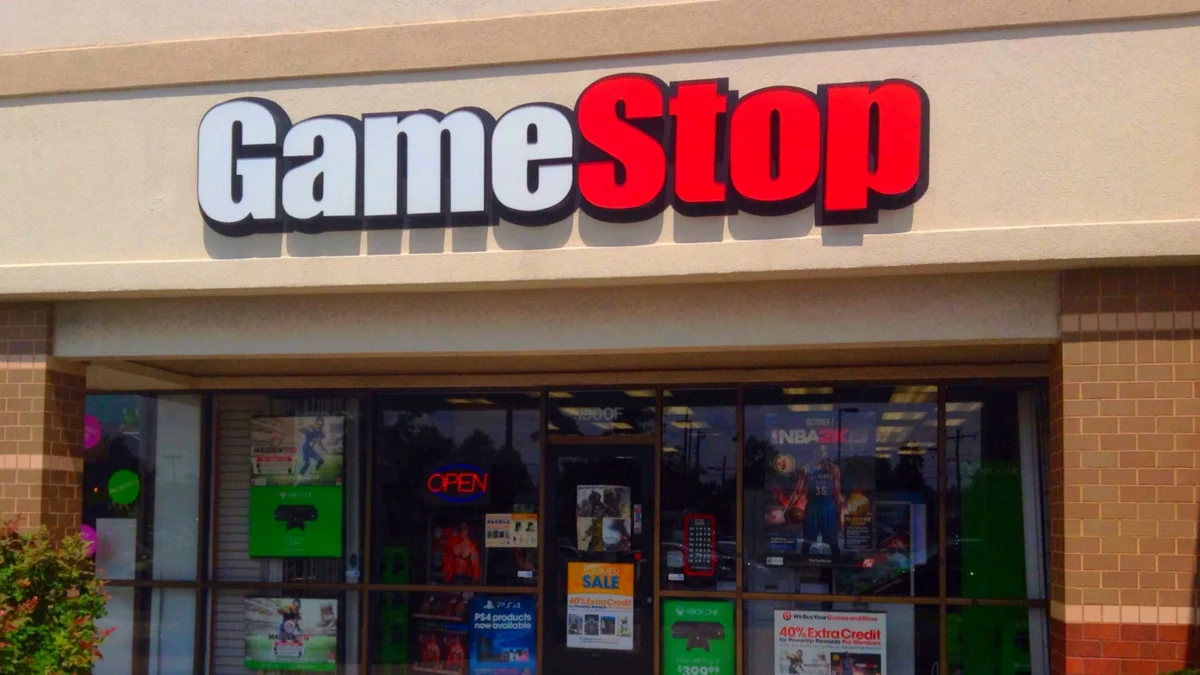
GameStop Chairman and Chief Executive Officer Ryan Cohen has publicly minimized the significance of Sony’s projected transition away from physical media, asserting that the impending obsolescence of PlayStation discs is "totally, totally irrelevant" to the future of the world’s largest specialized video game retailer. Speaking in a comprehensive interview with Bloomberg Tech, Cohen addressed the growing concerns regarding the "disc apocalypse," a term coined by industry analysts following Sony’s confirmation that it intends to cease the production of physical game discs for all new PlayStation titles starting in January 2028. While the announcement sent shockwaves through the gaming community and sparked intense debate regarding consumer ownership rights, Cohen’s stance suggests a fundamental pivot in GameStop’s business model, moving away from the software-centric roots that defined the company for decades and toward a diversified portfolio of physical collectibles and e-commerce aspirations.
The dismissive remarks from the GameStop chief executive come at a critical juncture for the gaming industry. For nearly forty years, the exchange of physical media—cartridges, CDs, DVDs, and Blu-rays—served as the cornerstone of the retail gaming economy. However, the rapid ascent of high-speed internet, cloud gaming, and digital storefronts like the PlayStation Store and Xbox Games Store has steadily eroded the market share of physical retail. Sony’s decision to set a 2028 deadline for the end of physical production marks one of the most definitive steps toward a digital-only ecosystem taken by a major console manufacturer to date. Despite this, Cohen argued that the shift does not threaten GameStop’s viability because the company has already begun distancing its revenue streams from new software sales, which he noted now constitute a diminishing portion of the firm’s total bottom line.
The Strategic Pivot: From Software to Collectibles
The rationale behind Cohen’s lack of concern lies in the recent financial restructuring of GameStop’s sales data. In early 2025, GameStop reported that its collectibles segment—which includes trading cards, Pokémon products, action figures, and apparel—had grown to represent approximately 29% of its first-quarter sales. Crucially, this segment outperformed video game software sales during the same period. Cohen has framed the expansion into trading cards and high-value collectibles not as a desperate pivot, but as a "natural extension" of GameStop’s historical "buy-sell-trade" identity. By focusing on items that possess inherent physical value and cannot be replicated digitally, such as rare Magic: The Gathering cards or graded sports memorabilia, GameStop is attempting to insulate itself from the volatility of the digital software market.
This diversification strategy is supported by the company’s aggressive entry into the professional grading and secondary markets for trading card games (TCG). By transforming retail locations into hubs for enthusiasts to trade and authenticate physical assets, GameStop aims to maintain foot traffic even as game consoles move toward disc-less designs. Cohen’s vision suggests that the "Game" in GameStop may eventually refer more to the culture of collecting and tabletop gaming than to the hardware and software of traditional home consoles.
Sony’s Digital Roadmap and the 2028 Deadline
Sony’s announcement in July 2024 regarding the 2028 cessation of disc production was not entirely unexpected but was surprising in its specificity. The transition is part of a broader industry trend toward "Games as a Service" (GaaS) and subscription-based models like PlayStation Plus. By eliminating physical discs, console manufacturers can recapture the 10% to 15% margin typically lost to retailers and distribution logistics, while also effectively killing the used game market—a sector that GameStop dominated for years.
The timeline for this shift aligns with the projected lifecycle of the current console generation and the anticipated launch of future hardware. Analysts suggest that by 2028, the infrastructure for digital distribution will be sufficiently robust in major markets to justify a total abandonment of physical media. However, this move has faced significant pushback from advocacy groups and industry veterans who argue that digital-only futures compromise game preservation and consumer rights. Unlike a physical disc, which can be played offline and resold, a digital license is often subject to the whims of server availability and end-user license agreements (EULAs) that can be revoked by the publisher.
Industry Reactions and the Preservation Crisis
The reaction to Sony’s move and Cohen’s subsequent dismissal has been polarized. Within the development community, high-profile figures have voiced alarm. Hideo Kojima, the acclaimed creator of the Metal Gear and Death Stranding series, warned of a "frightening" future where players no longer "own" the media they purchase. Kojima emphasized that physical media serves as a tangible record of cultural history that digital formats cannot replicate. Similarly, Mike Ybarra, the former president of Blizzard Entertainment, expressed concerns over how a digital-only environment might impact consumer choice and the ability of lower-income players to access games through the secondary market.
Public sentiment has manifested in the form of massive digital petitions, with hundreds of thousands of signatures calling on Sony to reconsider its 2028 deadline. The "Stop Killing Games" movement, which advocates for the legal right of consumers to keep playing games they have purchased even after official servers are shut down, has gained significant momentum in the wake of Sony’s announcement. For these consumers, Cohen’s assertion that the end of discs "doesn’t matter" feels like a betrayal of the core demographic that saved GameStop from bankruptcy during the 2021 "meme stock" short squeeze.
GameStop’s Ambitions Beyond Traditional Retail
While Cohen minimizes the impact of the disc’s demise, his actions suggest he is looking for a way out of traditional brick-and-mortar limitations entirely. Recently, GameStop made headlines by launching an unsolicited $56 billion bid to acquire the e-commerce giant eBay. Although eBay’s board of directors rejected the proposal, citing a lack of "credibility" and "attractiveness," the move signaled Cohen’s intent to transform GameStop into a global powerhouse of circular economy and e-commerce.
By attempting to acquire eBay, GameStop sought to integrate its physical retail footprint with a massive digital marketplace for used goods. This would have provided a hedge against the decline of physical video games by giving GameStop a dominant position in the broader resale market for electronics, collectibles, and consumer goods. Even without eBay, GameStop continues to leverage its significant cash reserves—estimated at over $4 billion following several successful secondary stock offerings—to explore acquisitions that could pivot the company toward financial services or specialized logistics.
Timeline of the Decline of Physical Media
The transition Cohen is currently navigating has been nearly two decades in the making:
- 2005-2010: The rise of Steam on PC demonstrates the viability of digital distribution, leading to the near-total disappearance of physical PC game boxes.
- 2013: The launch of the PlayStation 4 and Xbox One introduces mandatory installations, meaning discs no longer "run" the game but merely act as a license key.
- 2020: Sony and Microsoft launch digital-only versions of their flagship consoles (PS5 Digital Edition and Xbox Series S), offering lower entry prices in exchange for the loss of the disc drive.
- 2024: Major retailers, including Best Buy, announce they will no longer carry physical Blu-ray movies and games in-store, citing declining demand.
- July 2024: Sony officially sets January 2028 as the end date for new physical PlayStation disc production.
- January 2025: Ryan Cohen tells Bloomberg Tech that the shift is "irrelevant" to GameStop’s future, citing the success of the collectibles division.
Economic Implications and Market Analysis
From a purely financial perspective, Cohen’s lack of concern is rooted in margin analysis. The profit margins on new video game software are notoriously thin for retailers, often hovering between 10% and 15%. In contrast, the margins on used games and collectibles are significantly higher, often exceeding 40% to 50%. By transitioning the store’s focus to TCG (Trading Card Games) and "geek culture" merchandise, GameStop is prioritizing high-margin physical goods over low-margin physical media.
However, market analysts warn that GameStop’s pivot is not without risk. The collectibles market is highly cyclical and sensitive to broader economic trends. Furthermore, the loss of physical game sales may reduce the "halo effect" that brings parents and casual gamers into stores. If GameStop ceases to be a destination for the latest blockbuster releases, it must rely entirely on a niche audience of collectors to sustain its thousands of physical locations.
Conclusion: A New Era for GameStop
Ryan Cohen’s comments reflect a pragmatic, if cold, assessment of the retail landscape. For Cohen, GameStop is no longer a "video game store" in the traditional sense; it is a retail platform for physical assets in an increasingly digital world. As Sony prepares to pull the plug on the physical disc in 2028, GameStop is betting that the human desire to own, trade, and collect physical objects will simply migrate from plastic discs to cardboard cards and vinyl figures. Whether this strategy will be enough to sustain the company in the long term remains to be seen, but for now, the leadership at GameStop appears ready to let the disc die, confident that their future lies in the tangible, even if the games themselves become ghosts in the machine.




 Jia Lissa
 Yuyun Lusiyani
 Joko Widodo
 Eva Lovia