Pevita Pearce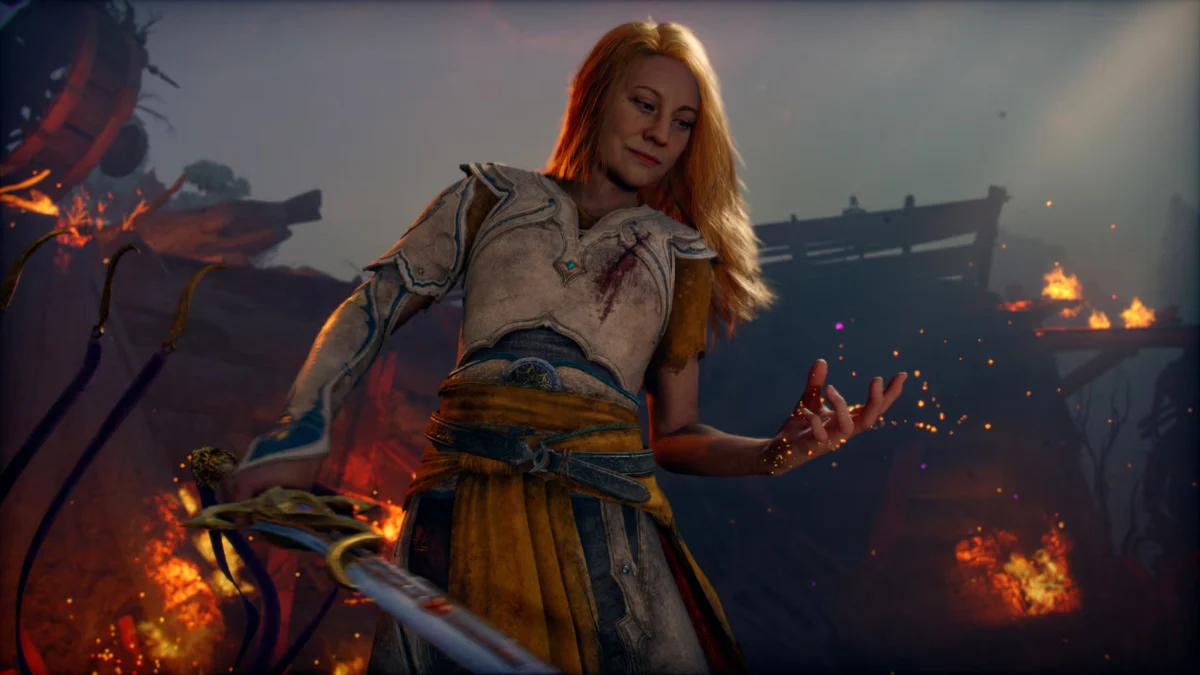
The announcement of God of War: Laufey, a narrative-driven spin-off centered on the character of Faye, has sparked significant discourse within the global gaming community. Following its surprise reveal during the June PlayStation State of Play, the title has faced a polarized reception, ranging from enthusiastic anticipation to vocal criticism regarding its departure from the series’ traditional focus on Kratos. Amidst this backdrop of online debate, lead actress Deborah Ann Woll, who portrays the titular protagonist, has broken her silence to address the controversy. Speaking at a recent appearance at Florida Supercon, Woll expressed a steadfast confidence in the project, asserting that her detachment from social media and her belief in the game’s narrative quality have shielded her from the brunt of the criticism.
The Reveal and Initial Public Reception
God of War: Laufey was introduced as a major expansion of the Norse mythology arc established by Sony Santa Monica. Unlike previous entries that centered on the Spartan warrior Kratos and his son Atreus, this new installment focuses exclusively on Laufey the Just—better known as Faye. The narrative premise is set immediately following her death, which served as the inciting incident of the 2018 God of War reboot. Players will reportedly navigate Faye’s journey through the afterlife of the gods, exploring the "Nine Realms" from a perspective previously only hinted at through environmental storytelling and dialogue.
The reveal immediately divided the fanbase. Proponents of the game have praised the decision to flesh out one of the franchise’s most enigmatic and influential characters. Conversely, a vocal segment of the community expressed dissatisfaction with the shift in protagonist, arguing that the franchise is inextricably linked to Kratos. This friction was further exacerbated by the introduction of new gameplay mechanics and supporting characters that deviate from the somber, visceral tone of the main series.
Deborah Ann Woll’s Stance on Project Quality
During a Q&A session at Florida Supercon, TikTok creator "quinnphobic" questioned Woll regarding her awareness of the negative feedback surrounding the announcement. Woll, who previously portrayed Faye in God of War Ragnarök, provided a measured response that emphasized artistic integrity over public perception.
"Genuinely, I thought I was going to be much more affected by it, but one, I’m not on social media, so that helps," Woll explained. "And two, I don’t know, I feel totally unbothered, because I just know it’s great. It’s okay if it’s not your cup of tea, but in no universe is it bad."
Woll’s comments suggest that the internal development team is highly confident in the product’s quality. Her remarks also highlight a growing trend among high-profile actors in the gaming industry who choose to distance themselves from social media platforms to avoid the "echo chamber" of reactionary criticism that often follows major franchise pivots.
A Decade in the Making: The Chronology of Development
While the public only learned of God of War: Laufey in mid-2024, the conceptual foundations of the game date back more than half a decade. Woll revealed that Cory Barlog, the creative director behind the 2018 God of War, first pitched the idea of a Faye-centric title to her during the production of the first Norse game.
The timeline of the project’s development provides context for its current state:
- 2018: Cory Barlog develops the initial concept for a Faye spin-off during the launch window of God of War (2018).
- 2019-2022: Narrative seeds for Faye’s backstory are planted throughout God of War Ragnarök, with Woll performing motion capture and voice work for flashback sequences.
- 2023: Full-scale production on the spin-off begins under the stewardship of Sony Santa Monica, utilizing the engine and assets refined during the development of Ragnarök.
- June 2024: The game is officially revealed at the PlayStation State of Play, sparking immediate viral debate.
The fact that the game has been a "long-term vision" for the studio’s leadership suggests that God of War: Laufey is not a reactionary product, but a planned pillar of the franchise’s expanded universe.
The "Phranque" Controversy and Tonal Shifts
One of the most contentious elements of the reveal was not Faye herself, but her companion character, Phranque. Described as a sentient, talking blue cube, Phranque is voiced by Jack Quaid, known for his role in the Amazon series The Boys. The inclusion of a geometric, highly vocal sidekick has been cited by critics as a sign of "Marvel-ification," a term used by some gamers to describe a shift toward quip-heavy dialogue and whimsical elements that may clash with the established "grim-dark" aesthetic of the God of War series.
Analysts suggest that the introduction of Phranque may be an attempt to replicate the success of Mimir, the "smartest man alive" who provided exposition and levity in the previous two games. However, the visual design of Phranque—a stark departure from the mythological realism of the Norse saga—remains a primary point of contention for fans who prefer the series’ traditional art direction.
Brand Banter: The Domino’s Pizza Incident
The backlash against God of War: Laufey reached an unusual peak when the official social media account for Domino’s Pizza UK joined the fray. In a post that quickly went viral, the pizza chain mocked the reveal, suggesting the game looked "dull" and lacked the "DNA" of a God of War title.
The post prompted a rare public response from Sony Santa Monica’s social media team, who defended the creative direction of the project. While brand-to-brand interactions are common on platforms like X (formerly Twitter), the incident underscored the volatility of the game’s reception. Industry experts noted that when non-gaming brands begin to capitalize on negative sentiment toward a product, it can significantly impact the "narrative" surrounding a game’s pre-launch marketing phase.
Strategic Implications for the God of War IP
From a business and franchise management perspective, God of War: Laufey represents a strategic pivot for Sony Interactive Entertainment (SIE). As development costs for AAA "prestige" titles continue to climb—often exceeding $200 million—publishers are increasingly looking toward spin-offs and smaller-scale "bridge" titles to maintain brand relevance between major mainline releases.
This strategy has been successfully employed with other PlayStation exclusives:
- Uncharted: The Lost Legacy: A spin-off featuring Chloe Frazer and Nadine Ross that was praised for its tighter focus and experimental gameplay.
- Marvel’s Spider-Man: Miles Morales: A standalone expansion that successfully transitioned the lead role to a new character while reusing the core city map.
- The Last of Us: Left Behind: A prequel chapter that added significant depth to Ellie’s character without requiring a full-length sequel.
By focusing on Faye, Sony Santa Monica is attempting to broaden the intellectual property’s reach. Faye’s character offers an opportunity to explore the Jotnar (Giant) culture and the more magical, ethereal aspects of the Norse realms, potentially attracting a demographic interested in high-fantasy narratives while retaining the core combat mechanics that fans expect.
Fact-Based Analysis of the "Kratos-Less" Era
The concern over a God of War game without Kratos is rooted in the character’s 20-year history as the face of the brand. However, narrative analysis of God of War Ragnarök suggests that the studio has been preparing for this transition for years. The ending of Ragnarök saw Kratos finding a path toward peace and "godhood through worship" rather than war, effectively completing his traditional character arc.
Faye, as the "Ghost of Jotunheim," possesses a backstory that is intrinsically linked to the central mysteries of the Norse saga. Her rebellion against the Aesir and her role in the prophecy of Ragnarök are events that have only been described to the player secondhand. Providing a playable experience of these events is a logical step for a studio that prides itself on character-driven storytelling.
Conclusion and Future Outlook
Despite the initial wave of skepticism, the pedigree of Sony Santa Monica and the commitment of performers like Deborah Ann Woll suggest that God of War: Laufey is being developed with significant care. Woll’s assertion that the game is "great" and "in no universe bad" serves as a direct counter-narrative to the social media outcry.
As the release date approaches, the burden of proof will lie on the gameplay demonstrations to show how Faye’s combat style and the presence of characters like Phranque integrate into the beloved franchise. If God of War: Laufey follows the trajectory of previous PlayStation spin-offs, it may eventually be viewed not as a detraction from the series, but as a necessary evolution that proves the God of War universe is larger than any single protagonist. For now, the studio remains focused on its vision, seemingly unswayed by the digital "fimbulwinter" of online criticism.




 Jia Lissa
 Yuyun Lusiyani
 Joko Widodo
 Eva Lovia