
 Amara Maple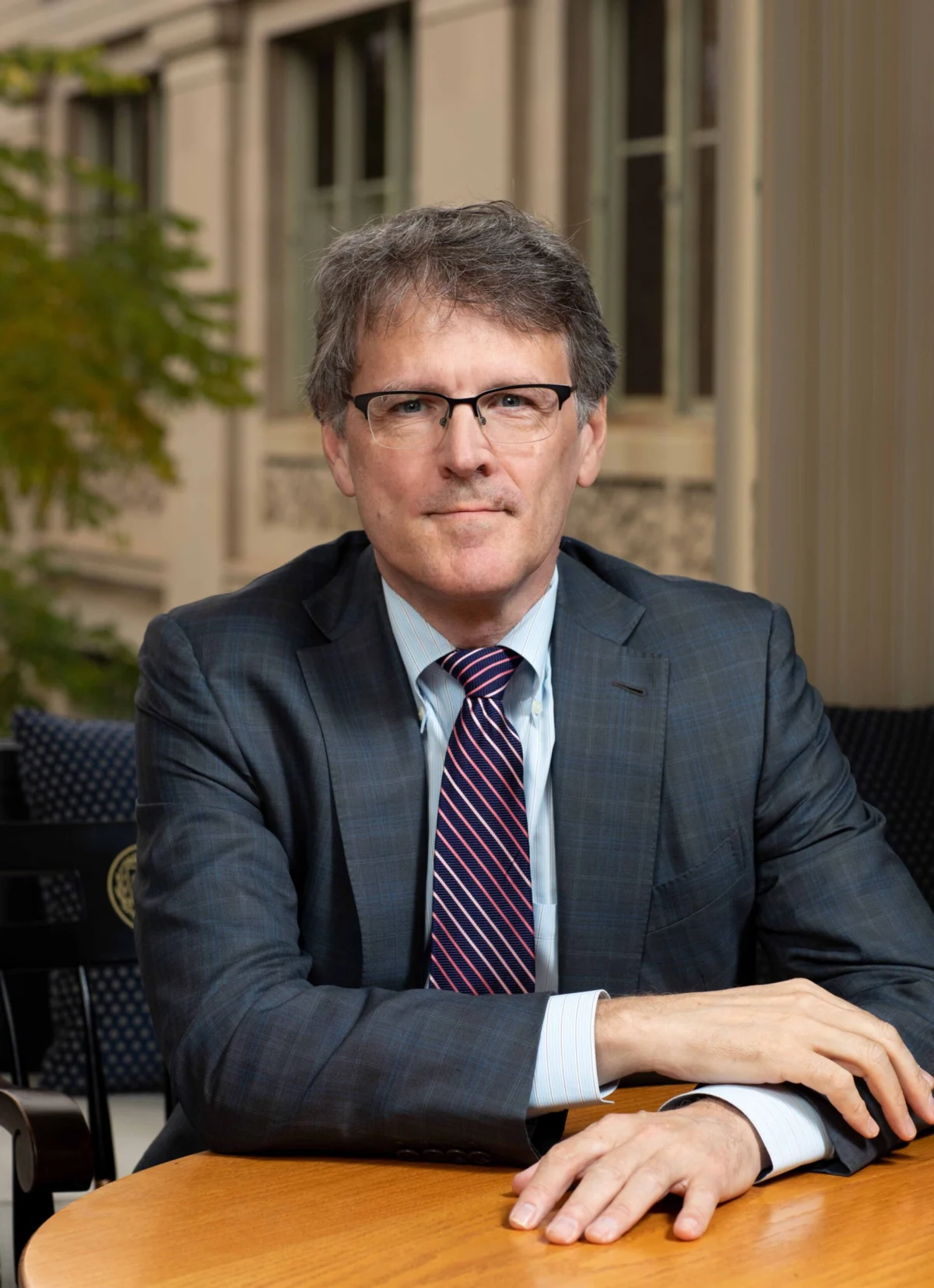
Harvard Law Professor John Coates, a distinguished figure in corporate governance and financial regulation, has emerged as a leading voice in a growing chorus of criticism against the current direction of the Securities and Exchange Commission (SEC). As a founding member of the influential Shadow SEC, a collective of prominent securities law professors, Coates has spearheaded efforts to highlight what he and his colleagues describe as an unprecedented wave of politicization, deregulation, and operational degradation within the nation’s primary capital markets regulator. Their concerns, articulated through a series of eleven, and now twelve, detailed public statements, paint a stark picture of an agency under siege, with potentially far-reaching consequences for investor protection and the integrity of U.S. financial markets.
The Shadow SEC: A Watchdog for Market Integrity
The Shadow SEC, an independent group of esteemed legal scholars, was formed to provide expert, non-partisan analysis and oversight of the SEC’s policies and actions. Its founding members include Professor Coates, alongside other luminaries such as John C. Coffee, Jr. (Columbia Law), James Cox (Duke Law), Merritt Fox (Columbia Law), and Joel Seligman (University of Washington Law). This collective brings decades of academic rigor and practical experience in securities law, offering a critical perspective often absent from the internal debates of a politically charged agency. Their recent flurry of activity underscores a profound disquiet regarding the Trump administration’s aggressive push to deregulate capital markets, a strategy they contend undermines the foundational principles of investor confidence and market efficiency. Since the beginning of June 2026 alone, the Shadow SEC has issued four new statements, critically examining the SEC’s proposals on semiannual reports, simplified filer status, the rescission of climate disclosure rules, and offering reform, with a twelfth statement later addressing the agency’s retreat from enforcement.
Professor Coates: A Profile in Public Service and Expertise
Professor John Coates’s extensive background lends significant weight to the Shadow SEC’s pronouncements. His career bridges the worlds of academia, private legal practice, and public service at the highest levels of financial regulation. Prior to his current role at Harvard Law School and Harvard Business School, where he teaches corporate governance, M&A, and finance, Coates served as General Counsel of the SEC. He also held the crucial position of acting director at the Division of Corporation Finance at the SEC, giving him intimate knowledge of the agency’s operational mechanics and regulatory responsibilities. Before entering public service, Coates was a partner at the prestigious law firm Wachtell, Lipton, Rosen & Katz, specializing in financial institutions and M&A, a role that provided him with a deep understanding of market dynamics and corporate transactions. His expertise has been sought by Congress, the U.S. Department of Justice, the Department of Treasury, and the New York Stock Exchange. He also chaired the Investor-as-Owner Subcommittee of the Investor Advisory Committee of the SEC, further cementing his credentials as a champion of investor interests. Coates is also the author of "The Problem of Twelve: When a Few Financial Institutions Control Everything" (Columbia Global Reports, 2023), a seminal work exploring the concentration of power in financial markets.
A Four-Pronged Critique of the Current SEC
In a recent interview with the Corporate Crime Reporter, Professor Coates outlined his primary concerns regarding the current SEC under Chair Atkins, categorizing them into four major areas that collectively represent a significant departure from historical norms and statutory mandates.
1. Unprecedented Politicization:
Coates argues that while some political influence has always been inherent in the SEC’s operations, the current administration has escalated this to an "order of magnitude more politicized" state. Historically, the SEC was designed to be somewhat independent, with a statutory requirement that no more than three of its five commissioners belong to the same political party. This structure aimed to foster bipartisan consensus and insulate the agency from direct executive overreach. However, Coates points out that since the beginning of the year, the SEC has operated without any Democratic commissioners, leaving two crucial slots unfilled and effectively creating an all-Republican commission. This imbalance, he contends, stifles internal debate and critical challenge, leading to a homogenous policy agenda.
Furthermore, Coates highlights Chair Atkins’s unusual embrace of direct directives from the White House. These directives, spanning issues from staffing to specific regulatory areas like cryptocurrency and the Elon Musk DOGE operation, represent an atypical level of executive interference in an independent agency’s agenda. While previous administrations might have signaled policy priorities, the overt nature of the current White House’s commands, often delivered via public press releases and executive orders, and the SEC’s subsequent adoption of these as its own, is a significant departure. This trend, coupled with the dramatic reduction in long-serving, non-partisan civil servants, replaced by political appointees, further consolidates partisan influence and erodes the agency’s traditional independence.
2. Dramatic Staff Cuts and Operational Impairment:
A critical concern raised by Coates is the severe reduction in SEC staffing, estimated at approximately 20%. This "brain drain" has been orchestrated through a combination of early retirement packages, buyouts, and outright dismissals, far exceeding normal turnover rates during a presidential transition. The implications for the SEC’s core functions are profound. Coates emphasizes that these cuts have visibly hampered the agency’s ability to efficiently process IPOs, review registration statements, and provide timely feedback to companies. He cites a decline in the speed and effectiveness of document review, a function he experienced firsthand during his time in private practice, where SEC staff comments were crucial for improving disclosure documents and mitigating future legal risks.
The professor underscores that investor protection and capital formation are complementary, not antagonistic, goals. A robust SEC, through its rigorous review processes, enhances the quality of information available to investors, thereby reducing risk and ultimately lowering the cost of capital for legitimate businesses. By weakening the agency’s operational capacity, the current administration inadvertently undermines the very capital formation it claims to champion. Coates also projects a similar, if less immediately visible, decline in enforcement actions. Given the significant lag between initiating an investigation and producing a public enforcement action, the full impact of these staff cuts on the SEC’s ability to deter and punish financial misconduct may only become apparent years down the line. The complex and time-consuming nature of federal hiring processes further exacerbates the problem, meaning that even if the agency were to begin rehiring immediately, it would take many months for new staff to become fully operational.
3. Accelerated and Bundled Rule Proposals:
The current SEC has embarked on an exceptionally aggressive rulemaking agenda, characterized by a rapid pace and the bundling of numerous significant changes into single proposals. Coates notes that even under former Chair Gary Gensler, whose tenure saw a high volume of rulemaking, the current pace is "significantly faster." These "bundled proposals" are not merely minor adjustments but encompass dozens of substantial regulatory shifts across major areas of securities law, including the 1933 Act (governing capital formation), the 1934 Act (regulating reporting companies), and audit firm assurances.
Such a deluge of proposed changes, often presented without adequate time for public comment or thorough internal deliberation due to staff shortages, raises concerns about the quality, coherence, and ultimate effectiveness of the new regulations. Critics argue that this rapid, sweeping overhaul risks introducing instability and uncertainty into the capital markets, potentially creating unforeseen loopholes or unintended consequences that could harm investors or legitimate businesses. The Shadow SEC has specifically critiqued proposals that aim to rescind climate disclosure rules, simplify filer status, and allow semiannual reports, arguing that these moves reduce transparency and investor access to critical information.
4. Chair Atkins’s Extracurricular Opinions and Expanded Mandate:
Professor Coates points to Chair Atkins’s propensity for publicly opining on subjects traditionally outside the SEC’s regulatory purview as a fourth significant concern. He cites instances of Atkins advising the Delaware legislature on corporate law reforms and encouraging companies to reincorporate in Texas, following the example of figures like Elon Musk. These actions represent a deviation from the SEC’s historical focus on federal securities laws, investor protection, and capital markets.

By engaging in debates on state corporate law and advocating for specific jurisdictional choices, the SEC Chair ventures into areas typically reserved for state legislatures and courts. Coates views this as part of a broader pattern of an "unconstrained SEC," one that is "not playing traditional roles, not mostly focused on capital formation, mostly trying to tick off political boxes and adding to the political boxes beyond anything that any prior SEC has taken on at least since the 1970s." This expansion of the Chair’s public platform and policy interests, Coates suggests, further politicizes the agency and distracts from its core mission.
Chronology of Shadow SEC Statements (June-August 2026):
The Shadow SEC has been particularly active in recent months, issuing critical analyses of several key SEC proposals:
- June 1, 2026: Comment on The SEC Proposal to Allow Semiannual Reports.
- June 26, 2026: Comment on The SEC Proposal to Simplify Filer Status.
- June 30, 2026: Statement No. 10, "The SEC’s Proposed Climate Do-Over: Prejudged, Internally Inconsistent, and Partisan," addressing the proposal to Rescind Climate Disclosure Rules.
- July 20, 2026: Statement No. 11, "The SEC Offering Reform Proposals."
- August 11, 2026: Statement No. 12, "The SEC’s Retreat from Enforcement and the Special Case of Mandatory Arbitration Clauses." (This statement was issued after the print edition of the Corporate Crime Reporter interview).
The Looming Threat of Increased Fraud and Market Instability
The combined effect of reduced enforcement, extensive deregulation, and operational limitations due to staffing cuts, Coates warns, will inevitably lead to an increase in financial fraud. He explains that such policies fundamentally alter the risk-reward calculus for market participants, tilting it towards lawbreaking. While this might initially create an illusion of increased investment or capital formation as fraudulent schemes attract short-term capital, these deceptions are bound to be exposed. When they are, investor confidence will plummet, capital costs will rise, and overall capital formation will ultimately decline.
Coates draws parallels to historical periods preceding major financial crises, such as the lead-up to Enron in the early 2000s or the pre-2008 financial crisis. In both instances, lax oversight and insufficient enforcement contributed to an environment ripe for widespread fraud, ultimately culminating in market collapses that severely impacted ordinary Americans’ savings and investments. He suggests that a similar pattern could emerge, leading to a "predictable surge in scandals" that will not only affect individual companies and investors but also destabilize the market as a whole. This, he argues, is when the public will truly take notice, as historical events like the unanimous passage of the Sarbanes-Oxley Act following the Enron scandal demonstrate a public outrage when financial misconduct hits their pocketbooks.
The Silence of the Alumni and Strategic Calculations
A curious aspect of the current situation is the relative silence of many SEC alums, particularly those now practicing at large corporate law firms. These individuals, many of whom served in enforcement roles, often hold deep loyalty to the agency’s mission. Coates acknowledges the complexity of their position. While he, as an academic, can speak freely, lawyers at large firms face potential conflicts between public policy advocacy and client relations. Furthermore, the Trump administration’s direct attacks on law firms during its initial term, though largely struck down as illegal, created a climate of caution. Firms facing legal battles to defend their own independence and operations may prioritize these existential threats over public commentary on agency policies, however critical. Coates posits that for major firms, defending the firm itself, and then perhaps the broader rule of law (e.g., against attacks on the Department of Justice), would logically precede concerns about the SEC.
Why Not a Full Shutdown? The Capitalist Conundrum
Unlike the Consumer Financial Protection Bureau (CFPB), which faced attempts to effectively dismantle it, the SEC has not experienced a similar direct threat of complete shutdown. Coates attributes this differential treatment to a fundamental understanding, even among deregulation advocates like Chair Atkins and many Republicans, that "capital formation depends on investor protection." He argues that investor protection is a "core capitalist need." A complete shutdown of the SEC would lead to a catastrophic loss of investor confidence, significantly hindering capital investment—a scenario even ardent capitalists would seek to avoid.
Coates believes that while Chair Atkins may genuinely hold different views on the optimal balance between investor protection and capital formation—a legitimate policy debate—many of his actions are "purely political in nature." These actions, such as acceding to White House directives and making non-traditional pronouncements, appear designed to placate political leadership and check ideological boxes rather than solely to optimize market regulation.
The Peril of Unintended Consequences and the Erosion of Internal Debate
Chair Atkins, with his background, is likely aware of the historical repercussions of excessive deregulation. However, Coates suggests that the decimation of SEC staff, particularly the loss of experienced civil servants, creates a significant blind spot. These skilled professionals traditionally provide critical warnings about the potential unintended consequences of policy changes. Furthermore, the absence of Democratic commissioners and their staff on the "top floor" eliminates the crucial internal pushback, discussion, and debate that are vital for robust policymaking. Without these diverse perspectives, the agency risks proceeding with policies based on an incomplete understanding of their full ramifications, potentially leading to unforeseen market instability and a surge in the very fraud it is meant to prevent.
The Shadow SEC, through its sustained and detailed critiques, aims to fill this void of informed dissent, providing an external check on an agency that appears increasingly constrained by political pressures and diminished by internal capacity. The long-term implications of these trends for the U.S. capital markets and the millions of investors who rely on the SEC for protection remain a significant concern for Professor Coates and his esteemed colleagues.

 Yuyun Lusiyani
 Ana Megawati
 Joko Widodo
 Eva Lovia
 Jia Lissa
 Pevita Pearce