
 Pevita Pearce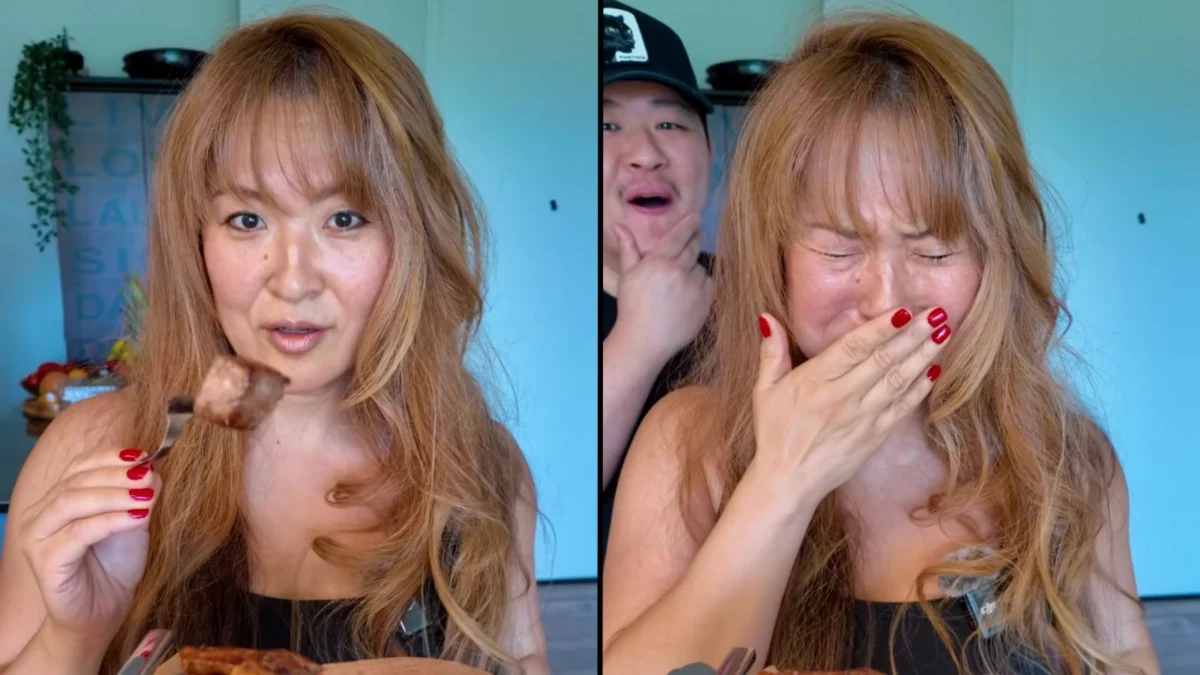
The digital landscape of health and wellness has been significantly altered following a series of viral videos from prominent foodie influencer Love Soo, who recently announced the end of her 14-year commitment to veganism. Known to her 119,000 Instagram followers and a substantial YouTube audience for her long-standing advocacy of a plant-based lifestyle, Soo’s transition back to animal proteins has triggered a polarized response across social media platforms, highlighting the complex intersection of personal health, digital identity, and the ethics of consumption.
The shift began in late July when Soo uploaded a video documenting her first experience eating beef in over a decade. The footage, which shows the influencer visibly trembling and eventually breaking into tears as she consumes a steak, has since accumulated millions of views. For Soo, the moment was not merely a change in diet but a profound psychological and physiological threshold. Her reaction—a mixture of fear, relief, and sensory overload—has become a focal point for discussions regarding the long-term sustainability of restrictive diets and the intense social pressure placed on influencers to maintain a specific public persona.
The Chronology of a 14-Year Dietary Identity
To understand the impact of Soo’s decision, it is necessary to examine the timeline of her career. Soo transitioned to veganism roughly 14 years ago, initially motivated by goals related to weight loss and general health. Over the subsequent decade, she built a dedicated following by documenting her plant-based journey, sharing recipes, and advocating for the lifestyle.
However, the internal reality of her health reportedly began to diverge from her online projection. In a comprehensive explanatory video posted to her YouTube channel, Soo revealed that while she had remained committed to the ideology of veganism for nearly a decade and a half, her body had begun to signal distress. She admitted to experiencing persistent cravings for non-vegan foods over several years—signals she initially suppressed in favor of maintaining her dietary discipline.
By 2024, Soo concluded that her vegan diet was no longer serving her physical well-being. She cited undisclosed "issues for her body" as the primary catalyst for the change, suggesting that the nutritional profile of her plant-based regimen was insufficient to meet her biological needs after 14 years of strict adherence. This realization led to the decision to reintroduce meat, starting with the steak video that catalyzed her recent viral status.
The Biological and Nutritional Context of Long-Term Veganism
The transition from a long-term vegan diet back to animal products is a phenomenon that has gained increasing attention in nutritional science. While organizations such as the Academy of Nutrition and Dietetics state that appropriately planned vegan diets are healthful and nutritionally adequate for all stages of the life cycle, the keyword remains "appropriately planned."
Scientific data suggests that long-term vegans may face challenges regarding the bioavailability of certain nutrients. For instance, Vitamin B12 is found naturally only in animal products; while supplements and fortified foods exist, deficiencies can lead to neurological issues and fatigue over time. Similarly, the absorption of heme iron (found in meat) is significantly more efficient than non-heme iron (found in plants). Other nutrients of concern for decade-long adherents include long-chain omega-3 fatty acids (EPA and DHA), zinc, and high-quality complete proteins.
Soo’s experience of "shaking" and crying during her first meal of steak may be attributed to "food neophobia" or a psychological "disgust response" developed over years of viewing meat as a non-food item. However, her subsequent comment that the meat "tastes so good" and was "not gamey at all" suggests a rapid sensory recalibration. Nutritionists often note that individuals who reintroduce meat after long periods may experience an immediate "nutrient rush" or a sense of satiety that had been missing, though the digestive system often requires a gradual transition to adjust to the increased fat and protein density.
Social Media Fallout and the "Ex-Vegan" Phenomenon
The reaction to Soo’s videos has been a microcosm of the current cultural divide surrounding dietary choices. On one side, a vocal segment of the vegan community expressed feelings of betrayal. Comments on her videos involving chicken and steak included announcements of "unfollowing" and accusations of hypocrisy. This reaction underscores the "identity-based" nature of veganism; for many, it is not just a diet but a moral and social contract. When an influencer "breaks" that contract, followers often perceive it as a personal affront.
Conversely, a significant portion of the public has rallied to her defense. Supporters argue that personal health should always take precedence over ideological purity. "Her life, her choice and we must respect her decision," one commenter noted, echoing a sentiment shared by many who believe that the "cancel culture" surrounding dietary shifts is counterproductive.
Soo is not the first high-profile influencer to leave veganism. She joins a growing list of "ex-vegan" content creators who have cited health complications—such as digestive issues, brain fog, and hormonal imbalances—as the reason for their departure from the lifestyle. This trend has created a new sub-genre of content where creators document their "healing journeys" through the reintroduction of animal products, often facing significant backlash from the communities they once led.
Psychological Implications: The Burden of the Digital Gaze
The emotional intensity of Soo’s videos—the crying and the visible fear—points to the immense psychological burden placed on digital creators. For 14 years, Soo’s brand and social standing were tethered to a specific way of eating. To change that is to effectively dismantle a decade of professional work and personal identity.
"People said bad things to me because I was vegan, it doesn’t make sense," Soo told her partner during the steak video, highlighting the "damned if you do, damned if you don’t" position many influencers find themselves in. While she faced criticism for being vegan in certain circles, she now faces even harsher criticism for leaving it. This highlights a broader issue in the creator economy: the lack of room for personal evolution and the requirement for static, unchanging personas.
The "unusual technique" noted by some viewers regarding her consumption of chicken—a hesitant, almost clinical approach—further illustrates the cognitive dissonance involved in reversing a long-held belief system. For Soo, the act of eating meat was not just a culinary choice but a confrontation with 14 years of self-imposed restrictions.
Broader Industry Trends and Market Data
The shift in Soo’s content reflects broader market trends in the food and wellness industry. While the plant-based market continues to grow, there is a simultaneous rise in "flexitarianism" and a renewed interest in "ancestral" or "whole-food" diets that include high-quality animal proteins.
According to data from Faunalytics, a non-profit that studies animal advocacy, the recidivism rate for vegetarians and vegans is remarkably high. Their research indicates that approximately 84% of people who try a vegetarian or vegan diet eventually return to eating meat. The most common reasons cited for the return are health concerns, social difficulties, and cravings. Soo’s 14-year stint is actually an outlier, as most people who abandon the diet do so within the first year. Her longevity in the movement makes her eventual departure all the more significant for researchers studying dietary trends.
Implications for the Vegan Movement and Influencer Culture
Love Soo’s transition serves as a pivotal case study for the future of health influencer culture. It raises critical questions about the transparency of creators and the health risks of promoting restrictive diets to large audiences without disclosing the physical toll those diets may be taking behind the scenes.
As Soo continues to document her transition, the focus of her content appears to be shifting toward a more holistic, health-first approach rather than a strictly ideological one. This shift may alienate her original core audience, but it is also attracting a new demographic interested in the realities of dietary recovery and nutritional balance.
The long-term impact on Soo’s brand remains to be seen. However, her story has already succeeded in humanizing the struggle of maintaining a public-facing lifestyle that may no longer align with private physical needs. In a digital world often criticized for its lack of authenticity, Soo’s tearful, messy, and controversial reintroduction to meat provides a raw look at the complexities of human health and the high cost of digital fame.
As the dust settles on this viral event, the conversation continues to move toward a more nuanced understanding of nutrition—one that acknowledges that while plant-based diets offer many benefits, they are not a one-size-fits-all solution for every individual’s biology over a lifetime. Soo’s 14-year experiment has ended, but the discussion regarding the ethics, health, and social pressures of what we put on our plates is only intensifying.




 Yuyun Lusiyani
 Joko Widodo
 Eva Lovia
 admin
admin
 Lina Irawan