Jia Lissa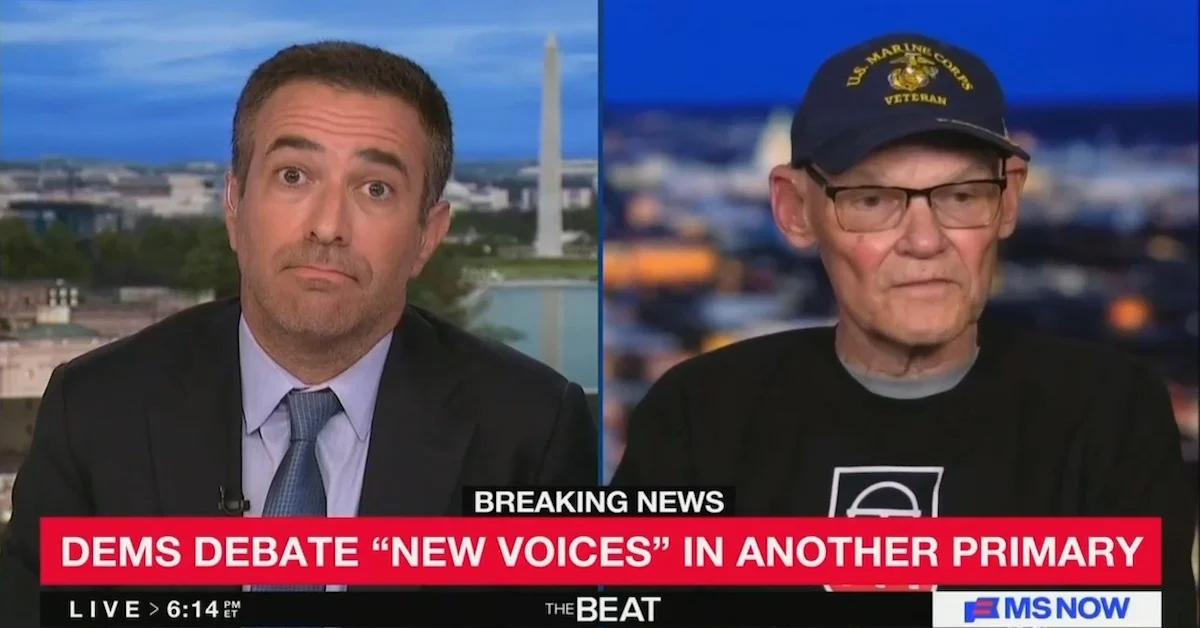
Veteran political strategist James Carville, a foundational figure in modern Democratic campaigning, has ignited a strategic debate within the party by arguing that Democrats should abandon the pursuit of an affirmative policy platform for the 2026 midterm elections. Speaking during a Tuesday evening appearance on MS NOW’s The Beat with host Ari Melber, Carville asserted that the upcoming elections should be treated exclusively as a referendum on President Donald Trump’s administration, rather than a competition of legislative ideas.
Carville’s commentary comes at a pivotal moment as the Democratic National Committee and various congressional campaign committees weigh the benefits of a "policy-forward" approach against a strategy rooted in negative partisanship. When pressed by Melber on whether voters require a proactive reason to support the Democratic ticket—specifically a message focused on improving the lives of citizens—Carville remained steadfast in his belief that the President’s own actions and visibility would be the primary driver of voter behavior.
The Strategy of the Referendum
The central premise of Carville’s argument rests on the historical nature of midterm elections, which traditionally serve as a check on the sitting president’s power. During the interview, Melber questioned the balance between being "anti-Trump" and providing an "affirmative message." Carville’s response was characteristically blunt: "Why do they need to be for anything?"
He argued that the electorate is fundamentally divided on the direction of the current administration and that the most effective way to mobilize the Democratic base, while courting undecided moderates, is to frame the election as a choice between continuing the Trump trajectory or "slowing the train down."
"The people are going to vote on Trump," Carville told Melber. "Trump is going to spend, I don’t know, claims to have spent $400 million on TV, making it about Trump. He’s going to go to Dallas. They’re going to have this idiotic mini-convention, which is going to be a disaster, and my advice to Democrats is don’t just do nothing. Stand there!"
This "stand there" philosophy suggests that by staying out of the way, Democrats allow the President’s controversial rhetoric and polarizing policy decisions to remain the focal point of public discourse. Carville suggested that the time for a robust, forward-looking Democratic vision is the presidential election cycle, not the midterms.
Trump’s Dallas Convention and the $400 Million Ad Blitz
Carville’s analysis is informed by the current Republican strategy, which he views as inadvertently aiding the Democratic cause by keeping the President at the center of every news cycle. The President’s planned "mini-convention" in Dallas is a key example of this phenomenon. Unlike traditional midterm cycles where the president often takes a secondary role to local candidates, the 2026 cycle appears to be dominated by the President’s personal brand and massive media spending.
Reports indicate that the Trump campaign and affiliated Super PACs have already committed upwards of $400 million to television and digital advertising. These advertisements, according to Carville, are not focused on local congressional achievements but are instead centered on the President himself. Carville contends that this creates a "gravity well" that pulls every local race into the national orbit.
By turning the midterms into a nationalized event, the President is effectively setting the stage for a high-turnout election. However, Carville believes this will ultimately backfire, as it forces swing voters to decide whether they want to grant the executive branch more power or impose a legislative "speed bump" via a Democratic-controlled Congress.
Historical Context and the Midterm Trend
Carville’s advice draws on decades of political data. Historically, the president’s party almost always loses seats in the midterm elections. Since the end of World War II, the incumbent’s party has lost an average of 26 seats in the House and four seats in the Senate. Notable exceptions, such as the 1998 and 2002 midterms, occurred under unique circumstances—impeachment backlash and post-9/11 national unity, respectively.
In 2018, during Trump’s first term, Democrats successfully regained control of the House of Representatives by focusing heavily on healthcare (the Affordable Care Act) while simultaneously benefiting from the President’s low approval ratings. While some strategists argue that the healthcare message was the deciding factor, Carville’s school of thought suggests that the policy was merely a vehicle for the broader "anti-Trump" sentiment of the era.
In the current 2026 landscape, the "Ragin’ Cajun" believes the polarization is so entrenched that policy nuances are secondary to the fundamental question of executive oversight. He noted that the public’s desire to "slow this train down" is a palpable sentiment that transcends specific legislative proposals.
Predictions of an Early Exit and the Vance Factor
Beyond the immediate midterm strategy, Carville reiterated a bold and controversial prediction that has become a staple of his recent media appearances: that Donald Trump will not finish his current term in office. Carville argued that the cumulative pressure of legal challenges, legislative resistance, and internal party fractures will lead to an early departure following the midterm results.
"I will say it again, I think he’s going to leave early," Carville said on The Beat. "He doesn’t have any idea of how hard he’s going to be hit, and these Republicans are going to turn on him because they’re going to figure out it’s all about him."
Carville also addressed the role of Vice President JD Vance, whom he previously characterized as a potentially ineffective successor. He suggested that if the GOP suffers significant losses in the midterms, the party’s loyalty to the Trump-Vance ticket will evaporate. The logic follows that Republican incumbents, fearing for their own political survival in 2028, will begin to distance themselves from the administration once it is no longer seen as a political asset.
Internal Democratic Friction over Messaging
Carville’s "anti-Trump only" stance is not without its critics within the Democratic Party. Progressive leaders have long argued that "running against" a candidate is insufficient and that the party must offer a "bold vision" to inspire younger voters and those who feel neglected by the political establishment.
Proponents of an affirmative message point to issues such as climate change, student debt relief, and reproductive rights as essential components of a winning strategy. They argue that without a clear "for" message, the party risks lower turnout among its core constituencies.
However, Carville’s counter-argument is rooted in the pragmatism of the "median voter." In his view, the voters who decide midterms—often suburban moderates and independent-leaning workers—are less interested in a 10-point policy plan and more interested in the stability of the federal government. For these voters, the midterm is a tool for recalibration.
Data and Polling Implications
Recent polling data suggests a complex environment for both parties. While President Trump maintains a loyal base, his disapproval ratings among independent voters remain a significant hurdle for Republican congressional candidates. Internal Democratic polling has reportedly shown that while specific policies like "lowering prescription drug costs" test well, the most consistent driver of "likelihood to vote" among Democrats and Independents remains opposition to the President’s specific executive orders and rhetoric.
Furthermore, economic indicators in late 2025 and early 2026 have shown a "split-screen" economy. While the stock market has seen periods of growth, inflation in key sectors like housing and insurance has kept consumer confidence in a state of flux. Republicans intend to run on these economic anxieties, but Carville believes that as long as the President remains the "face" of the news, the blame for economic instability will likely stick to the White House rather than the opposition.
Analysis of Broader Implications
If the Democratic leadership adopts Carville’s "get out of the way" strategy, the 2026 midterms will become one of the most nationalized and personality-driven contests in American history. This approach carries both high rewards and significant risks.
The primary risk is a "hollowed-out" party identity. If Democrats win solely on an anti-incumbent platform, they may find themselves in the majority with no clear mandate or internal consensus on how to govern. This was a criticism leveled against the party following the 2018 midterms, where a diverse freshman class often clashed with established leadership over the party’s direction.
On the other hand, the reward is a simplified, high-impact message that is easy to communicate in a fractured media environment. By focusing on "slowing the train," Democrats can build a "big tent" coalition that includes everyone from progressive activists to "Never-Trump" Republicans.
Carville’s insistence that "the time for the Democratic message is going to be when we run for president" suggests a two-phase strategy: use 2026 to seize the levers of legislative power and oversight, and use 2027-2028 to define what the party stands for in a post-Trump era.
Conclusion: The Path to November
As the 2026 midterm cycle enters its most intensive phase, the debate over the Democratic "soul" continues. James Carville’s intervention serves as a reminder of the "old school" school of political thought that prioritizes the mechanics of power and the psychology of the swing voter over the idealism of policy manifestos.
Whether the Democratic National Committee heeds his advice or continues to push a multi-faceted policy agenda remains to be seen. However, with the President’s Dallas convention looming and hundreds of millions of dollars in advertising already flooding the airwaves, the 2026 election is rapidly becoming exactly what Carville predicted: a singular, high-stakes referendum on the man in the Oval Office.
For now, Carville’s message to his party is clear: let the President be his own worst enemy, and don’t complicate a winning hand with unnecessary policy debates. As he put it, the goal isn’t necessarily to be "for" something new, but to be the "brake" that the American public is looking for.

 admin
admin
 Lina Irawan
 Yuyun Lusiyani
 Nana Wu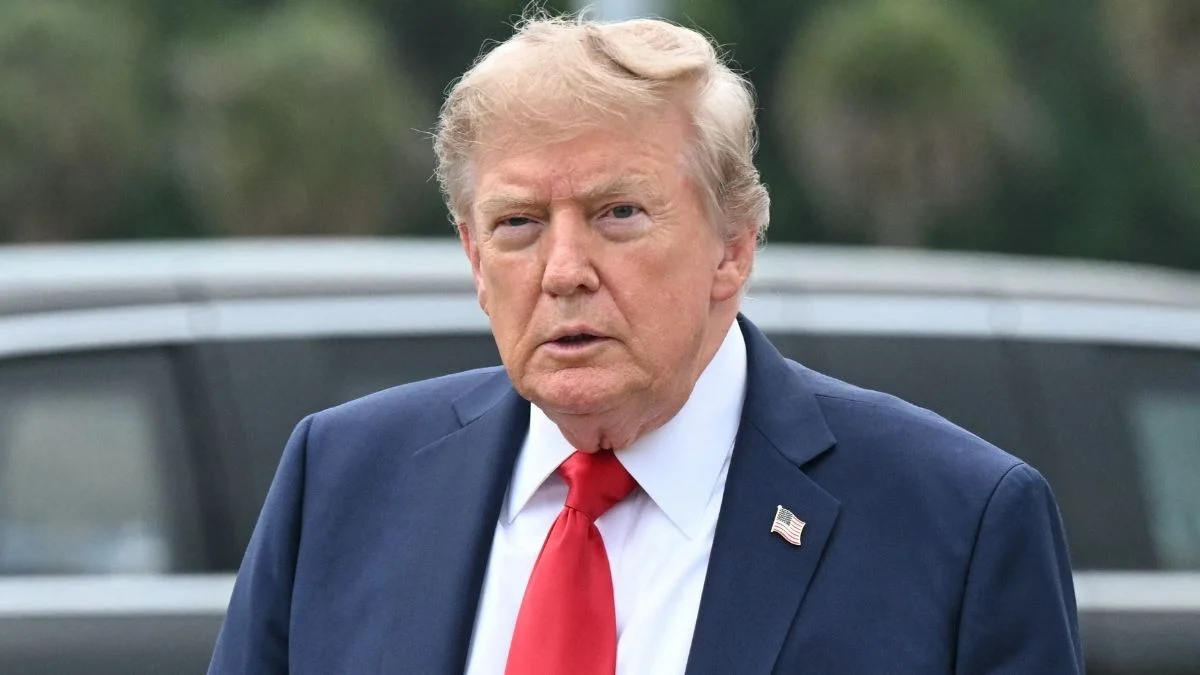
 Joko Widodo