
 Nana Wu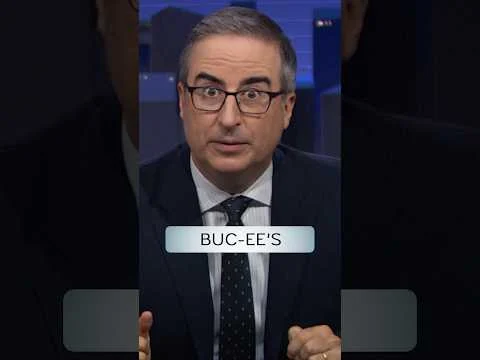
The satirical news program "Last Week Tonight with John Oliver" has turned its analytical lens onto the burgeoning trend of aggressive trademark enforcement, specifically focusing on the popular Texas-based gas station and convenience store chain, Buc-ee’s. The segment, which aired recently, highlighted a pattern of legal challenges initiated by Buc-ee’s against smaller businesses, often involving claims over the use of cartoon mascots and circular logos. This intervention by Oliver, known for his in-depth explorations of complex issues, has amplified public scrutiny of Buc-ee’s legal tactics and sparked a broader conversation about the implications of trademark law for independent businesses.
A Pattern of Legal Action Emerges
For over a year, Techdirt, a technology and policy news outlet, has been documenting Buc-ee’s legal activities, characterizing the company’s approach as "trademark bullying." This characterization stems from a series of lawsuits filed by Buc-ee’s against entities whose branding, according to Buc-ee’s, infringes upon its intellectual property rights. The core of these disputes often revolves around the use of animal or human characters in a circular logo format, a design element that Buc-ee’s asserts it has exclusive rights to protect within certain commercial spheres.
The "Last Week Tonight" segment provided a detailed, if often humorous, overview of these legal battles. Oliver’s team presented evidence of Buc-ee’s legal actions against a variety of businesses. Among the cited examples were:
- Super Fuels in Dallas: Buc-ee’s sued this Dallas-based gas station over its logo, which featured a brown dog sporting a red cape. Buc-ee’s contended that the dog mascot infringed upon their beaver mascot, Beaver the Beaver.
- Duckees Drive-Thru in Missouri: A drive-through liquor store named Duckees, featuring a cartoon duck in sunglasses as its mascot, also faced legal action from Buc-ee’s.
- Choke Canyon Travel Center: This Texas establishment was sued for using a cartoon alligator in a cowboy hat as its logo.
- Nut Huggers: An Oklahoma-based underwear company that utilized a squirrel mascot was also targeted by Buc-ee’s legal team.
Oliver’s critique, echoed by Techdirt’s prior reporting, posited that Buc-ee’s actions constitute "outright bullying." The program emphasized that many of the targeted businesses, lacking the substantial financial resources of Buc-ee’s—a company that operates over 50 large-format stores—were compelled to alter their branding to avoid costly litigation. This dynamic raises concerns about the power imbalance inherent in trademark disputes, where established corporations can leverage their legal might to stifle smaller competitors or even unrelated businesses.
Background: The Rise of Buc-ee’s and Trademark Strategy
Buc-ee’s has experienced a meteoric rise in popularity since its founding in 1982. Initially a single gas station in Lake Jackson, Texas, it has expanded into a regional powerhouse known for its expansive travel centers, clean restrooms, and a wide array of food and merchandise. The chain has cultivated a strong brand identity, with its beaver mascot, "Beaver the Beaver," becoming a recognizable symbol.
However, as the company has grown, so too has its approach to protecting its brand. Trademark law is designed to prevent consumer confusion about the source of goods or services. Businesses use trademarks to distinguish their offerings from those of their competitors. When a company believes another is using a confusingly similar mark, they have the right to take legal action.
The controversy surrounding Buc-ee’s lies not in the existence of trademark law itself, but in the perceived breadth and aggressiveness of its application. Critics argue that Buc-ee’s is extending its trademark claims beyond reasonable bounds, asserting rights over elements that are common in branding, such as cartoon animals and circular logos, even when the businesses are in entirely different industries or geographically distant. This approach can be seen as an attempt to preemptively eliminate any potential, however remote, for brand association or confusion, a strategy that can have a chilling effect on small business creativity and market entry.
Examining the Legal Arguments and Counterarguments
At the heart of Buc-ee’s legal actions is the concept of "likelihood of confusion." Trademark holders must demonstrate that a consumer is likely to believe that the goods or services offered by the defendant originate from, are sponsored by, or are affiliated with the trademark holder. The strength of a trademark, the similarity of the marks, the proximity of the goods or services, and the marketing channels used are all factors considered by courts.
Buc-ee’s appears to argue that any use of a cartoon animal in a circular logo, particularly if it bears any resemblance in style or color palette to its own branding, creates a likelihood of confusion. However, opponents and observers like John Oliver and Techdirt suggest that this interpretation is overly broad. For instance, suing an underwear company for using a squirrel mascot when Buc-ee’s uses a beaver mascot, even if both are in circular logos, may stretch the definition of "likelihood of confusion" thin, especially when the products are vastly different.
Furthermore, the concept of "parody" is often raised in defense against trademark infringement claims. Parody involves using a copyrighted or trademarked work for commentary or ridicule. While Buc-ee’s has not publicly commented on specific parody defenses, its aggressive stance suggests a low tolerance for any use of its branding elements, regardless of intent.
Broader Implications for Small Businesses and Intellectual Property
The attention drawn by John Oliver’s segment has significant implications for small businesses and the broader landscape of intellectual property law.
Chilling Effect on Innovation:
When large corporations aggressively pursue trademark claims against unrelated businesses, it can create a "chilling effect" on innovation and entrepreneurship. Small business owners may become hesitant to develop distinctive branding for fear of drawing the ire and legal might of a larger entity, even if their branding is original and unlikely to cause confusion. This can lead to a homogenization of brand identities and stifle creative expression in the marketplace.
Resource Imbalance:
As highlighted in the "Last Week Tonight" segment, the financial disparity between a company like Buc-ee’s and the small businesses it targets is substantial. Litigation is expensive and time-consuming. For a small business, even a successful defense can be financially crippling. This imbalance of power allows larger companies to essentially "bully" smaller ones into compliance, regardless of the actual strength of their legal claims.
Public Perception and Brand Reputation:
While Buc-ee’s has a loyal customer base, its aggressive legal tactics, now amplified by mainstream media, could negatively impact its public perception. The narrative of a large corporation suing small businesses over cartoon characters can be damaging to brand reputation, portraying the company as heavy-handed and unsympathetic. This can alienate potential customers and create a backlash.
The Role of Satire in Public Discourse:
John Oliver’s show often uses satire and humor to shed light on complex and important issues. By dedicating a segment to Buc-ee’s trademark practices, Oliver brought a significant legal trend to a wider audience. This type of platform can educate the public, encourage discussion, and potentially influence corporate behavior by highlighting the social and ethical dimensions of legal strategies.
Potential Future Developments
The "Last Week Tonight" segment has undoubtedly placed Buc-ee’s under a microscope. While the article’s author speculated that Buc-ee’s might sue Oliver and HBO, this would likely be a PR disaster for the company, further cementing its image as a trademark bully and generating more negative publicity. Such a lawsuit would also likely be viewed by many as a disproportionate response to a satirical critique.
Instead, the increased public awareness may lead to a few key outcomes:
- Increased Scrutiny of Buc-ee’s Legal Actions: Future trademark disputes involving Buc-ee’s may receive more media attention and public scrutiny. This could make the company more hesitant to pursue questionable claims.
- Potential for Regulatory or Legislative Review: If the trend of aggressive trademark enforcement by large companies continues unchecked, it could eventually draw the attention of regulatory bodies or lawmakers interested in protecting small businesses and fair competition.
- Shifting Corporate Strategy: Buc-ee’s may choose to reassess its trademark enforcement strategy in light of the negative publicity. This could involve a more nuanced approach to identifying and addressing alleged infringements, focusing on cases where there is a clear and demonstrable likelihood of consumer confusion.
The story of Buc-ee’s and its trademark battles, amplified by "Last Week Tonight," serves as a compelling case study in the complexities of intellectual property law and its impact on the business landscape. It underscores the ongoing tension between protecting brand identity and fostering a competitive environment where small businesses can thrive without fear of disproportionate legal challenges.




 Yuyun Lusiyani
 Joko Widodo
 Eva Lovia
 Pevita Pearce
 admin
admin
 Lina Irawan