
 Eva Lovia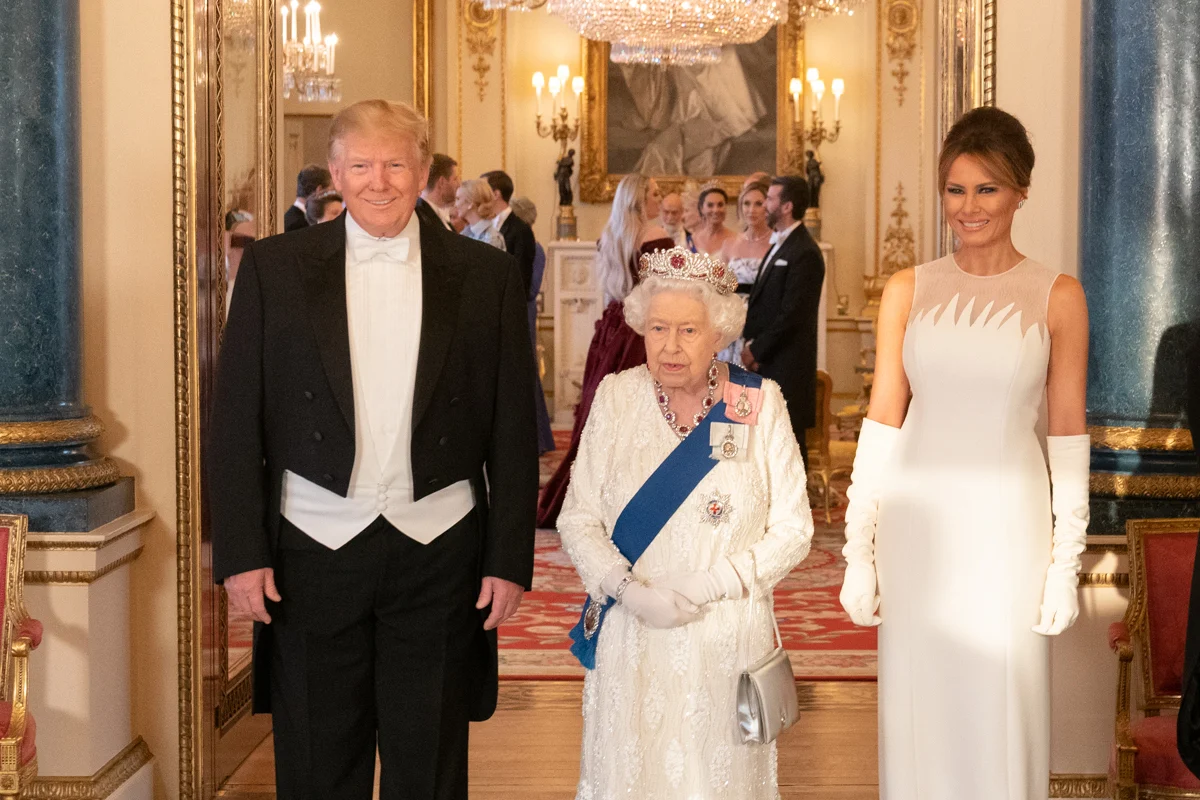
With King Charles III and Queen Camilla’s highly anticipated State Visit to the United States just weeks away, the final preparations are underway, promising a significant moment in Anglo-American relations. A central element of such diplomatic occasions, the State Banquet, presents a unique opportunity for Queen Camilla to adorn herself with a tiara, a tradition steeped in royal protocol and symbolic significance. However, the selection for this particular event is notably constrained, as two historically significant royal jewels, both exclusively reserved for queens, are currently unavailable for wear, having been placed on public display. This situation adds a layer of intrigue to the sartorial choices for the upcoming banquet, particularly given the past symbolic connections one of these unavailable tiaras holds with a previous US presidential visit.
A Tradition of Royal Sparkle on US Soil
State Visits by British monarchs to the United States have historically been occasions of considerable grandeur, marked by opulent ceremonies and the display of significant royal regalia. Queen Elizabeth II, a steadfast upholder of tradition, consistently wore a tiara during State Banquets hosted in Washington D.C. This practice not only underscored the formality and prestige of the occasion but also served as a visual representation of the enduring alliance between the United Kingdom and the United States. It is widely expected that Queen Camilla will follow this established precedent, with the State Banquet being the sole opportunity during the visit for such a resplendent display.
The Unavailability of Two Queenly Treasures
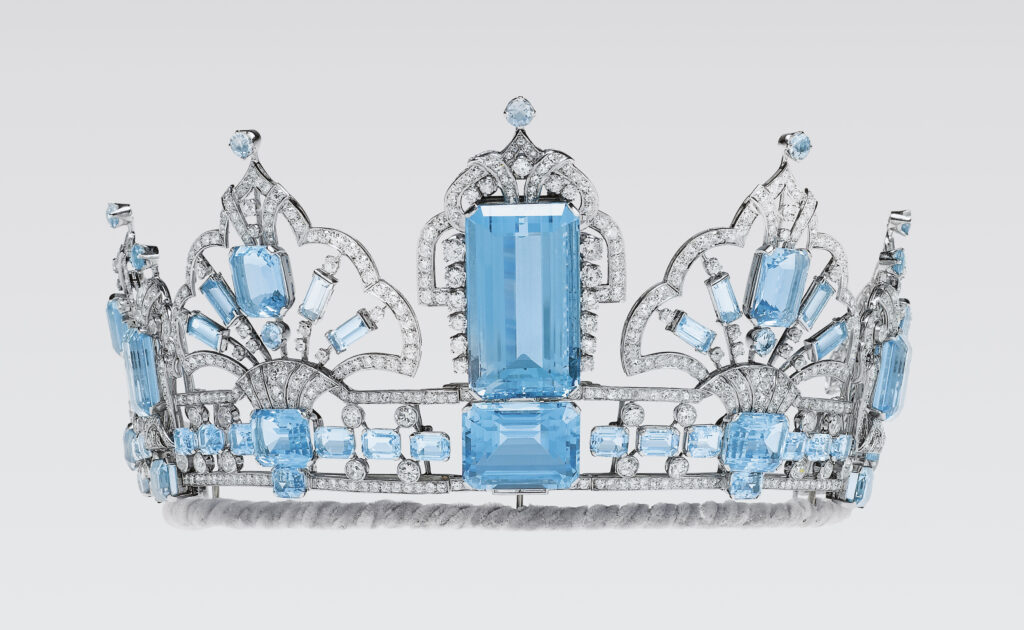
The choices for Queen Camilla’s tiara selection have been significantly narrowed due to the concurrent exhibition of two of the most prominent jewels in the royal collection designated solely for queens: the Brazilian Aquamarine Tiara and the Burmese Ruby Tiara. Both are currently featured in the newly opened exhibition, "Queen Elizabeth II: Her Life in Style," at The King’s Gallery in London. This exhibition, which offers a comprehensive look at the late monarch’s personal style and its reflection of historical eras and diplomatic engagements, has drawn significant public interest since its opening.
The Brazilian Aquamarine Tiara, a breathtaking piece known for its magnificent aquamarine stones set in platinum, has a unique provenance. It was commissioned in 1953, the same year Queen Elizabeth II was crowned, and crafted by the esteemed jewellers Garrard & Co. The stones themselves were a gift from the people of Brazil to Queen Elizabeth II on the occasion of her coronation, intended as a symbol of goodwill and the strong relationship between the two nations. While Queen Camilla has never previously worn this particular tiara, it has been exclusively worn by Queen Elizabeth II throughout her reign, making its absence from the State Banquet a notable point.
The Burmese Ruby Tiara, another crown jewel, holds particular historical resonance for this specific diplomatic context. This magnificent tiara, featuring a central row of large, cushion-shaped Burmese rubies surrounded by diamonds, was also created during Queen Elizabeth II’s reign. Its significance is amplified by its association with a pivotal moment in recent US-UK diplomatic history. Queen Elizabeth II wore the Burmese Ruby Tiara during the first State Visit of former President Donald Trump to the United Kingdom in June 2019. This visit, itself a high-profile event, saw extensive diplomatic engagement and a lavish State Banquet hosted by the Queen at Buckingham Palace. The choice of the Burmese Ruby Tiara for that occasion was interpreted by many as a deliberate statement of royal prestige and a clear nod to the historical weight of the alliance.
Past Choices and Symbolic Echoes
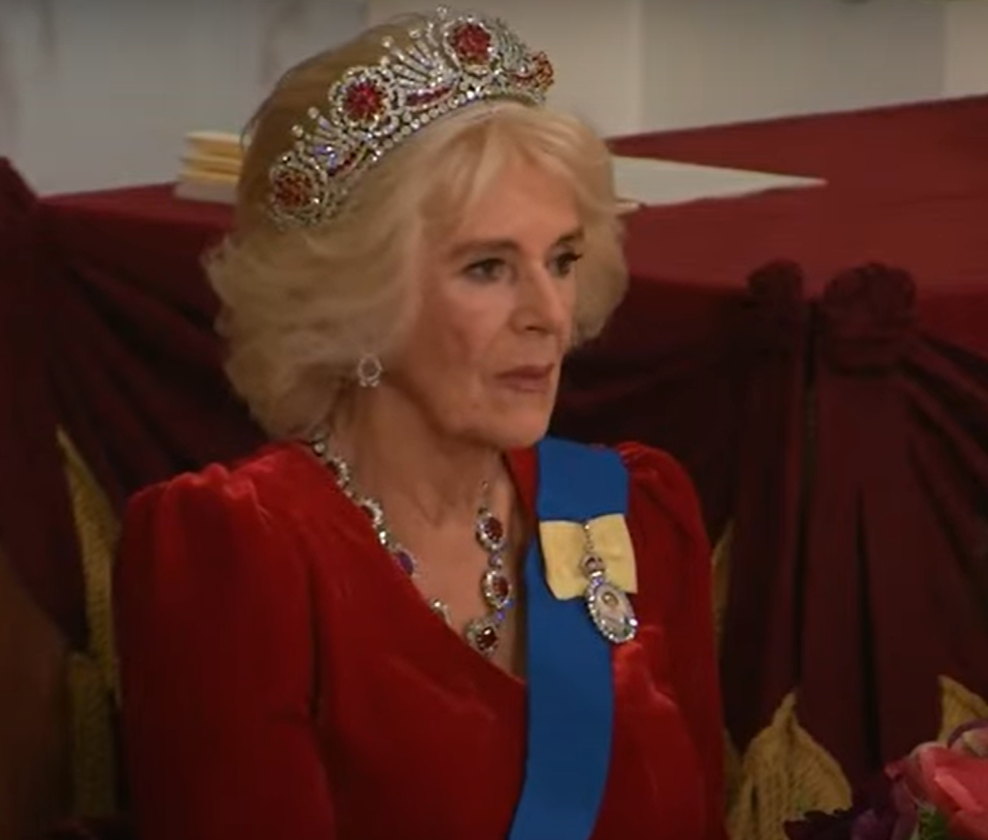
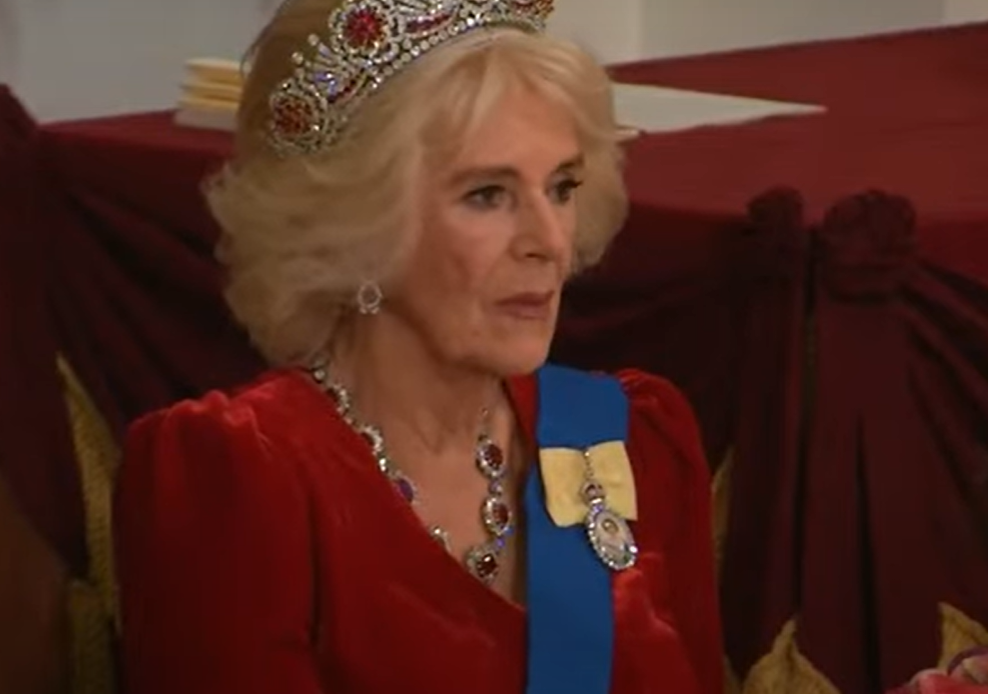
Queen Camilla has, in fact, worn the Burmese Ruby Tiara on occasion, demonstrating its place within the available pool of queen-exclusive jewels. Her previous wearings of this tiara suggest it is a favoured piece. However, its current exhibition means it will not grace the Queen’s head during the upcoming US State Visit.
The original article notes that during President Trump’s return visit in 2025, Queen Camilla opted for the sapphire diadem from the George VI suite of jewels. This piece, also a creation of Queen Elizabeth II’s reign, was ingeniously fashioned from a Belgian sapphire necklace, itself a treasured heirloom. The necklace had belonged to Princess Louise of Belgium and was later acquired by Queen Elizabeth II. The transformation of this necklace into a tiara for the Queen was a testament to royal ingenuity and the reinterpretation of existing treasures. Furthermore, this sapphire tiara carries its own historical links to the United States. Queen Elizabeth II wore it to a State Dinner during her own visit to the US in 1991, hosted by President George H.W. Bush. This act of wearing the tiara on American soil during a State Visit further solidifies its diplomatic symbolism and its connection to significant moments in US-UK relations.
Beyond these specific pieces, Queen Elizabeth II historically drew upon a distinguished collection for her visits to the United States. Other notable tiaras that have graced royal heads during such occasions include the Queen Alexandra Kokoshnik, a striking and towering creation predominantly featuring diamonds, and the universally recognised Girls of Great Britain and Ireland Tiara. The latter, an all-diamond diadem, was reportedly a particular favourite of Queen Elizabeth II, often seen as a symbol of her enduring reign and her dedication to the Commonwealth.
Queen Camilla has previously worn both the Queen Alexandra Kokoshnik and the Girls of Great Britain and Ireland tiaras, indicating their continued relevance and her personal affinity for them. Notably, she chose the Girls of Great Britain and Ireland tiara for one of the most significant events of King Charles III’s reign thus far: the dinner held in their honour following the Coronation. This choice underscored the tiara’s importance and its association with a new chapter for the monarchy. Similarly, the Queen Alexandra Kokoshnik tiara has been worn by Queen Camilla for State Banquets, highlighting its suitability for formal diplomatic engagements.
Potential Choices for the White House Banquet
Despite the unavailability of the Brazilian Aquamarine and Burmese Ruby tiaras, Queen Camilla retains a selection of exquisite options for the White House State Banquet. The inherent prestige and historical weight of the available tiaras ensure that her eventual choice will be a fitting symbol of British royalty and the enduring special relationship with the United States. The glittering State Banquet, scheduled for the end of the month, is poised to be a highlight of the visit, meticulously designed to strengthen diplomatic ties and foster continued cooperation between the two nations. The carefully curated jewels will undoubtedly contribute to the overall splendour and diplomatic significance of the occasion, serving as silent but potent emissaries of history, tradition, and enduring alliance.
Broader Implications and Diplomatic Significance
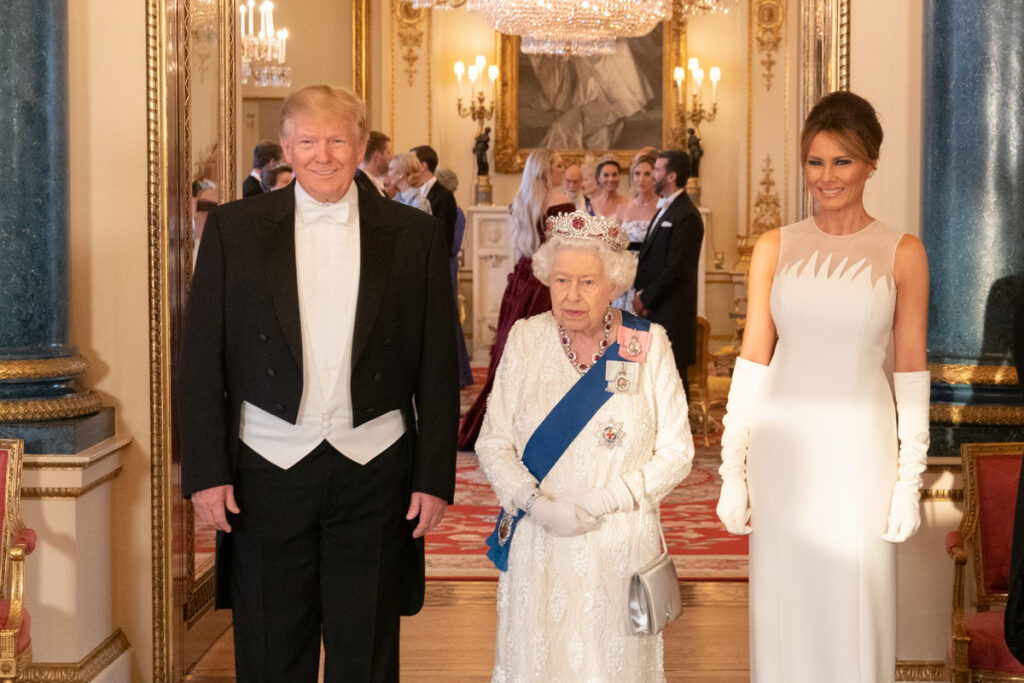
The choice of tiara for a State Banquet is more than just a fashion statement; it is a nuanced diplomatic tool. Each jewel carries its own history, provenance, and symbolic weight, which can be strategically employed to convey messages of continuity, respect, and shared values. The selection of a tiara during a State Visit to the US is particularly significant, given the unique historical relationship between the two nations and the public’s keen interest in the British monarchy.
The current exhibition of two major tiaras, while a boon for cultural institutions and the public’s access to these treasures, presents a logistical challenge for royal sartorial planning. This situation underscores the dynamic nature of royal traditions, where even long-standing protocols can be influenced by contemporary circumstances. The fact that Queen Camilla has a repertoire of other significant tiaras, including those with direct historical links to US visits, demonstrates the depth and richness of the Crown Jewels and the strategic thinking involved in their deployment.
The upcoming State Visit aims to reaffirm and strengthen the "special relationship" between the UK and the US. In an era of evolving global dynamics, such high-profile diplomatic exchanges are crucial for maintaining strong alliances. The presence of King Charles and Queen Camilla, accompanied by the full regalia of state occasions, including the potential for a tiara to be worn, serves as a powerful symbol of this enduring partnership. It communicates a message of stability, continuity, and shared commitment to democratic values and international cooperation. The detailed planning that goes into every aspect of a State Visit, from the guest list to the menu, and indeed to the choice of jewellery, reflects the meticulous attention paid to projecting a unified and respectful image on the world stage. The selection of the tiara, therefore, will be keenly observed as another subtle yet significant element in the broader narrative of this important diplomatic mission.



 Yuyun Lusiyani
 Joko Widodo
 Pevita Pearce
 admin
admin
 Lina Irawan