
 Jia Lissa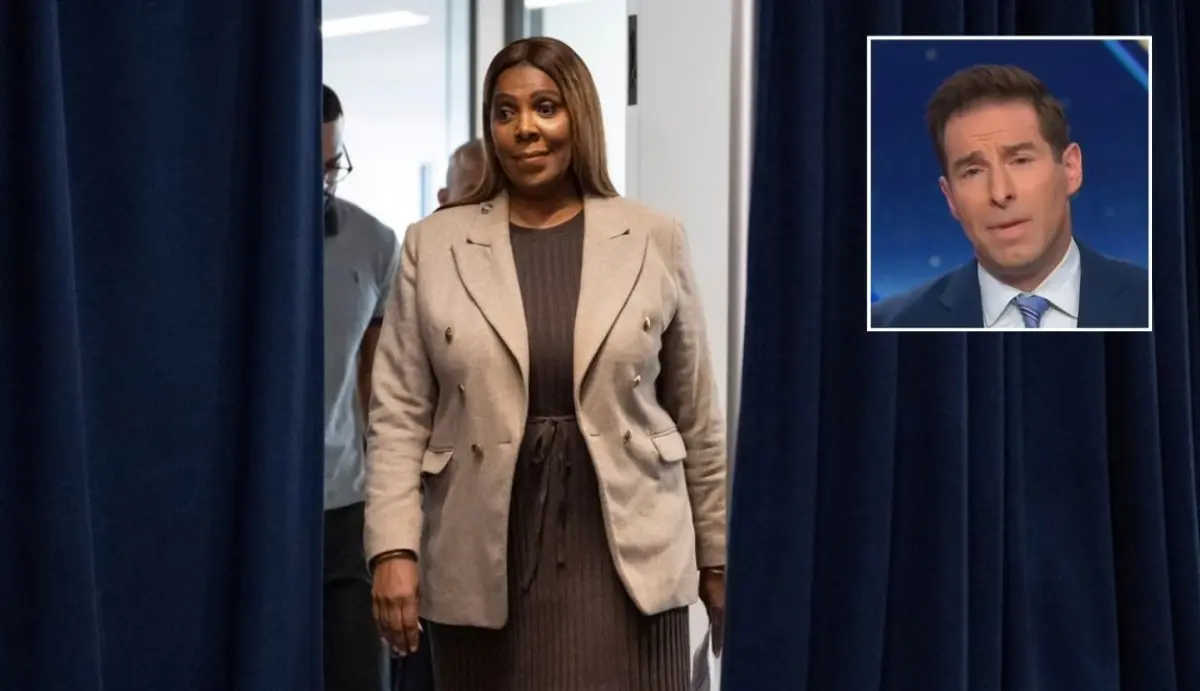
The appointment of New York Attorney General Letitia James as a special prosecutor in the high-profile "Cornell 7" sexual assault investigation has ignited a firestorm of legal criticism, centered on the fundamental principle of prosecutorial impartiality. Elie Honig, a former federal and state prosecutor and current CNN legal analyst, has emerged as one of the most vocal critics of the move, describing James as a "deeply problematic" choice for a case that has already polarized public opinion and drawn national scrutiny. The controversy stems from James’s public declarations of solidarity with the accuser before any formal criminal charges were filed or evidence was comprehensively reviewed by her office.
Governor Kathy Hochul’s decision to bypass the local district attorney and appoint James follows months of growing public outcry regarding the handling of an alleged October 2024 gang rape at a Cornell University fraternity house. While the move was intended to restore public confidence in the investigation, legal scholars and practitioners warn that James’s prior public statements may have the opposite effect, potentially tainting the judicial process and providing the defense with grounds for future legal challenges.
The Cornell 7 Case: Background and Allegations
The case, which has become known in the media as the "Cornell 7," involves allegations of a brutal sexual assault occurring in the autumn of 2024. The accuser, identified in legal filings as Jane Doe, alleges she was the victim of a gang rape involving seven members of a prominent Cornell University fraternity. The incident reportedly took place during a social event at the fraternity house, an environment that has since come under intense scrutiny for its culture and safety protocols.
For months, the case remained largely out of the criminal spotlight, as the Tompkins County District Attorney’s Office, led by Matthew Van Houten, faced criticism for what many observers described as a "slapdash" and "bumbling" initial inquiry. Despite the gravity of the accusations, no criminal charges were brought against the seven men in the immediate aftermath of the report. This perceived inaction prompted Jane Doe to file a civil lawsuit against the fraternity brothers, a move that brought the details of the incident into the public record and sparked a renewed demand for criminal accountability.
As the civil litigation progressed, a timeline emerged through investigative reporting, including a detailed deep dive by the New York Times, which suggested a series of systemic failures in how the initial report was handled by both the university and local law enforcement. The resulting political pressure eventually forced Governor Hochul to intervene, exercising her authority under New York Executive Law to appoint a special prosecutor.
A Timeline of the Controversy
To understand the current legal friction, it is necessary to examine the sequence of events that led to the appointment of the Attorney General:
- October 2024: The alleged incident occurs at a Cornell University fraternity house.
- Late 2024 – Mid 2025: Local law enforcement and the Tompkins County District Attorney’s Office conduct an initial investigation. No criminal charges are filed, leading to accusations of procedural negligence.
- Early 2026: Jane Doe files a civil lawsuit against the seven men, alleging gang rape. The lawsuit gains national media attention.
- June 2026: Letitia James, acting in her capacity as Attorney General but before being appointed to the case, posts on social media expressing solidarity with Jane Doe, referring to her as a "survivor" and stating, "We stand with you."
- Friday, October 2026: Governor Kathy Hochul officially removes District Attorney Matthew Van Houten from the case and appoints Letitia James as the special prosecutor, citing a need to restore faith in the justice system.
- October 2026: Elie Honig publishes a scathing critique in New York magazine, arguing that James has already "prejudged" the case, thereby compromising the integrity of the prosecution.
The Legal Argument Against the Appointment
The core of the criticism leveled by Elie Honig and other legal experts is the requirement that a prosecutor must remain an objective seeker of justice, rather than an advocate for one side, during the investigative phase. In his critique, Honig emphasized that impartiality is the "single most indispensable trait" for any prosecutor, particularly in cases involving high levels of emotional and political tension.
Honig’s primary contention is that James’s use of the word "survivor" in her social media outreach constitutes a legal conclusion. In a sexual assault case where the central dispute is often whether the acts were consensual or non-consensual, labeling the accuser a "survivor" before an investigation is complete suggests that the prosecutor has already decided a crime was committed.
"James drew her conclusion and announced it to the world before she had access to an iota of evidence," Honig wrote. He argued that this creates, at the very least, a "corrosive" appearance of bias that could undermine public confidence in the eventual outcome, regardless of whether the evidence supports a conviction or an exoneration. To illustrate the point, Honig suggested a hypothetical reversal: if a prosecutor had posted a message of solidarity with the accused men, calling their ordeal "horrific" and promising to stand with them before reviewing the file, the outcry for their removal would be instantaneous and universal.

The Failure of Local Prosecution and the Search for Alternatives
The appointment of a special prosecutor is typically a measure of last resort, used when a local district attorney has a conflict of interest or has demonstrated a clear inability to handle a case competently. Governor Hochul defended her choice by pointing to the "undercut faith" in the Tompkins County DA’s Office. Matthew Van Houten has been widely criticized for failing to conduct an in-depth investigation when the claims were first reported, a failure that Hochul suggested required the intervention of the state’s highest legal officer.
However, Honig and other analysts argue that while Van Houten’s removal may have been justified, James was not the only—nor the best—choice for the role. Honig pointed to a deep pool of qualified, non-political legal figures who could have been tapped to lead the investigation. Among the names suggested were:
- Mary Jo White: Former U.S. Attorney for the Southern District of New York, known for her non-partisan approach to high-stakes litigation.
- Darcel Clark: The current Bronx District Attorney, who has extensive experience in handling complex criminal matters within the New York state system.
- Loretta Lynch: Former U.S. Attorney General, whose career has been defined by civil rights and high-level criminal prosecutions.
- Barbara Jones: A retired federal judge with a reputation for meticulous impartiality.
The argument is that by choosing James—a politician who has frequently been accused of using her office for political messaging—the Governor has traded a "clueless" prosecutor for one with a perceived "agenda."
Official Responses and Public Reaction
During a press conference held on the day of her appointment, Letitia James remained largely silent on the issue of her previous social media comments. When pressed by reporters regarding the potential for bias, she offered a terse dismissal: "I will not comment on a Facebook post."
Governor Hochul, standing alongside James, focused her remarks on the necessity of a rigorous investigation that the local authorities failed to provide. "The victims of sexual assault deserve to know that the system works for them, not against them," Hochul stated. The Governor’s office has maintained that James’s experience and the resources of the Attorney General’s office make her the most capable candidate to handle a case of this magnitude.
Conversely, representatives for some of the accused men have already signaled that they may use the Attorney General’s public statements as a basis for legal motions. Defense attorneys often argue that "prosecutorial misconduct" or "prejudicial pretrial publicity" can prevent a defendant from receiving a fair trial. If James’s office moves forward with indictments, the defense is expected to argue that the lead prosecutor’s public "solidarity" with the accuser makes an impartial grand jury or trial jury nearly impossible to seat.
Broader Implications for the Justice System
The "Cornell 7" case sits at the intersection of several volatile social and legal issues: the "Believe Women" movement, the rights of the accused, and the role of politics in the prosecutor’s office. The enrichment of this case with a special prosecutor from the state level elevates it from a local criminal matter to a state-wide litmus test for the New York legal system.
If the investigation led by James results in convictions, critics may argue they were the product of a predetermined narrative. If it results in no charges or acquittals, the "survivor" community may feel betrayed by a prosecutor who promised solidarity but could not deliver a legal victory. This "no-win" scenario is exactly what legal experts like Honig warn against when impartiality is sacrificed for political optics.
Furthermore, the case highlights the growing influence of social media on legal proceedings. In an era where public officials are expected to weigh in on every social issue in real-time, the boundary between "public servant" and "objective prosecutor" is becoming increasingly blurred. The Cornell case may serve as a definitive precedent for whether a prosecutor’s digital footprint can be used to disqualify them from high-profile criminal matters.
As the Attorney General’s office begins its review of the evidence—including forensic reports, witness statements, and electronic communications—the eyes of the legal community remain fixed on the procedural integrity of the case. The ultimate challenge for Letitia James will be to prove that she can set aside her stated "solidarity" and conduct an investigation based strictly on the facts and the law, a task that her critics believe she has already made unnecessarily difficult.


 Yuyun Lusiyani
 Joko Widodo
 Eva Lovia
 Pevita Pearce
 admin
admin