
 Lina Irawan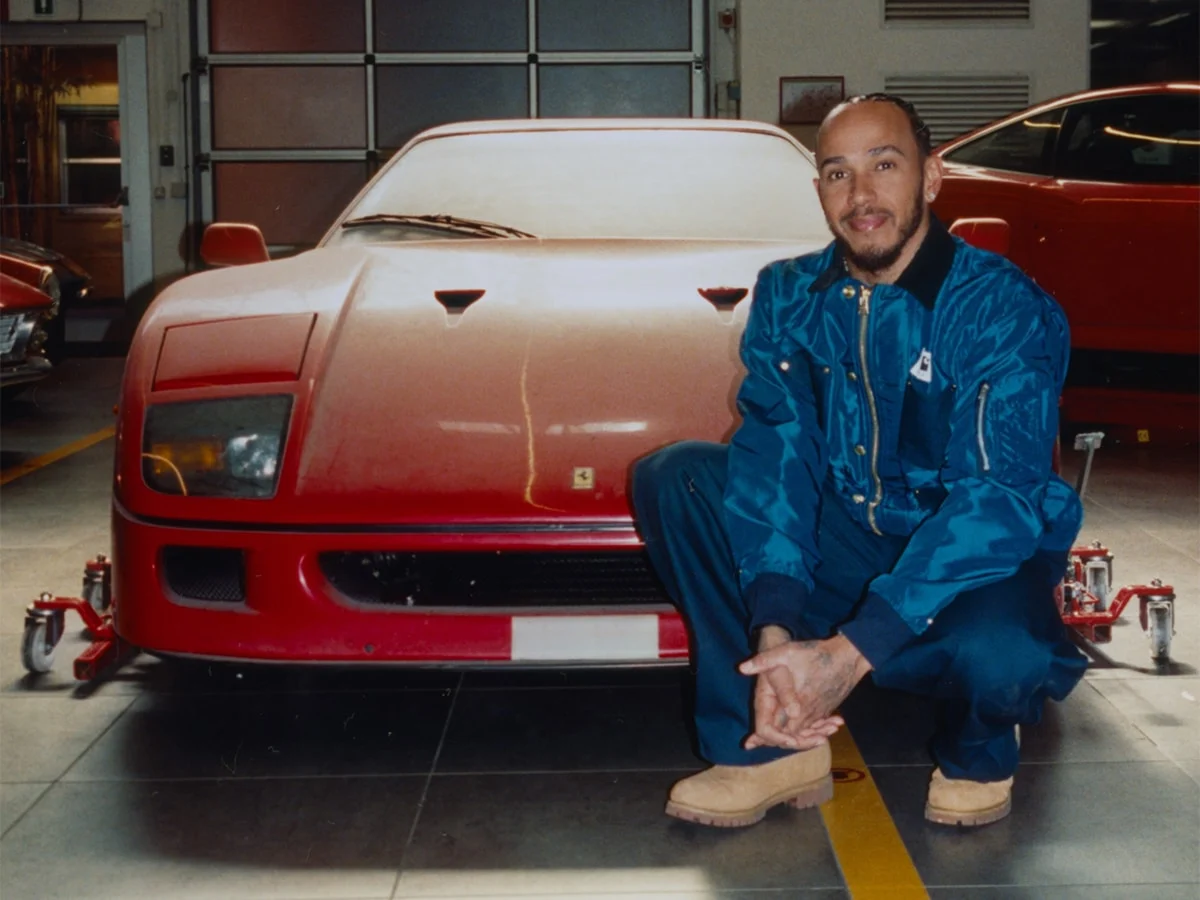
Lewis Hamilton, the seven-time Formula 1 World Champion, has officially revealed his latest automotive acquisition, a meticulously restored Ferrari F40 that was discovered after sitting idle for over thirty years. The unveiling, shared across the driver’s digital platforms, marks a significant personal and professional milestone as Hamilton integrates into the Scuderia Ferrari culture ahead of his highly anticipated competitive debut with the Italian marque. The vehicle, described as a "barn-find," underwent an exhaustive, multi-million-dollar restoration at the factory’s renowned Ferrari Classiche division in Maranello to return it to a condition that reportedly exceeds its original factory specifications.
The acquisition of the F40 is more than a mere addition to a high-value collection; it represents the fulfillment of a lifelong ambition for the British driver. Hamilton noted that the Ferrari F40 had been his "dream car" since childhood, a sentiment that influenced his decision to secure this specific example. The vehicle had remained off the road for more than three decades, layered in dust and preserved in a state of stasis before Hamilton intervened to "bring her home." The project underscores the deepening relationship between Hamilton and the Ferrari brand, a partnership that extends beyond the Formula 1 circuit and into the realm of automotive heritage and design.
The Restoration Journey and the Ferrari Classiche Process
To ensure the F40 maintained its historical integrity and maximized its long-term value, Hamilton commissioned the Ferrari Classiche department to oversee the restoration. Established in 2006, Ferrari Classiche is a dedicated workshop within the Maranello factory providing restoration and maintenance services, technical assistance, and Certificates of Authenticity to owners of classic Ferraris. For a vehicle of the F40’s stature, this process is rigorous and relies on the original factory blueprints and assembly sheets archived by the company.
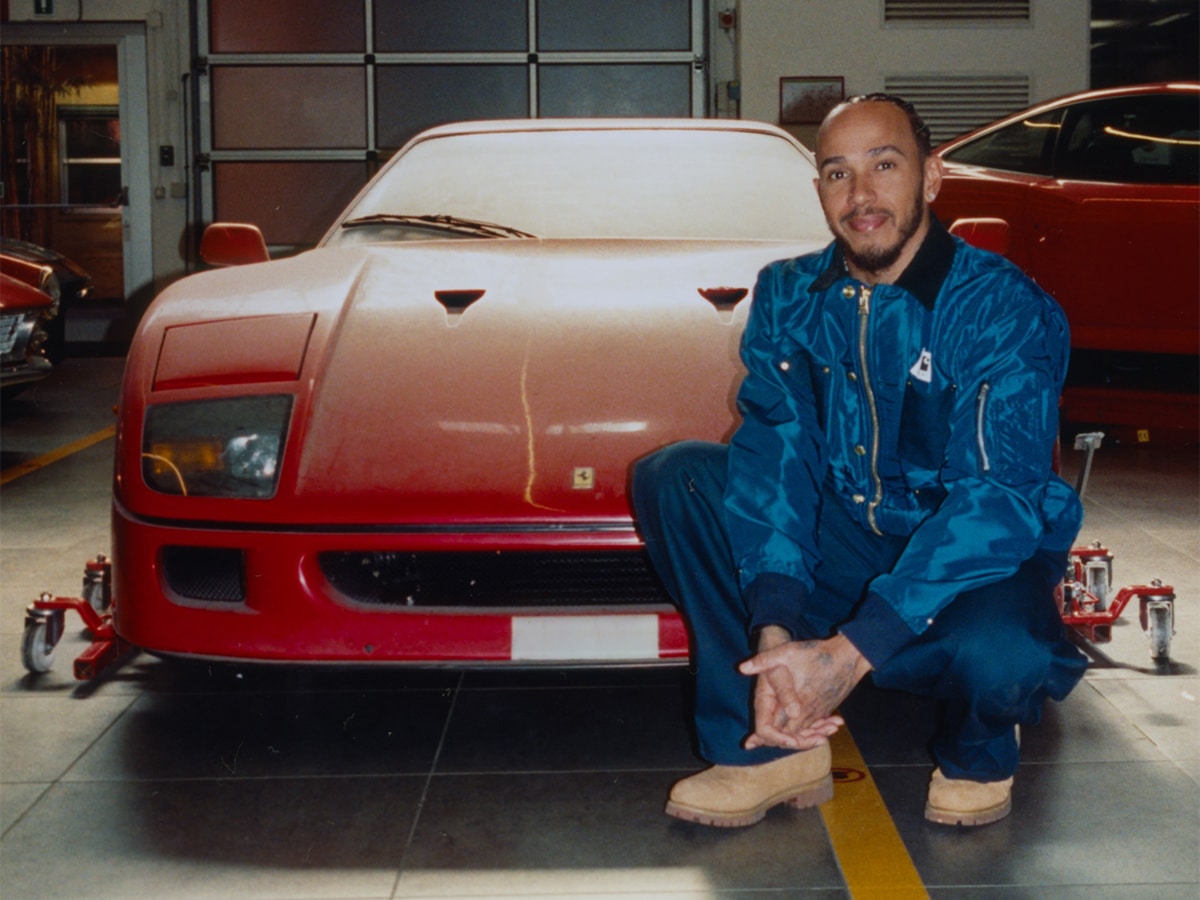
The restoration process for Hamilton’s F40 involved a complete "teardown" and inspection of every component. Central to the Ferrari Classiche philosophy is the verification of "matching numbers," ensuring that the engine, gearbox, chassis, and bodywork are the original units fitted to the car when it first left the assembly line. The process begins with a technical analysis where engineers verify the authenticity of the mechanical systems and the composition of the bodywork—which in the F40’s case, consists of a complex mix of Kevlar, carbon fiber, and aluminum.
Upon completion of the mechanical and aesthetic overhaul, the vehicle is eligible for the "Red Book" (Certificato di Autenticità). This document, signed by Piero Ferrari, the son of founder Enzo Ferrari, serves as the ultimate proof of a vehicle’s provenance. For Hamilton, whose F40 sat for thirty years, the restoration likely required a complete overhaul of the fuel bladders—a known maintenance requirement for the F40 every ten years—and a total refresh of the 2.9-liter twin-turbocharged V8 engine.
Historical Context of the Ferrari F40
The Ferrari F40 holds a unique position in automotive history as the final car personally approved by Enzo Ferrari before his death in 1988. Launched in 1987 to celebrate the company’s 40th anniversary, the F40 was designed with a singular focus: performance. It was the first production car to break the 200-mph barrier, a feat achieved through a combination of its 471-horsepower engine and a lightweight design that prioritized speed over driver comfort.
The F40 was famously "raw," lacking power steering, power brakes, and electronic driver aids. This visceral driving experience is what has made the model a staple of high-end collections and a benchmark for supercars that followed. By acquiring and restoring a barn-find example, Hamilton has preserved a piece of this legacy. Industry analysts suggest that the cost of such a restoration, combined with the initial purchase price of a low-mileage or "undiscovered" F40, places the total value of the project in the eight-figure range. Recent auction data from houses such as RM Sotheby’s shows that Classiche-certified F40s have seen their market values skyrocket, with some examples fetching over $8 million USD, and unique provenance cars like Hamilton’s potentially exceeding $10 million USD.

The F44 Concept: Hamilton’s Vision for a Successor
The restoration of the F40 coincides with Hamilton’s public expressions of interest in Ferrari’s future road car development. During the 2025 Australian Grand Prix, Hamilton proposed a concept he termed the "F44," a tribute to the F40 that incorporates his iconic racing number. Hamilton’s vision for the F44 includes a return to mechanical simplicity, specifically advocating for the inclusion of a traditional manual transmission—a feature Ferrari largely phased out of its production line over a decade ago.
Hamilton’s desire to influence Ferrari’s road car design highlights the strategic nature of his move to the Italian team. Unlike his previous tenures, his relationship with Ferrari appears to involve a deeper integration into the brand’s identity. While Ferrari has historically focused on dual-clutch transmissions for their superior shift speeds, the company recently acknowledged the demand for "analog" experiences with the release of the Ferrari 12Cilindri Manuale. Hamilton’s advocacy for a manual-shift successor to the F40 aligns with a growing trend among collectors who value driver engagement over laboratory-tested lap times.
Chronology of Hamilton’s Ferrari Integration
The timeline of Hamilton’s transition to Ferrari reflects a calculated effort to build rapport with the "Tifosi" (Ferrari fans) and the factory workforce:
- Early 2024: The announcement of Lewis Hamilton’s departure from Mercedes-AMG PETRONAS to join Scuderia Ferrari for the 2025 season.
- Late 2024: Hamilton begins making frequent visits to Maranello. During his first official day, he is photographed with a pristine F40, signaling his affinity for the brand’s history.
- Early 2025: Discovery of the barn-find F40. The vehicle is transported to the Ferrari Classiche department for evaluation.
- Mid-2025: Restoration begins. Engineers focus on rectifying three decades of neglect, ensuring the carbon-Kevlar weave and the iconic Rosso Corsa paint meet factory standards.
- Late 2025/Early 2026: Hamilton officially unveils the completed restoration, sharing images of the "dust-to-glory" transformation on social media.
Financial and Market Implications
The vintage Ferrari market remains one of the most robust sectors of the luxury investment world. The "Hamilton effect" is expected to further buoy the values of F40 models globally. When a high-profile figure—particularly a driver of Hamilton’s caliber—associates themselves with a specific vintage model, it often leads to a "halo effect" that increases demand among ultra-high-net-worth collectors.
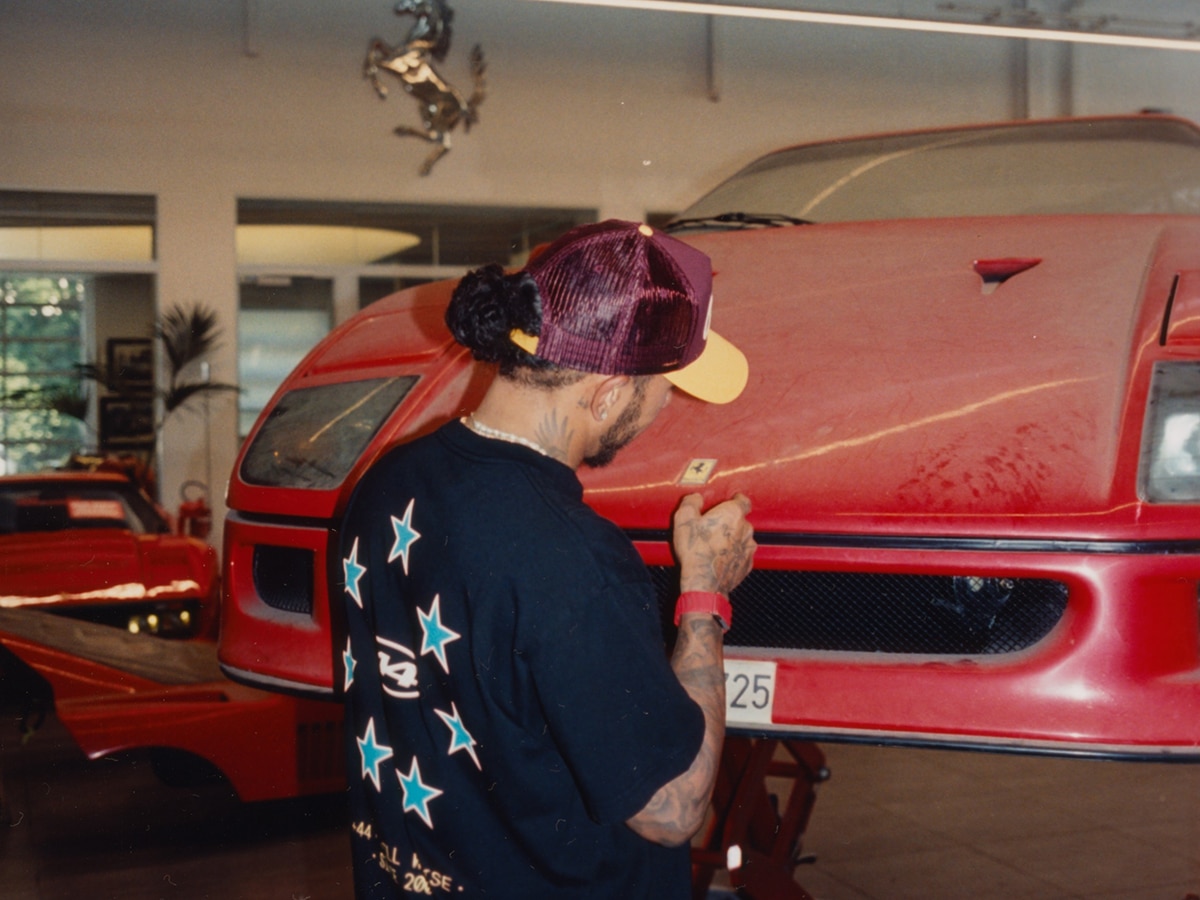
The decision to use the factory restoration service rather than a private specialist is a tactical move. In the world of high-end car collecting, a factory-certified restoration adds a premium to the vehicle’s value that often exceeds the cost of the work itself. For Hamilton, whose car collection already includes rarities like the McLaren P1, the Ferrari LaFerrari, and a custom Pagani Zonda, the F40 serves as a cornerstone of automotive purity.
Broader Impact on the Ferrari Brand
Hamilton’s move to Ferrari and his subsequent embrace of the brand’s heritage serve as a powerful marketing tool for the Italian manufacturer. By showcasing the Ferrari Classiche process, Hamilton highlights the brand’s commitment to longevity and the preservation of its icons. This is particularly relevant as the automotive industry shifts toward electrification; by championing the twin-turbo V8 of the F40, Hamilton reinforces the emotional and historical value of internal combustion engines.
Furthermore, Hamilton’s off-track activities, including his lifestyle deals with brands like Lululemon and his partnership with Richard Mille—who provides timepieces valued at over $1 million AUD as part of the Ferrari deal—position him as a global ambassador for the "Ferrari Lifestyle." This multifaceted role suggests that Hamilton’s impact on Ferrari will be measured not only by his performance on the starting grid but also by his ability to elevate the brand’s prestige in the luxury and collector markets.
As Hamilton prepares for the upcoming Formula 1 seasons, his restored F40 stands as a symbol of his commitment to the Maranello ethos. While more details regarding the technical specifics of the "F44" project and the F40 restoration are expected to be released in the coming months, the current unveiling has already solidified Hamilton’s status as a premier custodian of Ferrari history. The project confirms that for the seven-time champion, the move to Ferrari is as much about honoring the past as it is about chasing an eighth world title.


 Joko Widodo
 admin
admin
 Jia Lissa
 Yuyun Lusiyani
 Pevita Pearce