
 Amara Maple
Last month, CorpWatch, a non-profit corporate watchdog organization, released a comprehensive report titled "MAGA Inc.: A Guide to Trump’s World of Crypto Czars, Tech Titans and Prison Profiteers." The report offers an in-depth examination of the corporate entities and individuals that have significantly funded and benefited from the "Make America Great Again" (MAGA) movement spearheaded by former President Donald Trump. According to CorpWatch, these actors represent a network of cronies who have leveraged political influence for substantial financial gain, often at the expense of public welfare and environmental integrity.
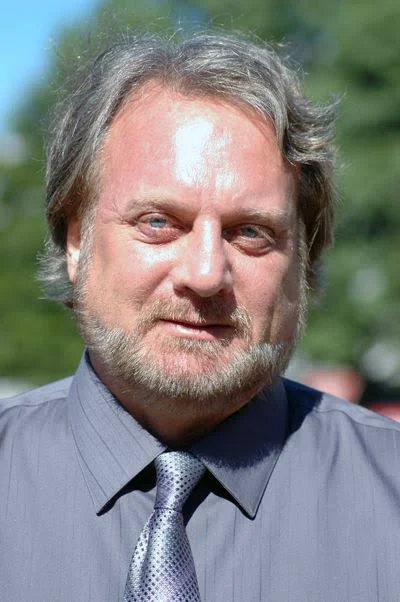
Pratap Chatterjee, executive director of CorpWatch, starkly articulated the report’s central thesis: "Trump has promised his followers that he can build them a stairway to heaven if they vote for him and his agenda. But the truth of the matter is that we are all being taken for a ride by his cronies – the Crypto Czars, Tech Titans and Prison Profiteers." This statement encapsulates the report’s critical assessment of the economic promises made by the MAGA movement against the backdrop of specific corporate dealings.
CorpWatch: A Legacy of Corporate Scrutiny
CorpWatch’s latest report is consistent with its two-decade-long history of exposing corporate profiteering and accountability failures. The organization has previously published influential reports and books such as "Afghanistan Inc.," "Drone Inc.," "Iraq Inc.," "Halliburton’s Army," and "Verax," which shed light on companies that financially gained from the War on Terror and other geopolitical conflicts. Their work typically involves meticulous research into corporate structures, political donations, lobbying efforts, and the societal and environmental impacts of corporate operations. "MAGA Inc." extends this investigative tradition by scrutinizing the contemporary landscape of political-corporate symbiosis within the context of a specific political movement.
The Crypto Czars: Doubling Fortunes in Digital Currencies
The report identifies a cadre of "Crypto Czars," primarily digital currency companies like Tether and World Liberty Financial, as key beneficiaries and enablers within Trump’s financial orbit. These entities are alleged to have played a significant role in "doubling Trump’s fortune." The rise of cryptocurrencies has presented new avenues for wealth accumulation and, critics argue, for obscuring financial flows due to the decentralized and often less regulated nature of the market.
Tether, a stablecoin whose value is pegged to the U.S. dollar, has been a dominant force in the crypto market, often facilitating large-scale transactions and providing liquidity. While the report doesn’t detail the specific mechanisms through which these companies allegedly augmented Trump’s wealth, the implication is that investments, partnerships, or indirect financial relationships within the burgeoning and often opaque digital currency ecosystem have yielded considerable profits. The allure of quick riches and innovative financial instruments in the crypto space has attracted a wide array of investors, including high-profile figures, making it a fertile ground for financial maneuvering and potential political influence. The intersection of politics and cryptocurrency remains a contentious area, with ongoing debates about regulation, transparency, and its potential for both legitimate innovation and illicit activities.
Tech Titans and the Data Center "Gold Rush"
A significant portion of the CorpWatch report focuses on the "Tech Titans"—companies like Oracle, OpenAI, and Palantir—who are depicted as backing Trump’s vision for a "new gold rush" driven by the construction of extensive new data centers. This technological expansion, critical for the exponential growth of artificial intelligence and cloud computing, is portrayed as being deeply intertwined with specific political and corporate interests.
The report highlights a triumvirate of influential figures central to this nexus:
- Howard Lutnick: Head of Cantor Fitzgerald, a Wall Street firm, and a close confidant of Trump, Lutnick was appointed Secretary of Commerce. He is credited with bringing to Trump’s attention the vast opportunities within the tech industry, particularly data centers. Cantor Fitzgerald has notably invested heavily in this sector.
- Kelcy Warren: CEO of Energy Transfer, a major gas pipeline company. Energy Transfer is described as a staunch Trump supporter and a crucial provider of the "uninterrupted power" (via natural gas) necessary to fuel these energy-intensive data centers.
- Larry Ellison: Founder of Oracle, a database giant, Ellison is depicted as a visionary with ambitions extending to pervasive surveillance systems, allegedly aiming to "build a surveillance company that will follow everybody all the time." His long-standing expertise in databases aligns with the data-driven future envisioned by the tech titans.
According to Chatterjee, these individuals "convinced Trump that this was going to be the next golden era," promising to "make America richer and at the same time make America great again" through technological advancements. This alliance solidified rapidly, with Trump reportedly meeting with the founder of Oracle and the CEO of OpenAI within 24 hours of his inauguration to promote this vision of wealth generation through data centers. This move was particularly notable given that many tech companies had initially opposed Trump’s first presidential campaign. The promise of abundant natural gas from companies like Energy Transfer was a critical component in securing this alliance, addressing the insatiable power demands of modern data infrastructure.
Environmental Costs and Community Opposition to Data Centers
The rapid expansion of data centers, while championed by some as an economic engine, comes with significant environmental and social costs, as highlighted by CorpWatch. Oriane Burke, a researcher at CorpWatch, condemned the trend: "Making America Great Again should mean protecting the health and well-being of local communities, not sacrificing their air, water, and land. Instead Energy Transfer’s aggressive expansion of gas pipelines and gutting of environmental regulations for datacenter profits is doing the exact opposite."
Data centers are notorious for their massive energy consumption and significant water usage for cooling, contributing to carbon emissions and straining local resources. Energy Transfer’s aggressive pipeline development, often facing intense local opposition, facilitates this expansion by ensuring a steady supply of natural gas. Critics argue that environmental regulations are being relaxed or circumvented to expedite these projects, prioritizing corporate profits over ecological preservation and community health.
Public sentiment strongly reflects these concerns. A recent Gallup poll cited in the report indicates that seven out of ten Americans oppose data centers in their communities. This widespread opposition is not partisan; the report notes that even many Republicans are against these developments. Local communities across the country are responding by enacting bans and restrictions on data center construction, driven by fears about environmental degradation, increased utility costs, and the perception that AI technologies could displace jobs and harm economic well-being. The political class, however, appears largely unresponsive, leading Chatterjee to express puzzlement: "Why the Democratic Party doesn’t want to capitalize on this is a mystery to me." This suggests a systemic issue where political parties, despite public outcry, remain aligned with corporate interests.
The Prison Profiteers: Exploitation in the Detention Industrial Complex
The third pillar of the "MAGA Inc." report scrutinizes the "Prison Profiteers"—companies that profit handsomely from the incarceration and deportation of individuals, particularly migrants. The report names CoreCivic, GEO Group, and CSI Aviation as the primary actors in this sector.
Aya Dardari, another CorpWatch researcher, condemned their practices: "These Prison Profiteers are making a windfall off of ICE’s reign of terror on migrants. They are exploiting the most vulnerable working class people – the backbone of America – and subjecting them to appalling conditions to increase their bottom line. But communities from around the country are responding in solidarity with a message of their own: humanity is not up for sale."
- CSI Aviation: This air charter company, owned by Trump supporter Allen Weh, contracts with ICE and the U.S. government to transport and deport individuals. CorpWatch alleges that CSI Aviation has become one of the largest recipients of federal funds since Trump’s election. Alarmingly, the report details how the company has obscured flight tracking by covering plane tail numbers, rendering the transport of prisoners largely invisible to public scrutiny—a significant change from the Bush administration era when activists could track such movements. This lack of transparency severely hampers oversight and accountability.
- CoreCivic and GEO Group: These two companies dominate the private prison market, collectively holding an estimated 80% market share. They operate massive detention centers, such as Delaney Hall in New Jersey. Their business model involves receiving a daily fee for each detainee, creating a financial incentive for higher incarceration rates. The report alleges that conditions in these facilities are often substandard, with inadequate food and healthcare provisions, prioritizing profit over humanitarian concerns.
While the expansion of the prison industrial complex, including private facilities, saw significant growth under both Obama and Biden administrations, Trump is accused of uniquely leveraging this existing infrastructure for his political agenda. He utilized these expanded private prisons to fulfill his promise of mass deportations, with 140,000 people deported last year alone. The absence of political oversight in private prisons, compared to public facilities, allowed the Trump administration to operate with greater impunity. Local opposition, exemplified by the Mayor of Newark, the Governor of New Jersey, and Senator Andy Kim against the expansion of facilities like Delaney Hall, was reportedly stonewalled, underscoring the lack of accountability faced by these private entities.
Chatterjee suggests that while Trump may not directly profit financially from the private prison industry, he benefits politically. His rhetoric on immigration and his aggressive deportation policies resonate with his political base, providing a convenient scapegoat and diverting attention from his own alleged corruption. The report highlights a stark irony: Trump, whose businesses have historically relied on migrant labor, simultaneously fuels an industry that exploits and deports those same populations for political gain.
The Broader Landscape of Public Corruption in the United States
CorpWatch’s report extends beyond specific corporate malfeasance to address the systemic issue of public corruption in the United States. Chatterjee, in an interview with Corporate Crime Reporter, acknowledged that corruption is not unique to Trump but is a bipartisan issue, with money flowing and favors exchanged across both Democratic and Republican parties. However, he noted that Trump’s personal profiteering while in office is "unusual in the United States, but not in other countries."
Chatterjee contends that both parties often "turn a blind eye to corruption because they engage in it themselves." This widespread complicity creates a climate where corporate crime, despite inflicting "far more damage on society than all street crime combined," often fails to capture public attention in the same way. The average American, preoccupied with daily struggles like mortgages, gas bills, and groceries, may not fully grasp the intricacies or long-term impacts of corporate corruption. He draws historical parallels to figures like Lyndon Johnson and his ties to Brown & Root, illustrating a long-standing pattern of political financing and influence.
Despite the pervasive nature of corruption, Chatterjee notes a peculiar phenomenon regarding Trump’s public support. "If you look at the last three Presidential elections, the numbers of votes that Trump received increased each time," he observed. "By the last election, Trump was getting more votes than Obama ever did. Many Americans believe Trump and they want to believe him. They are desperate for some kind of change. They see a man who claims to be a billionaire and they want to be like him." This aspirational connection, coupled with a desire for change, has allowed Trump to maintain a fervent base, even amidst controversial statements or actions. The example of "Trump coins," purchased by millions despite their questionable value, illustrates a deep-seated desire among supporters to align themselves with his image and perceived success.
However, Chatterjee speculates that a turning point might be approaching. "But things might be changing. Trump has gone too far. The Republicans will not get the support they have in the past. This is blatant corruption." This suggests a potential shift in public tolerance for what is perceived as increasingly overt and egregious acts of corruption.
Implications and the Growing Tide of Resistance
The "MAGA Inc." report paints a concerning picture of a political-economic landscape where corporate power and political influence coalesce to benefit a select few, often at significant social and environmental cost. The implications are far-reaching:
- Economic Disparity: The concentration of wealth and power in the hands of "Crypto Czars" and "Tech Titans" exacerbates existing economic inequalities, further entrenching a system where the politically connected thrive.
- Environmental Degradation: The unchecked expansion of energy-intensive data centers, facilitated by fossil fuel infrastructure, poses severe threats to local environments and global climate goals.
- Humanitarian Crisis: The "Prison Profiteers" perpetuate a system that dehumanizes vulnerable populations, particularly migrants, for financial gain, undermining fundamental human rights and ethical governance.
- Erosion of Democracy: The bipartisan nature of corruption and the political class’s apparent disinterest in addressing public concerns regarding corporate influence threaten to erode public trust in democratic institutions and processes.
Despite this bleak assessment, CorpWatch concludes its report with a message of hope and empowerment, emphasizing the growing wave of public resistance. Pratap Chatterjee’s final takeaway from the report is succinct and resolute: "Resistance is growing. People are pushing back. More important than the fact that this is a deeply corrupt administration is the fact that across America, people are rising up, going to town halls, speaking up, and effectively slowing down detention at ICE detention centers, they are slowing down the opening of prisons, they are staging hunger strikes, showing up at town halls and shutting down new data centers. People are finally pushing back."
This final sentiment underscores the report’s dual purpose: to expose systemic corruption and to highlight the burgeoning grassroots movements actively challenging these powerful corporate and political forces. The pushback from communities, whether against detention centers or the environmental impact of data centers, represents a critical counter-narrative, asserting that "humanity is not up for sale" and demanding greater accountability and transparency from both corporations and their political allies.
The full interview with Pratap Chatterjee can be found in the print edition of Corporate Crime Reporter, 40 Corporate Crime Reporter 29(12), July 20, 2026.


 Yuyun Lusiyani
 Joko Widodo
 Jia Lissa
 Pevita Pearce
 admin
admin
