
 Pevita Pearce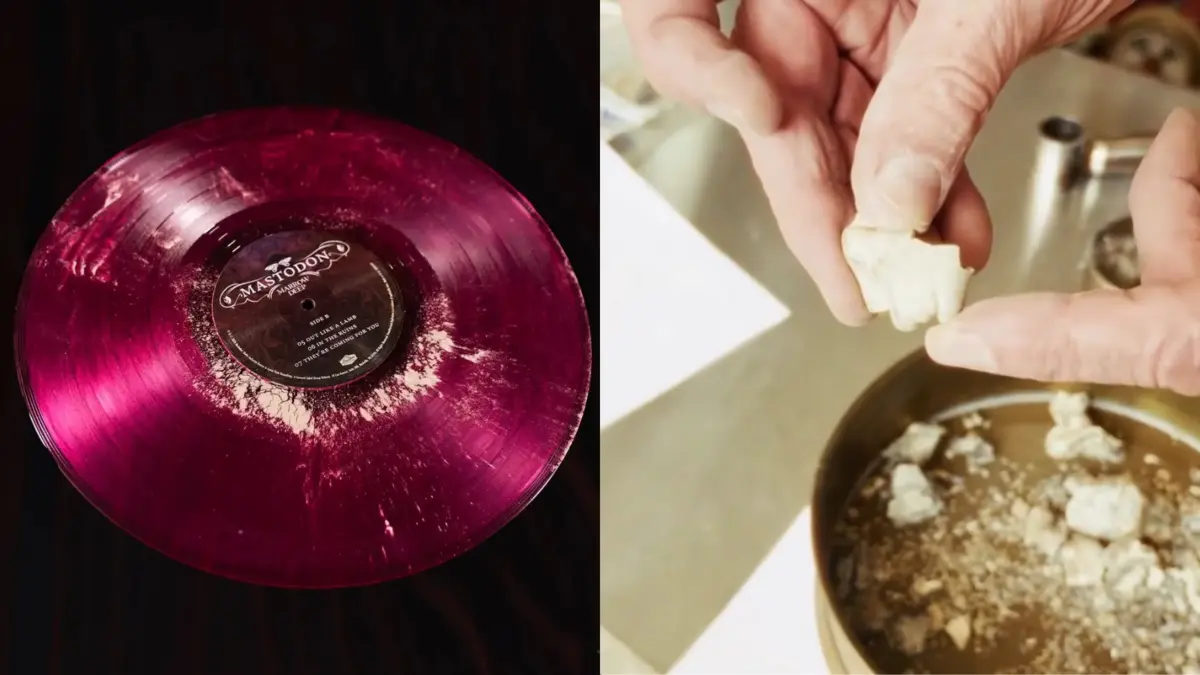
The Grammy Award-winning heavy metal quartet Mastodon has officially announced a specialized, ultra-limited edition of their latest studio album, Marrow Deep, featuring a physical component that bridges the gap between modern music production and prehistoric natural history. On October 9, 2026, the band revealed the "Bone Dust Edition," a vinyl pressing that incorporates the pulverized remains of 10,000-year-old mastodon fossils directly into the record’s substrate. This release, limited to only 170 copies worldwide, represents one of the most ambitious intersections of paleontology and physical media in the history of the music industry.
The announcement comes several weeks after the initial launch of Marrow Deep, which debuted on August 28, 2026, to critical acclaim. The Bone Dust Edition is not merely a colored variant or a standard deluxe reissue; it is a conceptual piece of art that utilizes actual biological material from the animal that serves as the band’s namesake. Priced at $150 per unit, the release is being managed through a high-demand raffle system to ensure an equitable distribution among the band’s global fanbase.
The Genesis of a Two-Decade Vision
The origins of the Bone Dust Edition trace back approximately 20 years, during the earlier stages of the band’s career. According to official statements from the group—comprised of Troy Sanders, Brann Dailor, Brent Hinds, and Bill Kelliher—the project was sparked by an unusual gift from a dedicated fan. The band was presented with a large collection of fossilized teeth belonging to a mastodon, an extinct megafaunal mammal that inhabited North and Central America during the late Miocene or late Pliocene up until their extinction at the end of the Pleistocene epoch.
While the fossils were authentic, they were deemed "not display-worthy" by paleontological standards, meaning they lacked the structural integrity or aesthetic completeness required for museum exhibition or academic preservation. For two decades, the bag of fossilized fragments remained in the band’s possession, serving as a curious relic of their early touring days. The musicians reportedly deliberated for years on how to honor the gift in a way that resonated with their artistic identity.
Bassist and vocalist Troy Sanders eventually proposed the concept of integrating the fossils into their primary medium: the vinyl record. The band noted that while they had considered various uses for the bones over the last 20 years, the thematic weight of their 2026 album, Marrow Deep, provided the necessary creative alignment. The album’s title and lyrical focus on mortality, ancestry, and the primordial earth served as the catalyst for finally moving forward with the fossil-infusion process.
Scientific Collaboration and Technical Manufacturing
Transforming ancient biological matter into a functional audio medium presented significant engineering challenges. To ensure that the inclusion of fossil dust did not compromise the "groove" of the record or the listener’s playback equipment, Mastodon collaborated with a diverse group of specialists. The project required the technical expertise of Loma Vista Recordings, the specialized manufacturing capabilities of Waxwork Records, and the academic oversight of the University of Georgia’s (UGA) geology department.
The University of Georgia’s involvement was critical in transitioning the fossils from raw specimens to a pressable material. Researchers at the university’s geology department were tasked with the delicate process of grinding the 10,000-year-old teeth into a fine powder. This process, often referred to as micronization, had to be executed with extreme precision. If the particles were too large, they would create surface noise or "pops" during playback, potentially damaging the stylus of a turntable. If the particles were too fine or improperly mixed, they could weaken the structural integrity of the polyvinyl chloride (PVC).
Once the fossils were reduced to a fine, consistent dust, the band members personally participated in the manufacturing phase. Visiting the pressing plant, the musicians manually applied the fossil dust to the hot vinyl pucks before they were clamped in the hydraulic press. This "hand-poured" or "splatter" technique ensures that every copy of the 170-unit run is unique, with the fossilized material visible within the translucent or marbled finish of the record.
Detailed Specifications and Market Positioning
The Marrow Deep Bone Dust Edition is positioned as a high-end collector’s item. Each $150 package includes:
- Two 12-inch vinyl LPs containing the full Marrow Deep album.
- A bespoke gatefold jacket featuring exclusive artwork.
- A physical certificate of authenticity, verifying the age and origin of the mastodon fossil dust included in the pressing.
- Access to a digital high-resolution audio master of the album.
The price point of $150 is significantly higher than the standard $35–$45 retail price for a double LP. However, industry analysts suggest that the scarcity and the inclusion of genuine prehistoric artifacts justify the premium for dedicated collectors. In the contemporary vinyl market, "gimmick" or "concept" pressings—such as those containing liquid, dried flowers, or even human ashes—have historically seen rapid appreciation in the secondary market. By limiting the run to 170 copies, Mastodon and Loma Vista Recordings have created a high-scarcity environment that likely exceeds the current demand from the band’s millions of monthly listeners.
Raffle Logistics and Distribution Timeline
To manage the anticipated surge in traffic and prevent automated "scalper" bots from monopolizing the inventory, Loma Vista Recordings implemented a lottery-based purchasing system. The raffle opened on October 9 and is scheduled to close on October 12, 2026, at 12 PM ET. Participation is currently restricted to fans residing in the United States, Canada, and Mexico.
The selection process is automated; winners are chosen at random from the pool of entrants. To streamline the transaction, successful entrants are automatically charged the $150 (plus applicable taxes and shipping) upon selection. Those not selected receive no charges. This "draw" method has become increasingly common for high-value releases in both the music and footwear industries, as it provides a more stable user experience than a traditional "first-come, first-served" digital storefront.
Following the conclusion of the raffle and the verification of winners, the records are expected to begin shipping on or around October 16, 2026. Given the fragility of the product and its high value, specialized packaging is anticipated to prevent warping or damage during transit.
Historical and Artistic Context of Specialty Vinyl
The Bone Dust Edition follows a long tradition of experimental vinyl manufacturing, though it arguably sets a new precedent for the age of the materials used. In the past, artists like Jack White’s Third Man Records have experimented with "liquid-filled" records, while others have pressed hair, blood, or string into the vinyl. Mastodon’s decision to use 10,000-year-old teeth is a literal manifestation of their "Mastodon" brand, creating a physical link between the prehistoric creature and the modern heavy metal genre.
From a paleontological perspective, the use of "non-display-worthy" fossils for art is a subject of mild debate. However, because these teeth were fragmentary and lacked the context of a controlled excavation site, their scientific value was considered negligible compared to their value as a cultural artifact for the band. By pulverizing the teeth, the band has effectively "recycled" the fossils into a new form of preservation—one that will be housed in the private collections of 170 individuals.
Broader Implications for the Music Industry
Mastodon’s latest venture highlights the evolving nature of the physical music market. As streaming services like Spotify and Apple Music dominate the consumption of audio, physical media has shifted from a primary delivery method to a luxury merchandise category. Fans are increasingly looking for "tangible experiences" that cannot be replicated digitally.
The collaboration with the University of Georgia also suggests a potential for more interdisciplinary partnerships in music marketing. By involving a geology department, Mastodon added a layer of scientific legitimacy to the release, distinguishing it from standard "bone-colored" vinyl that merely uses plastic dyes to simulate the appearance of fossils.
Furthermore, the "Marrow Deep" release underscores the importance of storytelling in product design. The narrative of a 20-year-old gift finally finding its purpose in a 2026 album creates a compelling "full-circle" moment for the band’s legacy. As the heavy metal community continues to value physical artifacts and elaborate packaging, the Bone Dust Edition sets a high bar for creative innovation, blending the ancient past with the technological present.
As the raffle deadline approaches, the music industry will be watching to see how this release impacts the band’s chart performance and whether other high-profile artists will follow suit by incorporating unique, non-traditional materials into their physical discographies. For now, 170 fans will soon possess a piece of prehistory, literally etched with the sounds of one of modern metal’s most enduring acts.




 Yuyun Lusiyani
 Ana Megawati
 Joko Widodo
 Eva Lovia
 Jia Lissa