
 Pevita Pearce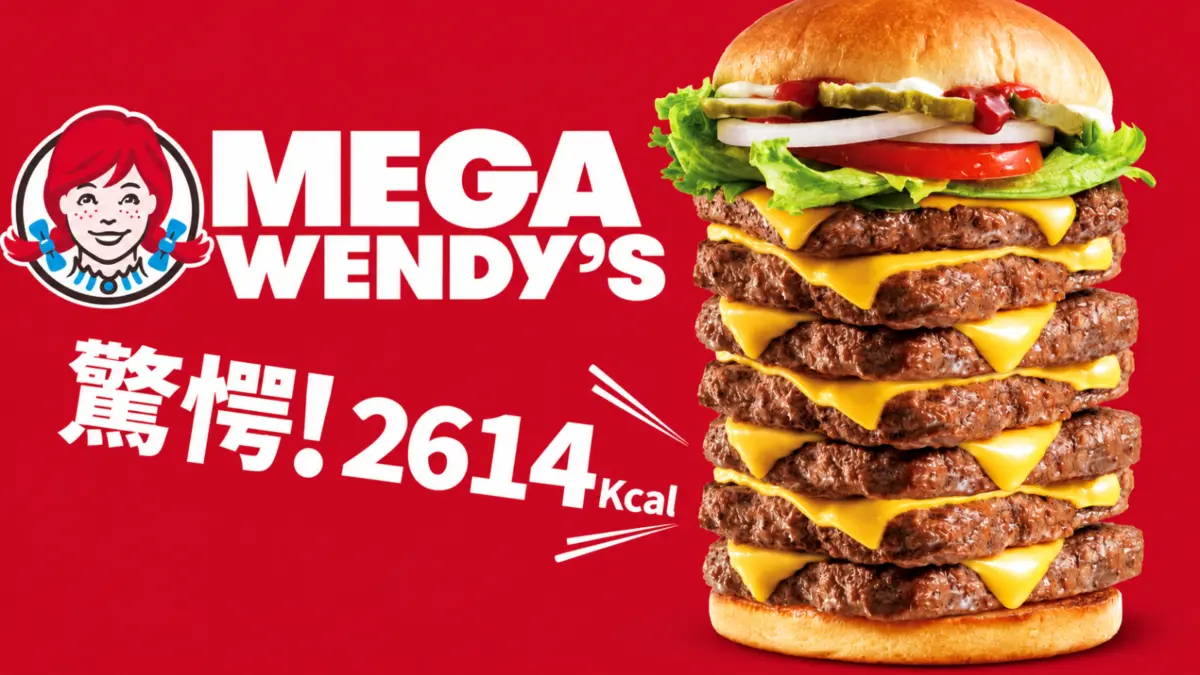
Wendy’s First Kitchen, the Japanese division of the global fast-food franchise, has officially unveiled its latest menu innovation: the MEGA Wendy’s. This towering culinary construction features a staggering seven beef patties, marking a new chapter in the ongoing industry trend of "maximalist" burger design. While fast-food advertisements are frequently criticized for presenting idealized versions of products that differ significantly from the items served to customers, the MEGA Wendy’s has gained early notoriety for its surprising adherence to its promotional imagery. The burger, which effectively functions as a "Dave’s Septuple," provides a caloric load that exceeds the daily recommended intake for most adults, sparking discussions regarding nutritional responsibility, marketing strategies, and the evolution of international fast-food menus.
Engineering the MEGA Wendy’s: A Breakdown of the Septuple Stack
The MEGA Wendy’s is not a standard menu item built from scratch but is rather an extreme modification of the chain’s signature Dave’s Triple. To achieve the "MEGA" status, kitchen staff add four additional square beef patties and four extra slices of American cheese to the existing triple-patty structure. The result is a vertical stack of seven beef patties, interspersed with melted cheese, lettuce, tomato, onion, pickles, mayo, and ketchup, all contained between two toasted buns.
The sheer scale of the burger translates into significant nutritional data. According to official disclosures from Wendy’s First Kitchen, the MEGA Wendy’s contains approximately 2,614 calories. This figure represents more than 100% of the daily caloric requirement for an average adult male and significantly more for the average female. When paired with a medium order of French fries and a soft drink, the total caloric intake for a single meal can easily exceed 3,300 calories. Beyond the caloric count, the burger also carries substantial levels of sodium and saturated fats, positioning it as a "challenge" item rather than a standard dietary choice.
Economic Considerations and Menu Pricing
The MEGA Wendy’s occupies a premium price point within the Japanese fast-food market. The standalone burger is priced at ¥3,670, which converts to approximately $23.25 USD based on current exchange rates. For consumers wishing to make the burger part of a meal, a medium set—including fries and a beverage—brings the total cost to ¥4,150 (roughly $26.30 USD).
This pricing strategy reflects the high cost of protein and the logistical complexity of assembling such a large item. In the context of the Japanese economy, where fast-food "value meals" typically range between ¥600 and ¥1,000, the MEGA Wendy’s is positioned as a luxury or novelty item. Analysts suggest that the high price point serves two purposes: it covers the increased ingredient costs and it ensures that the item remains a niche product, preventing the kitchen from being overwhelmed by orders for the labor-intensive burger during peak hours.
Consumer Reception and the Expectation vs. Reality Phenomenon
One of the most notable aspects of the MEGA Wendy’s launch has been the feedback from early adopters on social media platforms. Historically, fast-food chains have faced litigation and public backlash for "food styling"—the practice of using non-edible materials or meticulous arrangement to make products look larger and more appetizing in advertisements than they appear in person.
However, recent reports and viral videos from customers in Tokyo and other Japanese metropolitan areas suggest that the MEGA Wendy’s largely delivers on its visual promise. On Reddit, a comparison between a promotional photograph and a screenshot from a customer’s video went viral, with users expressing surprise at the burger’s structural integrity. One commenter noted that the real-world version looked "fine" and "actually lives up to the ad," a rarity in the industry.
Despite the visual accuracy, the practicalities of consuming the burger have become a point of contention. Due to its height, the MEGA Wendy’s is nearly impossible to eat in the traditional manner. Videos have surfaced showing customers dismantling the burger or "tackling it with a fork," as the vertical stack is too large for the human jaw to encompass. On social media, some observers compared the product to satirical items found in the Grand Theft Auto video game series, suggesting that the burger blurs the line between a legitimate food item and a parody of American excess.
A History of Excess: The Evolution of Wendy’s in the Japanese Market
The introduction of the MEGA Wendy’s is part of a broader history of unique marketing and product development by Wendy’s in Japan. The brand’s journey in the country has been marked by strategic shifts and local collaborations. Wendy’s initially exited the Japanese market in 2009 after a 29-year presence, only to return in 2011 through a partnership with Higa Industries.
In 2016, Wendy’s Japan acquired First Kitchen, a well-established local "city-style" fast-food chain. This merger created "Wendy’s First Kitchen," a hybrid brand that combines Wendy’s signature square burgers and chili with First Kitchen’s flavored fries and pasta dishes. This localized approach has allowed the brand to experiment with menu items that appeal to the Japanese fascination with "limited-time offers" (LTOs) and "tower" food items.
Japan has a long-standing tradition of "Mega" food trends. Competitors such as Burger King Japan have previously released items like the "One Pounder" series, and local chains like Lotteria have offered burgers with up to ten patties. The MEGA Wendy’s is the latest entry in this competitive landscape of "stunt" food, designed to generate social media engagement and foot traffic through novelty.
Comparative Analysis: The T-Rex Burger and Global Secret Menus
While the MEGA Wendy’s is an official menu item in Japan, similar creations have existed in the United States and Canada as part of "secret menus" or localized challenges. The most famous predecessor is the "T-Rex Burger," a nine-patty behemoth that gained notoriety in a Brandon, Manitoba, Wendy’s location in 2013. That burger, which contained roughly 3,000 calories, was eventually banned by the corporate office after photos of the monstrosity went viral, with the company citing concerns over food safety and brand consistency.
However, the appetite for such items persists. More recently, a Wendy’s franchise in Oklahoma made headlines for bringing back the T-Rex burger as a sanctioned eating challenge. Customers were offered a mystery prize if they could finish the nine-patty stack within a nine-minute time limit.
In the United States, customers can technically replicate the MEGA Wendy’s by ordering a Dave’s Triple and requesting four additional patties a la carte. However, the success of such an order depends entirely on individual restaurant policy. Wendy’s corporate customer care has stated that while the company provides guidelines, the decision to accommodate "extreme" customization—such as adding four or more extra patties—is left to the discretion of the local store manager.
Nutritional Implications and Public Health Perspectives
The release of a 2,614-calorie burger inevitably invites scrutiny from health advocates. In a global environment where obesity and diet-related illnesses are on the rise, the promotion of "mega-meals" is often seen as counterproductive to public health initiatives. In Japan, while obesity rates are lower than in the United States, there is a growing awareness of the risks associated with high-sodium and high-fat diets.
From a nutritional standpoint, the MEGA Wendy’s is an outlier. The sheer volume of red meat and processed cheese provides a massive dose of protein, but it is accompanied by levels of saturated fat that can put significant strain on the cardiovascular system in a single sitting. Health experts generally advise that such items should be viewed as a "once-in-a-lifetime" novelty rather than a meal, though the marketing of these items often targets younger demographics who may be more inclined to attempt "eating challenges."
The Strategic Logic of Viral Menu Items
From a business perspective, the MEGA Wendy’s is a masterclass in modern marketing. In the digital age, a menu item does not necessarily need to be a top-seller to be successful; it simply needs to be "viral." By creating a burger that is visually shocking and physically difficult to eat, Wendy’s First Kitchen ensures a surge in user-generated content.
Every customer who buys the burger to film a "review" or take a photo for Instagram provides free advertising for the brand. This "stunt marketing" helps maintain brand relevance in a crowded market and can drive customers into stores who may ultimately decide to buy a more traditional, smaller burger once they are confronted with the reality (and the price) of the seven-patty stack.
Conclusion: The Future of the Maximalist Burger
The MEGA Wendy’s represents the current apex of the "meat wars" in the international fast-food scene. By leaning into the absurdity of a seven-patty stack, Wendy’s First Kitchen has successfully captured the attention of the global food community. Whether the burger remains a permanent fixture or a fleeting limited-time offer, its existence highlights the ongoing tension between nutritional guidelines and the consumer’s desire for spectacle.
As fast-food chains continue to navigate a post-pandemic economy marked by rising ingredient costs and changing consumer habits, the "Mega" burger serves as a reminder that in the world of marketing, sometimes bigger—no matter how impractical—really is seen as better. For now, the MEGA Wendy’s stands as a tall, cheese-covered monument to the extremes of modern dining, challenging the appetites and the jaw-hinges of customers across Japan.



 Yuyun Lusiyani
 Ana Megawati
 Joko Widodo
 Eva Lovia
 Jia Lissa