
 Jia Lissa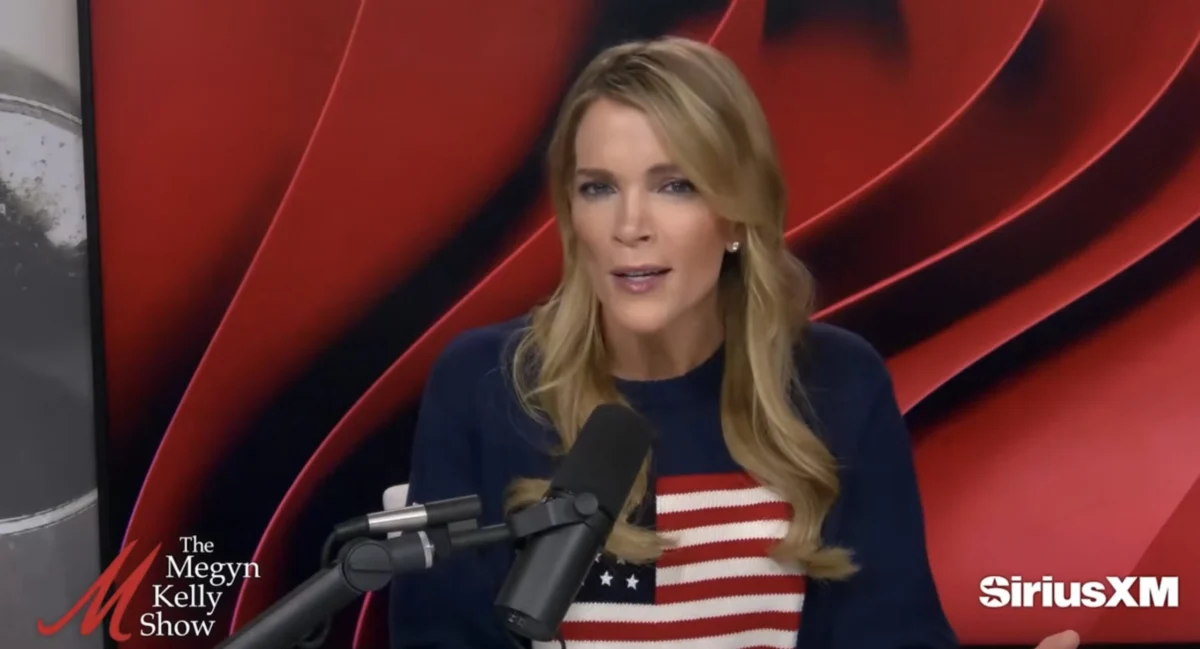
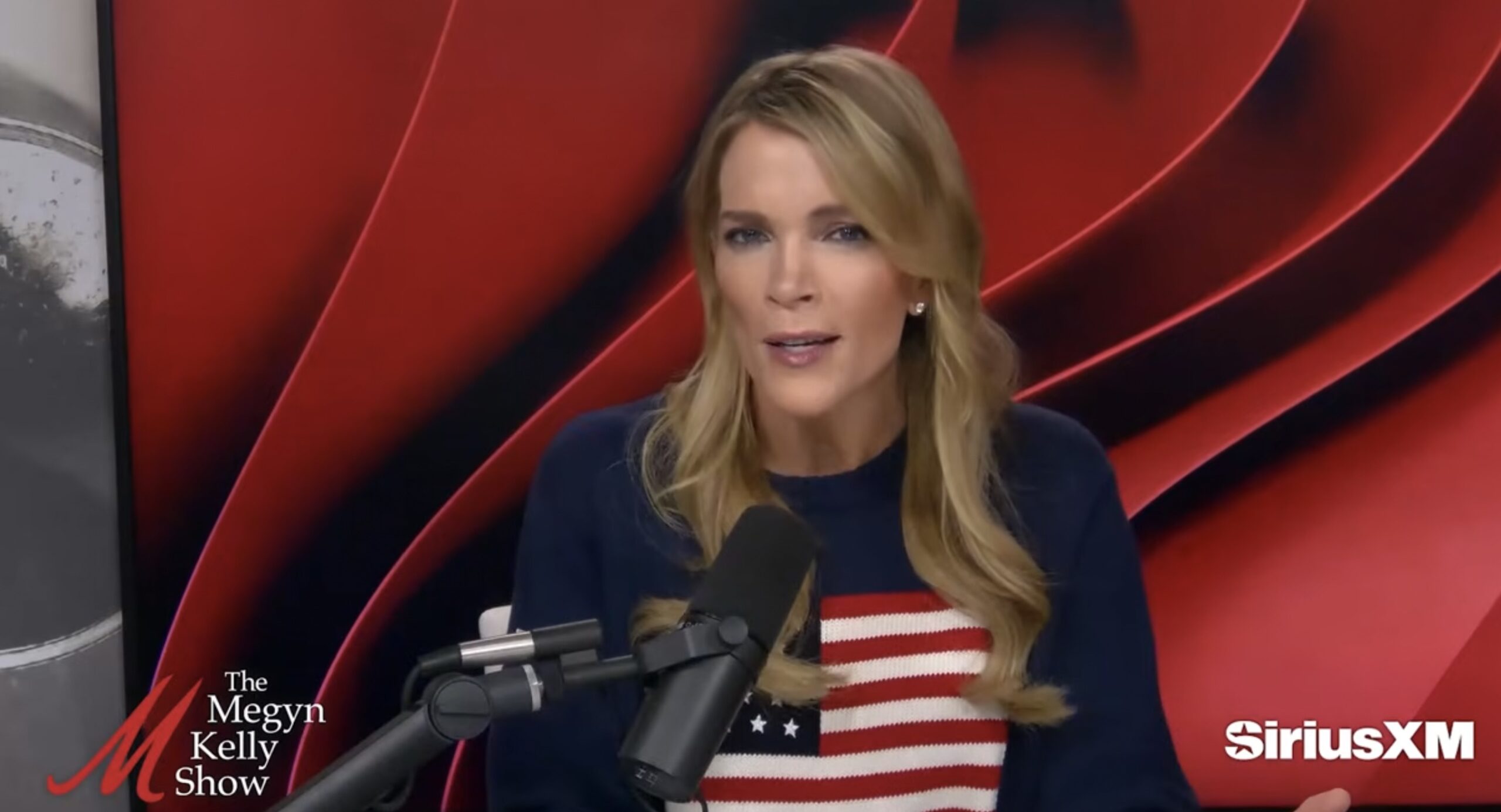
The landscape of American media commentary was marked by significant controversy on Wednesday night, March 19, 2026, as veteran journalist and independent media host Megyn Kelly became the center of a viral debate regarding national symbols and journalistic consistency. The dispute arose following Kelly’s public condemnation of Fox News for utilizing a broadcast graphic that merged the flags of the United States and Israel. However, the criticism quickly pivoted toward Kelly herself when digital archivists and social media users identified nearly identical graphic choices within her own recent programming, specifically involving the flag of the Islamic Republic of Iran.
The incident began when Kelly, the former Fox News and NBC anchor who now hosts an independent digital program, took to the social media platform X to express her disapproval of a Fox News "chyron"—the text and graphic overlay used during news broadcasts. The graphic in question featured a stylistic blend of the American Stars and Stripes with the Israeli Star of David. Kelly’s initial reaction, a quote-tweet of a post describing the graphic as "absolutely disgusting," was succinct: “Holy shit is this real?”
As the post gained traction, Kelly expanded on her objection, responding to a user who questioned the harm in displaying the flags of two allied nations currently engaged in shared strategic interests. Kelly articulated a strict stance on vexillological etiquette, stating, “You don’t put another country’s flag on the USA flag, ever. We don’t share it. We treat the flag as inviolate. It’s extremely inappropriate.” This statement framed the issue not as a matter of foreign policy preference, but as a fundamental breach of patriotic protocol and respect for the American national symbol.
The Emergence of the Counter-Evidence
The trajectory of the discourse shifted abruptly when X’s "Community Notes" feature, a crowd-sourced fact-checking tool, appended a correction to Kelly’s post. The note pointed out that Kelly’s own production team had utilized a similar visual technique less than three weeks prior. On March 3, 2026, during an episode of her "AM Update" titled "America’s Iran War Planning," Kelly’s program displayed a circular graphic that blended the United States flag with the flag of Iran.
The revelation of the Iran-themed graphic introduced a new dimension to the criticism. While the Fox News graphic depicted an alliance between the U.S. and Israel, Kelly’s graphic merged the American flag with that of a nation long considered a primary geopolitical adversary. Critics were quick to note that if the American flag is indeed "inviolate" and should "never" be shared with another nation’s symbols, the application of that rule should logically extend to all foreign entities, regardless of their diplomatic status with Washington.
Chronology of the Controversy
To understand the scale of the backlash, it is necessary to examine the timeline of events leading up to the March 19 confrontation:
- March 3, 2026: The Megyn Kelly Show airs its "AM Update" segment. The production features a thumbnail and on-screen graphic blending the U.S. and Iranian flags to illustrate a discussion on military planning and Middle Eastern tensions.
- March 18, 2026: Fox News broadcasts a segment regarding U.S.-Israeli military cooperation, utilizing a background graphic that dissolves the two flags into a singular visual element.
- March 19, 2026 (Evening): Social media accounts critical of Fox News begin circulating screenshots of the graphic, labeling it "disgusting."
- March 19, 2026 (9:00 PM – 11:00 PM ET): Megyn Kelly joins the fray, issuing her "inviolate" doctrine regarding the American flag.
- March 19, 2026 (Midnight): Community Notes and high-profile commentators highlight the March 3 Iran graphic from Kelly’s show. The term "Groyper" begins trending in relation to the incident as critics accuse Kelly of adopting rhetoric associated with the "America First" or dissident right-wing movements.
Media Standards and the U.S. Flag Code
The debate has reignited discussions regarding the United States Flag Code (Title 4 of the U.S. Code). While the code provides civil guidelines for the treatment of the flag—noting that it should not be used for advertising or have any mark, insignia, or design placed upon it—these guidelines are largely viewed as advisory rather than legally binding due to First Amendment protections.
In the context of modern broadcast journalism, the "blended flag" has become a common visual shorthand. Networks frequently use such imagery to denote bilateral summits, trade agreements, or shared military conflicts. For instance, during the early stages of the Russia-Ukraine conflict in 2022 and 2023, many Western news outlets utilized graphics that merged the U.S. and Ukrainian flags to symbolize support and aid. Kelly’s assertion that the flag is "never" shared appears to contradict decades of established graphic design standards in cable and digital news.
Public and Intellectual Reactions
The response from media figures across the political spectrum was swift and largely critical of Kelly’s perceived double standard. William Jacobson, a Cornell Law Professor and founder of Legal Insurrection, was particularly vocal. Jacobson accused Kelly of "Jew-baiting," suggesting that her outrage was selectively applied to Israel. He noted, "She’s going full Groyper—Jew-baiting sleaze because in a chyron Fox News created a graphic about US and Israel working together… Your true colors have come out and they are very ugly."
The term "Groyper," referenced by Jacobson and several other commentators, refers to a loose network of alt-right figures known for white nationalist and often antisemitic views. The accusation suggests that Kelly’s rhetoric is increasingly aligning with a specific faction of the "New Right" that opposes the U.S.-Israel alliance, sometimes using nationalistic "America First" arguments as a cover for more controversial ideologies.
Other reactions included:
- James Lindsay: An author and cultural critic, Lindsay questioned Kelly’s motives, asking if she was being "malicious" or simply unaware of her own show’s output.
- Laura Loomer: A conservative activist and media personality, Loomer labeled Kelly "the dumbest woman in media," highlighting the irony of Kelly expressing "faux outrage" over an ally’s flag while having previously used the flag of the Islamic Republic.
- Harry Khachatrian: A writer for The Washington Examiner, Khachatrian utilized a pop-culture reference to critique Kelly’s perceived shift in political positioning, suggesting she had moved toward the fringes of the political right.
- Jim Hanson: Of the Middle East Forum, Hanson pointed out the logical inconsistency of the outrage, noting that it is common to show the flags of allies fighting a "common enemy of mankind."
Broader Impact and Journalistic Implications
This controversy highlights a growing tension within the American conservative media landscape. For decades, support for Israel was a bedrock principle of Republican and conservative identity. However, in recent years, a burgeoning isolationist movement—often characterized as "America First"—has challenged these traditional alliances. Kelly, who has navigated various iterations of conservative and mainstream media, appears to be caught in the crossfire of this ideological shift.
From a journalistic perspective, the incident underscores the risks of the "outrage economy" on social media. The speed with which commentators can criticize competitors often leaves them vulnerable to charges of hypocrisy when their own past work is scrutinized. For Kelly, the primary damage may not be the flag graphic itself—which most viewers recognize as a standard production element—but the perception that her principles are applied inconsistently based on the subject matter or the network being criticized.
Furthermore, the role of Community Notes in this event demonstrates the increasing power of algorithmic and crowd-sourced accountability. In an era where media figures often operate in silos, the ability of a platform to provide immediate, visible context to a post can dismantle a narrative in real-time.
Conclusion
As of the morning of March 20, 2026, Megyn Kelly has not issued a formal clarification regarding the March 3 Iran graphic or the accusations of hypocrisy. The incident remains a significant point of discussion regarding the intersection of patriotism, media ethics, and the shifting alliances within the American right.
The episode serves as a case study in the complexities of modern political commentary, where the boundaries of "appropriate" symbolism are often defined more by the prevailing political winds than by a consistent set of standards. Whether this will lead to a change in production standards for The Megyn Kelly Show or a recalibration of her rhetorical approach remains to be seen. However, for the moment, the "inviolate" nature of the American flag remains a point of contention, with the digital record serving as a persistent witness to the challenges of maintaining consistency in the public eye.



 Yuyun Lusiyani
 Joko Widodo
 Eva Lovia
 Pevita Pearce
 admin
admin
 Lina Irawan